Yes—Gmail is usually a good choice for internship applications if the address looks professional and you check it reliably.
For most students and early-career applicants, a clean dedicated Gmail account is one of the easiest ways to stay reachable without mixing internship traffic into your entire personal inbox.
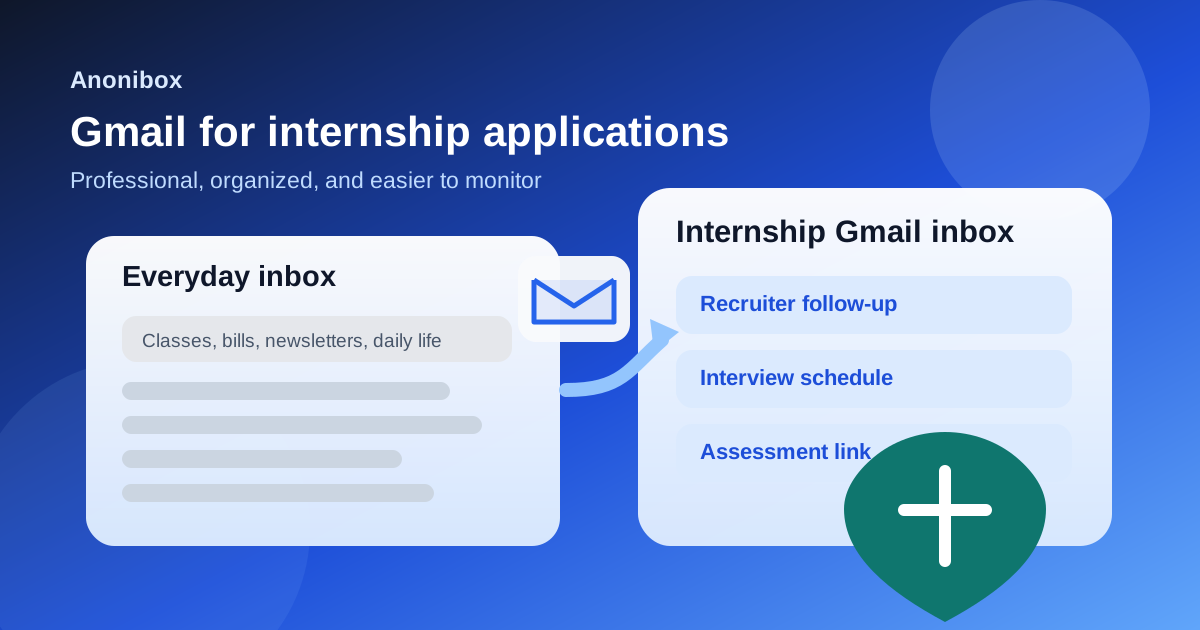
Why this question matters
On the surface, Gmail seems like the default answer. Plenty of students already have one, employers know the provider, and it works well on phones and laptops. But “should you use Gmail for internship applications” is not really just a provider question. It is a privacy, organization, and professionalism question.
Internship applications often create more email than people expect. A single application can lead to confirmation messages, assessment links, calendar invites, reminders, campus recruiting announcements, talent-network follow-ups, and marketing mail for other roles. If all of that lands in the same inbox you use for classes, bank alerts, travel, group chats, and online accounts, important recruiter messages are much easier to lose.
That is why Gmail can be a strong option when you use it intentionally. The provider itself is usually not the problem. The real difference comes from which Gmail address you use, how professional it looks, and whether it helps you keep your search organized.
Short answer: yes, but use the right Gmail setup
If you already have a simple, professional Gmail address and you monitor it closely, using Gmail for internship applications is usually perfectly fine. Most employers will not see Gmail as unusual or unprofessional.
In fact, Gmail is often more practical than using a school address you may lose later, a work address you should not use for job hunting, or a temporary inbox that may not stay available long enough for real follow-up.
The catch is that not every Gmail setup is equally good. A cluttered personal inbox, an immature username, or a Gmail account tied to every part of your daily life can create problems even if the provider itself is widely accepted.
Why Gmail works well for internship applications
It is familiar to employers
Recruiters, campus hiring teams, and applicant tracking systems see Gmail addresses all the time. A Gmail address is not going to raise eyebrows just because it is Gmail. That makes it a low-friction choice for most internship applicants.
It is easy to access everywhere
Internship hiring can move quickly. You may need to open a coding test link from your phone, confirm an interview while traveling, or spot a scheduling email between classes. Gmail’s reliability across devices is a practical advantage when response time matters.
It supports organization well
Labels, filters, stars, search, and categories make Gmail workable for active internship searches. If you apply to many roles, those features can help you separate interview requests from generic recruiting mail without building a complicated system.
It can be easy to separate from your main inbox
If your current Gmail account is messy, you are not stuck with it. Creating a separate Gmail account for internships is simple, and for many people that is the best version of this strategy.
When Gmail is a good choice
Gmail is usually a smart option when:
- the address uses your real name or a clear professional variation of it;
- you can check it consistently every day;
- you want a stable inbox for interview follow-up, assessments, and offers;
- you need a provider that works smoothly across phone and laptop;
- you want something mainstream and easy for recruiters to recognize.
In these situations, Gmail is often one of the safest defaults because it is predictable, accessible, and easy to manage.
When Gmail can become a problem
1. The address itself looks unprofessional
The biggest Gmail risk is usually not Gmail. It is the username. An address based on a joke, fandom handle, old gaming tag, or string of random numbers can make a weak first impression. That does not always ruin an application, but it adds unnecessary friction.
A simple name-based address is much better. It does not need to be perfect, just readable and clearly tied to you.
2. Your everyday inbox is too crowded
If your current Gmail account already handles shopping receipts, newsletters, password resets, school updates, and personal conversations, adding internship traffic can turn it into noise. You may still technically receive everything, but the odds of missing something important go up fast.
3. You use one account for too many parts of your life
Even when an address looks professional, using the same Gmail account for applications, social signups, personal correspondence, and low-trust web forms creates more exposure than you may want. A separate internship Gmail account gives you cleaner boundaries.
4. You assume Gmail solves privacy by itself
Gmail is convenient, but convenience is not the same thing as privacy. If you submit the same address to many job boards, recruiting systems, and third-party forms, that address can still attract long-tail recruiting spam. The right workflow matters more than the brand name of the inbox.
Should you use your main Gmail or create a separate one?
For many applicants, this is the real decision.
If your existing Gmail account is already professional, fairly uncluttered, and easy to monitor, using it for internship applications can be completely reasonable. But if the inbox is noisy or deeply tied to the rest of your life, a separate Gmail account is usually better.
A separate internship Gmail account gives you several advantages:
- Cleaner organization: internship messages are easier to spot and search.
- Better privacy: your long-term everyday address does not have to go everywhere.
- Less spam spillover: recruiting noise stays out of your primary personal inbox.
- An easier cleanup later: you can filter, archive, or retire that workflow after internship season.
This is one reason the site’s existing advice on using a separate email for internship applications matters. If you want Gmail’s convenience without giving your everyday inbox more exposure, a separate Gmail account is often the sweet spot.
How Gmail compares with other internship email options
Gmail vs. school email
A college email can look credible, but it may not last as long as you expect. Some schools change access rules after graduation, and some students simply stop checking that inbox closely outside class-related needs. Gmail is often more stable long term.
Gmail vs. work email
If you already have a part-time job, campus job, or current employer-managed address, Gmail is usually the safer choice. Work email can expose your search activity, create policy issues, and tie your applications to an inbox you do not fully control.
Gmail vs. temporary email
Temporary email can still be useful in narrow situations, especially for low-trust signups or one-off platform tests. But serious internship applications usually need a stable inbox. If you use Anonibox or another temporary inbox to explore a questionable board or early signup flow, switch to a dependable address before real employer follow-up begins.
That is why temporary email for internship applications and Gmail are not really interchangeable. One is for early shielding in selective cases. The other is for ongoing communication.
Best practices if you use Gmail for internship applications
Use a professional display name and address
Make sure both the email address and the sender name look clean. Recruiters see the sender name first in many inbox views, so this matters.
Turn on simple organization from day one
Create labels for active companies, star interview-related messages, and use filters for common assessment platforms or applicant tracking systems. Small habits early can save you from inbox chaos later.
Check it consistently
A good email setup still fails if you forget to look at it. Internship hiring can move quickly, especially for assessment deadlines and scheduling requests. If this is a separate Gmail account, make sure notifications or a routine keep it visible.
Keep the inbox focused
Do not turn the account into a catch-all for unrelated signups. The more narrowly you use it, the more useful it stays.
Be careful with suspicious recruiter mail
A Gmail address does not protect you from scam outreach. Watch for vague employers, rushed offers, odd attachments, requests to move to personal chat apps immediately, or pressure to share sensitive information before basic verification.
Common mistakes to avoid
- Using an old embarrassing address: easy to fix, not worth keeping.
- Mixing internship traffic with everything else: this is where missed replies happen.
- Using a throwaway inbox for real applications: fine for exploration, risky for serious follow-up.
- Creating a separate Gmail account and then never checking it: separation only helps if you stay responsive.
- Submitting the same address to every low-trust site without filters or caution: spam accumulates fast.
A simple Gmail setup that works well
If you want the lowest-friction option, use this structure:
- Main personal inbox: everyday life, core accounts, family, finances, and non-job-search traffic.
- Internship Gmail inbox: applications, recruiter contact, interviews, assessments, and offer-related communication.
- Temporary inbox only when needed: low-trust signups, exploratory forms, or situations where you are not ready to share a stable address yet.
This keeps your search manageable without making you harder for legitimate employers to reach.
Quick decision checklist
- Does my Gmail address look professional?
- Can I check it consistently on phone and laptop?
- Would a separate Gmail account keep internship traffic more organized?
- Do I need a stable inbox for interviews and follow-up?
- Am I using temporary email only for selective early-stage cases rather than for everything?
If most answers are yes, Gmail is probably a solid choice.
Final answer
Yes, you can usually use Gmail for internship applications, and for many people it is one of the best practical options. Employers are familiar with it, it works well across devices, and it is easy to manage during a busy search.
The smarter question is whether you should use your current everyday Gmail or a separate internship Gmail. In many cases, the separate account wins because it gives you better organization, less spillover, and more control over where recruiting traffic goes. Used that way, Gmail is not just acceptable for internship applications. It is often the cleanest balance between reliability, professionalism, and privacy.