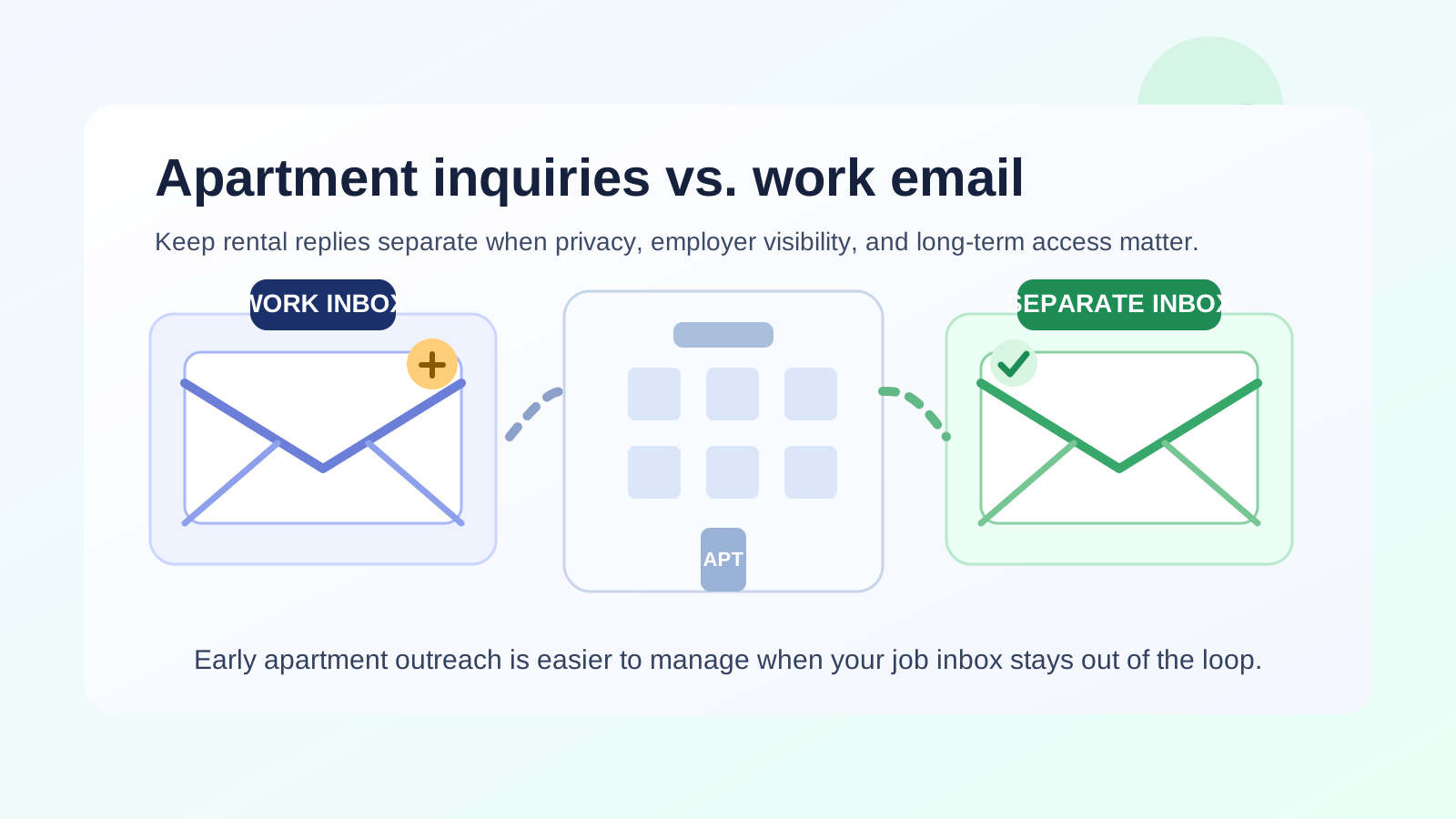
Usually, no — your work email is rarely the best default for first-contact apartment inquiries. A separate apartment-search inbox is usually safer, easier to manage, and less likely to expose your employer, your company systems, or your long-term personal plans.
If a listing is legitimate and you move into a serious application or lease conversation, you can always switch later. But for early rental outreach, using your work address creates unnecessary privacy, continuity, and professionalism risks that most renters do not need to take on.
Why people consider using a work email in the first place
On the surface, a work address can feel practical. It is an inbox you already check, it may look polished, and if your personal inbox is crowded, it can seem like a clean place to manage replies. Some people also assume a work domain makes them look more established to landlords or leasing agents.
That logic is understandable, but apartment inquiries are not the same as normal business communication. You are often contacting listing portals, broker forms, lead-routing systems, property-management CRMs, and individual landlords you have never met. The question is not whether your work email can receive those messages. It is whether it is wise to attach your housing search to an account your employer may control and that you may not keep forever.
The biggest risks of using your work email for apartment inquiries
1. You expose your employer and workplace identity
Your work address does more than identify you. It usually identifies your employer, your domain, and often your role or department naming pattern. That gives strangers a lot more context than they need for a simple rental inquiry. A leasing office does not need to know where you work just because you asked whether a unit is still available.
That extra context can create awkwardness even when nobody is acting badly. A landlord may make assumptions about your income, your schedule, your stability, or how easy you are to pressure based on your employer. You may not want that kind of framing during an early housing search.
2. Your employer may retain or monitor the account
Many work inboxes are company property. Depending on your employer, administrators may retain messages, security tools may scan them, and access may not be as private as you assume. Even if nobody is actively reading your apartment emails, the account still sits inside systems designed for business records, compliance, and IT control.
That is not inherently sinister. It is just the wrong environment for a personal move, a roommate search, or questions about rent concessions, credit checks, pets, or move-in timing.
3. You may lose access at the worst time
Housing searches do not always move on your timeline. A listing that seems unimportant today may produce the best reply next week. A tour invitation can arrive after hours. A property manager might send application instructions, fee receipts, or lease follow-up later than expected.
If you change jobs, go on leave, lose access, or stop checking the account closely, that continuity breaks. Using a work address for apartment inquiries means your housing trail depends on an inbox you do not fully own.
4. Personal and work boundaries get blurry
Apartment hunting can generate more messages than people expect: similar listings, viewing reminders, “still interested?” nudges, broker follow-ups, syndication emails, and marketing from listing platforms. Bringing all of that into your work inbox is not only annoying. It also makes it easier to miss either personal housing messages or real work messages because the streams start mixing together.
That crossover gets worse if you are contacting multiple listings at once or comparing neighborhoods in a fast market.
5. Security tools and filters may cause friction
Some company email systems block certain links, rewrite URLs, quarantine messages, or aggressively filter unfamiliar senders. That can be helpful for business security, but frustrating during a rental search. A tour scheduler, document portal, or application email may arrive late, look broken, or disappear into a quarantine process you do not control.
Apartment communication is already inconsistent enough without adding a corporate email stack to the mix.
When it might be acceptable
There are situations where using a work address is not a disaster. It just should be the exception, not the default.
- Employer-sponsored relocation: if your company is helping with a move and you intentionally want the leasing conversation connected to that process.
- You are self-employed or run your own business domain: if the address is genuinely yours and not controlled by a separate employer, the continuity risk is lower.
- You are already deep into a verified conversation: if you know the property manager is real and want to move one thread into the inbox you monitor most, it can be workable.
Even then, it is worth asking whether there is any real upside that a separate personal inbox would not give you with fewer downsides.
What usually works better instead
A separate apartment-search inbox
For most people, this is the best answer. A dedicated inbox keeps rental communication organized without tying it to your employer or your oldest personal email. It is stable enough for tours and applications, but separate enough to retire later if the search gets noisy.
This is especially useful if you are comparing multiple properties, dealing with listing sites, or trying to keep work, banking, healthcare, and everyday personal mail clean.
An email alias
If you want separation without managing a whole second account, an alias can work well. It gives you a distinct contact point for apartment outreach while still forwarding into a mailbox you control.
The key is reliability. If you use an alias, make sure replies land where you will actually see them and that you can keep the thread stable if a conversation becomes serious.
A temporary inbox for first-contact only
If you are still in the screening stage, a temporary inbox can make sense for low-trust listing forms or portals that look likely to generate long-tail spam. The important part is timing: temporary addresses work best early, before tours, applications, and lease paperwork become real.
If you want distance from noisy apartment portals before you decide which listings deserve more trust, a service like Anonibox can be useful as a first-contact buffer. Once a property proves legitimate, switching to a stable inbox is usually the better move.
How to decide which address to use
A simple rule works well:
- Low trust + early stage: temporary inbox or alias.
- Active search + real replies expected: separate dedicated apartment-search inbox.
- Verified landlord + serious application stage: whichever personal inbox you fully control and check consistently.
Your work email rarely wins that comparison unless the housing process is directly tied to work relocation.
What to do if you already used your work email
If you already sent inquiries from your work address, do not panic. Just clean it up quickly.
- Create a stable personal inbox for the search.
- Move promising conversations over early. A short note such as “Please use this address for future apartment communication” is enough.
- Keep a simple tracking system. Label replies by building, neighborhood, or tour status so nothing gets lost.
- Watch for long-tail marketing. Unsubscribe where sensible and avoid using the work address for new inquiries.
If the search is still early, the easiest fix is simply to stop using the work inbox for new listing outreach.
Red flags that matter more than the email choice
Your contact strategy helps, but it is not the whole safety plan. Be extra careful when:
- The listing is vague, duplicated, or priced far below the local market.
- You are pushed to pay a fee before a real viewing or verification step.
- The sender avoids direct answers and keeps trying to move you to another channel quickly.
- The message quality is sloppy enough that basic details do not line up.
- You are asked for sensitive documents before the property itself feels verified.
Those are signs to slow down no matter which email address you used.
A quick checklist before you send the inquiry
- Does this listing look verified, or am I still testing the waters?
- Do I want this contact thread tied to my employer in any way?
- Will I still control this inbox if my job changes?
- Am I comfortable receiving apartment spam in my work account later?
- Would a separate inbox give me the same convenience with fewer risks?
If that last question is yes, the work email usually stops making sense.
Final answer
Using your work email for apartment inquiries is usually a bad default. It can expose more about you than necessary, mix personal housing communication into employer-controlled systems, and create continuity problems if the search lasts longer than expected.
A separate apartment-search inbox is usually the smarter middle ground: reliable enough for real replies, private enough to protect your main life, and much easier to retire once you find a place. Save the work email for the rare cases where the housing process is genuinely connected to your job. For everyday apartment outreach, keep those worlds separate.