Yes, you can use Gmail for job interviews, and for most candidates it is a normal, reliable, recruiter-friendly choice.
It works best when the address looks professional, you check it constantly, and you use a stable Gmail account instead of a temporary inbox or a work-managed Google account.
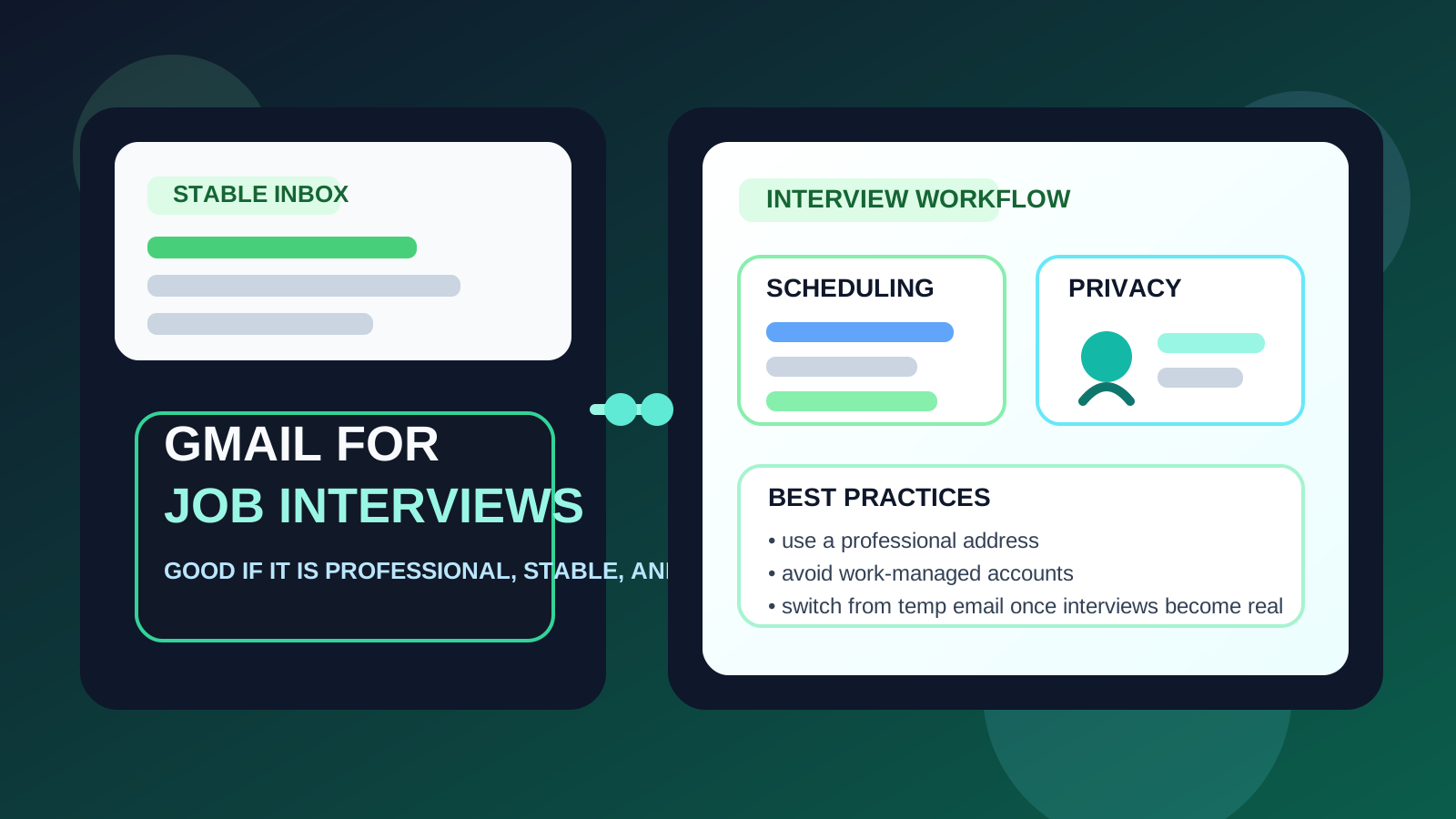
That is the short answer behind searches for should you use gmail for job interviews. Interview-stage communication is less forgiving than early application-stage communication. Once a recruiter or hiring manager wants to speak with you, email stops being a throwaway contact field and starts becoming part of a live workflow. You may need to receive calendar invites, reschedule on short notice, confirm availability, open attachments, and keep a clean record of what each company sent.
Gmail usually handles that well. It is common, familiar, and unlikely to make employers hesitate. But “Gmail is fine” is not exactly the same thing as “any Gmail setup is fine.” The real issue is whether your inbox is professional, organized, and private enough for an active interview process.
Why Gmail is usually acceptable for job interviews
Most employers are not screening candidates based on whether they use Gmail, Outlook, iCloud Mail, Proton Mail, or another mainstream provider. They care about simpler signals:
- Does the address look professional?
- Do you reply quickly?
- Can you receive scheduling messages and attachments without trouble?
- Will the inbox still be active later in the process?
Gmail clears those tests for most job seekers. It is widely used, easy to access on mobile, and familiar to recruiters who send interview confirmations, Google Calendar invites, and follow-up questions every day. That makes it a practical default for interviews in a way that temporary email usually is not.
Why interview-stage email is different from application-stage email
At the application stage, some job seekers can get away with more experimentation. They may test a new job board, sign up for alerts, or use a temporary inbox to keep spam away from their main address. Interviews are different because the messages become more important and more time-sensitive.
Once a company moves you forward, your inbox may suddenly need to handle:
- screening-call scheduling
- calendar invites and reschedule notices
- Google Meet, Zoom, or Teams links
- take-home assignment instructions
- follow-up questions from recruiters or hiring managers
- reference-check or offer-stage communication
That is why stability matters so much. An inbox that is acceptable for a low-trust signup is not necessarily good enough for an interview process that might stretch over days or weeks.
When Gmail is a strong choice
Your address already looks professional
If your Gmail address is some calm version of your real name, you are already in good shape. A clean address does more for recruiter confidence than the provider name does. The inbox should feel ordinary and dependable, not clever or disposable.
You monitor it closely
Gmail is only useful if you actually check it. Interview coordination can move quickly, especially when scheduling teams are trying to fill slots. If Gmail is already on your phone and part of your routine, that convenience becomes a real advantage.
You want a stable inbox without using work systems
A lot of job seekers are trying to avoid using employer-managed accounts while still keeping things simple. Gmail is often the obvious middle ground. It is easier to trust than a burner inbox and less risky than anything tied to your current employer’s Google Workspace.
You need a predictable workflow
Because Gmail is well integrated with search, threading, labels, attachments, and calendar invites, it works well for the practical side of interviewing. That matters more than people think. A smooth workflow helps you stay responsive, and responsiveness matters.
Where Gmail can still create privacy or organization problems
Your main personal inbox may be too busy
If your everyday Gmail account is full of newsletters, shopping receipts, family messages, banking alerts, and years of random signups, interview emails can get buried. Gmail has excellent search, but clutter still creates friction when a recruiter needs a quick answer.
Your broader Google identity may be mixed in
For many people, Gmail is not just email. It is also tied to Google Calendar, browser sync, Drive files, saved contacts, and other personal habits. That does not make Gmail unsafe, but it does mean your interview activity can live inside a much bigger personal account than you might prefer.
You may collect long-term recruiter noise
Even after a hiring process ends, some recruiters keep reaching out. Some platforms keep sending alerts. If you use your main Gmail account everywhere, all of that leftover traffic stays attached to the inbox you use for the rest of your life.
A sloppy Gmail address can still look weak
The problem is not Gmail. The problem is presentation. If the username looks like an old gaming handle, includes too many random numbers, or feels unserious, the provider will not save it.
The big warning: do not confuse Gmail with your work Google account
This is where a lot of people get into avoidable trouble. Saying “I use Gmail” is not the same as saying “I should use my employer-controlled Gmail or Google Workspace account.” Those are very different situations.
If the account belongs to your current employer, it may be visible through admin logs, synced to work devices, connected to work calendars, or exposed through browser profiles you use on company hardware. Even if nobody is actively watching, that is unnecessary risk. For interviews, a personal Gmail account or a separate job-search Gmail account is usually much smarter than a work-managed one.
Gmail vs a separate Gmail account for job interviews
This is often the real decision. Gmail itself is usually fine. The more useful question is whether you should use your main Gmail or a separate Gmail created for your job search.
A separate Gmail account is often better when:
- you are interviewing with multiple companies at once
- you want a cleaner calendar for interview invites
- you do not want recruiter traffic mixed into your daily personal inbox
- you are still employed and want stronger boundaries
- you want an inbox you can archive or reduce later without touching your main account
If your existing Gmail account is already tidy and professional, you may not need another one. But a separate Gmail account is often the cleanest long-term setup for active interviewing.
Gmail vs temporary email for job interviews
Temporary email and Gmail solve different problems. A temporary inbox can be useful at the noisy front edge of a job search: testing a job board, signing up for a gated guide, or protecting your main inbox from low-trust forms. That is where a service like Anonibox can make sense.
But once a real employer is scheduling interviews, Gmail is usually the better tool. You want continuity, search, stable access, and an inbox you can still open next week if the recruiter sends a reschedule or a follow-up task. Temporary email can help you filter early noise. Gmail is usually better for real interview coordination.
Best practices if you use Gmail for job interviews
Use a professional address format
Keep it simple. Some version of your real name is usually best.
Set up labels or filters
Create labels such as Interviews, Recruiters, Assessments, or Offers so important messages are easy to spot. Even basic organization can save you from missed follow-ups.
Check spam and promotions folders
Automated scheduling tools and applicant systems do not always land where you expect. Make a habit of checking the non-primary folders while you are actively interviewing.
Keep your contact information consistent
If your resume uses one address, the application portal uses a second, and your reply comes from a third, people can get confused. Once interviews begin, consistency helps.
Think about calendar spillover
If you use Gmail heavily with Google Calendar, decide whether you are comfortable mixing interview invites into your everyday schedule. If not, a separate Gmail account may be worth it just for cleaner calendar control.
Avoid using Gmail casually on work-managed devices
Even if the account itself is personal, opening interview messages on employer-controlled machines or inside work browser profiles can still create exposure you do not need.
When Gmail is probably not the best default
Gmail may not be the best choice if:
- your address looks unprofessional
- your main Gmail inbox is chaotic and you routinely miss messages
- you are relying on a work-managed Google account
- you want stronger separation between your job search and everyday life
- you plan to abandon the inbox before the hiring process is over
In those cases, the better answer is usually not “avoid Gmail entirely.” It is “use a better Gmail setup,” such as a separate dedicated account.
A simple decision framework
- Use Gmail confidently if the account is professional, stable, and easy for you to monitor.
- Use a separate Gmail account if you want more privacy, cleaner calendar control, or better organization during an active search.
- Use temporary email only earlier in the funnel for low-trust or low-commitment signups, then move to Gmail when interviews become real.
- Avoid work-managed Gmail or Google Workspace accounts for interviews unless you are comfortable with unnecessary employer visibility risk.
Final answer
Yes, Gmail is usually a good choice for job interviews. Recruiters generally accept it without hesitation, and it works well for scheduling, attachments, and ongoing communication.
The smarter question is whether you should use your main Gmail account or a separate job-search Gmail account. For many people, Gmail itself is fine, but a dedicated account is cleaner. Use temporary email tools like Anonibox for early noisy signups if you want to protect your main inbox, then switch to a stable Gmail account when real interview coordination starts.
That approach gives you both privacy and reliability without turning serious interview communication into a disposable workflow.