Yes, you can use HEY Email for reference checks, and it can be a solid choice if the address is active, professional-looking, and checked regularly.
But a dedicated HEY Email inbox works much better than one you barely open or one with aggressive screening habits, because reference checks often involve time-sensitive follow-ups that you do not want hidden, delayed, or buried.
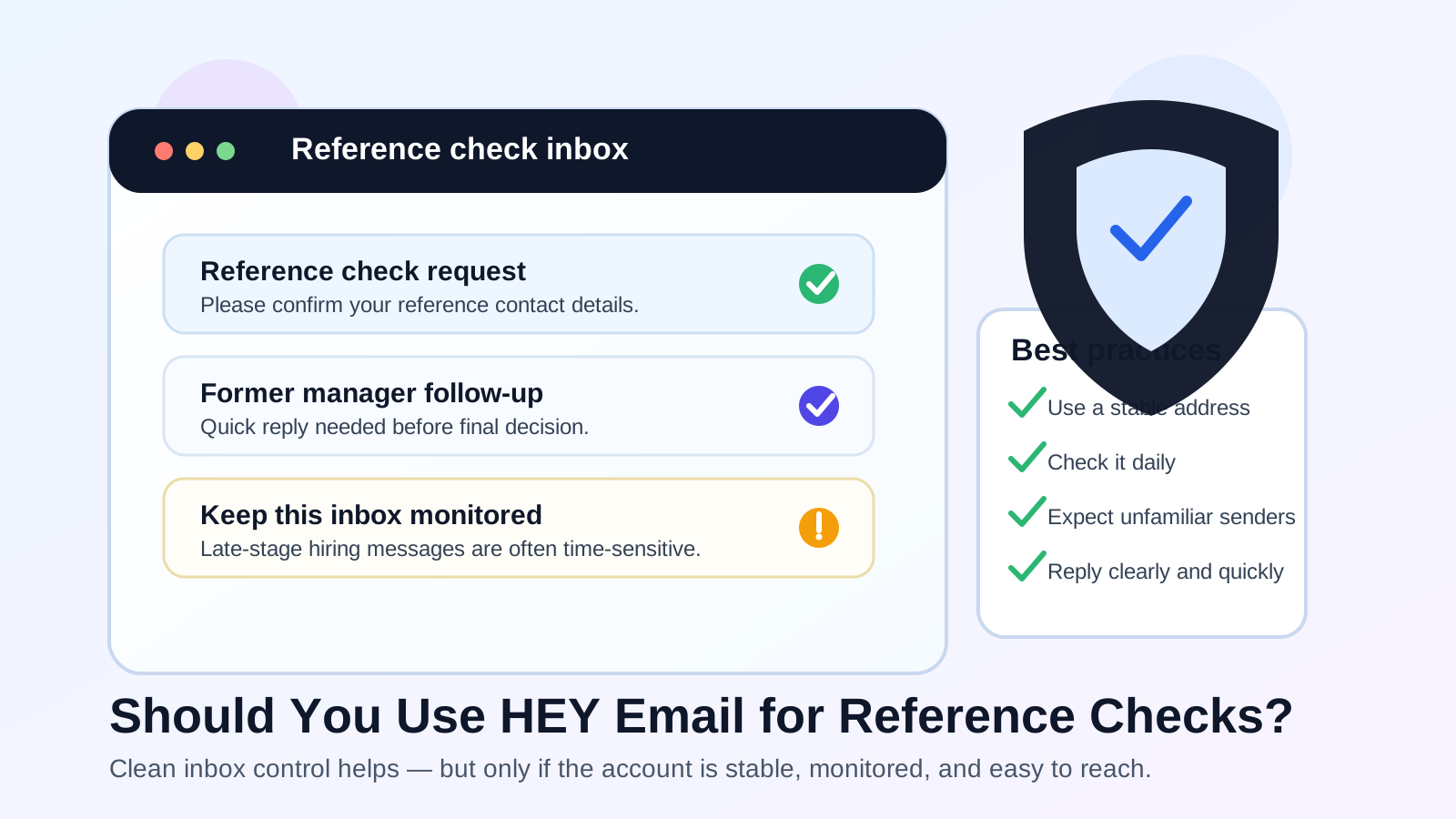
Why reference checks are different from earlier job-search email decisions
Reference checks usually happen late in the hiring process. At that stage, the question is no longer just “how do I reduce spam while I apply everywhere?” It becomes “how do I stay easy to reach while still keeping my job search organized and private?”
That distinction matters. Early in a search, a temporary inbox can help you test job boards, protect your main account, and keep cold outreach away from your personal email. During reference checks, stability matters more. An employer or recruiter may need to confirm a former manager’s contact details, ask whether a reference is still available, or clarify dates before making a decision. Those messages are often short, practical, and time-sensitive.
So the real question is not whether HEY Email is acceptable in theory. The real question is whether your specific HEY setup is dependable enough for a stage where missing one message can slow down an offer.
Why HEY Email can be a good fit for reference checks
HEY Email can work well for this part of the hiring process because it is built around inbox control and cleaner message management. If you prefer a tidier workflow than a decades-old personal inbox full of newsletters, promotions, account alerts, and random receipts, a dedicated HEY address can feel much easier to manage.
It helps you separate hiring communication from everything else
One of the biggest risks during reference checks is not that an employer refuses to use your email provider. It is that you miss something because the message lands in a cluttered account you have been using for years. A separate HEY inbox can reduce that risk by giving reference-check communication its own lane.
That is especially helpful if you are already juggling applications, interviews, current-work obligations, and family messages elsewhere. A clean inbox makes it easier to notice the messages that actually matter.
It can look professional if the address itself is professional
Most employers are not evaluating you based on whether you use Gmail, Outlook, Proton Mail, or HEY Email. They care more about whether the address looks reasonable, whether you respond promptly, and whether your communication is clear. An address like firstname.lastname@hey.com is usually far better than something old, cluttered, or overly casual.
The provider matters less than the presentation. If the inbox is easy to recognize, easy to monitor, and tied to your real name, HEY Email can work just fine.
It gives privacy-conscious job seekers a middle ground
Some job seekers do not want every hiring-related message flowing into the same inbox they use for banking alerts, shopping receipts, travel confirmations, and personal conversations. HEY Email can be a reasonable middle ground: not a disposable mailbox, but also not your oldest all-purpose account.
That balance is often the sweet spot for reference checks. You want an address that feels stable and credible, while still keeping your job-search communication separate from the rest of your life.
Where HEY Email can create problems during reference checks
HEY Email is not automatically the wrong choice, but there are a few situations where it can cause avoidable friction if you are not careful.
If you rely too heavily on filtering or screening habits
Reference-check emails are not always sent by the recruiter you already know. Sometimes they come from a third-party screening company, a coordinator you have never emailed before, or an HR address that looks unfamiliar. If your normal habit is to ignore unfamiliar senders, postpone screening decisions, or only glance at a narrowed view of your inbox, you can create your own bottleneck.
This is where people get into trouble: the email provider is fine, but their workflow is too selective for a time-sensitive part of hiring. During reference checks, it is safer to be slightly over-aware than under-aware.
If you use an address that looks too unusual or too casual
HEY as a provider is not the issue. The bigger issue is whether the address itself looks polished. If your mailbox name is hard to read, full of numbers, or sounds like an old side-project handle, it may look less professional than it should. Reference checks are a stage where small presentation details can shape how organized you appear.
A clean naming pattern is better than a clever one. If possible, use your real name or a straightforward variant of it.
If you only log in occasionally
A dedicated inbox only helps if you actually watch it. If HEY Email is your “privacy account” but you check it once every few days, it is a bad fit for reference checks. At this stage, replies may need to happen the same day. A former manager may be asked to confirm something quickly, and the recruiter may want your answer before they move the file forward.
Best practices if you use HEY Email for reference checks
1. Use a dedicated, stable address
A dedicated HEY Email account can be a smart option, but it should feel stable rather than temporary. Avoid switching addresses mid-process unless you have a real reason. Once a recruiter, hiring coordinator, or screening partner has your contact information, consistency makes everything easier.
2. Check it more often than you think you need to
During an active reference-check window, check the inbox several times a day. That does not mean obsessively refreshing it every ten minutes. It just means recognizing that this is not the stage to disappear for twenty-four hours and assume everything will wait.
3. Watch for messages from unfamiliar domains
Reference-check communication often comes from companies that handle screening, verification, or scheduling on behalf of the employer. Those domains may not match the company you interviewed with. Be careful, but do not ignore every unfamiliar sender automatically. Read the message, compare it with your recent hiring timeline, and verify it if needed.
4. Keep your replies brief and easy to scan
Reference checks usually do not need long, polished essays. They need clear answers, prompt replies, and correct details. If someone asks whether a reference is still the right contact, answer directly. If they need a corrected job title or date range, give the correction cleanly. A tidy inbox is only helpful if your actual communication is tidy too.
5. Make your signature simple and professional
A plain signature with your full name is enough. If it helps reduce confusion, you can also include the phone number you want recruiters to use. You do not need a complicated personal brand block for reference-check emails.
6. Do not mix this stage with a throwaway-email mindset
This is one of the biggest mistakes job seekers make. A disposable inbox can be useful when you are testing a sketchy job board, downloading a guide, or exposing an email address to broad early-stage outreach. Reference checks are different. At this point, you want continuity, not disposability.
That is where a service like Anonibox fits naturally: it can help you protect your main inbox during noisy early search activity, but once a real employer is progressing you toward a decision, a stable address like a clean HEY Email account is usually the better handoff point.
When another email may be better than HEY Email
HEY Email is not always the best option just because it is private or organized. Another inbox may be the stronger choice if:
- the employer already knows you through a different stable email address,
- your HEY account is brand new and not yet part of your normal workflow,
- you rarely monitor the account,
- your HEY address looks less professional than another address you already own, or
- your current hiring process is already centered around another inbox that is working well.
Sometimes the smartest move is not switching anything. If a recruiter has already been using your professional Gmail or Outlook address for several rounds without any friction, changing providers right before reference checks can add confusion instead of privacy.
A simple decision framework
If you are unsure whether to use HEY Email for reference checks, ask yourself four practical questions:
- Is the address stable? Will I still monitor it closely for the next few weeks?
- Is it professional? Does the mailbox name look clean and adult?
- Is it organized? Will important replies stand out instead of getting buried?
- Is it easy to use? Can I respond quickly without needing extra steps or account juggling?
If the answer to all four is yes, HEY Email is probably a fine choice.
Example: when HEY Email works well
Imagine you created a dedicated HEY address for your job search, used it consistently through interviews, and now the company wants to contact two references before final approval. That is a good use case. The address is already familiar to the employer, you are checking it daily, and reference-check messages are easy to spot.
Now imagine the opposite: you signed up for a HEY account months ago, rarely open it, and mostly use it as a place to keep miscellaneous signups away from your main inbox. That is not a good reference-check setup. Even if the provider itself is fine, your usage pattern is not.
Final answer: should you use HEY Email for reference checks?
Yes, you can use HEY Email for reference checks, and it can be a smart choice if the account is clean, professional, and actively monitored.
The key is to treat reference checks as a reliability problem, not just a privacy problem. A stable inbox that helps you reply quickly is better than a clever setup that hides or delays messages. If HEY Email gives you that balance, use it. If another inbox is more familiar, more professional, or easier for you to monitor, use that instead.
Either way, the goal is simple: make it easy for recruiters and screening teams to reach you, make it easy for you to stay organized, and keep your job-search privacy strategy practical rather than performative.