Yes — Hide My Email can work for apartment applications if you want to protect your primary inbox while still receiving screening updates, document requests, and landlord follow-up.
It works best as a stable alias during the application stage, but a dedicated long-term mailbox is usually the safer choice once lease paperwork and ongoing tenant communication begin.
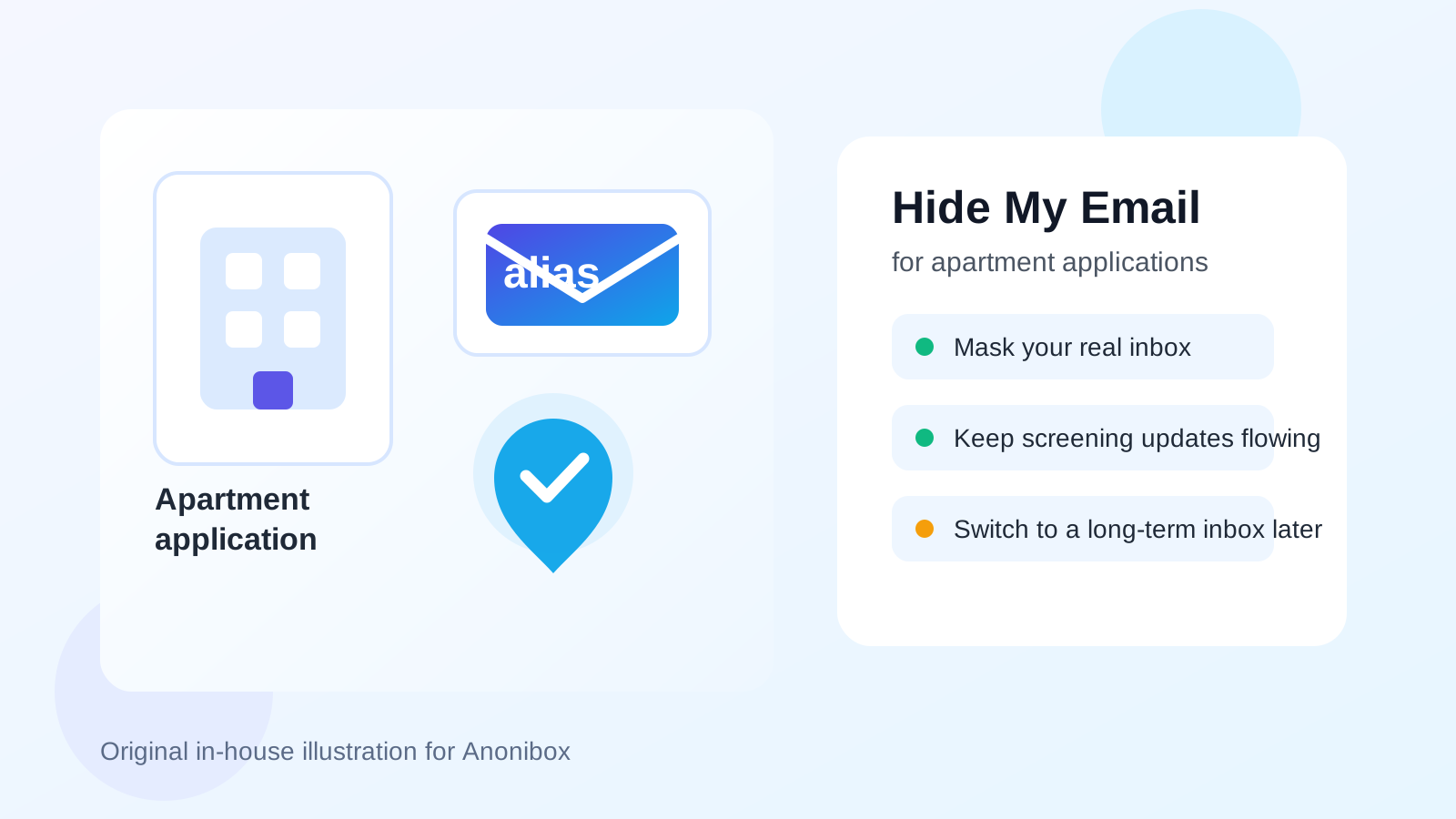
Apartment applications are a different privacy problem than casual rental browsing. Once you move past a simple listing inquiry, the email attached to your application may start receiving portal logins, identity-verification links, proof-of-income requests, co-applicant messages, payment receipts, approval updates, and reminders about missing paperwork. That means you need something more durable than a throwaway inbox, but you may still want to avoid giving every listing platform and screening vendor your oldest everyday email address.
That is exactly why people ask whether Hide My Email is a smart middle ground. In many cases, it is. But the useful answer is not a blanket yes or no. It depends on whether you are still testing listings, actively applying, or already moving into a landlord relationship that could last months or years.
What Hide My Email actually helps with
Hide My Email is most useful when your goal is masking, not disappearance. Instead of handing out your direct address, you use an alias that forwards messages into a mailbox you already control. For apartment applications, that can help in three practical ways.
- It reduces direct exposure of your main inbox. If several property sites, brokers, or screening tools end up emailing you later, they do not all have your core address.
- It gives you better control over rental-search noise. Apartment platforms often keep sending listing alerts and “similar units” long after you stop caring about them.
- It is more stable than a short-lived temp inbox. Serious application messages do not always arrive in the first ten minutes. Some appear days later, after manual review or follow-up from a leasing team.
That combination makes Hide My Email more appropriate for apartment applications than a classic disposable inbox. At the same time, it is not identical to using a full dedicated housing mailbox. The messages still land in a real inbox you already use, so organization and long-term continuity still matter.
Short answer: yes, but only if you treat it as part of a system
If you are applying to multiple apartments and want a privacy buffer, Hide My Email can be a good fit. It is especially helpful when you need to stay reachable for screening updates and scheduling messages without letting every rental portal learn your direct address.
Where people run into trouble is assuming the alias solves everything by itself. It does not. You still need to monitor the destination inbox carefully, keep track of which alias was used where, and decide when a promising application has become important enough to move onto a more permanent communication setup.
Why apartment applications create more risk than apartment inquiries
A casual inquiry is often just a first contact: “Is this place still available?” or “Can I book a tour?” An apartment application is more serious. It usually means fees, identity checks, financial documents, or time-sensitive next steps.
That changes the email decision. At the inquiry stage, the biggest risk is wasted exposure and long-tail spam. At the application stage, the bigger risk is missing something important. A good apartment-application email setup has to balance both:
- enough privacy that your personal inbox is not sprayed across rental platforms, and
- enough stability that you do not miss a screening link, approval notice, or request for additional documents.
Hide My Email can strike that balance better than a throwaway inbox, but it still works best when you understand its limits.
When Hide My Email is a smart choice for apartment applications
1. You are applying through platforms you do not fully trust yet
Many apartment applications start on large listing marketplaces, syndication networks, or white-labeled property portals. Even when the property itself is legitimate, you may not love how broadly those systems reuse your data for later promotions and follow-up. A masked address lets you stay reachable without giving those systems your main email identity up front.
2. You expect several days of back-and-forth
Apartment applications often stretch beyond one message. You may get a receipt today, a document request tomorrow, and a screening result next week. Hide My Email is much better suited to that kind of timeline than a one-off disposable inbox that you might stop checking too early.
3. You already have a clean destination inbox underneath it
Aliases work best when the mailbox underneath them is organized. If your forwarded messages land in an inbox you actually check and can filter, Hide My Email can be a smooth solution. If they disappear into a chaotic personal inbox with thousands of unread messages, the privacy benefit may not be worth the tracking risk.
4. You want a graceful exit once the search is over
Rental platforms can be noisy for months. If one site keeps sending stale listings, promo blasts, or referrals after you already signed somewhere else, an alias gives you more flexibility than your main address ever will.
When Hide My Email is probably the wrong choice
Formal lease-stage communication
Once a landlord or property manager is sending lease packets, move-in instructions, recurring account notices, or maintenance-related information, a long-term address you plan to keep using is usually better. Privacy still matters, but continuity matters more.
Shared or co-applicant workflows
If you are applying with a partner, roommate, guarantor, or family member, a separate dedicated apartment mailbox can be easier than managing one person’s forwarding aliases. Shared access and cleaner record-keeping may matter more than masking.
Application portals with fussy login or verification flows
Some rental systems rely heavily on magic links, repeated password resets, or account verification messages. Those flows are often easiest to manage in a normal mailbox you log into directly. An alias may still work, but it introduces one more moving part.
Situations where you keep changing your setup mid-process
The biggest practical risk is not the alias itself. It is disabling it too early, forgetting which property used which address, or switching communication channels halfway through a live application. Apartment applications often stay active longer than people expect.
Hide My Email vs. a separate apartment inbox vs. temporary email
These tools are not interchangeable. They solve different problems at different stages.
Hide My Email
Best when you want a stable privacy buffer for active apartment applications. It is strong for masking your real address while still receiving legitimate follow-up.
A separate apartment-search inbox
Best when organization is just as important as privacy. A dedicated housing mailbox is often the cleanest solution if you are applying to several places, sharing the search with someone else, or expecting a long paper trail.
Temporary email
Best when trust is lowest and you only need a lightweight first-contact layer. If a listing portal feels sketchy or you are just testing whether a site is worth engaging with, a temporary inbox from Anonibox can make sense. Once the property looks real and the process becomes formal, moving to a stable alias or dedicated mailbox is usually the safer move.
A practical workflow that usually works well
- Use a low-exposure option for weak signals. If the listing source feels uncertain, start with a temporary address for the first touchpoint instead of exposing a long-term inbox immediately.
- Move serious applications to a stable setup. When the property, portal, and contact look legitimate, use Hide My Email or a dedicated apartment inbox for the real application stage.
- Keep one clear label or folder for rental traffic. Apartment emails pile up fast. Filter them so screening links and receipts do not disappear.
- Save key messages outside the inbox if fees or documents are involved. Keep receipts, application IDs, and deadlines somewhere easy to find.
- Switch to a long-term address if the relationship becomes ongoing. Approval, lease signing, and move-in are usually the point where stability matters more than masking.
Best practices if you use Hide My Email for apartment applications
- Check the destination inbox frequently. Housing timelines can move fast, especially in competitive markets.
- Do not rely on memory alone. Note which alias was used for which property or platform.
- Watch for fake screening or payment requests. A masked address does not make a scam legitimate.
- Keep your replies professional and prompt. Privacy tools should reduce friction for you, not for the landlord.
- Do not disable the alias the moment you submit. Important follow-up often arrives after the first receipt email.
Red flags that matter more than the email provider
Even the cleanest alias setup cannot protect you from every bad listing. Be cautious if an application email asks you to wire money quickly, pay unusual fees before a viewing, share highly sensitive documents before basic verification, or move the entire conversation onto a suspicious channel with no credible property record behind it.
Your email choice helps with privacy and organization. It does not replace normal scam screening. Always verify the property, the landlord or manager, and the payment process independently.
So should you use Hide My Email for apartment applications?
Usually yes — if you are in the real application stage and want a stable alias that keeps your primary inbox less exposed. It can be a smart middle ground between using your oldest personal email everywhere and relying on a fully disposable inbox that may be too fragile for screening and follow-up.
Just do not treat it as a forever address automatically. For apartment applications, the best approach is stage-based: use stronger privacy tools early, use stable aliases for active applications, and move to a long-term mailbox once the housing relationship becomes real. That way you stay reachable for the messages that matter without turning one apartment search into years of inbox clutter.