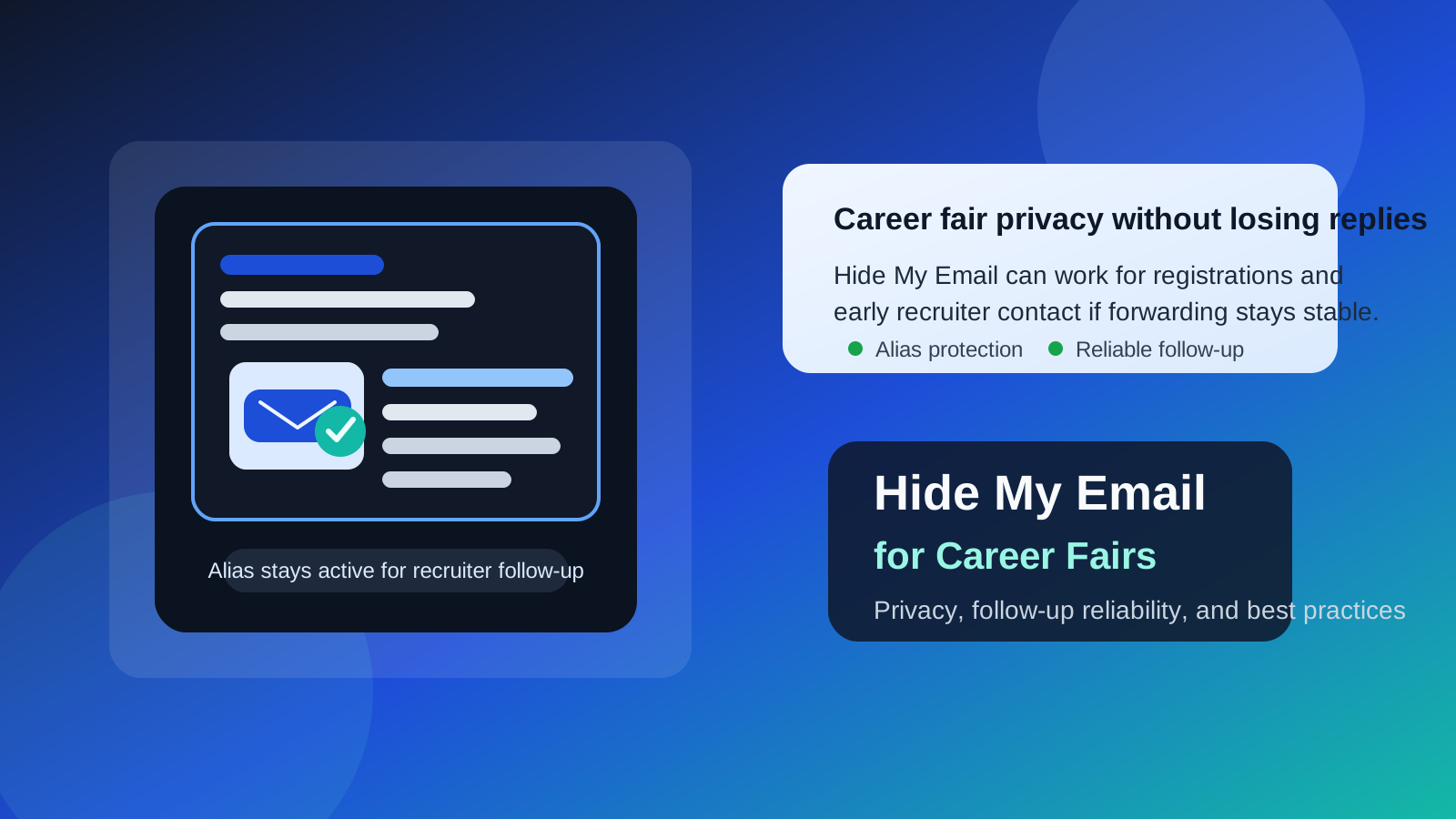
Yes — Hide My Email can work for career fairs if you want more privacy, but only if the alias stays active and forwards reliably while recruiters follow up.
For most job seekers, it works best as a buffer for registrations and early contact filtering, not as a replacement for a stable inbox you can manage for weeks or months.
Why this question comes up at career fairs
Career fairs are one of the fastest ways to spread your contact details further than you intended. You may scan employer QR codes, join talent communities, upload a resume, register for interviews, subscribe to follow-up lists, and hand the same contact information to several recruiters in a single afternoon. That can be useful, but it also means your email address may end up in recruiter notes, event platforms, applicant tracking systems, newsletters, and future outreach campaigns all at once.
That is why privacy-minded job seekers start looking for a middle ground. You want real recruiters to reach you, but you may not want every employer, sponsor, or event vendor to have your main personal inbox forever. Hide My Email feels appealing because it gives you an alias instead of exposing your primary address directly.
What Hide My Email actually does
Hide My Email is best understood as an alias and forwarding layer, not a fully separate mailbox. Messages sent to the alias are forwarded to another inbox you already use. That can be convenient because you do not need to manage a brand-new email account just to protect your address at an event.
But that design also creates the main trade-off: the alias helps reduce direct exposure, yet the communication still depends on a forwarding setup you need to keep active and organized. At a career fair, that can be either a smart privacy layer or an unnecessary point of failure depending on how you use it.
When Hide My Email makes sense for career fairs
1. You expect broad event-related follow-up
If you are attending a large fair with dozens of booths, sponsors, mailing-list offers, and talent network signups, an alias can help keep your real address out of more systems. That is especially useful when you do not yet know which employers are worth a longer relationship.
2. You want to separate low-trust intake from serious opportunities
Not every interaction at a fair becomes a meaningful lead. Some booths are valuable. Others mostly collect interest forms and send generic campaigns later. Hide My Email can be a practical filter for early-stage event contact when you want to stay reachable without giving away your main inbox immediately.
3. You already manage aliases carefully
If you are the kind of person who labels aliases, keeps them active, and monitors the destination inbox consistently, Hide My Email can work well. The problem is rarely the alias itself. The problem is losing track of which alias was used where, then forgetting that a real recruiter may reply later.
When Hide My Email can backfire
A recruiter follows up later than you expected
Career-fair communication is not always immediate. Some recruiters reach out the same evening. Others sort resumes later, loop in hiring teams, and reply days or weeks after the event. If the alias is disabled, misrouted, or simply forgotten, you may miss a legitimate opportunity.
You treat a real relationship like a throwaway signup
There is a difference between joining a sponsor mailing list and beginning a real conversation with a recruiter who may schedule a phone screen. The more personal and ongoing the relationship becomes, the less sense it makes to rely on something you may retire quickly.
Your workflow is already messy
Hide My Email does not magically create organization. If your underlying inbox is overloaded, you do not check it often, or you mix aliases without any labeling system, the alias simply adds another layer to an already messy process.
Hide My Email vs a separate job-search inbox
For many job seekers, this is the real decision. A separate job-search inbox gives you privacy through segmentation. Hide My Email gives you privacy through masking. Those are not the same thing.
A dedicated inbox is usually better when you expect real back-and-forth: recruiter replies, interview invitations, thank-you notes, and later follow-up. It gives you continuity, easy searching, and a cleaner record of your interactions.
Hide My Email is often better when the main goal is reducing exposure during the earliest stage of contact. Think event registration forms, QR-code signups, employer newsletters, and booths you are curious about but not yet invested in.
Hide My Email vs temporary email
Temporary email and alias forwarding solve different problems. Temporary inboxes are stronger when you want real distance from a spam-heavy or low-trust signup. They are weaker when you need stable professional follow-up over time.
That is why a tool like Anonibox makes the most sense on the intake side of the workflow: event registrations, downloads, generic employer forms, or talent community signups you are not ready to tie to your main inbox. For a recruiter conversation that may continue after the fair, Hide My Email or a dedicated job-search inbox is usually the more practical choice.
What recruiters are likely to care about
Most recruiters do not care whether the address is an alias as long as the communication works. They care about whether the message reaches you, whether you reply promptly, and whether the contact method feels stable enough for follow-up. If an alias helps you stay organized and responsive, it is not automatically a problem.
Where trouble starts is when the alias setup makes you slower, harder to reach, or inconsistent across resume, application form, and later correspondence. Recruiters usually notice friction before they notice privacy strategy.
Best practices if you use Hide My Email for career fairs
Keep the alias active long enough for real follow-up
Do not think of career-fair contact as a same-day event. Leave the alias active for as long as employers may realistically follow up.
Know where the messages land
Before the event, make sure the destination inbox is one you check regularly. If forwarded mail lands in an account you rarely open, your privacy plan will quietly sabotage your job search.
Use it selectively
You do not have to use the same contact method for every interaction. An alias can be sensible for broad event forms and sponsor signups, while a stable dedicated inbox may be better once a recruiter asks for your resume, schedules a conversation, or starts a serious thread.
Stay consistent when an employer becomes important
If a company moves from casual fair contact to real candidacy, do not create confusion with multiple shifting addresses unless there is a clear reason. Stability matters more once an opportunity is genuine.
Pair your email choice with a clean resume workflow
Your contact strategy works best when resume, email, and follow-up habits all align. If you are using privacy tools, keep the system simple enough that you can still respond quickly and professionally.
A practical decision framework
- Use Hide My Email when you want to protect your main inbox during high-volume fair registrations and early employer contact.
- Use a separate dedicated inbox when you expect ongoing recruiter conversations, interview scheduling, or long-tail follow-up.
- Use temporary email carefully when the interaction looks spammy, low-trust, or unlikely to become a real relationship.
You do not need one tool for every stage. The best setup often changes as the relationship becomes more serious.
Common mistakes to avoid
- Turning off an alias too soon after the event
- Forgetting which employers received which contact method
- Using a forwarding setup tied to an inbox you barely monitor
- Assuming privacy protection matters more than reliable follow-up
- Overcomplicating the workflow so much that you miss opportunities
Final answer
So, should you use Hide My Email for career fairs? Yes, it can be a smart option when your goal is to protect your main inbox during event registrations and broad recruiter outreach.
But it is not the best default for every situation. Once a recruiter relationship becomes real, a stable inbox you control is usually the safer choice. The winning setup is the one that protects your privacy and keeps you easy to reach when a worthwhile opportunity arrives.