Yes — Hushmail can be a sensible choice for data broker removal services if you want a separate, stable inbox you can keep checking for weeks or months.
It is usually a better fit than a throwaway inbox once you start a real removal workflow, but it still works best as a dedicated mailbox rather than the same address tied to the rest of your online life.
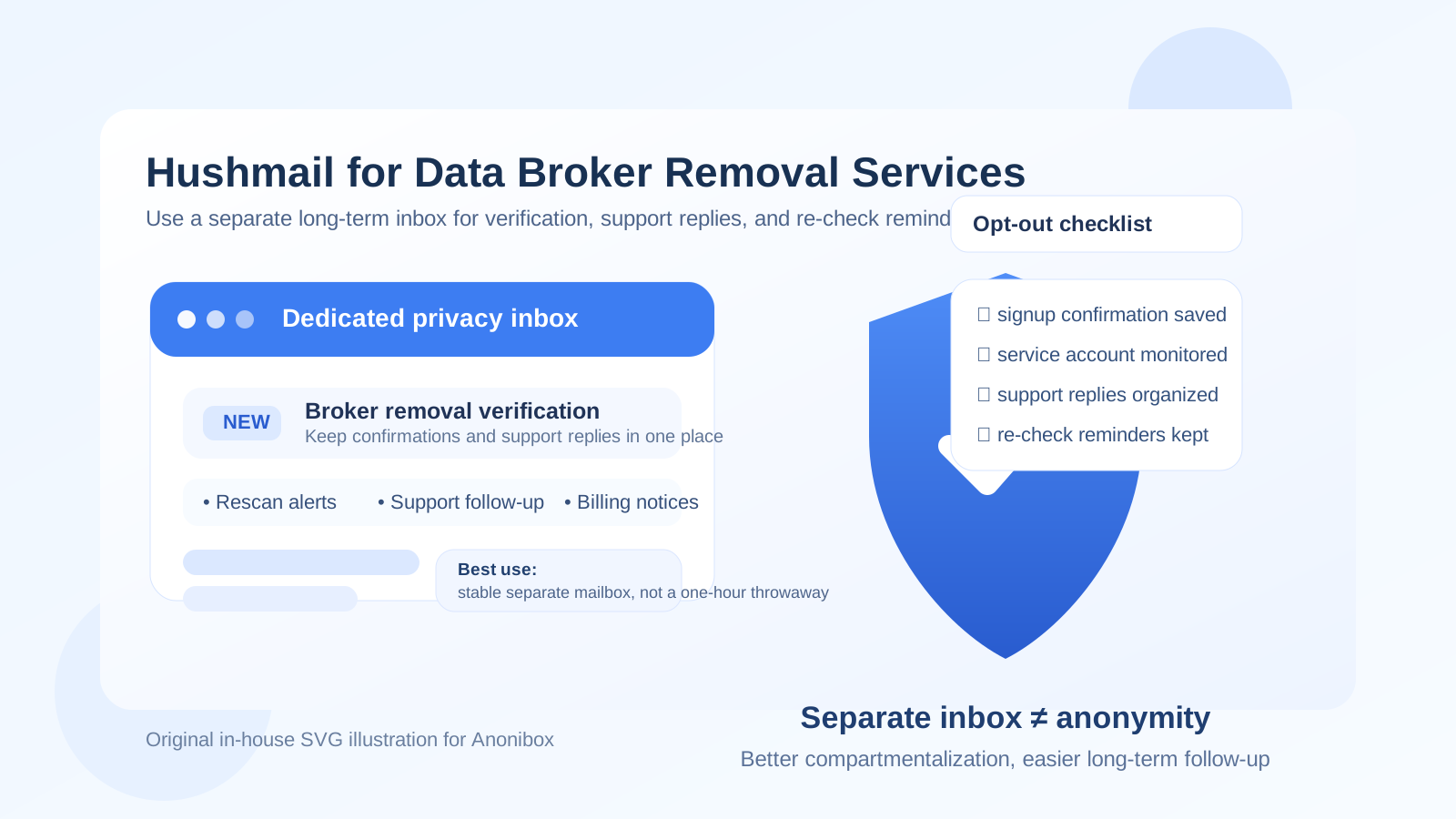
That is the real answer behind searches for Hushmail for data broker removal services. The service itself may be about privacy, but the email you attach to it also shapes how much control you keep after signup. Many data broker removal services send more follow-up than people expect: verification links, progress reports, support replies, rescans, billing notices, renewal reminders, and occasional account-security messages.
If you use your oldest everyday inbox, you may be exposing an identifier that is already tied to years of shopping, logins, newsletters, and account recovery. If you go too far in the other direction and use a mailbox you barely monitor, you risk missing messages that matter later. Hushmail sits in the middle for some people: more compartmentalized than a main personal inbox, but still stable enough for an ongoing privacy-admin workflow.
Short answer: Hushmail is usually a good fit when the removal service relationship is real and ongoing
Data broker removal services are not always a one-day task. Some send periodic scan updates. Some ask you to confirm ownership of an email address. Some surface new broker matches later and email you when action is needed again. That makes this a bad place for an inbox that expires quickly or gets ignored after the first login.
Hushmail works best here as a separate long-term mailbox. If you want the signup, support, and monitoring traffic isolated from your main identity, but you still need a real address you can keep checking, it can be a practical option. The value is not that the brand name itself magically fixes privacy. The value is that a dedicated mailbox gives you cleaner boundaries and better long-term access.
Why the email choice matters for data broker removal services
People sign up for these services because they want less exposure, not more. That makes the account email part of the privacy decision. The address you choose may appear in support conversations, billing notices, progress summaries, or account-recovery flows. If that address is your oldest personal inbox, you are extending the reach of an identifier you may already wish had less surface area.
At the same time, you cannot treat this the same way you would treat a one-click coupon signup or a low-trust download gate. Some removal services require follow-up over time. If the service sends a rescan result in two months, a support question in three weeks, or a renewal notice later in the year, you still need access. That is why the real decision is not just “private or not private.” It is “private enough while still practical enough.”
What Hushmail does well for this use case
1. It gives you a stable separate inbox
The biggest advantage is separation without disposability. A Hushmail address can function as a dedicated privacy-admin mailbox instead of another permanent attachment to your oldest everyday account. That matters when you want the removal-service relationship contained, searchable, and easy to revisit later.
If you ever need to confirm what a service promised, find an old rescan notice, or pull up support replies, a stable separate inbox is much easier to manage than a temporary one that is already gone.
2. It can reduce main-inbox clutter
Even good privacy services create admin noise. You may get account confirmations, completion notices, support replies, FAQ sequences, billing emails, or reminders to review new findings. None of that is dangerous by itself, but it can become messy when mixed into the same inbox as family mail, receipts, job-search traffic, and account-recovery messages.
Keeping this category separate makes it easier to judge what the service is doing and whether it is worth paying attention to. Organization is not glamorous, but it is part of privacy hygiene.
3. It fits better than a disposable inbox for long-running follow-up
A disposable or temporary email can make sense when you are only comparing providers, downloading a sample guide, or testing a low-trust site before you decide whether it deserves your real attention. Once you actually create a working removal-service account, stability matters more.
That is where Hushmail is more useful than a short-lived inbox. You can keep the account alive, monitor messages over time, and still avoid using the same address that touches the rest of your online life.
Where Hushmail is not a magic privacy shield
It is easy to overread the word “private” in any email-provider discussion. Using Hushmail does not make a data broker removal workflow anonymous, and it does not erase every identifier connected to you. The provider can help you compartmentalize communication, but the broader process may still involve your legal name, payment details, account history, or other information you choose to provide.
It also does not guarantee that every vendor or support exchange becomes more secure simply because the mailbox brand changed. The privacy benefit mostly comes from compartmentalization and control: using a separate address, keeping that inbox organized, and not spreading your oldest primary address everywhere by default.
When Hushmail is a good choice
- You want a real inbox you can keep checking over time.
- You do not want data-broker-removal traffic mixed into your oldest personal email account.
- You expect support replies, rescans, or account reminders later.
- You prefer a dedicated privacy-admin mailbox instead of a generic mainstream inbox.
- You are willing to treat the account as part of an ongoing process rather than a one-time signup.
When a temporary email is still the better first move
There are also situations where Hushmail is not the first address you should reach for. If you are only browsing unfamiliar services, unlocking a one-time download, or testing whether a company looks legitimate, a temporary inbox may be better early on.
That is where a tool like Anonibox can make more sense: you can isolate the first interaction, avoid exposing a long-term address too quickly, and decide whether the service deserves a real managed mailbox later. Once you commit to an actual data broker removal account, though, the durable inbox usually wins.
Best practices if you use Hushmail for this purpose
Use a dedicated address, not your oldest all-purpose one
The biggest gain comes from separation. Even if you trust the service, there is little reason to tie it directly to the same inbox you use for everything else.
Keep the address plain and easy to monitor
A simple professional-looking address is usually better than something overly clever. More important than style, though, is consistency: check it often enough that verification or support messages do not sit unread.
Save important messages
Keep copies of onboarding emails, confirmation links, receipts, support replies, and any notice that explains what the service actually did. That record becomes useful if you compare providers later or need to understand why a record reappeared.
Do not confuse provider choice with total privacy
Using Hushmail can improve boundaries, but you still need sensible habits: strong login protection, careful recovery settings, and a clear understanding of what information the removal service itself requires.
Final verdict
Hushmail is usually a solid option for data broker removal services when you want a separate long-term inbox that stays practical beyond the first signup.
It is generally better than a throwaway inbox for real ongoing opt-out work, because those services often involve confirmation emails, support replies, and later reminders that you cannot afford to miss. The smarter comparison is not really “Hushmail or nothing.” It is “Hushmail or my main personal inbox” — and for many privacy-conscious people, the dedicated separate inbox is the better move.
If you are only testing low-trust services or comparing options, start with a temporary address. If you are opening a real account you expect to revisit, Hushmail can be a clean, organized middle ground that keeps your main inbox less exposed without sacrificing long-term access.