Yes — Hushmail can work well for job interviews if you use a professional-looking address, monitor it closely, and keep it stable from scheduling through follow-up. It is usually a better interview-stage choice than a disposable inbox because reliability matters more than short-term anonymity once a real employer is talking to you.
The bigger question is not whether Hushmail is “allowed,” but whether your specific setup helps you look organized and stay reachable. A privacy-focused email account can be a smart choice during a job search, but interview communication still depends on fast replies, clean presentation, and a mailbox you can trust for calendar invites, reschedules, take-home assignments, and offer-stage updates.
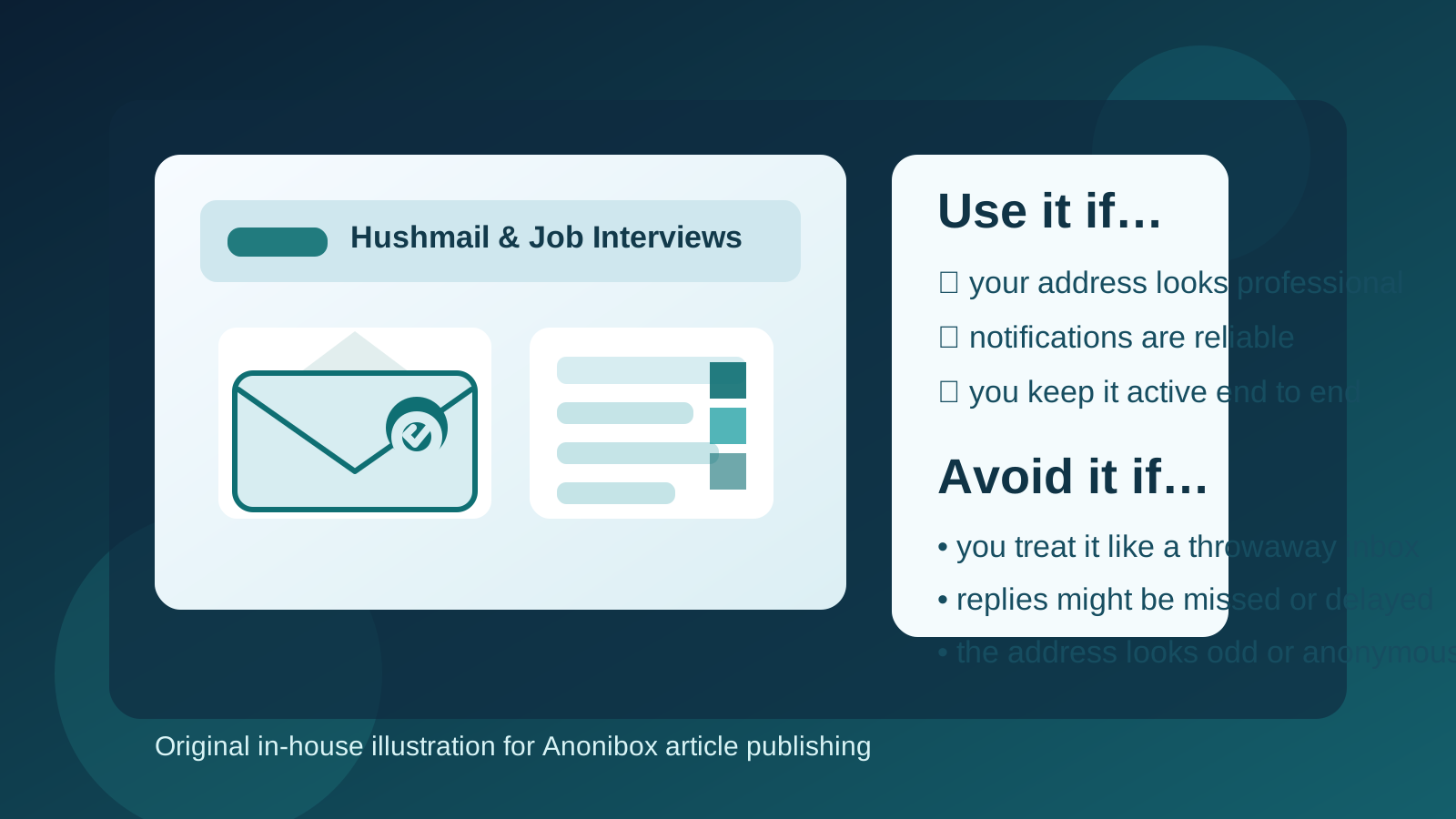
Why people even ask about Hushmail for interviews
By the time you reach interviews, many job seekers have already realized how exposed a job search can feel. Applications get copied across job boards, recruiters send cold messages, and spam starts to build. That is why some people move away from their everyday personal inbox and into a separate job-search account.
Hushmail comes up in that conversation because it feels more private and more intentional than a random free inbox. It can signal that you care about controlling your digital footprint. But interviews are a different stage from initial signups. At that point, your main risk is not just privacy — it is missing something important or making communication harder than it needs to be.
Short answer: Hushmail is fine if you treat it like a serious interview inbox
If your Hushmail address uses a sensible name, stays active every day, and reliably receives interview messages, there is nothing inherently wrong with using it for job interviews. Most recruiters care far more about whether you respond promptly, show up prepared, and communicate clearly than about whether your email provider is Gmail, Outlook, Fastmail, or Hushmail.
Where people get into trouble is using a privacy-focused inbox in a way that looks temporary, hard to reach, or overly anonymous. Interview communication is time-sensitive. If you are switching between multiple aliases, forgetting to check the account, or using an address that reads like a burner, the provider is not the real problem — the workflow is.
When Hushmail is a good choice for job interviews
Hushmail can be a strong option when you want better separation between your job search and your personal life. It is especially useful if you already decided that your everyday inbox is too cluttered, too exposed, or too tied to other parts of your identity.
- You want a dedicated interview inbox: keeping job-search messages separate makes it easier to spot scheduling emails quickly.
- You care about privacy: a privacy-oriented provider can feel more comfortable than using the same inbox tied to years of personal accounts.
- You already use the account consistently: if Hushmail is already part of your normal workflow, there is little downside.
- You need a cleaner professional identity: a fresh, well-named address can look more polished than an old personal inbox full of legacy clutter.
In other words, Hushmail works best when it is not an experiment. If it is a stable tool you actually use, it can absolutely handle interview communication.
What recruiters usually care about more than the provider name
Most interviewers are not ranking candidates by email brand. They are looking for signs that communication will be easy and dependable. That usually means:
- your address looks professional and readable
- you answer within a reasonable time
- you do not miss meeting links or reschedule notices
- your replies are clear and polite
- you can keep the same inbox active through later stages
A Hushmail address like firstname.lastname or a clean variant of your name is generally far more important than the fact that the domain is Hushmail. On the other hand, even a mainstream provider can look bad if the address is chaotic, jokey, or obviously disposable.
Where Hushmail can create friction
Hushmail is not automatically the best choice in every hiring situation. There are a few ways it can create extra friction if you are not careful.
1. You treat it like a temporary account
Interview threads can stretch across days or weeks. A recruiter may send a scheduling email, then a calendar invite, then a prep note, then a follow-up, then a take-home assignment, and later a reference or offer update. If you picked Hushmail only because you wanted distance, but you are not committed to monitoring it long enough, that is a problem.
2. Your address looks too anonymous
Privacy is good. Looking fake is not. Avoid usernames that sound random, cryptic, edgy, or disposable. An interview inbox should still look like it belongs to a real professional human.
3. You rely on it without testing your workflow
If you are new to the account, make sure notifications, mobile access, spam filtering, and everyday reply habits are working before interview season gets busy. The worst time to discover a workflow issue is after a recruiter says, “Please confirm by 3 PM.”
4. You over-optimize privacy at the expense of convenience
Sometimes job seekers get so focused on minimizing exposure that they make themselves harder to contact. That can backfire during interviews, where speed matters. Privacy should support your search, not slow it down.
Why a temporary email is usually worse than Hushmail at this stage
This is where Hushmail has a real advantage over disposable inboxes. Temporary email can be useful very early in a job search — for example, when you are testing a job board, downloading a free guide, or checking whether a sketchy signup form is worth touching at all. But once a real interview is on the table, you usually need a stable mailbox.
Interview communication often includes:
- calendar invitations and reschedules
- video meeting links
- panel interview details
- portfolio or case-study requests
- follow-up questions from recruiters
- reference-check and offer-stage coordination
That is why the best privacy move is often to graduate from a temporary inbox to a stable dedicated inbox. If you used Anonibox or another disposable address for very early research, Hushmail can be a much safer place to continue once an employer relationship becomes real.
Best practices if you decide to use Hushmail for interviews
Use a clean, name-based address
If possible, use your real name or a straightforward variation. Keep it boring in the best way. The goal is to make replying and filing messages easy for other people.
Check the inbox like it is your main inbox
During active interviews, once a day is not enough. Watch for morning scheduling messages, midday reschedules, and end-of-day follow-ups. Fast replies can reduce friction and help you look organized.
Test your notifications before you need them
Send yourself a few messages, open them on mobile and desktop, and make sure alerts are reaching you. Do not assume the setup is fine just because the account exists.
Keep the same address throughout the process
Do not switch addresses halfway through unless there is a real reason. Consistency matters. A candidate who moves from one inbox to another without explanation can create avoidable confusion.
Pair it with a stable phone strategy
Email is only one part of interview communication. If you are privacy-conscious, think about your phone number too. A stable, dedicated job-search number can make just as much sense as a dedicated inbox, especially for short-notice calls or SMS confirmations.
When a mainstream inbox may be the better choice
Even if Hushmail can work, there are cases where a more mainstream provider may be the simpler option.
- You already have a polished Gmail or Outlook address that you trust and monitor constantly.
- You are applying in very fast-moving hiring environments where familiarity and convenience matter more than separation.
- You are not confident you will check the Hushmail inbox enough during multi-stage interviews.
- You only created the account yesterday and have not tested your notification habits yet.
Privacy tools are only better if they fit the way you actually work. If a mainstream inbox is more dependable for you personally, that may be the smarter interview choice.
A simple decision checklist
Before using Hushmail for interviews, ask yourself:
- Does the address look professional?
- Will I monitor it closely every day?
- Can I keep using it through interviews, references, and possible offers?
- Have I tested notifications, spam handling, and reply speed?
- Am I choosing it for practical privacy reasons, not just because it feels more anonymous?
If the answer is yes across the board, Hushmail is a perfectly reasonable interview inbox. If several answers are no, fix the workflow first or use a different account.
Final answer
So, should you use Hushmail for job interviews? Yes — if it is a stable, professional inbox that you can manage reliably from first scheduling email through final follow-up. The privacy angle can be a real benefit, especially if you want separation from your everyday personal accounts, but that benefit only matters if you stay highly reachable.
For interview-stage communication, reliability beats novelty and stability beats disposable convenience. If Hushmail helps you stay organized, protect your privacy, and respond quickly, it is a solid choice. If it makes you harder to reach or tempts you to treat the process like a temporary exchange, use something more established in your own routine instead.