Yes, you can use Mailfence for informational interviews, and it is often a better fit than a disposable inbox when you want privacy without sacrificing reliable follow-up.
The key is to treat Mailfence as a stable separate inbox for networking, not as a throwaway address you plan to abandon after the first reply.
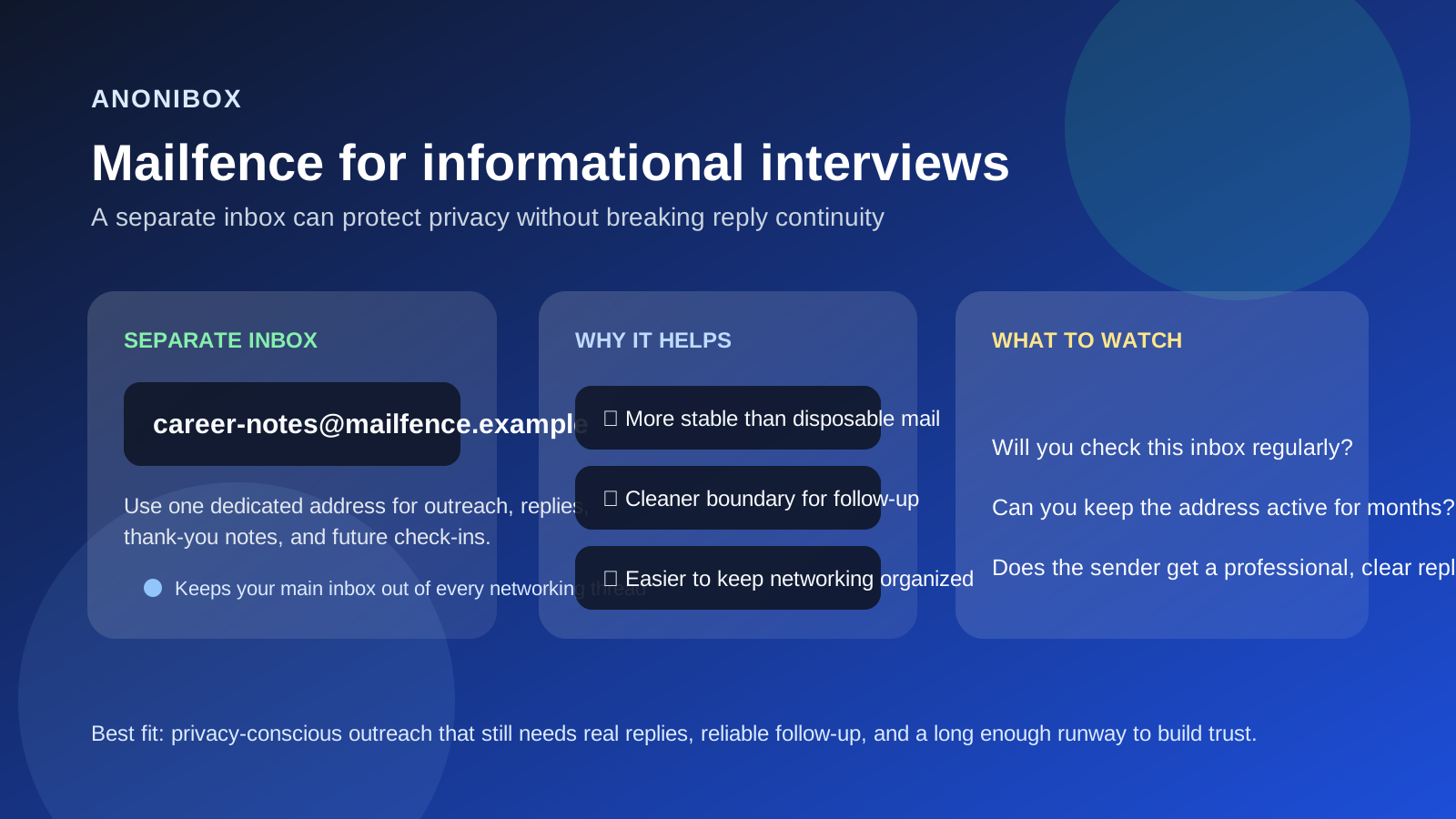
Why people think about Mailfence for informational interviews
Informational interviews are not random signups. They are relationship-based conversations with alumni, former coworkers, warm introductions, industry peers, or professionals you genuinely want to learn from. That makes the contact details you use more important than they first appear. You want enough privacy to avoid handing your main address to every new connection, but you also need enough stability to receive replies, track scheduling, and follow up well.
That is where a separate inbox comes in. If you already use Mailfence or you are thinking about creating a dedicated account there, the appeal is simple: it behaves like a real email address you can keep, monitor, and organize, rather than a short-lived inbox built for one-time verification.
For an Anonibox-style privacy workflow, that difference matters. Temporary email is great for low-trust forms, gated downloads, and early-stage signups you do not expect to revisit. Informational interviews are different because a useful conversation today can turn into a referral, a hiring lead, or a helpful reconnect months later.
Short answer: usually yes, if you want a separate long-term inbox
Mailfence can work well for informational interviews if your main goal is to create distance between networking activity and your everyday personal inbox. It gives you a dedicated identity for outreach, keeps job-search-adjacent conversations easier to organize, and can reduce how widely your main address gets shared.
What makes it useful is not that it is “secret” or magical. It is useful because it is a real inbox you control. That is the big difference between a separate provider-based account and a disposable address. If the other person replies next week, sends a calendar option next month, or reconnects later in the year, you still want the message to reach you cleanly.
Why a separate inbox can be smarter than using your main email
1. It protects your primary inbox from spread
Even thoughtful networking contacts can lead to your address being saved, forwarded, copied into CRM notes, or added to newsletters and event follow-ups later. That is not always malicious, but it does create more long-term exposure than many people intend when they start networking.
2. It creates a clearer boundary
A dedicated inbox helps you separate informational interview outreach from shopping receipts, family messages, banking alerts, and the rest of daily life. That makes it easier to reply quickly and keep a more professional rhythm.
3. It is more stable than disposable email
This is the biggest advantage. Informational interviews depend on continuity. A throwaway inbox can help you make first contact, but it is a weak tool for thank-you notes, later updates, and trust-building over time. A real separate inbox is far better for that job.
4. It can make your search easier to manage
If you are talking to several people across different companies or industries, a separate inbox keeps those conversations in one place. That helps with follow-up, note-taking, and spotting the opportunities that are actually moving forward.
How Mailfence compares with temporary email for this use case
Temporary email and informational interviews solve different problems. A temporary address is ideal when you mostly want a verification link or when you do not expect any meaningful relationship afterward. Informational interviews are the opposite. The initial email matters, but the follow-up often matters more.
You might need to:
- reply to a scheduling suggestion,
- send a thank-you note after the conversation,
- check back in a few weeks later,
- receive a referral or introduction, or
- keep the thread available for future opportunities.
That is why a stable inbox makes more sense than a disposable one. If you like using Anonibox to limit spam during low-trust signups, Mailfence can sit on the other end of that system as the more durable inbox you use when the relationship is actually worth maintaining.
Where using Mailfence can go wrong
1. You only check it occasionally
A separate inbox only helps if you monitor it. If you treat it like a parking lot for networking and only glance at it once a week, you may miss the very replies you wanted to protect.
2. The address looks unfinished or overly casual
The provider matters less than the overall presentation. If your address looks random, joke-based, or hard to read, it can make a thoughtful message feel less polished. A clean address beats a clever one.
3. You plan to move away from it too quickly
Informational interviews are often light-touch conversations that stay dormant until the right moment. If you stop using the address soon after the first exchange, you lose that continuity and make later follow-up harder on both sides.
4. You confuse privacy with distance
Privacy is good. Coldness is not. A separate inbox should protect your identity footprint, not make your communication feel disposable. The person on the other side is doing you a favor by sharing time and context. Your setup should still support respectful, reliable communication.
When Mailfence is a good choice
- You want a dedicated inbox for career networking that is separate from your main personal address.
- You expect real replies and possible future follow-up, not just a one-time message.
- You are privacy-conscious and do not want your everyday inbox circulating widely.
- You are doing enough outreach that organization matters.
- You are willing to keep the address active and check it consistently.
In those situations, Mailfence can be a practical middle ground: more private than using your primary address everywhere, but far more reliable than a disposable inbox.
When you should probably use something else
A separate Mailfence inbox may not be the best tool if you already have a polished dedicated networking address elsewhere, if you know the conversation will quickly turn into a formal interview loop using another account, or if you are the kind of person who will not reliably maintain another inbox.
It is also not the best solution if your real need is just a single low-trust contact form. In that case, temporary email may still be the cleaner option because the goal is different. The question is not whether Mailfence is “better” in every situation. The question is whether you need durability.
Best practices if you use Mailfence for informational interviews
Use one clear networking address
Keep the address simple, readable, and professional. You want the other person to focus on your message, not wonder why your contact details look improvised.
Check the inbox often
Informational interview replies are usually low volume but high value. The right contact might only send one short reply with a narrow scheduling window. Treat the inbox like a real communication channel, not a backup archive.
Keep the thread alive after the meeting
The thank-you note is part of the relationship, not a formality. If the conversation was useful, follow up promptly and keep the same email path available for later updates.
Pair it with lightweight organization
A separate inbox works even better if you pair it with a simple note or reminder system. Record who you contacted, when you last heard back, and whether you owe a thank-you or check-in message.
Know when to move to a more permanent address
If a relationship becomes especially important, or if the contact starts introducing you to others, it may make sense to keep using the same inbox or eventually shift to your long-term professional address. The point is to do that intentionally, not by accident.
A practical workflow that works well
- Create or reserve one Mailfence address specifically for networking and informational interviews.
- Use it for outreach emails, scheduling replies, and thank-you notes.
- Keep your message thoughtful and specific so the address itself is not doing all the credibility work.
- Check the inbox regularly while you are actively networking.
- Leave the address active long enough for later follow-up and future opportunities.
This approach keeps your main inbox less exposed while still giving you a steady communication channel. It is a much better fit for human conversations than a short-lived disposable address.
Common mistakes to avoid
- Using a disposable address instead of a durable inbox: informational interviews can pay off later.
- Creating too many addresses: over-segmentation makes it easier to miss replies.
- Ignoring the inbox after the first outreach wave: follow-up is where many opportunities start to matter.
- Making the address look unprofessional: a clean contact identity helps the rest of your message land better.
- Assuming privacy tools replace judgment: you still need to evaluate whether a contact is legitimate and worth your time.
So, should you use Mailfence for informational interviews?
Usually yes, if you want a separate inbox that gives you more privacy than your main account without creating the fragility of temporary email. Informational interviews are built on trust and continuity, so a stable address is usually more helpful than a disposable one.
If you keep the inbox active, monitor it consistently, and use it as part of a thoughtful networking workflow, Mailfence can be a strong choice. If you only need one-time verification or you know you will not maintain another account, then a different setup may be better. The best answer is the one that protects your privacy and still makes you easy to reach when the right opportunity shows up.