Yes — you can use Mailfence for reference checks if it is a stable inbox you monitor closely and plan to keep active through the full hiring process.
For reference checks, reliability matters more than novelty: the best email is the one that stays reachable, organized, and easy to check when recruiters or coordinators need quick answers.
That distinction matters because reference checks happen late in the process, not at the casual browsing stage. By this point, an employer may already be serious about you, and the messages tied to this step can move quickly. You may get requests to confirm a former manager’s contact details, timing updates about when outreach will happen, reminders that a reference has not responded yet, or follow-up questions that can slow an offer if they sit unanswered.
Mailfence can fit that stage well for some candidates. It gives you a more controlled inbox than dropping everything into the oldest personal account you have used for years, and it can help you keep hiring communication separate from newsletters, receipts, and random subscriptions. But that only helps if you treat it like a real working inbox, not like a disposable shield you barely open.
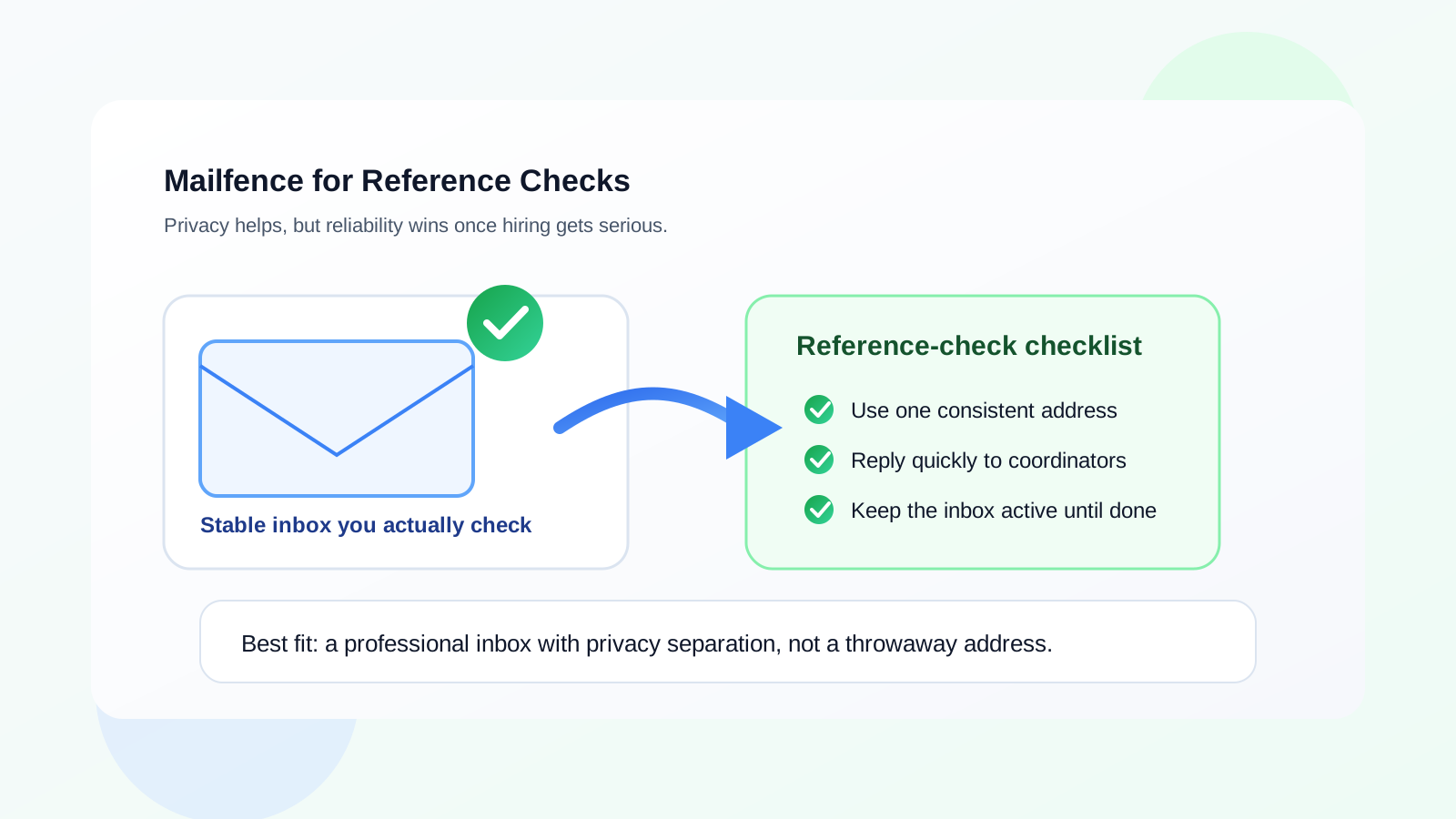
Why reference-check email is different from early job-search email
A lot of privacy advice makes sense early in a job search but becomes less useful once reference checks begin. When you are signing up for job boards, testing unknown application portals, or filtering out spam-heavy listings, more distance can be useful. That is where a temporary inbox can help. A tool like Anonibox is practical when you want to receive a one-time verification email without tying your long-term address to every low-trust form you touch.
Reference checks are different. At this stage, the employer or recruiter usually expects continuity. They may need to reach you more than once, and they may need you to respond without delay. That means the right email address is not just private. It also needs to be stable, searchable, easy to monitor, and available for as long as the hiring process stays active.
In other words, the question is not simply whether Mailfence is private enough. The real question is whether it supports a clean late-stage workflow better than your alternatives.
Why Mailfence can be a good fit for reference checks
It gives you separation without looking disposable
One of the most practical benefits of Mailfence is inbox separation. If you do not want every recruiter, staffing agency, and hiring coordinator tied directly to the same personal address you have used for years, a separate inbox can be sensible. That does not mean you are trying to hide. It just means you want more control over where professional messages land.
Mailfence can help with that because it behaves like a real long-term mailbox. For reference checks, that matters. You want an address that feels dependable enough for real hiring communication, not one that looks temporary or may disappear before the process is finished.
It can keep late-stage communication easier to manage
Reference checks are often deceptively simple until several threads start moving at once. A recruiter may want you to confirm reference details. A coordinator may ask whether one contact is still the best person to reach. A hiring team may send separate updates about timing. A dedicated inbox makes it easier to keep those messages visible instead of burying them under normal personal email noise.
That is not just a privacy win. It is an execution win. A clean inbox makes it easier to spot the message that actually matters today.
It can reduce unnecessary exposure of your oldest inbox
Even when the employer is legitimate, hiring workflows can include outside recruiters, third-party scheduling tools, and follow-up from people you may never speak with again after the role is filled. Using Mailfence can reduce how widely your oldest everyday inbox gets distributed. That does not create a legal, privacy, or security guarantee, but it does give you more control than using one overexposed address for everything.
What employers and references usually care about
Most employers are not evaluating your candidacy based on whether your email address is with Gmail, Outlook, iCloud, Proton Mail, StartMail, or Mailfence. Former managers and colleagues acting as references care even less. In practice, they care about a much simpler set of questions:
- Does the address work?
- Will you actually see messages sent there?
- Can you reply quickly if something needs clarification?
- Will the address still be active next week if the process stretches out?
If Mailfence helps you answer yes to all of those, it is doing its job. If it becomes a rarely checked side inbox that adds friction, the provider itself is not the problem — the workflow is.
When Mailfence makes the most sense for reference checks
1. You already use it as a serious inbox
If Mailfence is already part of your actual routine, it can be a good fit. The biggest risk with a separate mailbox is not the domain name. It is forgetting to check it. If you already log in regularly, keep it organized, and respond promptly from it, that risk is much lower.
2. You want a dedicated hiring channel
Some candidates prefer to keep recruiting, interview, and reference-check messages out of their personal inbox altogether. That is reasonable. A dedicated mailbox can make it easier to review conversations, find older threads, and shut down job-search traffic later if it starts to linger.
3. You are balancing privacy with professionalism
Mailfence can be a useful middle ground between using your oldest personal address everywhere and relying on something too disposable for a serious stage of hiring. If your goal is simply to stay organized and limit unnecessary exposure, it can work well.
When Mailfence can create friction
You switch addresses in the middle of the process
Consistency matters once reference checks begin. If your application used one address, your interview threads used another, and your reference-check details suddenly introduce Mailfence for the first time, confusion can creep in. Recruiters and coordinators do not always update records perfectly, and the cost of a missed message rises as the process gets closer to a decision.
If you want to use Mailfence for reference checks, the cleanest option is usually to make it part of your process early enough that everyone is already using the same address.
You do not check it often enough
This is the most common failure mode. A privacy-focused inbox does not help if it is not part of your daily habits. Reference-check messages often look ordinary, which makes them easy to underestimate. A simple request to confirm a phone number or former title may not feel urgent until you realize it is now holding up the hiring timeline.
You overcomplicate the setup
A clean separate inbox is useful. A maze of aliases, forwarding rules, backup folders, and half-monitored addresses is not. The more moving parts you add, the easier it becomes to lose track of what the employer actually has on file and where critical messages are landing.
You are using it for the wrong goal
If the goal is to look clever or unusually private, that is not very helpful. Mailfence is at its best when it gives you practical control: less clutter, more separation, and easier message handling. It is not a magic advantage by itself.
Mailfence vs a temporary inbox for reference checks
This is where it helps to separate early-stage privacy from late-stage reliability. Temporary email is great when you want to filter low-trust exposure, catch a one-time verification link, or test whether a source deserves more access to you. That is why temporary inboxes make sense for early browsing, gated downloads, or spam-heavy job-board interactions.
Reference checks usually need more continuity than that. The process may involve several messages over multiple days. You may need to revisit an older thread, answer a follow-up question, or confirm that a reference is still available. A temporary inbox is often too brittle for that stage.
Mailfence is a better fit than a disposable inbox because it supports an actual ongoing conversation. It gives you privacy and separation without forcing you into a one-time workflow that can collapse as soon as the employer needs a second or third reply.
Mailfence vs your main personal inbox
Your main personal inbox may still be the better option if it is the one you check most reliably and you have already used it throughout the hiring process. The most private-looking choice is not always the best operational choice. If the role is moving fast and your everyday inbox is where you never miss anything, that reliability may matter more than the additional separation Mailfence offers.
On the other hand, if your personal inbox is cluttered, overexposed, and tied to a lot of unrelated noise, Mailfence can be cleaner. The right decision depends less on the brand and more on your habits.
Best practices if you use Mailfence for reference checks
Check it at least daily during active hiring
During a live hiring process, a separate inbox should be treated like an operational mailbox, not a passive archive. If the employer says the timeline is moving quickly, check it more than once a day.
Keep one address consistent across the important steps
Try not to make the recruiter, coordinator, and references guess which inbox matters now. If you do need to change addresses, tell the employer directly instead of assuming the update will flow through every system automatically.
Save important details outside the inbox too
Keep a simple note with the employer name, recruiter name, the references you provided, and any deadlines or follow-up details. That makes it easier to respond quickly without digging through threads under pressure.
Use a professional display name
The provider matters less than presentation. Make sure the name attached to the account is clear, recognizable, and appropriate for professional communication.
Reply promptly and clearly
If someone asks whether a former manager is still the best contact or whether a title changed during a prior role, respond plainly and fast. At the reference-check stage, responsiveness often matters more than the email platform behind your reply.
Be ready to simplify if needed
If the process becomes more complex than expected, it is okay to move to the simplest stable inbox you control. Privacy tools are useful, but they should never become more important than staying reachable for a legitimate opportunity.
A quick decision checklist
- Will I check this inbox consistently while the hiring process is active?
- Can I keep using the same address until the role is fully resolved?
- Does Mailfence help me stay organized rather than add complexity?
- Would my main inbox actually be more reliable in practice?
- Am I choosing Mailfence for control and separation, not because I want a semi-disposable feel?
If those answers are mostly yes, Mailfence is usually a reasonable choice for reference checks.
Final answer
So, should you use Mailfence for reference checks? Usually yes — if it is a stable inbox you monitor closely, use consistently, and keep active through the full hiring process.
It can be a smart way to separate hiring communication from an overused personal inbox without looking disposable or creating unnecessary exposure. Just remember that once reference checks start, privacy is only half the equation. Reliability, continuity, and fast follow-up matter just as much. If Mailfence helps you stay organized and reachable, it is a solid fit. If it makes you slower or less consistent, use the simpler inbox instead.