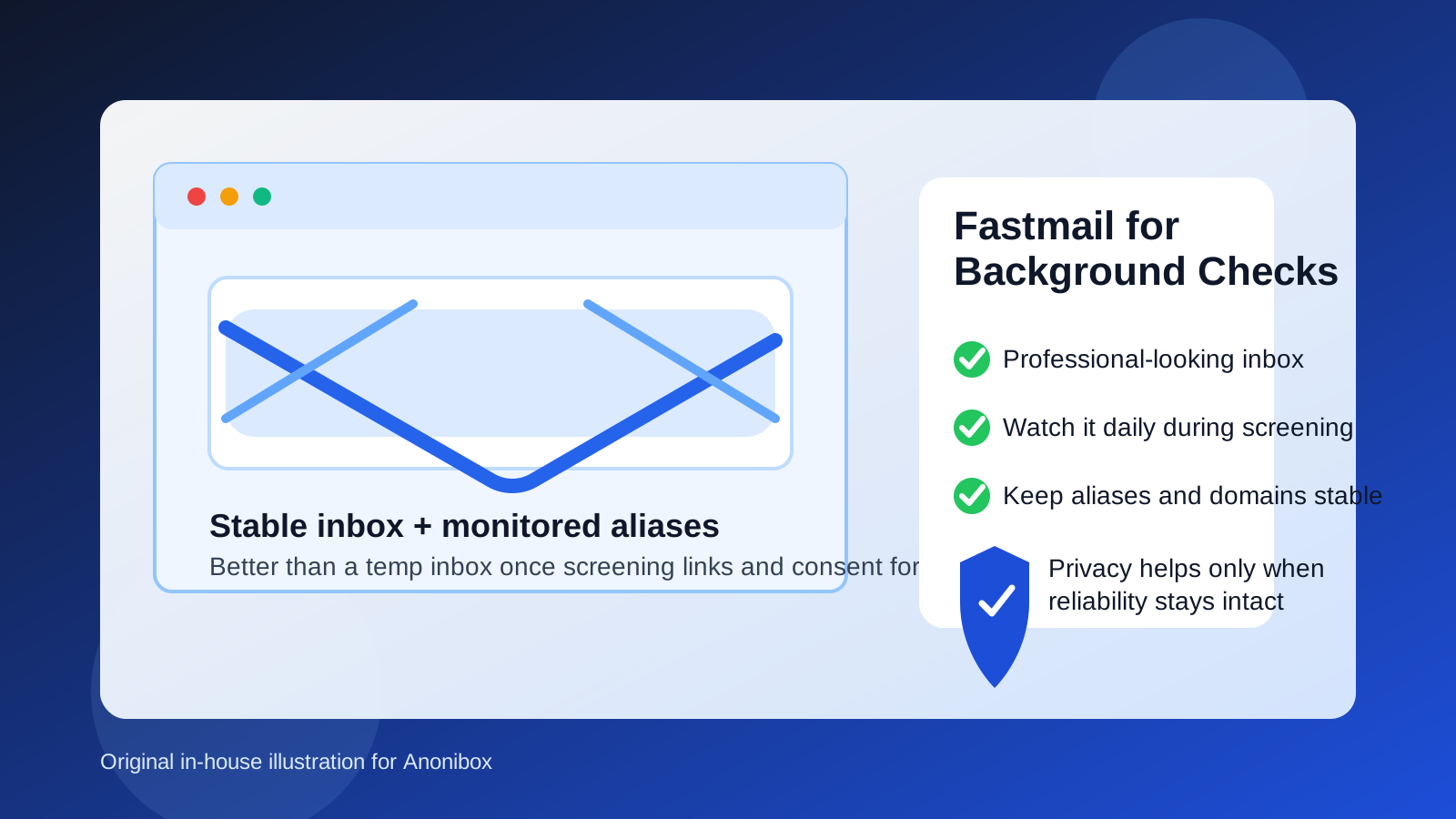
Fastmail can work well for background checks if you use a stable address you monitor closely and keep active through the full screening process.
It is usually a better fit than a temporary inbox once consent forms, portal links, and deadline reminders start arriving, but aliases and custom domains only help if they stay reliable.
If you are asking should you use Fastmail for background checks? the practical answer is usually yes. Most employers and screening vendors do not care that the address is hosted by Fastmail. They care that messages arrive, you reply quickly, and nothing about the contact setup slows down the check.
That matters because background checks are not the same as early job-board browsing. At this stage, email may carry disclosure forms, identity-verification instructions, portal invitations, correction requests, and deadline reminders. Privacy still matters, but reliability matters just as much. A privacy-friendly inbox helps only if it behaves like a real working inbox.
Short answer: yes, if the Fastmail address is stable and monitored
Fastmail is usually fine for background checks when:
- you check the inbox consistently during the screening window,
- the address looks normal and professional,
- you can keep access to it for as long as follow-up messages may arrive, and
- you are not treating it like a disposable layer you might disable next week.
If that describes your setup, Fastmail can be a smart privacy-conscious choice. If not, a more established inbox that you already watch constantly may be safer, even if it is less elegant.
Why background-check email is different from early-stage job-search email
Earlier in a job search, people often want distance from job-board spam, low-trust forms, and broad recruiter lists. That is where a temporary inbox or a separate first-contact address can make sense. A tool like Anonibox is useful when you want to collect a verification email, try a site, or keep your primary inbox away from noisy early-stage exposure.
Background checks are different. By the time an employer starts one, the communication usually has a specific purpose and a real deadline. The email on file may be used for:
- consent and disclosure forms,
- background-screening portal links,
- requests to confirm employment dates or address history,
- deadline reminders when a task is still incomplete,
- identity-verification follow-ups, and
- status updates tied to the hiring timeline.
That is why Fastmail can work here while a temporary inbox usually should not. The real question is not whether Fastmail is private enough. It is whether the exact address you use stays dependable long enough for a formal hiring workflow.
Why Fastmail can be a good choice for background checks
1. It gives you separation without looking disposable
One advantage of Fastmail is that it can help you separate hiring-related communication from your oldest personal inbox without looking like a throwaway address. That is useful if you do not want every employer, recruiter, and screening vendor attached directly to the same address you use for shopping, bills, family conversations, and years of accumulated subscriptions.
For background checks, that balance matters. You want the privacy benefit of compartmentalization without creating the impression that the address may disappear after a single verification email.
2. It can keep a document-heavy process organized
Background-check messages are easy to miss in a crowded inbox. Using Fastmail as a dedicated hiring-process address can make the workflow cleaner. Portal invites, reminder emails, attachments, and clarification requests stay separate from unrelated daily traffic, which reduces the chance that you overlook something time-sensitive.
That organization benefit is not just nice to have. If a screening vendor asks you to correct a date or resubmit a form by tomorrow, finding that message quickly can make the difference between a smooth process and a delayed start date.
3. It can reduce unnecessary inbox exposure
Even when the employer is legitimate, background checks may involve outside vendors, automated systems, and several contact points. Using a separate Fastmail address can limit how widely your oldest long-term inbox is distributed. That does not create any guarantee about what third parties do with data, but it can reduce unnecessary exposure compared with using the same address for everything.
4. It works well if you already use aliases responsibly
Fastmail is popular partly because it supports flexible alias workflows. That can be genuinely useful if you already know how you want to organize job-search communication. A dedicated alias for serious hiring steps can help you keep things tidy without giving up control of the underlying inbox.
The important part is stability. An alias helps only if it is long-lived, monitored, and easy to keep active until the entire screening process is finished.
Where Fastmail can create friction
1. If you do not check it often
A privacy-focused inbox only helps if you actually monitor it. Background checks can stall because candidates miss a reminder, fail to notice a portal invite, or respond too slowly to a correction request. If Fastmail is not already part of your daily routine, make sure you are willing to watch it closely before you use it.
2. If you rely on an alias you may disable
This is one of the biggest practical risks. Fastmail aliases are convenient, but the background-check stage is not the time to use a semi-disposable setup you may forget about or retire too soon. If the address receiving screening emails forwards elsewhere, test it. If it depends on a rule, keep the rule simple. If it depends on you remembering to leave something enabled, assume future-you might slip.
3. If your custom domain is not truly stable
Some Fastmail users run hiring communication through a custom domain. That can look polished, but it also adds one more dependency. If the domain registration, DNS, or mailbox routing is shaky, you are adding risk where you do not need it. Background checks are a bad time for a renewal lapse, broken forwarding rule, or authentication problem.
4. If you switch addresses mid-process
Consistency matters. If you applied with one email, interviewed through another, and then hand over a third address for the background-check stage, you increase the odds of confusion. That does not mean switching is impossible, but if you do switch, communicate clearly and make sure the employer and the screening vendor both know which address should be used going forward.
When Fastmail makes the most sense
Fastmail is often a strong choice for background checks when:
- you want a separate job-search inbox that still feels professional,
- you already use Fastmail regularly and trust yourself to monitor it,
- you want cleaner boundaries between hiring messages and your main personal inbox,
- you prefer to avoid using a current employer’s email address, and
- you have a stable alias or address you plan to keep active through hiring and onboarding.
In those situations, Fastmail can be a better option than a cluttered personal inbox or a work-managed address you do not fully control.
When Fastmail is the wrong choice
Fastmail is probably not the best background-check email if:
- you rarely check it,
- you only created it for experimentation and might abandon it soon,
- the address depends on a custom domain you may not maintain,
- you expect a disposable-email level of separation, or
- you already have a stable professional inbox that is working perfectly and there is no real privacy concern to solve.
In other words, Fastmail is a good choice when you use it like a serious inbox. It is a bad choice when you use it like a temporary shield.
Best practices if you use Fastmail for background checks
Use one address consistently
Pick the address you want the employer and the screening vendor to use, then stick with it. Consistency reduces confusion and makes it easier to find the full paper trail later.
Check the inbox daily during the screening window
Do not assume important messages will wait. Background-check vendors often send automatic reminders tied to deadlines. A quick daily check is much cheaper than fixing a delay after the fact.
Keep aliases simple
If you use a Fastmail alias, use one that forwards reliably and is easy to keep active. This is not the moment for a complicated chain of masked addresses and rules that you might forget to maintain.
Save key emails and documents
Keep the portal invitation, consent forms, and any instructions you receive. Even if everything goes smoothly, it helps to have a clean record of what was requested and when.
Reply promptly if a clarification request arrives
Many background-check delays are boring, fixable issues: an employment date is off by a month, an address needs clarification, or a form is missing a signature. Fast replies keep small problems from turning into bigger timeline issues.
Do not use your work email instead
If you are currently employed, a personal Fastmail address is usually safer than a work-managed inbox. A work account is controlled by your employer, may be monitored, and may be a poor fit for a hiring process you want to keep separate.
A quick checklist before you use Fastmail for screening
- Will I still control this inbox next month?
- Do I check it often enough to catch time-sensitive requests?
- Is the address clean, professional, and easy to recognize?
- If I use an alias, is it stable enough to stay active through the full process?
- Am I keeping this workflow simpler, not more fragile?
If you can answer yes to those questions, Fastmail is usually a reasonable choice.
Final answer: should you use Fastmail for background checks?
Yes — usually. Fastmail can be a smart email choice for background checks if you use it as a stable, professional inbox rather than a disposable layer. It gives you privacy and organization without forcing you to expose your oldest personal address everywhere.
The catch is that background checks reward reliability more than cleverness. If your Fastmail setup is clean, monitored, and consistent, it can work very well. If it depends on temporary aliases, forgotten forwarding rules, or an inbox you barely open, choose something more dependable. The best background-check email is the one that protects your privacy and keeps the process moving without missed messages.