Yes — Posteo can be a good choice for job offers if you use a stable, professional-looking address and keep it monitored through the full hiring and onboarding process.
No — it is not a smart choice if you treat it like a temporary privacy experiment, rarely check it, or plan to switch addresses right when offer letters, deadlines, and HR documents start arriving.
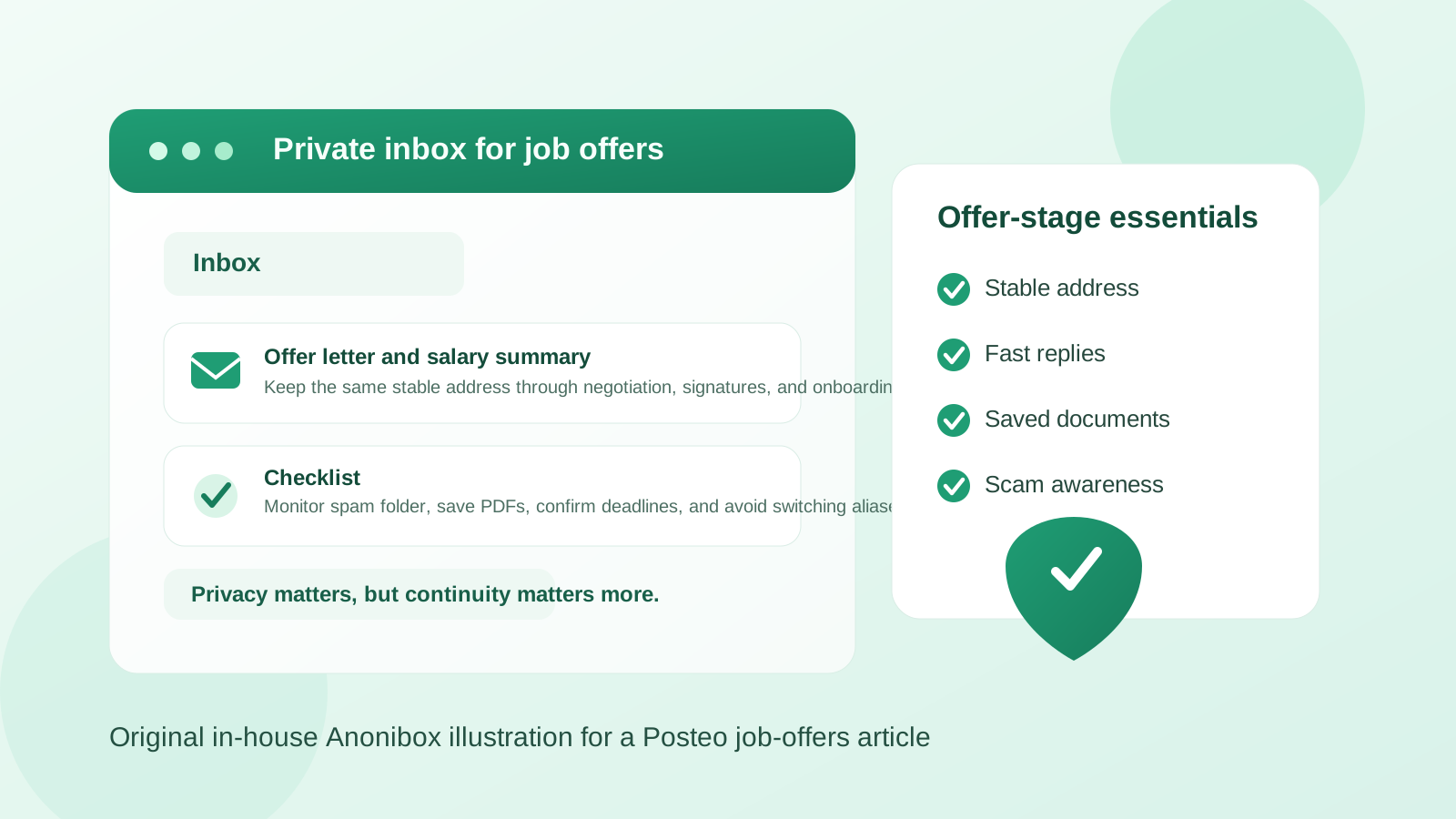
That is the real answer behind searches for should you use Posteo for job offers. At the offer stage, the question is not just whether an email provider feels private. The bigger question is whether it is dependable enough for sensitive, time-bound communication. Offer letters, salary details, deadline reminders, benefits summaries, e-signature links, background-check instructions, and onboarding tasks all tend to arrive in the same stretch of time. If your inbox setup is shaky, this is where it starts to hurt.
Posteo can fit this stage well because it is a real mailbox you control rather than a disposable inbox you expect to abandon. That matters. The closer you get to a final hiring decision, the less room there is for missed messages, broken forwarding, expired aliases, or confusion about which address an employer should use. If you already used a service like Anonibox earlier in your search to reduce spam from low-trust listings or one-off signups, the offer stage is usually the moment to move serious communication into a stable inbox.
Why the offer stage changes the rules
Job applications and job offers are not the same privacy problem. Early in a search, you may care most about limiting exposure. You do not know which companies will reply, which recruiters will keep your details, or which job boards will turn one application into months of unrelated outreach. A separate or temporary address can make sense there.
By the time an employer sends an actual offer, your priority shifts. Now continuity matters more than filtering. The same inbox may be used for:
- the written offer itself,
- salary or start-date discussions,
- benefits documents and policy attachments,
- background-check or identity-verification portals,
- equipment shipping questions, and
- first-week onboarding instructions.
That does not mean privacy suddenly stops mattering. It means privacy has to live inside a stable workflow. A good offer-stage address should protect your personal boundaries without making the hiring process harder to manage.
What Posteo gets right for job offers
Posteo can work well here for a simple reason: it is a long-term inbox, not a throwaway tool. Employers are usually not judging the brand name of your email provider nearly as much as job seekers imagine. In most cases, they care about three practical things:
- Does the address look normal and professional?
- Do you reply reliably and on time?
- Can they keep using the same thread without friction?
If your Posteo address passes those tests, it is already doing the most important work.
It can also help in a few specific ways:
- Better separation: you keep offer-stage communication out of a cluttered everyday inbox.
- Cleaner privacy boundaries: employers and recruiters do not need your oldest personal email address if you prefer not to use it.
- Less throwaway risk: unlike a disposable inbox, a stable address can stay active through negotiation and onboarding.
- More organized recordkeeping: one dedicated inbox makes it easier to search, archive, and revisit important attachments later.
For many job seekers, that combination is exactly what they want: a mailbox that feels more private than a heavily used personal account, but more dependable than a short-lived workaround.
Where Posteo can still create friction
Posteo is not automatically the right choice just because it is privacy-oriented. A privacy-focused provider only helps when your setup is boring in the best possible way: easy to reach, easy to trust, and consistent from one stage to the next.
Problems usually come from the way the inbox is used, not from the provider name itself. Watch out for these issues:
- You do not check it often enough: a private inbox is useless if a deadline sits unread for half a day.
- You are mid-transition: if some employers have one address and others have another, important messages can get scattered.
- Your address looks messy: an address full of random characters or joke wording can make offer-stage communication look less serious.
- You rely on fragile forwarding: if a forwarding rule breaks, you may not notice until something urgent is already late.
- You plan to abandon the inbox soon: offer letters often lead into onboarding, payroll, and benefits follow-up, so the address needs staying power.
Those are the real risks. The provider itself is rarely the main problem. In most hiring flows, consistency beats novelty.
When Posteo is a smart choice for job offers
Posteo is usually a reasonable option when all of the following are true:
- you already use the inbox regularly,
- you can access it easily on both desktop and mobile,
- you intend to keep it available after the offer is accepted,
- your email name looks professional, and
- you want a dedicated inbox separate from your oldest personal address.
In that situation, Posteo can give you the privacy benefits many job seekers want without the fragility that comes with burner or temporary email habits. It can be especially sensible if you are comparing multiple employers at once and want all offer-related documents in one cleaner channel.
When it is probably not the best fit
There are also cases where it is smarter to use a different inbox.
- You only created the address recently and still forget to check it.
- You are using a rotating alias strategy and may change addresses during negotiation.
- You plan to shut the account down after the job search.
- You need one account that is already deeply tied into your daily workflow and device notifications.
If any of those describe you, a more established inbox in your own routine may be the safer choice. The goal is not to prove you are privacy-conscious. The goal is to avoid missing something important at a stage where every message can matter.
How to use Posteo safely and professionally for job offers
If you decide to use Posteo for offer-stage communication, a few habits make the setup much stronger.
1. Stick with one address through the rest of the process
Do not switch addresses halfway through negotiations unless you absolutely have to. If the employer has already used one inbox successfully, keep that path stable.
2. Turn your attention to response speed
At the offer stage, slow replies can create unnecessary stress. Check the inbox frequently, especially if you know deadlines, signatures, or scheduling messages are pending.
3. Save important documents locally
Offer letters, compensation summaries, benefits PDFs, and signed copies should not live only inside one inbox view. Download them and keep them organized.
4. Check spam and promotions-like folders
Even legitimate onboarding systems can land in the wrong place. Background-check vendors, e-signature platforms, or HR automation tools do not always look like ordinary recruiter emails.
5. Keep the display name and address simple
A clean format based on your real name reduces friction. Offer-stage communication should feel straightforward, not experimental.
6. Make sure recovery and access are under control
The worst time to discover account-access problems is when an employer needs a same-day answer. Before important documents start arriving, make sure you can log in reliably from your normal devices.
What not to do with any job-offer inbox
Even a good inbox choice cannot protect you if you ignore basic caution. Avoid these mistakes:
- using a temporary address for real offer letters,
- letting multiple aliases confuse the employer about where to reply,
- keeping sensitive documents only in email without saving copies,
- replying from a different address without explanation, and
- assuming every “offer” email is legitimate just because it looks formal.
Remember that job-offer scams still exist
A private inbox helps with organization and separation, but it does not make fake offers disappear. You still need to verify what is arriving. Be skeptical if a supposed employer:
- sends an offer before any real interview process,
- asks for money, gift cards, or equipment purchases,
- pushes you to move urgently without basic verification,
- uses mismatched company branding or suspicious links, or
- asks for unusually sensitive information too early.
If an email feels off, slow down. Verify the company through its public careers page or known contacts before you click, sign, or upload documents.
If you used Anonibox earlier, when should you transition?
Anonibox can be useful during the high-noise part of a job search: low-trust listings, one-off account creation, or situations where you want to keep your long-term inbox out of early spam loops. But once a real employer is sending interview follow-ups, written offers, or onboarding steps, a stable mailbox is usually the better tool.
That transition point is important. Temporary inboxes help reduce exposure. Real inboxes help preserve continuity. When the stakes rise, continuity usually wins.
Quick decision checklist
Before you use Posteo for a job offer, ask yourself:
- Will I keep this address active for the entire hiring and onboarding process?
- Do I check it quickly enough for time-sensitive offer emails?
- Does the address look professional and easy to trust?
- Am I using one stable contact path instead of juggling multiple aliases?
- Do I have a plan to save and organize important documents outside the inbox?
If the answer is yes across the board, Posteo can be a strong fit. If not, the safer move may be a different long-term inbox that you already manage more comfortably.
Final answer
Yes — Posteo can be a good choice for job offers if it is a real inbox you control, monitor closely, and plan to keep using beyond the first offer email. It gives you better privacy separation than reusing a crowded personal account and far more stability than a disposable inbox.
The main risk is not Posteo itself. The risk is treating offer-stage communication like early-stage experimentation. When salary details, signatures, and onboarding deadlines are involved, the best inbox is the one that stays steady, professional, and easy to manage from start to finish.