Sometimes — but only after you verify the employer independently and keep email or the company’s hiring system as the primary record. Signal is excellent for privacy, but for job interviews it can create identity, scheduling, and documentation problems if it becomes the whole process.
If a real recruiter wants to use Signal for quick updates, reschedules, or a follow-up call, that can be reasonable. If a stranger wants to run the entire interview through Signal from the start, especially without a clear company domain or formal confirmation, that is usually a reason to slow down and treat the opportunity carefully.
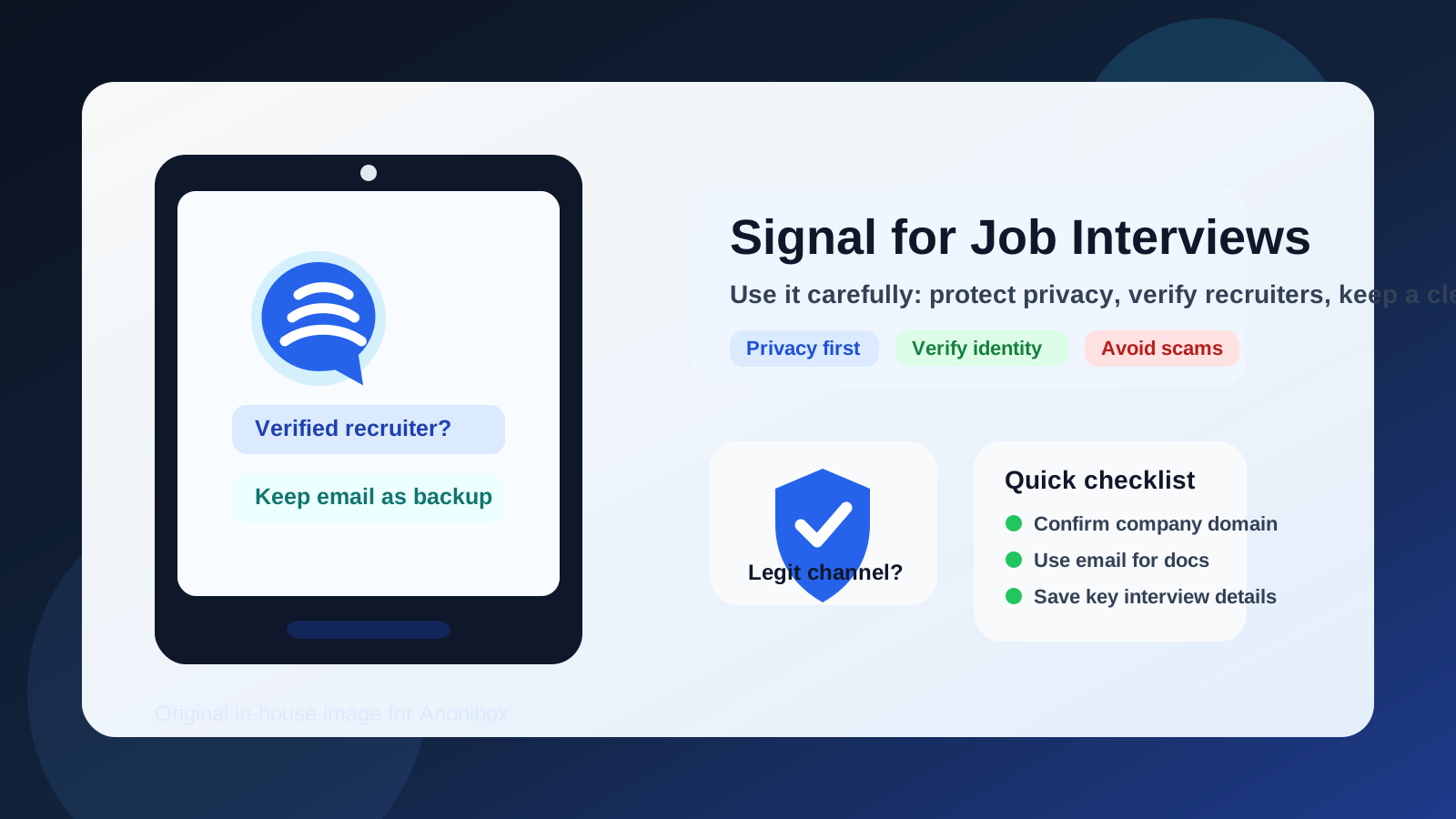
Why Signal comes up in job interviews at all
Signal appears in hiring conversations for a few understandable reasons. It is fast, mobile-friendly, and widely trusted for private communication. Some founders, recruiters, and remote teams already use secure chat tools in their day-to-day work, especially when they are coordinating across countries or want less noise than SMS and mainstream social messaging apps.
That does not automatically make Signal a bad interview channel. The issue is that job interviews need more than private transport. They also need clear identity verification, dependable scheduling, written records you can refer back to, and a professional trail for invites, documents, and next steps. Privacy matters, but so does legitimacy.
The short answer: Signal can be acceptable, but it should usually stay a secondary channel
For most job seekers, the safest workflow is simple: use email or the employer’s official careers system for the core process, and use Signal only for convenience. That means things like confirming an interview time, sending a last-minute “I’m joining now” message, or handling a quick follow-up after you already know the recruiter is real.
What Signal should not usually replace is the formal backbone of the interview process. If all the important details live only inside a private chat with someone you barely know, you lose some of the structure that protects you. That is where misunderstandings and scams become easier.
What Signal does well for interview communication
- Less public exposure: it can feel more controlled than moving onto social platforms tied to your broader personal life.
- Fast logistics: quick reschedules, arrival messages, or time-zone clarifications are easy to handle.
- Stronger privacy posture: many job seekers simply prefer a more privacy-conscious messenger when they have to move beyond email.
- Cleaner boundaries than some social apps: it is less performative than platforms built around feeds, profiles, or public activity.
Those are real advantages. They explain why Signal is not automatically a red flag. The problem is that its strengths do not remove the core hiring risks.
Where Signal becomes risky during interviews
1. It is harder to verify who is really contacting you
Email from an official company domain is not perfect proof, but it gives you something concrete to check. A Signal message from an unknown number or username gives you less to work with. Even if the person sounds professional, you still need independent confirmation that the role, company, and interviewer are genuine.
2. Your paper trail can get weaker
Interview processes generate important details: dates, meeting links, assessment instructions, compensation discussions, and next-step timelines. If too much of that lives only in chat, it is easier to lose context, miss a detail, or struggle later if the story changes.
3. It can blur personal boundaries
Depending on how your account is configured, using Signal may expose personal identifiers more directly than you want, such as your main phone number, display name, or profile photo. That may be fine for a known recruiter, but it is not always ideal for strangers from job boards or cold outreach.
4. Scammers like private, fast-moving channels
A scammer’s dream is a conversation that moves off official channels before you verify anything. Private messengers make it easier to create urgency, avoid formal documentation, and pressure candidates into quick decisions. Signal’s privacy reputation does not stop bad actors from using it too.
When Signal is more likely to be reasonable
Using Signal for job interviews is much easier to justify when several green flags are already present:
- You applied through a real company careers page or a verified recruiter.
- You already have matching emails from the company domain.
- The interviewer’s name appears on the company site or LinkedIn in a believable way.
- Signal is being used only for convenience, not as the only channel.
- The company is international, remote-first, security-conscious, or in a niche where private messengers are more normal.
In those cases, Signal can work as a practical side channel. It is not the same as a random stranger saying, “We only interview on Signal, reply now.”
Red flags that mean you should back up and verify first
- No company-domain email at all.
- The recruiter wants to keep everything inside Signal from the first message onward.
- You are asked to install software, send money, or share identity documents before normal interview steps happen.
- The role sounds vague, too urgent, or unusually high-paying for very little screening.
- The interviewer refuses to give a public company page, official email, or verifiable full name.
- The chat quickly shifts toward gift cards, equipment purchases, or “verification fees.”
That combination is much more important than the app itself. Signal is not the problem in isolation; an unverified hiring process is.
Best practices if you do use Signal for an interview
Keep official email in the loop
If someone messages you on Signal, ask them to confirm the same interview details by email from a real company domain. That gives you a cleaner record, a safer place for documents, and a stronger way to verify legitimacy.
Do not make Signal your document channel
Resumes, portfolios, and standard follow-ups are better handled through email or the company portal. Sensitive items such as identification, tax forms, or banking details should never be sent just because a chat feels private.
Lock down your profile before the conversation
Review what the other person can learn from your account at a glance. A neutral display name, a professional profile photo or no photo at all, and limited exposure of your main personal details can help keep boundaries clearer.
Save key details outside the chat
Copy the interview time, meeting format, interviewer name, and any next-step promises into your own notes or calendar. Do not rely on memory and do not rely on one app as your only record.
Use a backup channel for anything time-sensitive
If the interview is important, make sure you have an email address or formal invite as backup. Messaging apps are useful, but you do not want a missed notification or app issue to become the reason you miss a serious opportunity.
A smart privacy workflow for Signal interviews
The strongest approach is layered rather than absolute:
- Apply or respond through official channels first.
- Verify the recruiter and role independently.
- Use Signal only for speed and convenience once legitimacy is established.
- Keep email as the source of truth for invites, documents, and timelines.
- Separate early-stage inbox exposure from interview-stage communication.
That last point matters. If you used Anonibox or another separate inbox for earlier job-board signups, that can be helpful for reducing spam and controlling exposure. But once a real employer moves you into interviews, switch the important steps onto a stable email address you monitor closely so nothing critical disappears with a short-lived inbox.
What if the employer insists on Signal?
If they insist, that does not automatically mean the job is fake. Some teams have unusual habits. The question is whether they are willing to support basic verification and professionalism around that choice.
You can respond with something simple: you are happy to use Signal for quick coordination, but you would like the interview confirmation and role details sent from the company email as well. A legitimate recruiter should be able to accommodate that without drama.
If they become evasive, irritated, or push harder once you ask for normal confirmation, that tells you something useful. Real employers may prefer convenience, but they rarely object to a candidate asking for ordinary proof that the process is legitimate.
Final answer: should you use Signal for job interviews?
Yes, sometimes — but only as a verified secondary channel, not as the whole process. Signal offers real privacy benefits, and for quick scheduling or follow-up it can be perfectly workable. But privacy alone does not make an interview process trustworthy.
The safest move is to verify the employer independently, keep official email involved, avoid sending sensitive material in chat, and treat any all-Signal hiring process with extra caution. Used that way, Signal can be convenient. Used blindly, it can make a weak or suspicious hiring process harder to evaluate.