Yes, SimpleLogin can be a smart choice for networking events if you want to share a stable alias without exposing your main inbox to every badge scan, RSVP form, or follow-up list.
It is usually a better fit than a throwaway address because real networking often depends on replies that still work days or weeks later, not just one-time signups.
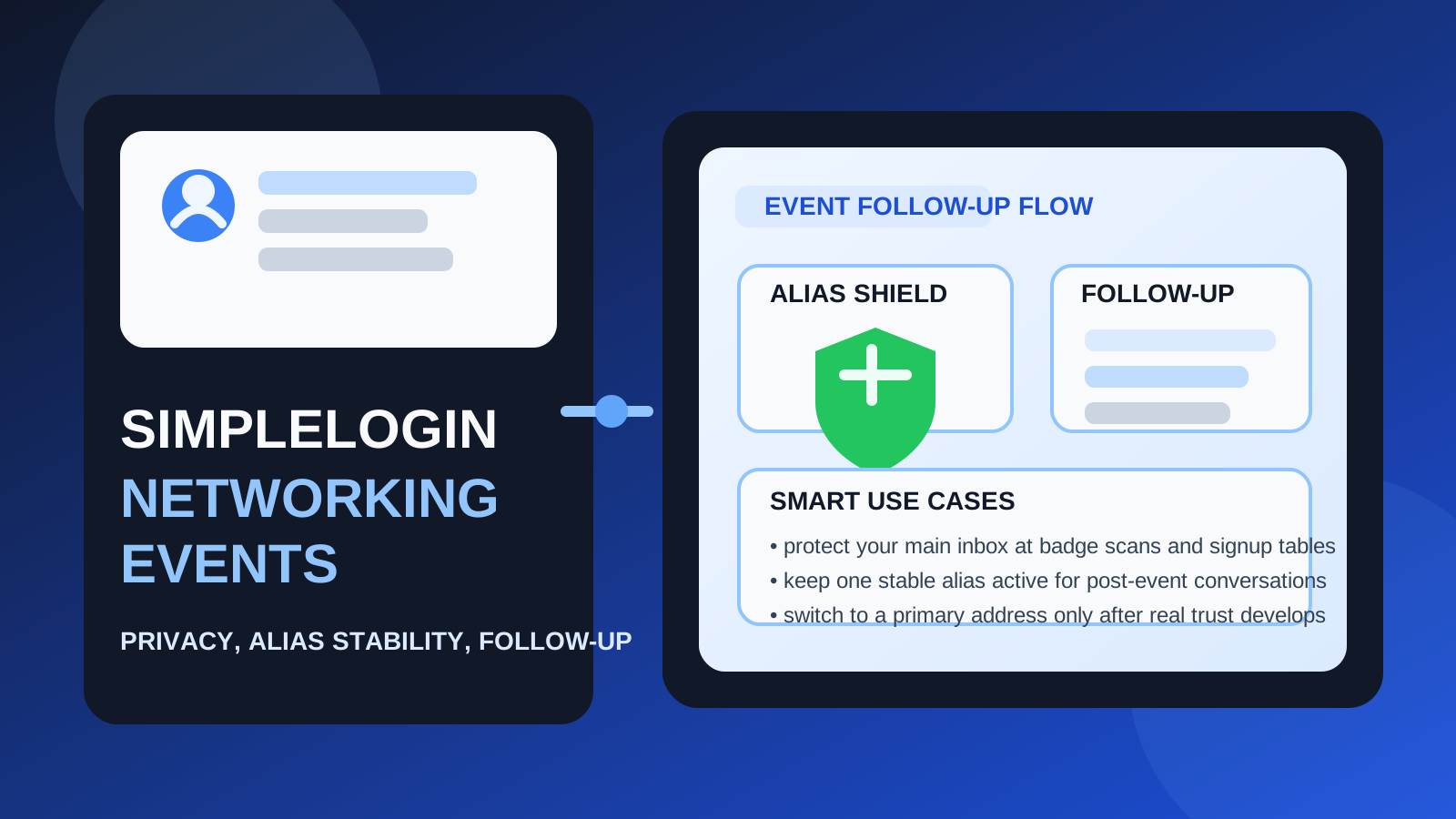
That is the practical answer behind the question should you use SimpleLogin for networking events. People go to conferences, meetups, hiring mixers, alumni panels, and industry events to create opportunities, not to invite months of random marketing into their main inbox. At the same time, networking only works if people can still reach you after the event. That is why SimpleLogin sits in a useful middle ground between using your personal email everywhere and handing out a disposable inbox that may not last long enough to support real follow-up.
Networking events are different from anonymous one-click website trials. You may hand your contact details to recruiters, founders, speakers, vendors, other job seekers, or people you only spoke with for three minutes in a hallway. Some of those contacts are worth keeping. Others may lead to newsletter signups, event blasts, or low-value outreach later. An alias-based setup can help you stay reachable while giving you more control over where that traffic lands.
If you already use privacy tools like Anonibox to avoid oversharing your main address, the same logic applies here: use a controlled address that protects your primary inbox, but keep it stable enough for genuine professional follow-up.
Why SimpleLogin makes sense for networking events
SimpleLogin is useful in this context because it is not just a disposable inbox. It is an alias service. That difference matters.
At networking events, you often need an address that can do three things at once:
- receive real replies from people you actually want to hear from
- shield your primary inbox from wider sharing and long-term clutter
- stay active long enough for follow-up messages, scheduling notes, and later introductions
A temporary email address is often too short-lived for that. Your personal inbox may be too exposed for that. A SimpleLogin alias can sit in the middle if you set it up intentionally.
What makes networking-event email different from job applications
Job applications usually move through formal systems. Networking events rarely do. A recruiter at a booth might email you that night. A founder might follow up a week later. Someone from a panel conversation may send an article, ask for your résumé, or suggest a coffee chat after the event rush settles down.
Because the timeline is less predictable, alias stability matters more than disposable convenience. If the address stops working too quickly, or if you forget which alias you handed out, you can lose the value of the event. That is why the question is not just “can you protect your inbox?” but “can you stay reachable without oversharing?”
When using SimpleLogin for networking events is a good idea
You want to avoid exposing your main inbox at large events
Big conferences and public networking events often involve QR forms, sponsor booths, mailing-list signups, and contact exchanges with people you barely know. Using an alias instead of your everyday inbox can reduce the amount of event-related clutter that follows you home.
You want one address for event-specific follow-up
Using one dedicated alias for a specific conference, job-fair trip, or networking season can make follow-up easier to organize. You can quickly see which messages came from that event context instead of mixing them into everything else.
You want reply reliability without using a burner inbox
A true throwaway address can be risky for networking because follow-up sometimes happens slowly. A SimpleLogin alias is often better because it behaves like a controlled forwarding layer rather than a single-use mailbox you abandon immediately.
You are talking to recruiters, not yet trusting them with your primary email
This is one of the best use cases. If you want to stay reachable while keeping a little distance until the opportunity looks real, an alias can help. You are not hiding. You are just protecting your main inbox until the conversation earns more trust.
When SimpleLogin may be the wrong choice
You are likely to disable the alias too quickly
If you treat the alias like a one-day burner, you may cut off useful conversations. Networking follow-up does not always happen immediately. Someone may reach out after the event recap, after an internal team chat, or after they return from travel. If you cannot keep the alias alive long enough, it is the wrong tool for the job.
You need a very simple, low-friction email identity
Some people prefer giving out one clean professional inbox and being done with it. That can be a perfectly reasonable choice if you already trust your email setup, have good spam filtering, and do not mind broader exposure. Alias tools are helpful, but they add one more layer to manage.
You are moving into high-trust, ongoing professional relationships right away
If the contact is already becoming a real hiring conversation, partnership discussion, or client relationship, you may prefer to move quickly to the address you plan to use long term. An alias is still fine if it stays stable, but clarity can matter once the relationship becomes more established.
SimpleLogin vs temporary email for networking events
This is where people often get tripped up. Temporary email and alias email solve different problems.
- Temporary email is great for one-off access, low-trust signup forms, or situations where you do not expect meaningful follow-up.
- SimpleLogin-style aliases are better when you want privacy plus continued reachability.
Networking events usually sit much closer to the second category. You may not want to expose your main address to every booth and attendee, but you do want thoughtful follow-up from the people who matter. That makes alias stability more useful than a pure disposable approach.
Best practices if you use SimpleLogin for networking events
1. Create one alias for a specific event or networking purpose
Do not overcomplicate it. A single event-specific or networking-specific alias is often enough. That lets you isolate event-related traffic without creating dozens of tiny contact identities you will forget to maintain.
2. Keep the alias active longer than the event itself
Leave it running for a reasonable follow-up window. For many events, that means at least several weeks. You want enough time for delayed introductions, scheduling messages, and the normal lag that happens after people get back to regular work.
3. Use a professional display identity when appropriate
Privacy matters, but credibility matters too. If you reply from an alias flow, make sure your messages still read like they come from a real professional. Keep your signature simple, clear, and human.
4. Track where you used the alias
If you hand the alias out at a conference, put it on an RSVP form, and also use it for sponsor downloads, do a quick note for yourself. Later, if a wave of low-value messages shows up, you will have a better sense of where the exposure likely came from.
5. Move promising contacts to your long-term address when it makes sense
An alias is a filter, not a prison. If a conversation turns into a real opportunity, warm referral, or useful professional relationship, you can always shift that person to the address you want to keep using long term.
What to avoid
Using a temporary inbox that may vanish before follow-up arrives
This is the biggest mistake. Networking depends on continuity. If the contact method disappears too soon, you may lose exactly the opportunities you attended the event to create.
Giving every contact a different alias unless you have a reason
That level of granularity sounds powerful, but for most people it creates unnecessary maintenance. A clean event-specific alias or networking-specific alias is usually enough.
Forgetting that event forms can feed sponsor lists
Some event signups, raffles, demo requests, and booth scans lead to much more follow-up than you expect. That is actually a good reason to use an alias, but it also means you should be selective about where you share it.
Staying on the alias forever when trust has already been established
If a recruiter, founder, or peer becomes a real long-term contact, moving to your normal professional email can make the relationship feel simpler and more transparent. Use the alias as protection early, then simplify when it becomes useful to do so.
A practical setup for networking events
If you want a straightforward workflow, this one works well:
- Create one alias specifically for networking events or one major event.
- Use it on event registrations, QR lead forms, business-card follow-up, and public contact exchanges where you do not want to expose your primary inbox yet.
- Check the forwarded mail actively during the week of the event and the weeks immediately after.
- Promote high-value contacts to your long-term address once the relationship proves real.
- If the alias later becomes noisy, retire it and create a fresh one for the next event cycle.
This keeps the privacy benefit without making the communication path brittle.
How this fits job-search and privacy strategy
For job seekers, networking events are often part of a broader contact strategy. You may already be using a separate email for job boards, a different address for direct applications, and more cautious contact details for lower-trust settings. A SimpleLogin alias can fit neatly into that system.
It is especially helpful when networking is exploratory: alumni meetups, industry panels, recruiting nights, conference social hours, or conversations that might turn into referrals later. In those settings, the right move is usually not total anonymity and not full exposure either. It is controlled reachability.
That is also why this is more aligned with Anonibox-style thinking than simply blasting out your main inbox. The goal is not to disappear. The goal is to reduce unnecessary exposure while still being easy for the right people to contact.
Quick decision checklist
Before you use SimpleLogin for networking events, ask yourself:
- Do I want to protect my main inbox from event-related spam or broad sharing?
- Can I keep this alias active long enough for meaningful follow-up?
- Would a disposable inbox be too short-lived for this context?
- Am I prepared to move real contacts to a long-term address once trust develops?
- Do I want one clean networking alias instead of giving out my primary email everywhere?
If most of those answers are yes, SimpleLogin is probably a good fit.
Final answer
Yes, you can use SimpleLogin for networking events, and it is often a smart privacy-first option when you want a stable alias instead of exposing your main inbox to every new contact.
The key is to treat it as a controlled professional alias, not as a one-night throwaway address. Networking only pays off if people can still reach you after the event. If you keep the alias active, stay organized, and move strong contacts to your long-term email when appropriate, SimpleLogin can be a very practical middle ground between full exposure and disposable-email chaos.