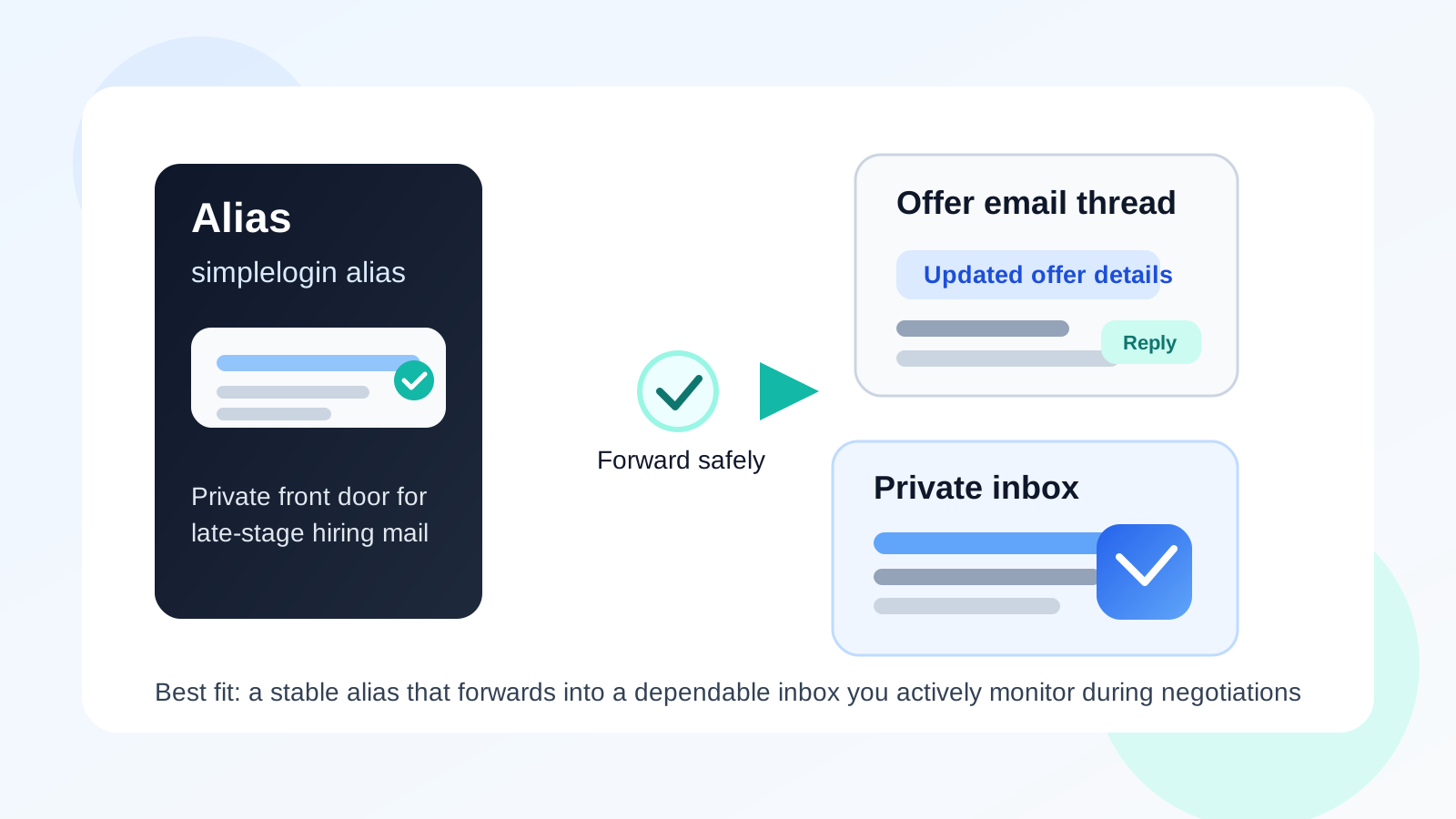
Yes, usually — if your SimpleLogin alias forwards to a real inbox you control, replies work cleanly, and you plan to keep the alias active through the whole negotiation.
It is usually a better fit than temporary email because salary negotiations need continuity, fast follow-up, and a written record you can keep.
Why this question matters
Salary negotiations are one of those moments in a job search where email stops being background noise and becomes part of the actual decision process. Recruiters may send the first offer by email, follow up after a call, attach revised numbers, clarify bonus details, confirm start-date options, or outline deadlines for your response. The thread matters because it often becomes the record of what was proposed and when.
That is why people who care about privacy start looking harder at the email address they use for this stage. They may not want to run compensation discussions through a crowded personal inbox, and they definitely should not rely on a current employer’s work email. For Anonibox readers, the next step is often some kind of separation tool: a dedicated inbox, a masked email, or an alias service like SimpleLogin.
The useful question is not just whether SimpleLogin is private. The real question is whether it is dependable enough for negotiations that may involve urgent replies, attached documents, and a need for clean message history.
Short answer: SimpleLogin can be a strong fit if you use it correctly
In many cases, yes. SimpleLogin can be a strong fit for salary negotiations because it gives you inbox separation without forcing you to expose your main personal address to every recruiter and HR workflow. That can be especially helpful if you want a more controlled job-search identity or if you expect compensation conversations to continue for several days across multiple employers.
But the answer depends on how your alias setup actually works in practice. If the alias forwards to a mailbox you trust, you can reply in a stable and recognizable way, and you keep the alias active for the full process, SimpleLogin can work very well. If the alias is experimental, rarely checked, or tied to a forwarding chain you do not fully trust, it can create friction at exactly the wrong time.
Why SimpleLogin makes sense for salary negotiations
It keeps your real inbox private
One of the biggest advantages of SimpleLogin is that you do not have to hand out your main personal email address every time a recruiter, internal recruiter, third-party recruiter, HR coordinator, or scheduling system touches the process. That matters because negotiations sometimes involve more people than expected. A thread can start with one recruiter and later include HR, a compensation contact, a coordinator, or a hiring manager.
Using a SimpleLogin alias lets you keep those conversations separated from your everyday inbox identity. If a process gets messy, drags on, or turns into unwanted follow-up later, you are not stuck exposing the address you use for everything else.
It can give you cleaner organization
A dedicated alias can make late-stage hiring conversations much easier to manage. Some job seekers create one alias for a whole job search. Others create one alias per employer. Either approach can work if it is deliberate. The benefit is that important messages about compensation, start dates, revised offers, and written approvals are less likely to get buried under newsletters, account alerts, or unrelated personal mail.
That organizational gain is often more useful than the privacy angle alone. A clean negotiation thread is easier to search, easier to archive, and easier to compare against another offer.
It is usually more professional than a disposable inbox
Salary negotiations are not the stage where a temporary inbox makes the most sense. Temporary email is better for low-trust signups, gated downloads, or early funnel experiments. By the time compensation enters the conversation, you usually need persistence. SimpleLogin helps because it gives you separation while still pointing back to a real long-term inbox underneath.
That means you can keep the benefits of a shielded address without taking on the fragility of a throwaway mailbox that may disappear or go unchecked.
Where SimpleLogin can create friction
Reply behavior has to be predictable
This is the biggest SimpleLogin-specific issue. A salary negotiation thread needs clean back-and-forth communication. If your alias setup forwards incoming mail but your replies come from the wrong address, use a different display name than expected, or confuse the other person about where the message came from, you add unnecessary friction.
Before you rely on SimpleLogin for a negotiation, make sure you understand exactly how replying through the alias works. If you have already tested it in normal use and know the thread stays consistent, that is a good sign. If you are figuring it out mid-negotiation, that is riskier.
You still depend on the destination inbox
SimpleLogin is not the inbox where you actually live; it is the alias layer in front of it. That means your real reliability still depends on the mailbox receiving the forwarded messages. If the destination inbox is cluttered, poorly filtered, rarely checked, or unstable, the alias does not solve that underlying problem.
In practice, SimpleLogin works best when it points to a dependable inbox that you already monitor closely.
Deactivating or changing aliases too early can backfire
Some people treat aliases as disposable by habit. That can make sense for spam-heavy signups, but salary negotiations are not a short-lived newsletter test. Even after a verbal agreement, you may still receive revised letters, final confirmations, benefit follow-ups, start-date paperwork, or clarifications you want to keep. If you plan to use SimpleLogin here, treat the alias as a durable contact point for the entire offer stage, not as something to shut off the minute you stop actively bargaining.
Some recruiters prefer obvious continuity
Most recruiters will not care if you use an alias as long as communication is clear. But negotiations are easier when nothing about the email setup distracts from the substance of the conversation. If your alias looks overly random, changes during the process, or makes replies harder to follow, the burden shifts back onto you.
The safest version is a clean alias you keep consistent from late-stage interviews through offer discussions.
SimpleLogin versus a separate dedicated inbox
This is a practical comparison worth making. A separate dedicated inbox gives you isolation and direct ownership in one place. SimpleLogin gives you isolation through an alias layer while keeping your underlying inbox hidden. Neither is automatically better in every case.
SimpleLogin is especially attractive when:
- you already use alias-based separation for your job search
- you want to protect your real address from long-tail recruiter follow-up
- you trust your destination inbox and know the reply flow works
- you want employer-specific routing without opening multiple full inbox accounts
A separate dedicated inbox may be better when:
- you want the simplest possible setup with fewer moving parts
- you are not fully confident in your alias reply workflow
- you expect a very long process with multiple attachments and back-and-forth approvals
- you want every message to live directly in one obvious account rather than through forwarding
For many people, the decision comes down to whether they already trust their SimpleLogin setup. If you do, it can be excellent. If you do not, negotiations are not the ideal moment to experiment.
SimpleLogin versus temporary email for salary negotiations
This is where the distinction becomes especially important for Anonibox readers. Temporary email helps when you need quick, low-trust insulation from spam. Salary negotiations need a different tool. You may receive time-sensitive revisions, formal offer letters, benefit details, or deadline reminders. Losing track of those because you used a fragile inbox is not worth the privacy tradeoff.
SimpleLogin is often the better privacy tool at this stage because it hides your real address while still routing everything into an inbox you actually control. It gives you the separation benefit without the temporary-email downside.
Best practices if you use SimpleLogin for salary negotiations
Test the alias before you need it
Do not wait until the first compensation email lands to figure out how replies work. Send a few test messages through the alias, reply from your destination inbox, and confirm the thread behaves the way you expect.
Use one alias consistently for one employer
If you switch addresses halfway through a negotiation, people can adapt, but it creates needless friction. One stable alias per employer is usually cleaner than bouncing between addresses during the offer stage.
Point the alias to an inbox you already trust
Your destination mailbox should be one you check frequently, search easily, and are willing to keep active. If you miss forwarded messages because the receiving inbox is chaotic, the privacy setup is not helping much.
Save important documents outside the thread
Offer letters, benefit summaries, equity explanations, and revised compensation documents should not live only in your inbox. Download the files that matter so you can review them calmly and keep a record even if you later disable the alias.
Keep the alias alive through the full offer stage
Compensation conversations do not always end the moment you say yes. Keep the alias available until you are sure the employer-side follow-up no longer depends on it.
Use a clear display name
The alias itself can be private, but the overall presentation should still look normal and easy to understand. A clean display name helps prevent confusion when negotiations move quickly.
Examples of when it works well
Good fit: you already use SimpleLogin for job search communication
If interviews, recruiter outreach, and offer discussions already route through a tested alias, there is a strong case for staying consistent. That reduces context switching and keeps the full employer thread in one place.
Good fit: one alias per employer, one dependable destination inbox
This is one of the cleanest setups. You get privacy, organization, and the ability to isolate future follow-up if one negotiation turns noisy.
Not a great fit: you are trying alias replies for the first time during negotiations
If you have never tested the workflow and are not sure how replies appear to the other side, you are adding avoidable uncertainty to a stage where clarity matters.
Not a great fit: you plan to disable the alias immediately after the negotiation
Even after a deal is reached, employers may send written confirmations and clarifications you still need. Do not treat the alias like a one-hour disposable tool.
A quick checklist before using SimpleLogin for salary negotiations
- Do you know exactly how replies from the alias work?
- Does the alias forward to a real inbox you actively monitor?
- Can you keep the same alias for the whole employer conversation?
- Will you keep the alias active long enough for post-offer follow-up?
- Have you avoided using a current employer’s email system?
- Would the setup still be fine if the thread includes attachments, revisions, and multiple contacts?
If the answer is yes to most of those, SimpleLogin is usually a reasonable and privacy-friendly choice.
Final answer
Yes, usually. SimpleLogin can be a strong option for salary negotiations because it hides your real address, keeps employer communication separated, and routes important messages into an inbox you control.
The key is not the alias itself; it is whether the setup is dependable. If reply behavior is clean, the destination inbox is reliable, and you keep the alias active through the whole process, SimpleLogin is often a smarter choice than temporary email and a safer choice than using a work-managed address.