Usually only as a secondary channel. SMS can work for recruiter outreach after trust is established, but email or LinkedIn is usually better for first contact, verification, and record-keeping.
If you do use SMS, keep it short, confirm the recruiter is real first, and move anything important back to email as soon as the conversation becomes serious.
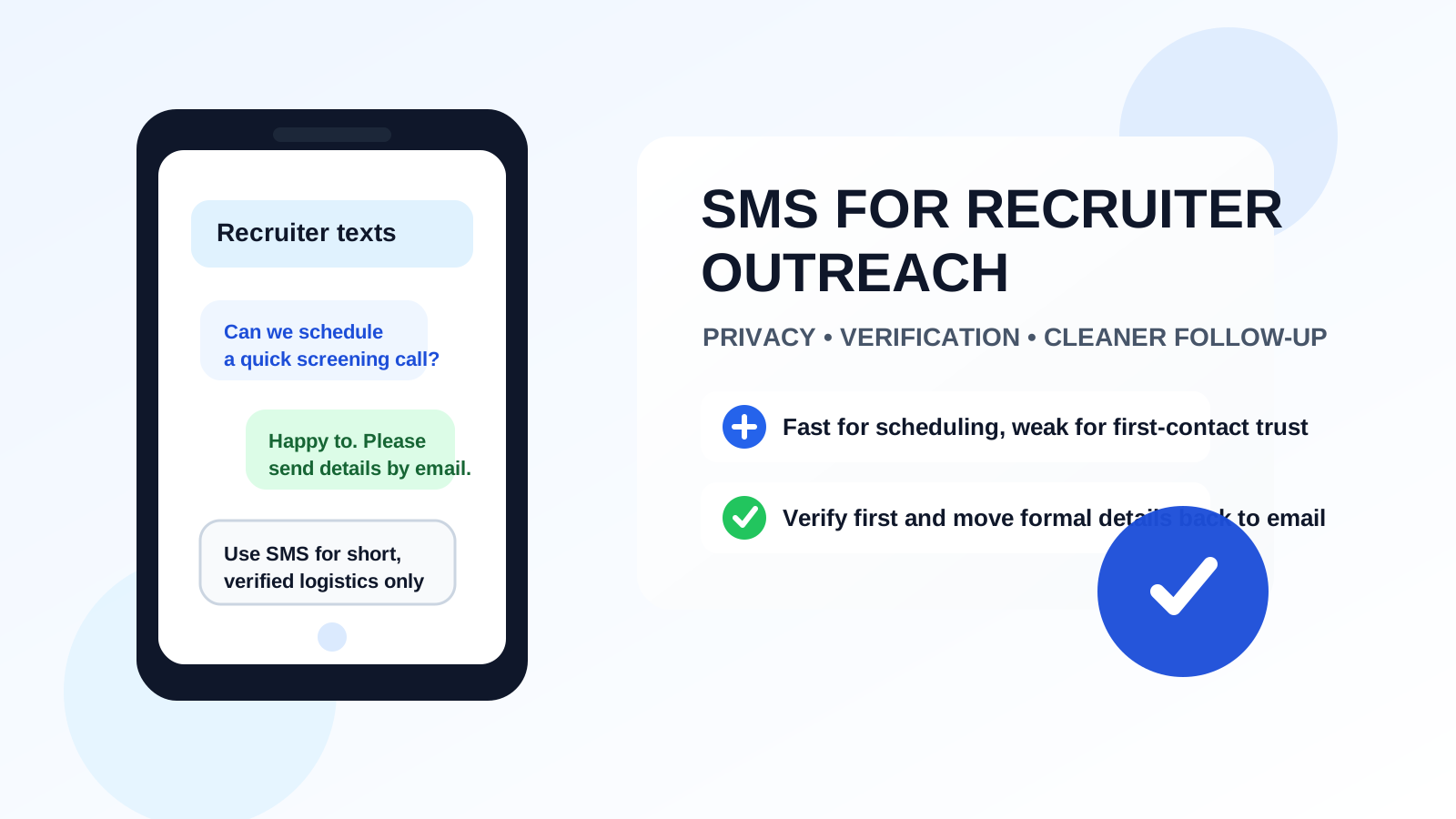
Text messaging feels fast, familiar, and low-friction, which is exactly why many job seekers consider using it with recruiters. If a recruiter wants to confirm a time, send a quick follow-up, or ask whether you are available for a screening call, SMS can feel more convenient than waiting inside an email thread. It is immediate, easy to notice, and works on nearly every phone without needing a specific app.
That convenience is real, but it comes with tradeoffs. SMS exposes your phone number right away, gives you fewer trust signals than a company email or LinkedIn profile, and can blur the line between useful outreach and low-quality spam. The smartest way to use SMS is not as your default front door for every recruiter conversation. It is as a narrow, practical channel after you know who you are talking to and why the text thread actually helps.
What SMS is good at in the hiring process
SMS is excellent for short, time-sensitive coordination. That includes things like:
- confirming whether you are free for a screening call
- sharing a same-day schedule change
- sending a quick reminder shortly before an interview
- letting you know a recruiter just emailed fuller details
- handling practical logistics when you are already in process
Those are all legitimate uses. In fact, in later hiring stages, some recruiters prefer texting for speed because they do not want an urgent timing issue buried in an inbox. If the relationship is already verified, SMS can be a useful convenience layer.
Why SMS is usually weak for first-contact recruiter outreach
It gives you fewer trust signals
An email from a company domain is not perfect proof, but it does provide context. A LinkedIn message usually comes with a profile, employer history, and some professional framing. An SMS from an unknown number gives you much less to work with. The message might be completely legitimate, but the channel itself does not tell you much.
It exposes your phone number immediately
If you start the relationship through SMS, you are handing over a direct personal identifier at the very beginning. That matters because recruiter outreach is often messy. Some recruiters are careful and relevant. Others work from large candidate databases or mass outreach lists. Once your number spreads, it can be harder to control who uses it later.
It can feel more urgent than it really is
Text messages create pressure. Even a harmless scheduling note can feel like something you need to answer right away. That may not be ideal if you are at work, trying to keep your search private, or simply want space to verify the opportunity before you engage.
It is bad at holding formal details
SMS is not a great long-term home for job descriptions, compensation ranges, interview packets, take-home instructions, or process summaries. Those things are easier to search, save, and organize in email. Texting works best when the message is short and practical, not when it becomes the whole hiring workflow.
When SMS can make sense for recruiter outreach
There are clear situations where texting is reasonable.
- You already verified the recruiter through a company email, a real job posting, or a known LinkedIn profile.
- You are already mid-process and the conversation is about scheduling or logistics.
- The recruiter asked permission first and you are comfortable sharing or using that number.
- You use a dedicated job-search number and want a faster way to manage inbound communication without giving out your main personal line.
- The role genuinely moves quickly and a short text thread reduces friction rather than creating confusion.
In those situations, SMS can be a practical secondary channel. The problem is not texting itself. The problem is using it too early, too broadly, or without enough verification.
When you should avoid SMS entirely
- The first outreach comes from an unknown number with vague job details.
- The recruiter refuses to email from a company domain.
- The role cannot be independently verified on a real company site.
- The text pushes urgency before you even know what the job is.
- You are asked to move from one vague channel to another with no clear reason.
- The conversation starts drifting toward sensitive data, identity documents, or payment information.
Those are not signals to “be extra careful but keep texting anyway.” They are signals to slow down, verify independently, or stop.
The privacy risks people underestimate
1. Long-term phone-number exposure
Your number can outlive a single opportunity. It may stay in recruiter notes, staffing databases, CRM tools, or old text threads that get reused later for unrelated roles. That may not sound dramatic, but it is one of the easiest ways a quiet job search turns into ongoing cold outreach.
2. Spam texts and low-quality sourcing
Once a number gets into circulation, it can start attracting messages that are technically about jobs but not actually useful to you: irrelevant contract roles, vague “urgent openings,” repeated check-ins, or mass recruiter blasts.
3. Scam pressure
Job scams work well over text because texts feel personal and immediate. A scammer can claim to be a recruiter, mention a role title, and push you toward a link, a chat app, or a fake intake form before you have had time to think clearly. SMS lowers friction for good communication, but it lowers friction for bad actors too.
4. Weak separation between job search and personal life
If you use your everyday number, recruiter traffic can arrive during dinner, on weekends, or when you are with family. That may be manageable for a few conversations. It gets much less pleasant when outreach volume increases.
A better default: email or LinkedIn first, SMS second
For most job seekers, the cleanest structure is simple:
- Use LinkedIn or email for first contact and basic verification.
- Confirm the recruiter, the company, and the role are real.
- Use SMS later for short logistics if it genuinely makes communication easier.
This preserves the benefits of texting without making it your only or earliest channel. You still get speed when speed matters, but you do not give up control too soon.
If you do use SMS, here is how to do it well
Verify the recruiter before engaging deeply
Look for the recruiter on LinkedIn, check the company careers page, and confirm the role exists somewhere credible. If the text references an application you do not remember, ask for the job link and the recruiter’s company email before continuing.
Keep the first replies short
You do not need to solve everything in the first text exchange. A perfectly reasonable response is: “Thanks for reaching out. Happy to continue—could you send the role details from your company email?” That keeps the door open without oversharing.
Move formal details back to email
If the conversation becomes real, ask for interview details, attachments, compensation information, or next steps by email. SMS is convenient for coordination. Email is better for substance.
Do not share sensitive information by text
No legitimate recruiter needs your banking details, government ID, tax forms, or login codes by SMS. If the conversation starts going there, stop.
Use a number you actually monitor
If you choose to text with recruiters, make sure the number is stable and checked regularly. A dedicated job-search number can work well, but only if it behaves like a real contact channel. Missed messages, muted notifications, or a full voicemail box will cost you more than the privacy benefit helps.
Is a separate number a good idea?
Often, yes. If you expect meaningful recruiter volume, a separate number can give you cleaner boundaries and better screening without making you unreachable. The key is to think “dedicated” rather than “throwaway.” Recruiter outreach may start casually, but a real opportunity can turn into multiple interview rounds, references, and offer-stage logistics. The number should still be available when that happens.
This is where your phone strategy and email strategy should work together. Many privacy-conscious job seekers pair a separate recruiter number with a separate inbox so early outreach stays organized and their oldest personal accounts do not absorb all the noise. If you already use Anonibox or another separate-email workflow for job-search activity, using a dedicated number alongside it can make the whole process much cleaner.
SMS vs messaging apps
Compared with WhatsApp, Telegram, or Signal, SMS has one big advantage: almost everyone can receive it without installing anything new. That makes it easy for short logistical messages. But it also lacks the platform context LinkedIn offers and can feel even more abrupt than app-based messaging because it drops straight into your phone-number identity.
In other words, SMS is universal, not necessarily ideal. Its strength is reachability. Its weakness is trust and boundary management.
A quick decision checklist
Before using SMS for recruiter outreach, ask yourself:
- Do I know who this recruiter is?
- Can I verify the company and role independently?
- Am I comfortable giving this person direct access to my number?
- Is this just for quick scheduling, or is it becoming the whole relationship?
- Would email or LinkedIn do the job with less exposure?
If those answers point toward caution, trust that instinct. There is nothing wrong with steering the conversation back to a better channel.
Bottom line
Yes, SMS can work for recruiter outreach, but usually only as a secondary channel after trust is established. It is useful for fast, simple logistics and short follow-up. It is much weaker as a first-contact default because it exposes your phone number early, gives you fewer verification signals, and can make low-quality outreach feel more urgent than it deserves.
The best balance is to verify first, text later, and keep the important parts of the hiring process in a channel that is easier to organize and easier to trust. That way you stay reachable for real opportunities without turning your phone number into open season for every recruiter who gets hold of it.