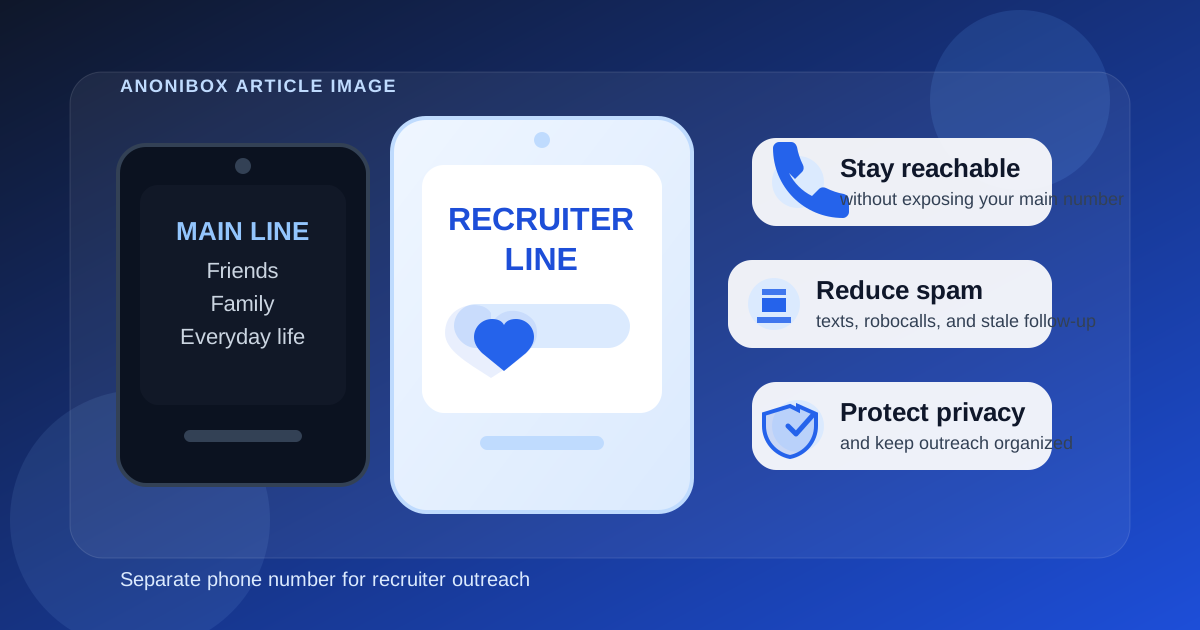
Yes — using a separate phone number for recruiter outreach is often a smart move if you want to stay reachable without exposing your main personal line to every recruiter, job board, or third-party contact form you touch. It is not mandatory for every job seeker, but it is one of the cleanest ways to reduce spam, screen unknown calls, and keep your search more organized.
Recruiter outreach usually happens before trust is fully established, which is exactly why your phone-number strategy matters. If you are messaging multiple recruiters, posting your résumé publicly, or exploring roles through staffing firms, a dedicated number can give you more control without making you harder to contact.
Why recruiter outreach is different from ordinary job applications
When you apply directly on a company careers page, you usually know where your information is going. Recruiter outreach is messier. Sometimes you are contacting an internal recruiter at a company you already know. Other times you are dealing with agency recruiters, sourcing specialists, staffing firms, job-board replies, or people you met through networking. Some will be excellent. Some will be vague. A few will be noisy or low-quality. And a small number may be outright scammy.
That means your phone number does not just become a way to schedule interviews. It can also become a doorway for repeated cold follow-ups, spam texts, robocalls, or messages from people who got your details from a résumé database months ago. A separate recruiter line gives you a buffer between your personal life and that wider outreach ecosystem.
Short answer: when a separate phone number is worth it
A separate phone number is usually worth considering if any of these are true:
- You are actively contacting a lot of recruiters in a short period.
- You are posting your résumé on public or semi-public job boards.
- You are changing jobs confidentially and do not want work-search traffic on your main line.
- You already know recruiter calls and texts tend to continue long after a search ends.
- You want a cleaner boundary between real opportunities and random follow-up noise.
If you are only speaking with a handful of trusted recruiters for targeted roles, using your main number may be perfectly fine. But once the volume goes up, the case for a separate line gets much stronger.
What counts as a separate phone number?
“Separate phone number” does not necessarily mean buying a second physical phone. For many people, it can mean any lawful, reliable second line they control and can stop using later if needed. Depending on what is available in your country and mobile setup, that might include:
- a second SIM or eSIM
- a secondary line from your existing carrier
- a virtual number you can use for calls and texts
- a dedicated number reserved only for job-search communication
The exact tool matters less than the outcome. The goal is simple: give recruiters a number that still reaches you, but does not permanently merge your job-search traffic with your everyday personal line.
Big advantages of using a separate number for recruiter outreach
1. You cut down the long tail of spam
One of the most annoying parts of recruiter outreach is that it rarely ends when you expect it to. A recruiter you spoke with once may keep your details for future searches. Another may share your profile internally. A résumé database may feed into later sourcing campaigns. Even if nobody acts maliciously, your number can keep circulating. A separate line limits the damage because the noise stays in one lane.
2. You can screen unknown contacts more calmly
When your main number rings, you are often deciding in real time whether to interrupt your day. A dedicated recruiter line makes that easier to manage. If that line rings, you already know the general category of the call. That can help you decide whether to answer immediately, let it go to voicemail, or follow up by text when convenient.
3. You protect your private life from job-search overflow
Not every recruiter call comes at a convenient time. Some arrive during dinner, weekends, travel, or while you are at your current job. Keeping outreach on a separate number reduces the feeling that your entire personal phone has become an extension of your search.
4. It is easier to retire later
If a job search ends or the number starts attracting too much junk, you can phase it out. That is much harder when every recruiter, staffing firm, and job board has your primary personal number.
When a separate number may be overkill
It is not automatically the best move for everyone. A separate line may be unnecessary if:
- you are only talking to a few known recruiters at reputable companies
- you are not posting your details broadly
- you prefer simpler communication and are comfortable managing boundaries on your existing number
- the extra setup would make you less responsive instead of more organized
The point is not to create friction for yourself. If a second number makes you miss callbacks, forget voicemail, or ignore legitimate follow-up, the privacy gain may not be worth it. Use the setup only if you will actually maintain it well.
Best practices if you do use a separate number
Make sure it is reliable enough for real hiring communication
Do not use a number that you barely monitor, cannot access consistently, or cannot use for normal callbacks. Recruiter outreach often moves quickly. If you share a number, it should be one you check regularly and can answer professionally.
Set up a clean voicemail greeting
A short, neutral greeting with your name is enough. You do not need anything elaborate. The goal is simply to sound reachable and organized if a recruiter leaves a message.
Keep notifications manageable
The whole point of a separate line is control. Set notification rules that help you, not rules that bury real opportunities. Some people prefer loud alerts only during business hours and quieter handling at night. Others want the line visible at all times during an active search. Pick what fits your pace.
Use it consistently
If you decide to use a separate recruiter number, use it consistently across outreach emails, recruiter conversations, résumé versions, and networking follow-ups where appropriate. Consistency reduces confusion and helps you keep a clearer record of who is contacting you.
Still verify who is calling
A separate number helps with organization, but it is not a magic shield. Unknown callers can still be low quality or fraudulent. If someone is vague about the company, the role, or how they found you, slow the conversation down. Ask for an email from a company domain or a properly documented job description before sharing more information.
How to pair a separate phone number with a better privacy workflow
The strongest setup is usually not just a separate number. It is a separate number plus a separate email strategy. If you use one dedicated phone line but still give your main inbox to every recruiter, staffing form, and talent network, you only solved half the problem.
That is where a tool like Anonibox can fit naturally into the workflow. For early-stage outreach, low-trust signups, résumé-database experiments, or recruiter forms you are not fully confident about yet, a separate inbox can reduce the email clutter while your separate number handles calls and texts. Later, when a serious opportunity becomes real, you can move the conversation onto the contact details you want tied to long-term communication.
That approach keeps your search practical rather than paranoid. You are still reachable. You are still responsive. You are just being more deliberate about what gets access to your main contact channels.
Common mistakes to avoid
- Using a number you rarely check: privacy is not helpful if it causes missed callbacks.
- Treating every recruiter like a scammer: caution is good, but real recruiters still need a workable way to reach you.
- Forgetting that texts can contain sensitive links: be careful with unexpected scheduling links, attachments, or requests to move to another app immediately.
- Letting the line become permanent clutter: if the search is over, decide whether to keep, mute, or retire the number.
- Using one setup everywhere without thinking: the right contact strategy may differ for direct applications, recruiter outreach, networking, and reference checks.
Red flags that make a separate number even more useful
A dedicated recruiter line becomes especially helpful when you are dealing with high-volume or lower-trust situations, such as:
- résumé databases that can expose your contact details to many recruiters at once
- staffing firms that work across multiple clients
- recruiters who immediately push you toward texting instead of clear email communication
- roles with vague titles, unclear compensation, or missing company details
- messages that feel urgent before any real relationship exists
In those cases, a separate number helps you stay open to legitimate opportunities without giving every unknown contact direct access to your personal line.
A quick decision checklist
Before you decide, ask yourself:
- How many recruiters am I likely to contact or hear from over the next few weeks?
- Will I post my résumé where multiple recruiters can find it?
- Do I care about separating job-search traffic from personal calls and texts?
- Do I have a second line setup I can actually monitor reliably?
- Would I feel better knowing I can retire that number later if it gets noisy?
If most of those point toward “yes,” a separate recruiter number is probably a smart choice.
Final answer
Yes, using a separate phone number for recruiter outreach is often a very sensible move — especially if you are running an active search, dealing with multiple recruiters, or want better control over spam and privacy. It is not a requirement, and it is not worth doing if the setup makes you less responsive. But for many job seekers, it is a simple, practical way to stay reachable while keeping personal contact details from spreading farther than necessary.
If you want the benefits of faster recruiter communication without turning your main phone into a permanent sourcing channel, a dedicated line is one of the cleanest compromises available.