If you are asking should you use Tutanota for employment verification? the short answer is yes, usually — as long as it is a stable inbox you control, check often, and keep consistent throughout the verification process.
Tutanota is usually a better fit than a disposable inbox once employment verification begins, because HR teams, staffing coordinators, and third-party verifiers may send consent forms, portal invites, follow-up questions, and deadline reminders that need to stay available for days or weeks, not just long enough to click one link.
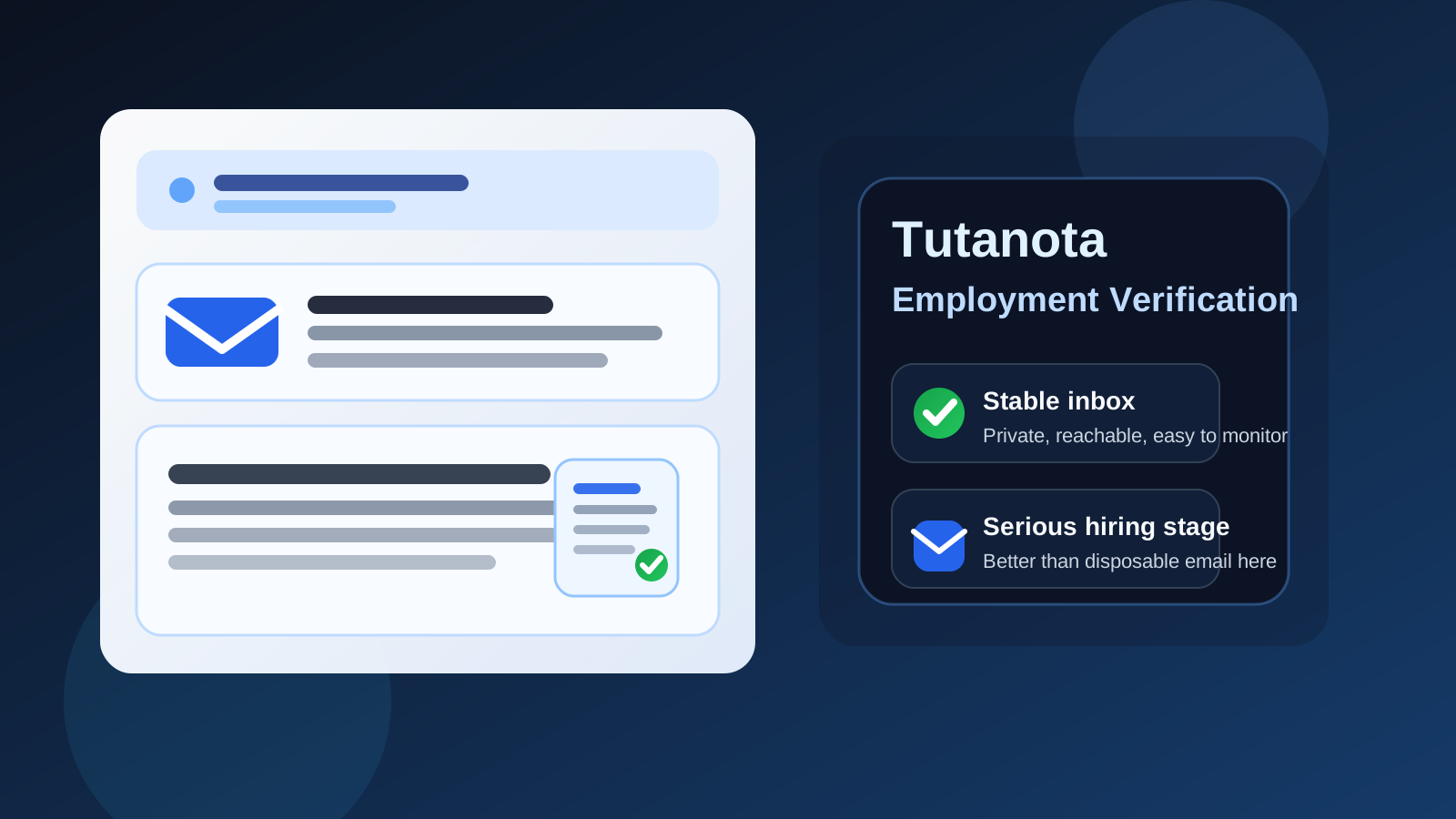
Short answer: Tutanota is usually fine for employment verification
Most employers and verification vendors do not care whether your email is Gmail, Outlook, Proton Mail, or Tutanota. What they care about is whether it works, whether you respond on time, and whether important messages do not disappear in the middle of a sensitive hiring step.
That makes Tutanota a reasonable option for privacy-conscious job seekers. It can help you keep employment-verification messages away from your oldest everyday inbox, and it does not carry the same temporary feel as a throwaway address. But it still needs to function like a professional inbox. Employment verification is not the stage where you want to look disposable, lose access, or forget which address you used.
Why employment-verification email is different from early-stage job-search email
Earlier in a job search, some people use temporary inboxes to reduce spam, test job boards, or keep lower-trust signups away from a primary address. That can be sensible when you are browsing listings, comparing platforms, or deciding which services deserve real contact information.
Employment verification is different. By the time a company starts verifying your background, titles, dates, or prior employers, the process is usually tied to a real offer or late-stage hiring decision. Your email may be used for:
- consent and disclosure forms
- secure portal invitations
- requests to confirm employer names, dates, or job titles
- deadline reminders tied to onboarding
- follow-up questions if records do not match cleanly
- status updates from HR or a third-party verification vendor
That means the best inbox at this stage is not just private. It also needs to be stable, searchable, and easy to monitor. Tutanota can work well for that if you use it as a real communication channel instead of a one-off shield.
Why Tutanota can be a good choice for employment verification
1. It gives you privacy without looking disposable
A big reason people consider Tutanota is control. You may not want every recruiter, HR portal, or verification vendor using the same inbox tied to newsletters, shopping accounts, and years of personal logins. Tutanota gives you a cleaner lane for sensitive hiring communication without looking like a throwaway address.
That matters because employment verification sits in an awkward middle ground: private enough that you want separation, but formal enough that you still need to look reachable and serious. A stable Tutanota inbox can strike that balance well.
2. It can keep verification messages organized
Employment verification often generates scattered communication from more than one sender. You may hear from the employer’s HR team, an outside verification company, and an automated portal. Keeping that traffic in a dedicated inbox makes it easier to spot what is actually important.
If you already use Anonibox earlier in your search to protect your main address from job-board clutter, that can still be useful. But once an opportunity becomes real and employment verification begins, a stable inbox like Tutanota is usually the better handoff point.
3. It can reduce spillover into your main inbox
Even legitimate hiring workflows can create follow-up messages you do not necessarily want mixed into your oldest personal account. A separate mailbox can make your search feel less noisy and help you review hiring records later if you need to check exactly what was requested or when you responded.
That is especially helpful if you are interviewing with several employers at once and want to avoid mixing onboarding-style messages with unrelated personal communication.
Where Tutanota can create problems if you use it carelessly
1. Switching addresses in the middle of the process
If you applied with one email and suddenly start using another during employment verification, confusion can follow. A recruiter may write to the first inbox while the verification vendor writes to the second. The safest move is consistency. If you want to use Tutanota for employment verification, decide early and keep the same address attached to the process whenever possible.
2. Not checking it often enough
The biggest risk is usually not the provider. It is neglect. If you open a separate private inbox and then forget to check it, you can miss time-sensitive forms or clarification requests. Employment verification often moves on deadlines, and an inbox that feels tidy is only useful if you actually monitor it.
3. Treating it like a temporary inbox
An employment-verification workflow may involve records you want to reference later, especially if a start date changes, a portal needs to be reopened, or a verifier asks for clarification after a delay. Do not use Tutanota as if it were disposable. Use it as a normal mailbox you plan to keep accessible through the full hiring and onboarding cycle.
Is Tutanota better than a temporary email for employment verification?
Usually, yes. Temporary email has a place, but that place is mostly earlier in the funnel. It can be useful when you want to reduce spam from job boards, low-trust signups, or one-time downloads. It is much less ideal when a real employer or verification company needs an address that stays reachable.
Employment verification can involve identity confirmation, deadline reminders, document flow, and back-and-forth questions. That is why a stable provider like Tutanota usually makes more sense than a disposable inbox once the hiring process becomes serious.
A practical approach is simple:
- use a temporary or separate inbox for noisier early-stage signups if needed
- move serious hiring communication to a stable mailbox you control
- stay consistent once employment verification begins
That gives you some privacy without creating avoidable friction.
Best practices if you use Tutanota for employment verification
Use one address consistently
Do not bounce between multiple inboxes unless you have a clear reason. If the employer knows you by one email address, keep the verification process tied to that same address whenever possible.
Check it daily, and more often when deadlines are active
Verification requests can be surprisingly time-sensitive. If a consent form, portal step, or clarification request sits unopened too long, the delay can slow your onboarding timeline.
Save important emails and portal links
Keep the key messages easy to find. Portal invites, case numbers, consent links, help contacts, and instructions for resubmission should not get buried. A simple label or folder system is often enough.
Whitelist legitimate senders if needed
If the employer tells you which verification company they use, keep an eye out for that domain and make sure their emails are not overlooked. The exact method varies, but the principle is universal: know what you are waiting for and monitor it closely.
Verify before sending sensitive information
Employment verification can involve sensitive details. Before you upload forms or reply with personal information, confirm that the message is tied to the real employer or real verification vendor. Privacy-conscious inbox choices help, but they do not replace normal phishing caution.
When you might want a different inbox instead
Tutanota is not automatically the best choice for every person. Another stable inbox may be better if:
- you already applied and interviewed through a different professional address
- you rarely check your Tutanota inbox
- you share a Tutanota address across too many unrelated projects
- you want all hiring communication to stay in one established job-search mailbox
The rule is simple: the best email for employment verification is the one that stays private and dependable. Privacy without consistency creates stress. Consistency without privacy may create clutter. Aim for both.
A quick decision checklist
- Will you check this inbox at least daily?
- Can you keep using the same address through the whole verification process?
- Will important messages stay accessible for weeks if needed?
- Are you using it as a real mailbox rather than a throwaway?
- Have you confirmed which employer or verification vendor should be contacting you?
If the answer to those questions is yes, Tutanota is usually a reasonable choice.
Final answer
Tutanota can be a good option for employment verification if you want a more private inbox without relying on something disposable. It is usually much better than a temporary address once verification starts, because employment verification depends on follow-up messages, stable access, and quick responses.
The important part is not the provider name by itself. It is how you use it. Keep the inbox active, monitor it closely, stay consistent across the process, and verify unexpected requests before sending sensitive information. Do that, and a Tutanota address can give you useful privacy without making a legitimate employment-verification workflow harder than it needs to be.