Usually no: for job interviews, one stable, well-monitored email address is better than listing two. Two addresses can confuse recruiters, split scheduling messages, and make it easier to miss an interview invite or last-minute update.
If you want more privacy, the better setup is one dedicated interview email address or an alias that forwards into a single inbox. That gives you control without creating communication friction when the stakes are higher.
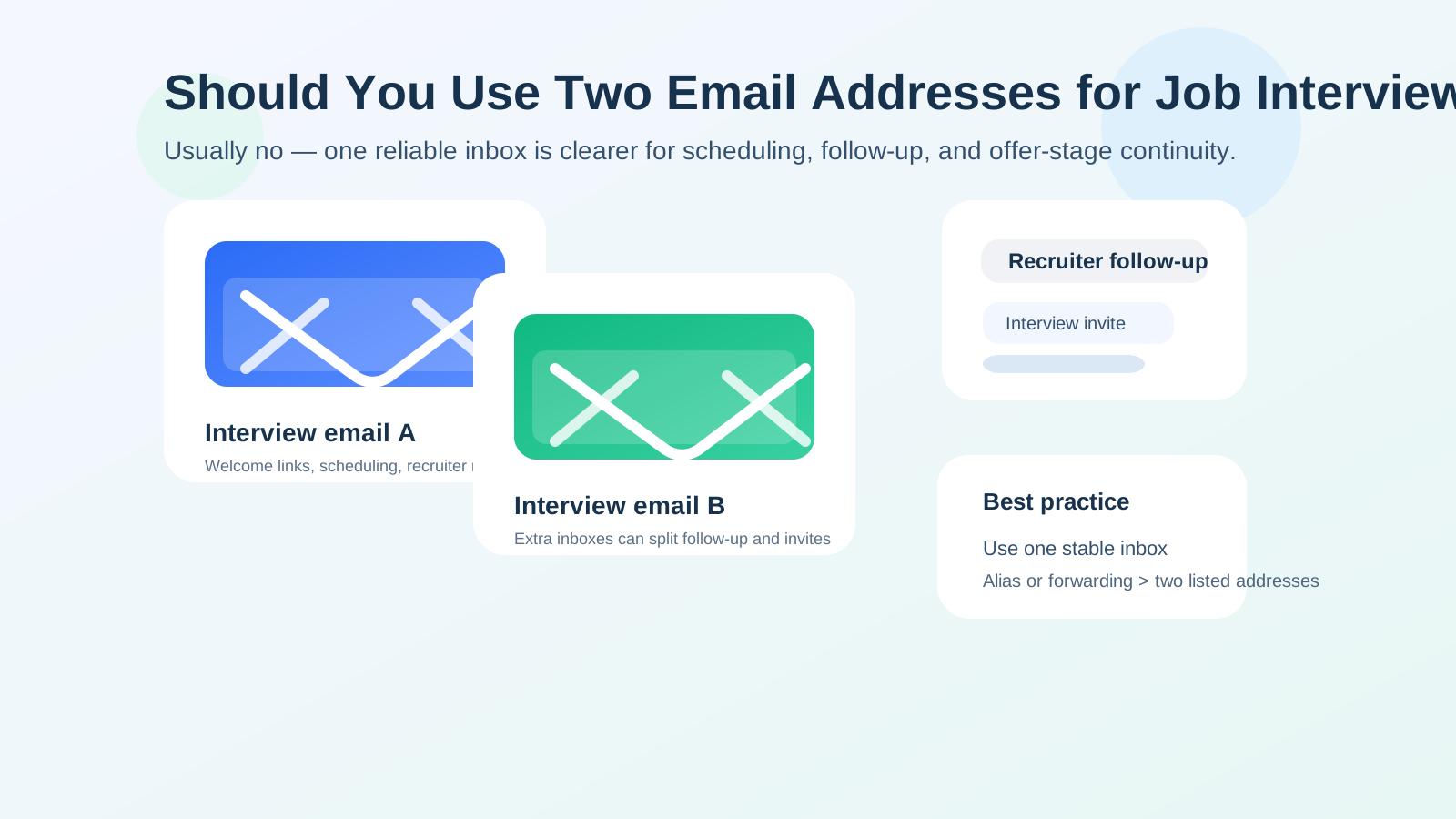
Why people consider using two email addresses for job interviews
The idea makes sense at first. Job seekers often want one address for privacy and another for reliability. Maybe you used one inbox for job boards, another for direct applications, or a temporary address earlier in your search when you were trying to avoid spam. By the time interviews start, though, the goal changes. You are no longer filtering random outreach. You are trying to make it easy for a real recruiter or hiring manager to reach you quickly and consistently.
That is why the question is not just about privacy. It is about coordination. Interview communication usually includes multiple moving parts: screening calls, calendar invites, assessment instructions, travel details, rescheduling notes, panel confirmations, and sometimes documents to sign later. Splitting that workflow across two addresses can create more problems than it solves.
Why listing two email addresses often backfires
1. Recruiters usually pick one and ignore the other
Most recruiters will not maintain parallel contact habits just because you gave them two addresses. They will choose the first one they see, the one they already have on file, or the one stored in their applicant tracking system. If you hoped they would use one address for formal messages and another for casual follow-up, that usually will not happen.
2. Calendar invites and interview links can get scattered
Interview logistics are especially easy to lose when they land in different inboxes. One message might contain the scheduling link. Another might include the updated time zone. A third might contain the actual meeting link. If those arrive in separate places, you increase the odds of missing something small but important.
3. It can look inconsistent
Two addresses do not automatically look suspicious, but they can raise avoidable questions. Which one should the interviewer use? Which one belongs in the system? Why are there two? During interviews, clarity helps. Employers are not grading you on having the most privacy-optimized setup. They are trying to coordinate with you smoothly.
4. You may create extra work for yourself
Even if recruiters do not mind, you still have to monitor both inboxes carefully. That means checking both for spam filtering mistakes, both for attachments, and both for reschedules that may arrive at inconvenient times. A privacy setup that makes your life harder is not much of an upgrade.
When a second address can help behind the scenes
A second email address is not always a bad idea. It is just usually a bad idea to list both during interviews.
For example, a second address can still be useful if:
- You use one public-facing address for applications and networking, but forward everything into one primary inbox.
- You want a dedicated job-search mailbox that stays separate from your personal life.
- You need an address just for account creation on scheduling tools or webinar platforms tied to recruiting events.
- You are phasing out an older address and want to keep it active temporarily while everything migrates to one better inbox.
In those cases, the second address works as part of your internal setup. The key distinction is that you still give employers one clear point of contact.
The better alternative: one interview inbox, plus privacy controls
If your real concern is privacy, clutter, or staying organized, you do not need two listed email addresses. You need one reliable address paired with a smarter workflow.
Use one dedicated interview address
A separate inbox for your job search can be a great idea, especially once interviews begin. It helps you keep recruiter outreach, interview prep, travel confirmations, and offer-stage paperwork away from newsletters and personal messages. The important part is consistency: choose one address and use it everywhere you want direct employer follow-up.
Use forwarding or aliases if you need flexibility
If you want extra control, use an alias or forwarding setup that still funnels into one inbox you actually monitor. That way, you can protect your main address without forcing interviewers to guess which contact line matters most.
Switch away from temporary inboxes before interviews get serious
A temporary inbox can be useful earlier in the funnel, such as for testing job boards, downloading career resources, or signing up for lower-stakes events. But interviews are different. At that stage, you need continuity. If you used Anonibox or another temporary email tool during the exploratory part of your search, interviews are usually the point where it makes sense to move to a stable inbox you control long enough to receive reschedules, follow-up questions, and possible offer paperwork.
When giving two addresses may make sense
There are a few edge cases where two addresses are not unreasonable, but they are rarer than people think.
- An employer explicitly asks for an alternate contact address. If the form or recruiter requests a backup email, follow the instruction.
- You are transitioning from one inbox to another. If you recently changed addresses, a short overlap period can help. Even then, explain which address you prefer.
- You need a formal admin address plus a practical day-to-day address. This can happen in unusual cases involving contractors, executive assistants, or shared coordination, but it is not typical for most job seekers.
Even in these cases, clarity matters. If you list two addresses, label the preferred one clearly and make sure both are actively monitored.
What employers actually care about
Most employers are not looking for a perfect email strategy. They care about whether you respond promptly, show up prepared, and are easy to coordinate with. A polished, boring, reliable inbox usually beats a clever but complicated system.
That means your interview email should be:
- Stable enough to keep using through later interview rounds
- Checked frequently
- Professional enough that the address itself does not distract
- Connected to a calendar workflow you trust
- Protected with strong security habits like a unique password and two-factor authentication
A simple setup that works well
For most people, the safest and cleanest setup looks like this:
- Create one dedicated job-search email address if you do not want to use your main personal inbox.
- Use that same address on applications, interview scheduling forms, and recruiter follow-up.
- Forward or alias older addresses into that inbox if needed.
- Connect it to one calendar you actually watch.
- Check spam and promotions folders during active interview periods.
This gives you organization and privacy without forcing the employer side of the process to adapt to a two-address system.
Mistakes to avoid
- Listing two addresses and assuming recruiters will know which one to use
- Using a temporary inbox long after the interview process becomes serious
- Switching addresses mid-process without telling anyone
- Using one address for the application and forgetting to monitor it after the interview is scheduled
- Creating a complicated alias system that you do not fully control or understand
So, should you use two email addresses for job interviews?
Usually no. One clear, stable, actively monitored email address is the best choice for job interviews because it reduces confusion and keeps scheduling, follow-up, and later-stage communication in one place.
If privacy is your concern, use one dedicated interview inbox, or use aliases and forwarding behind the scenes. That gives you control without making recruiters guess where important messages belong. In interview situations, simplicity is not just cleaner. It is safer.