Usually no. For most career fairs, one reliable phone number is clearer and more useful than giving two numbers at once.
A second number only helps when it serves a real backup or privacy purpose and your primary contact line is still obvious to recruiters.
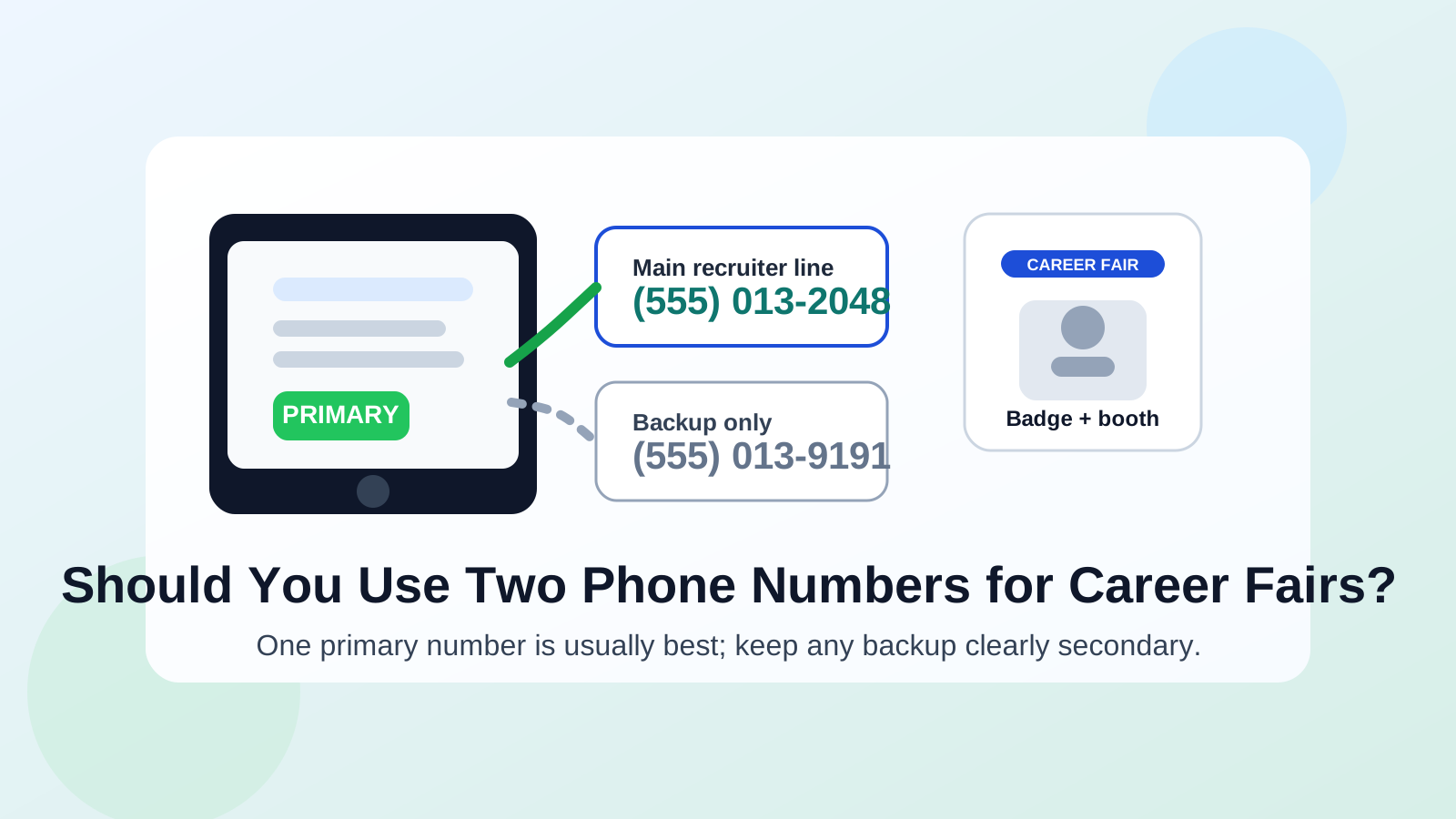
That is the practical answer behind searches for two phone numbers for career fairs. The idea sounds smart at first: more ways to reach you should mean less chance of missing an opportunity. But career fairs are fast, messy, and overloaded with quick notes, badge scans, QR forms, and recruiter follow-up. In that kind of environment, extra contact choices often create confusion instead of improving your odds.
Most recruiters do not want to decode your communication system. They want one number they can call or text when they decide to follow up. If they see two numbers with no clear explanation, they may wonder which one is current, which one you actually check, or whether one of them is disposable. That small moment of hesitation can work against you.
The short answer
If you are talking to an employer you genuinely want to hear from, give one primary phone number. It should be a number you can answer, return calls from, and keep active through the full application timeline.
If privacy is your concern, the better move is usually not to hand out two equal numbers. It is to choose one dedicated job-search number, or keep a backup line behind the scenes and only share it when there is a specific reason.
Why this question comes up at career fairs
Career fairs put you in an unusual contact-sharing situation. In a short stretch of time, you might:
- talk to several recruiters in a row
- upload a résumé to an event platform
- scan QR codes for talent communities
- share contact details with staffing agencies, employers, sponsors, or school staff
- collect follow-up promises that may turn into calls or texts later
Because of that, people start thinking in layers: one number for serious recruiters, one number for spammy lists, one number for convenience, one number for privacy. The instinct is understandable. The problem is that what feels organized to you can look unclear to the person trying to contact you.
There is also a real privacy angle. Career fairs can spread your contact details farther than expected. Even when the event is legitimate, your number may end up in CRM systems, recruiter notes, follow-up campaigns, or third-party list tools. That makes some separation sensible. The question is how to get that separation without making yourself harder to reach.
Why two visible phone numbers usually create problems
1. Recruiters may not know which one to use
If your résumé, badge profile, or handwritten note shows two numbers, many recruiters will simply pick one and move on. The trouble is that they may not pick the one you actually monitor best. If both look equal, you have introduced uncertainty into the first step of follow-up.
2. Calls and texts can split across two threads
One recruiter may text one number while another person from the same company calls the other. That can fragment the conversation. You may miss context, respond from the wrong place, or fail to realize two contacts belong to the same opportunity.
3. It can look less polished, not more prepared
Two numbers do not automatically signal professionalism. Often they just make it look like you are undecided about your own contact workflow. A clean single contact point feels more deliberate.
4. It adds friction to a high-volume process
Career-fair recruiting is often a quick triage exercise. Employers review notes later, compare candidates, and send follow-up in batches. Any added friction can slightly reduce the chances of a smooth reply chain. You want to remove small obstacles, not create them.
When a second number can make sense
A second number is not always a bad idea. It just should not usually be presented as a second equal public contact at the fair.
Here are the situations where a second number can be reasonable:
- You have a dedicated job-search line: this can be a smart privacy setup if it is the number you actually want recruiters to use.
- You need a true backup: for example, you are traveling, your primary number has coverage issues, or you temporarily cannot rely on one device.
- You are separating personal life from job-search traffic: a dedicated number can help with boundaries and spam control.
- A recruiter explicitly asks for an alternate contact: in that case, giving a backup number is fine because the purpose is clear.
The key difference is clarity. If you do share a second number, it should be labeled as backup or alternate, not presented as two equal options with no explanation.
Better alternatives than handing out two numbers
Use one dedicated job-search number
This is usually the strongest option. Instead of giving two public numbers, use one number specifically for career activity. That gives you cleaner boundaries without confusing recruiters.
Keep your primary number consistent across materials
Use the same main number on your résumé, fair profile, and follow-up email signature whenever possible. Consistency reduces mistakes and helps employers match their notes to the right candidate.
Use email for written detail and phone for direct reachability
Phone numbers are great for quick contact. Email is better for instructions, links, schedules, and documentation. A simple contact system is easier to manage than trying to make multiple phone lines do everything.
Keep your protective layers behind the scenes
If you are worried about spam from QR forms, sponsor downloads, or event newsletters, put the protective layer there instead. For example, if you use Anonibox or another disposable-email workflow for low-trust signups, that protects your inbox without complicating your recruiter-facing phone number.
Practical career-fair examples
You meet a recruiter at a booth and they ask for your number
Give one number. If you want the follow-up, make it the number you answer most reliably. Do not make them guess.
You are filling out an event platform profile
If the platform seems legitimate and will be the official source of employer follow-up, use the same primary number you want recruiters to have. If the platform feels more like a mailing-list funnel than a real recruiting tool, think carefully before adding a personal number at all.
You want to protect your personal line from spam
That is a real concern. The cleaner fix is one separate job-search number, not two public numbers on the same résumé or contact card.
You are already using one number for family and one for work-style contacts
That can be perfectly fine. Just choose one as the clear primary career-fair contact. Your internal system does not need to become the recruiter’s problem.
What if a recruiter asks for a backup number?
If someone specifically asks for another way to reach you, then yes, you can share a second number. That is different from proactively listing two numbers everywhere.
In that case, label them clearly:
- Primary: the number to call or text first
- Backup: only if the primary line fails or you are unreachable
That keeps the communication path understandable and prevents the second number from creating unnecessary noise.
Red flags to keep in mind
Not every request for contact info at a career fair deserves the same level of trust. Be more careful if:
- the booth or recruiter is vague about the company identity
- you are pushed toward text-only contact immediately
- the follow-up asks for sensitive information unusually fast
- the event form feels more like lead collection than hiring
- you are asked to move to off-platform messaging apps before there is any real job discussion
In those cases, giving more contact paths does not help. It usually just increases your exposure.
Career-fair phone checklist
- Choose one primary number before the event.
- Make sure voicemail is set up and professional.
- Use the same number on your résumé and fair profile when possible.
- Only share a backup number when there is a specific reason.
- Keep privacy tools behind the scenes rather than making recruiters decode them.
- Respond quickly so one good number works better than two ignored ones.
Final answer
Most of the time, you should not use two phone numbers for career fairs. One clear, reliable, recruiter-friendly number is better for follow-up and easier for employers to use.
If you want more privacy, the smarter move is one dedicated job-search number or one carefully controlled backup that stays secondary. That way, you protect your personal contact information without making yourself harder to reach when a real opportunity comes along.