Usually no — you do not need to use two phone numbers for salary negotiations, and for most people one reliable primary number is the cleaner choice.
A second number only helps when it has a clear job, such as protecting privacy or separating screening traffic, without making the recruiter guess which number to use.
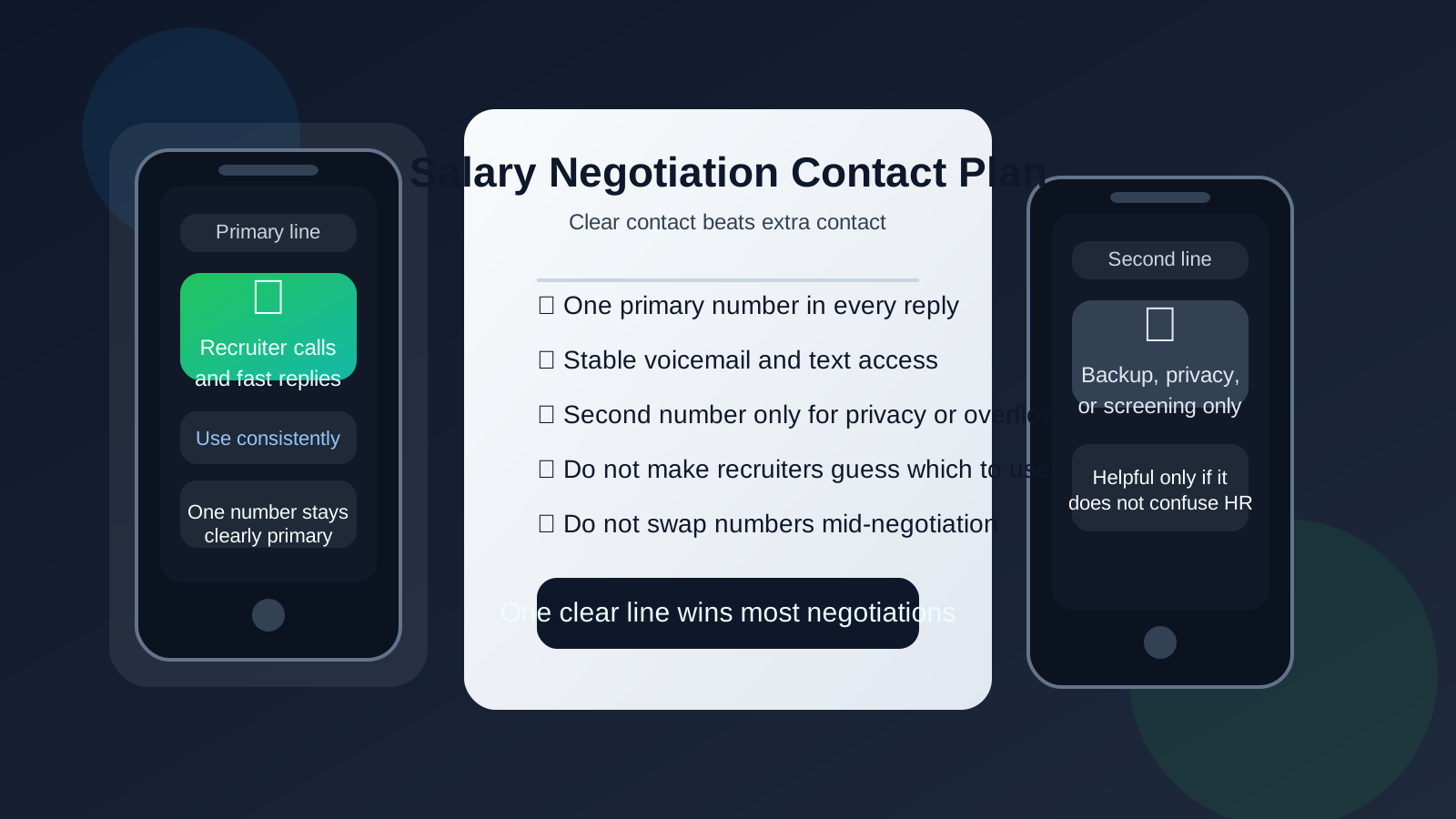
That is the real answer behind searches for two phone numbers for salary negotiations. By the time compensation discussions are happening, the communication stakes are higher than they were during early job applications. You may be talking about base pay, bonuses, equity, start dates, benefits, relocation, approval timelines, revised offers, and written follow-up after a counteroffer. In that environment, clarity matters more than redundancy.
Two phone numbers can still be useful in a narrow set of situations. But most of the value comes from having one primary line and one clearly secondary line, not from treating both numbers as equal contact points. If the recruiter, HR contact, and hiring manager are unsure which number is current, you create friction at exactly the moment you want the process to feel smooth.
Short answer: one main number is usually best
For most job seekers, the safest setup during salary negotiations is one phone number that you answer consistently, monitor closely, and use in every reply. That number might be your personal line or a dedicated job-search number, but it should feel stable and boring in the best possible way.
A second number can make sense if it solves a real problem:
- you want a privacy layer between your main life and recruiting traffic
- you used a separate number during the broader job search and want to keep it active
- you need a backup for voicemail, text reliability, or regional calling issues
- you are filtering recruiter noise from earlier stages while keeping negotiation communication cleaner
The mistake is assuming that two numbers automatically make you more reachable. They can also make you easier to miss.
Why people consider using two phone numbers during negotiations
Once an employer moves toward an offer, communication often starts happening across multiple channels. A recruiter may call to test flexibility on compensation. HR may text about a follow-up slot. An e-signature platform may email the written offer. You may also still be talking to other employers at the same time. That is when some people start thinking, “Would two numbers help me stay organized?”
Usually they are trying to solve one of these problems:
- Privacy: they do not want their longtime personal number spread across recruiters, staffing partners, and vendor tools.
- Organization: they want to keep early-stage job-search calls separate from final-stage offer discussions.
- Spam control: old recruiter lists and job boards can keep generating calls even after a search narrows down.
- Backup access: they worry about missed calls, weak signal, or not hearing a voicemail on the first line.
- Boundary setting: they want negotiation calls to live in a compartment they can monitor intentionally.
Those are reasonable concerns. The question is not whether two numbers are allowed. The question is whether they improve the negotiation workflow without making it messier.
When two phone numbers can actually help
1. One number is clearly primary and the other is truly secondary
This is the cleanest use case. Maybe you have a dedicated job-search number that all recruiters already know, and your personal number stays private. Or maybe your main personal line is the primary contact, while a second line exists only as a voicemail fallback or filtered archive for earlier recruiter traffic. Either way, the employer should not need to guess which number is the “real” one.
2. You are carrying over a privacy-first setup from earlier in the search
Some candidates already use a separate inbox or phone line during applications, especially when posting résumés on job boards or talking to multiple recruiters. If you have used Anonibox or a similar workflow to keep your main email cleaner, a separate negotiation number can fit that same privacy logic. The important shift is that the setup should become more stable at negotiation time, not more experimental.
3. One line is better for calls and the other is better for text follow-up
In some regions or devices, one number may be tied to a line or app that handles voicemail and call screening better, while another may be more convenient for text reminders and quick scheduling. That can work, but only if you present one number as primary and deliberately monitor the other.
4. You are dealing with lingering recruiter noise from the broader search
If your earlier applications generated a lot of cold recruiter calls, keeping those on a separate line can prevent random interruptions while you focus on the employer you are actively negotiating with. Again, the active negotiation itself should still funnel toward one dependable point of contact.
When two phone numbers become a bad idea
1. You give both numbers with equal weight
This is where confusion begins. If your résumé has one number, your email signature has another, and your last message says “either is fine,” you create one more decision for the recruiter. That may sound harmless, but during offer-stage communication, small ambiguities can slow things down.
2. You switch numbers mid-negotiation
Changing contact details after compensation talks begin can make you look disorganized unless there is a clear reason. If you do need to change numbers, explain it simply and state the one number that should be used going forward.
3. One of the numbers is unreliable
A second number is not helpful if it is tied to a service you rarely check, poor voicemail setup, weak app notifications, or a number you plan to abandon in a few days. Negotiations can move slowly and then suddenly speed up. Reliability matters more than cleverness.
4. You are using two numbers to avoid making a decision
Sometimes people list two numbers because they are unsure which line feels more professional, more private, or more convenient. That uncertainty usually means you should simplify. Negotiation contact details should reduce ambiguity, not reflect it.
What is the real risk of sharing too many numbers?
The main risk is not that employers will be offended by multiple phone numbers. It is that communication splits. One contact may save the first number. Another may use the second. A third may copy what is in your signature. Suddenly voicemail, missed calls, and text reminders are scattered across places you have to reconcile mentally.
There is also a privacy cost. Every additional number you distribute becomes another identifier tied to your job search. If one of those numbers is connected to job boards, staffing agencies, or lower-quality recruiter lists, it may keep attracting spam long after the negotiation ends.
Using two numbers is only worth it if the second number gives you more control than the first, not just more places for calls to land.
Best practice: one negotiation number, one backup plan
If you want the upside of two numbers without the chaos, use this structure:
- Choose one number as the negotiation number. This is the one you use in email signatures, callbacks, and direct replies.
- Keep the second number in a support role. It can be for voicemail forwarding, archived recruiter traffic, or emergency backup if you truly need it.
- Do not advertise both unless necessary. If you must share both, explicitly label one as your preferred number.
- Check both consistently. A backup line that you forget about is not a backup.
This setup keeps the human side simple: the employer knows where to reach you, and you still preserve some privacy and control.
Should you use a separate job-search number as the primary one?
Often, yes. If you already have a dedicated job-search number that you control well, it can be a smart primary number for negotiations. It keeps the process separate from your everyday personal line and makes it easier to scale down job-search traffic after you accept a role.
What matters is that the number feels stable enough for real offer-stage communication. You should be able to answer calls, receive voicemails, get texts quickly, and keep the number active long enough for negotiation, offer paperwork, and onboarding handoff if needed.
What you generally do not want is a disposable-feeling phone setup that looks temporary right when the conversation is becoming serious.
How this compares to using two email addresses
People often assume phone numbers work like email aliases, but the trade-off is different. With email, multiple inboxes can be manageable because threads are visible and searchable. With phone calls, the cost is interruption and missed timing. A call that lands on the less-monitored number at the wrong moment may simply not get answered.
So if you already use a separate inbox strategy with Anonibox or another privacy-first setup, do not automatically copy that structure into phone numbers. Email can tolerate more segmentation. Offer-stage calling usually benefits from more simplicity.
How to share two numbers without creating confusion
If you genuinely need both, keep the wording plain and explicit. For example, one line can be your preferred contact number and the other can be noted only when truly useful. You do not need a long explanation. You just need a clear signal about which number should be used first.
Avoid:
- listing two numbers with no label
- alternating numbers across different documents
- replying from one channel while asking the recruiter to call another without context
- introducing a second number late in the process without saying which one replaces the old one
Clarity beats cleverness here.
Quick checklist before you decide
- Do I already have one reliable number that works well enough on its own?
- Is the second number solving a real privacy or organization problem?
- Would I feel confident checking both numbers every day?
- Will the employer know exactly which number to use first?
- Am I adding complexity at the exact stage where I should be reducing it?
If the second number does not clearly improve control, you probably do not need it.
Final answer
Should you use two phone numbers for salary negotiations? Usually no — not as two equal contact lines. One clear, reliable primary number is better for most people because it keeps recruiter and HR communication simple when timing matters.
A second number can still be useful if it serves a defined purpose such as privacy, backup access, or separating noisy recruiter traffic from the final negotiation. Just keep the structure obvious: one number leads, the other supports. That way you protect your boundaries without making the negotiation harder than it needs to be.