Yes, you can use Yahoo Mail on your resume if the address is clean, active, and easy to monitor. A normal Yahoo address is not automatically unprofessional.
The bigger issue is whether your specific Yahoo inbox feels organized and stable. If it is an old address full of spam, odd screen-name baggage, or messages you barely check, a cleaner separate email is usually the smarter move.
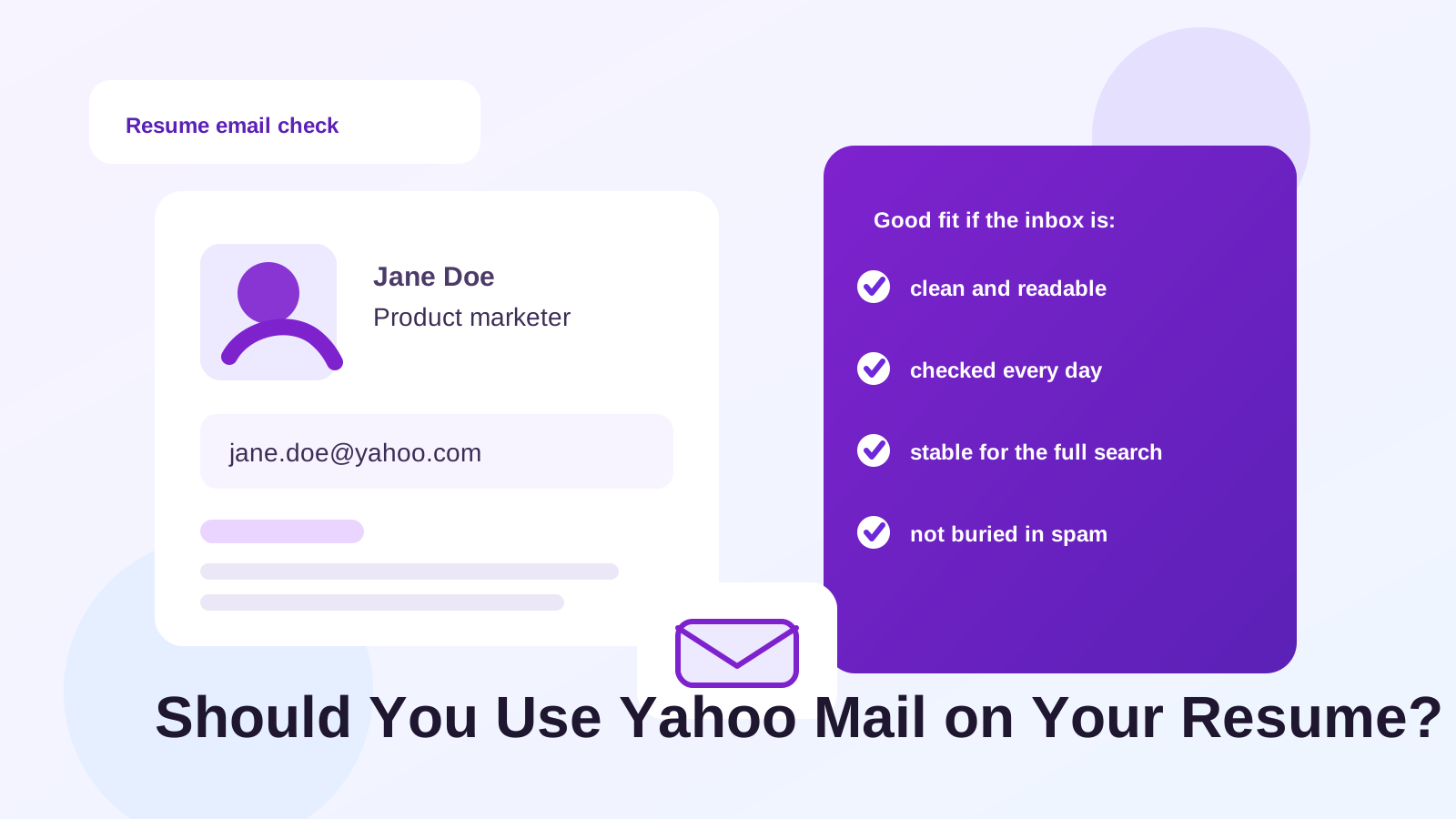
People tend to obsess over the provider name, but hiring teams are usually asking a simpler question: will sending a message to this address help them reach you quickly and without confusion? If the answer is yes, Yahoo can work. If the answer is no, the problem is not really Yahoo. It is the condition of the inbox behind it.
That matters because resume email is small but important. Recruiters may save your file, forward it, or reopen it weeks later. A solid email address supports that process quietly. A messy one creates doubt, lost messages, or friction you do not need.
Why Yahoo Mail can still work on a resume
Yahoo Mail is a mainstream provider with a long history. Recruiters have seen it before. It does not look like a disposable inbox, it does not require explanation, and it can be perfectly fine if the address itself looks professional.
- It is familiar. Most people know what a Yahoo address is, even if they do not use it themselves.
- It can be long-term. Many Yahoo users have kept the same address for years, which is useful when hiring timelines stretch out.
- It is personal rather than employer-controlled. That gives you more continuity than a work or school account.
- It can be dedicated. If you keep Yahoo mostly for professional outreach, that focus can actually help.
In other words, Yahoo Mail is not disqualified just because it is older or less trendy than Gmail. A recruiter is far more likely to notice a sloppy address than the provider name itself.
What recruiters actually care about
Most employers are not ranking candidates based on email brand loyalty. They care about whether your contact details feel trustworthy and easy to use.
- Does the address look readable and professional?
- Will you actually see and answer messages sent there?
- Will the address still belong to you later in the process?
- Does it match the email you use on applications, cover letters, and follow-up messages?
If those boxes are checked, Yahoo Mail is usually acceptable. If they are not, switching providers will not solve the underlying problem by itself.
What makes Yahoo Mail a little different from Gmail or Outlook
Yahoo Mail has one specific reputation issue: a lot of people still have very old Yahoo addresses created when they were teenagers, in college, or during a totally different phase of life. That means the risk is not “Yahoo looks bad.” The risk is that an old Yahoo address is more likely to come with clutter, dated naming, or an inbox you no longer manage carefully.
That is why Yahoo Mail on a resume works best when it feels current and intentional. A simple address like firstname.lastname@yahoo.com is a very different signal from something like skaterboy2007@yahoo.com or an account tied to years of shopping promos, gaming logins, and spam.
If your Yahoo address still feels clean, stable, and easy to trust, you are fine. If it feels like digital attic storage, your resume is not the place to dust it off.
When Yahoo Mail is a good fit for your resume
You have a clean, name-based address
This is the biggest factor. Recruiters are comfortable with ordinary addresses built around your name. A format like firstname.lastname@yahoo.com, firstnamelastname@yahoo.com, or another simple variation keeps the focus on you rather than the email itself.
You actually check the inbox
A good resume email is one you monitor. If you are likely to miss interview requests, follow-up questions, or scheduling changes because you never open Yahoo, then it is the wrong choice no matter how neat the address looks.
You want a stable personal address
A personal Yahoo inbox can outlast jobs, schools, moves, and hiring cycles. That kind of long-term ownership matters more than people realize. Old resumes often stay in systems, recruiter folders, and forwarded message threads longer than expected.
You keep it reasonably organized
If the inbox is usable, searchable, and not drowning in noise, Yahoo can serve the role just fine. You do not need perfection. You need enough control that a recruiter message will not disappear into chaos.
When Yahoo Mail is the wrong choice
The address looks childish or random
If your Yahoo address includes jokes, fandom references, excessive numbers, or old nicknames, it is time to retire it from resume use. That is true for any provider, but Yahoo accounts are especially common in the “ancient awkward address” category because many people created them a long time ago.
The inbox is overloaded with spam
If every important message gets buried under newsletters, coupon blasts, and account alerts, recruiter follow-up becomes riskier. A resume email should not require daily archaeological work.
You barely log in
An address you forget to check is worse than an address with a less fashionable provider. Reliability beats aesthetics. If you live in another inbox and Yahoo only gets opened every few weeks, use the inbox you actually manage.
The account recovery setup is weak
If you are not confident you could recover the account after a lockout, device change, or password issue, it is not a strong foundation for your job search. Resume contact information should be boringly dependable.
A separate Yahoo inbox can be smarter than your old main one
If you like Yahoo but do not trust your current address, the best solution may be a fresh, professional Yahoo account used mainly for job searching. That gives you the familiarity of the provider without carrying over years of clutter.
A dedicated resume inbox can help you:
- keep recruiter messages separate from daily personal traffic
- search faster when someone follows up after a delay
- set cleaner notifications and filters
- reduce the chance that important messages land in a neglected corner of an old account
This is often the real sweet spot. You do not need to abandon Yahoo Mail. You just need an address that feels deliberate instead of inherited from another era.
Privacy and spam considerations
Putting any email on a resume creates some exposure. Resumes get uploaded to job boards, emailed to recruiters, forwarded internally, and sometimes left in systems for months. That means your resume email should be something you can safely expose without handing out the keys to your entire personal life.
A dedicated Yahoo address can work well for that. It gives you a stable inbox for real employer contact while keeping your most personal email habits a bit more separate. If you are using Anonibox to protect your main inbox during early-stage signups, sketchier listings, or one-off job-board experiments, that can be useful too. Just do not put a temporary inbox on the resume itself. Your resume needs long-term continuity, not a short-lived address.
The practical middle ground is simple: use a stable personal or dedicated professional inbox on your resume, and use more disposable tools only where temporary protection actually makes sense.
How to decide if your Yahoo address is resume-ready
Run through this quick checklist before you send out another application:
- Professional appearance: Does the address look like a real adult would use it in a business context?
- Daily access: Will you see messages quickly enough to reply within a reasonable window?
- Low clutter: Can you spot recruiter messages without digging through junk?
- Long-term control: Do you expect to keep access for the full hiring cycle?
- Consistency: Is this the same address you are using on applications and follow-ups?
If you can answer yes to those questions, Yahoo Mail is probably fine. If several answers are no, the fix is not to argue with yourself about branding. The fix is to set up a cleaner, more reliable inbox.
Examples of strong and weak Yahoo resume emails
These are not rules carved in stone, but they show the difference between “easy to trust” and “please do not make me type this into an ATS.”
- Strong: jane.doe@yahoo.com
- Strong: janedoedesign@yahoo.com
- Usually fine: jane.m.doe@yahoo.com
- Weak: cutiepie4ever@yahoo.com
- Weak: dragonmaster1999@yahoo.com
- Weak: anything hard to read, packed with symbols, or clearly tied to a joke
The goal is not to sound robotic. It is to remove unnecessary doubt. Your experience, writing, and interview performance should carry the weight, not your email address.
Should you switch away from Yahoo just for appearances?
Usually no. If your Yahoo address is clean, monitored, and under control, switching providers only for appearances is not likely to improve your results. Employers are not sitting around rejecting strong candidates because the email ends in yahoo.com.
What can improve results is switching away from a messy address, cleaning up your contact strategy, and separating job-search communication from the rest of your online life. Sometimes that means staying with Yahoo but using it better. Sometimes it means opening a new inbox elsewhere. Either choice is fine if it makes you more reachable and organized.
Final answer: should you use Yahoo Mail on your resume?
Yes, you can use Yahoo Mail on your resume if the address looks professional, the inbox is actively managed, and you expect to keep using it throughout your job search. Yahoo itself is not the problem.
The real question is whether your Yahoo account helps recruiters reach you quickly and confidently. If it does, keep it. If it feels dated, noisy, or neglected, create a cleaner dedicated inbox before sending more applications. A resume email should reduce friction, protect your privacy where possible, and stay reliable long after you hit submit.