Usually, no—your college email can work for some early student networking, but it is rarely the best long-term address for job referrals because access, forwarding, and follow-up reliability can change after graduation.
If a referral could turn into recruiter outreach weeks or months later, a stable professional inbox—often a separate job-search email or a well-managed alias—is usually the safer choice.
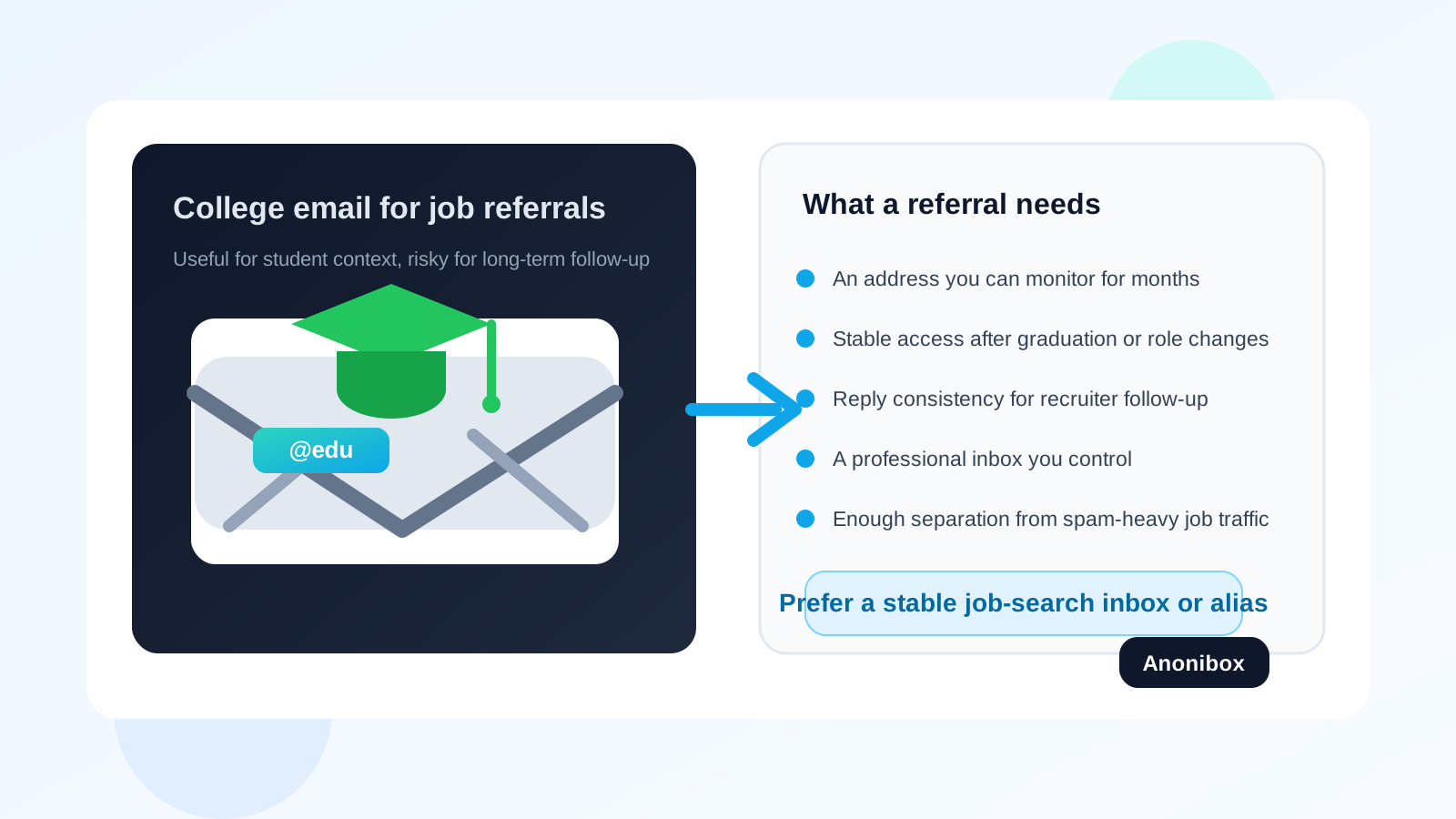
A referral is not just another application form. It often starts with a classmate, alum, professor, former intern manager, or professional contact putting their name behind you. That changes the stakes. The person referring you is signaling that you are worth a look, and the employer may respond later than you expect. Because of that, the address you attach to a referral needs to be dependable, easy to monitor, and professional enough to support a real hiring conversation.
That is why the college-email question matters. A student inbox can feel convenient because it is already tied to your university identity and you may still check it every day. But convenience during school is not the same thing as long-term reliability during a job search. The best email for job referrals is usually the one you fully control, not the one your school controls.
Why people consider using a college email for referrals
There are a few understandable reasons students and recent grads lean toward their college email address.
- It looks legitimate: an
.eduaddress can signal that you are currently enrolled or recently connected to a university. - It is already active: if you use it for classes, campus services, and student organizations, it may be the inbox you check most often right now.
- It separates job search traffic from personal mail: that can feel cleaner than mixing recruiter messages with shopping receipts and newsletters.
- It fits student recruiting contexts: some referral situations begin through campus clubs, alumni groups, or internship pipelines where a school identity makes sense.
So the answer is not that a college email is always wrong. It is that the trade-off changes once the referral moves from “student context” to “real hiring pipeline.”
When a college email can be acceptable
Using your college email is usually fine when all of the following are true:
- You are currently enrolled and expect to keep the address for a while.
- The referral is for an internship, campus recruiting program, or new-grad role happening in the near term.
- Your school email is reliable and you actually monitor it every day.
- You do not mind the referral thread being tied to your student identity.
In those cases, a college email is not a red flag. In fact, it can be contextually normal. If an alum is referring you for a summer internship while you are an active student, nobody is going to be shocked by a university address.
The bigger problem is what happens after that first stage.
Why college email often becomes a bad fit for job referrals
1. Access can expire or change
The biggest risk is simple: school-controlled accounts are not entirely yours. Some colleges keep alumni inboxes for years. Others reduce features, disable forwarding, tighten login rules, or close the account after graduation. A referral may not produce immediate results, so that timing matters more than people think.
If a recruiter comes back three months later and your campus account has changed, locked, or fallen out of your routine, you can miss the exact message that mattered.
2. Referral threads can turn into long hiring cycles
Referrals are rarely a one-message event. A contact may pass your résumé to an internal recruiter, who may contact you later, who may then hand you to a hiring manager, who may re-open the role weeks after that. What looked like a quick introduction can stretch across multiple rounds, calendar invites, and follow-up questions.
A disposable or unstable address is a bad match for that kind of communication chain. A college inbox is not disposable in the same way a burner address is, but it can still be unstable if your access depends on school policy rather than your own setup.
3. You may outgrow the student framing
Sometimes a college email helps because it explains your current stage. Other times it can over-emphasize that stage when you are trying to present yourself more broadly. If you are applying for full-time roles, changing fields, or building a longer-term professional identity, a more neutral professional email can age better than a school-branded one.
This is not about pretending you are not a student or recent grad. It is about using contact details that still make sense after the student label stops being the most important part of your profile.
4. School inboxes can be noisy
University accounts are often full of campus alerts, event promotions, portal notices, and department mail. That noise is manageable when you live in the ecosystem every day, but it is not ideal when you are trying to make sure you never miss a referral follow-up or interview request.
For something as important as a job referral, less clutter is better.
How job referrals differ from ordinary applications
With a cold application, you may be one of hundreds of candidates and the system may never contact you. A referral is different because it usually creates a real human expectation of follow-up. The referring person may ask whether anyone reached out. The recruiter may assume you are watching closely. You may need to reply quickly to keep momentum.
That is why reliability matters more here than it does for casual signups or early research. A referral should live in an inbox you control, check often, and plan to keep.
What is usually better than a college email?
A stable personal-professional email
For many people, the best answer is a normal long-term inbox that uses a clean, professional name and is not tied to a school or employer. It does not need to be fancy. It just needs to be stable, readable, and easy for you to manage.
A separate job-search email
If you want more privacy and better organization, a dedicated job-search inbox is often the sweet spot. It keeps recruiter messages, referrals, interview invites, and application traffic separate from your everyday life without making the address temporary or unreliable.
This is where a privacy-first workflow can help. If you want distance between your personal inbox and your career outreach, a separate address or well-managed alias can give you that boundary. A service like Anonibox can be useful when you want cleaner separation during job-search activity, but for an actual referral you should still use an address you can maintain and monitor long term.
An email alias you control
An alias can be a strong option if it forwards reliably to an inbox you actively use. It gives you privacy and sorting benefits without the fragility of a throwaway address. The key is that the underlying inbox must be stable. A referral is not the place for a mailbox you might abandon next month.
Usually not a temporary or burner inbox
Job referrals are one of the worst places to use a truly temporary inbox. You might get the first message, but the whole point of a referral is ongoing credibility and follow-up. If the address looks disposable or stops working, the referral chain breaks fast.
If you already gave someone your college email for a referral
Do not panic. This is easy to fix if you act early.
- Keep monitoring the college inbox closely until the process ends or you update the contact details.
- Add forwarding if your school allows it and test that it actually works.
- Reply from the same thread with your preferred long-term address once a real conversation starts.
- Update your résumé, LinkedIn contact details, and application materials so future messages point to the more stable inbox.
A simple line such as “For future recruiting communication, feel free to use this address” is usually enough. The goal is not to make the change dramatic. It is just to prevent missed follow-up later.
A quick decision checklist
Before using your college email for a referral, ask yourself:
- Will I still have dependable access to this inbox six to twelve months from now?
- Do I check it often enough to catch fast recruiter replies?
- Is this a short-term student recruiting context, or could it turn into a longer hiring process?
- Would a separate professional inbox make me more organized?
- Am I using this address because it is truly best, or just because it is convenient today?
If your answers point to uncertainty, that usually means a stable separate inbox is the better move.
Final answer
You can use your college email for job referrals, especially while you are still an active student in a short-term campus recruiting context. But in most cases, it is not the best long-term choice.
Referrals work best when your contact details stay reliable, professional, and easy to manage over time. If there is any chance the conversation will continue beyond the semester, beyond graduation, or beyond your current student routine, use an inbox you fully control. A separate job-search email or stable alias usually gives you the best mix of privacy, organization, and follow-up reliability.
That way, you protect your future opportunities instead of tying an important referral to an address that may stop fitting your life just when the right recruiter finally writes back.