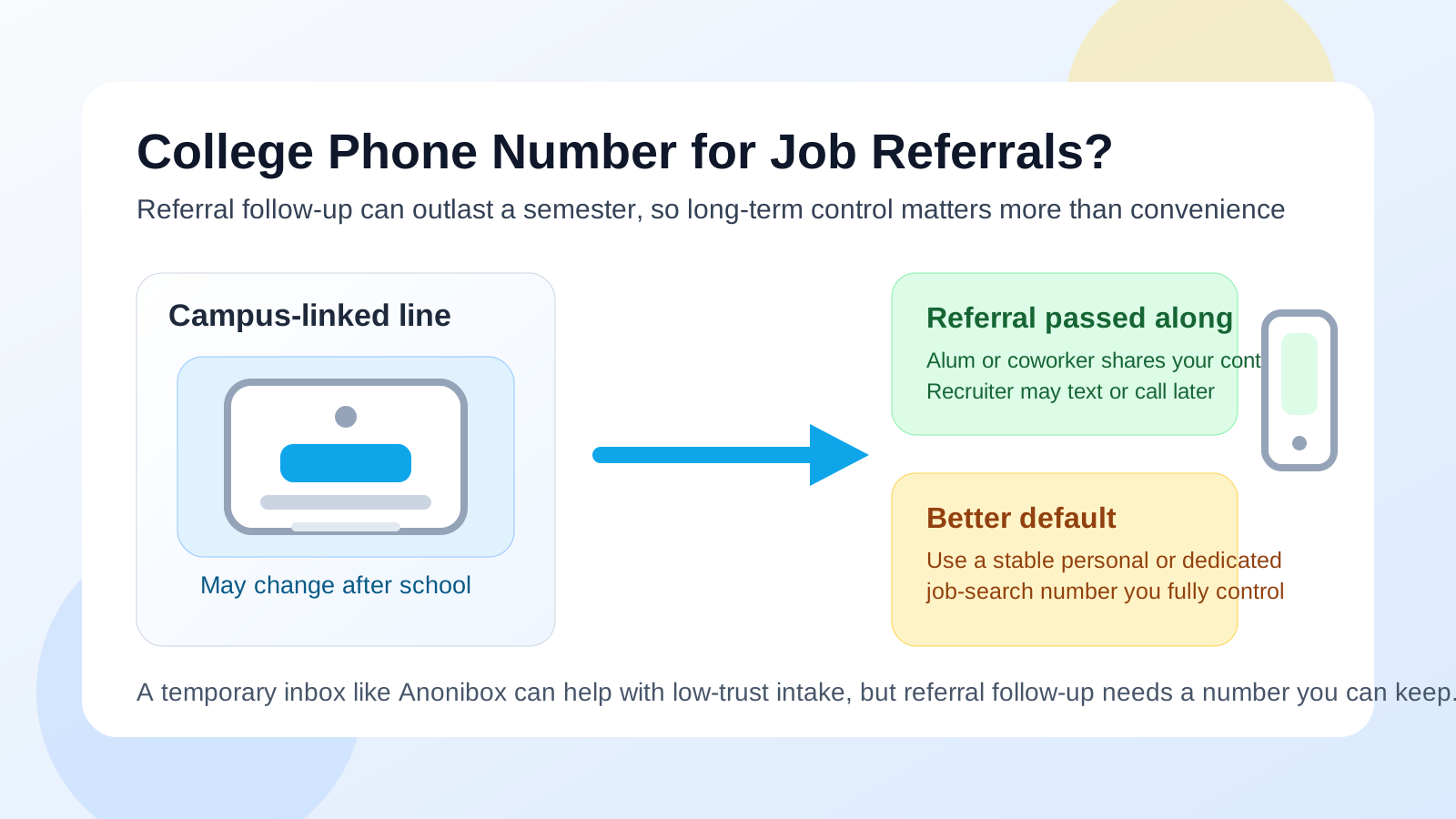
Usually no — not unless it is a stable number you fully control and plan to keep after graduation. For job referrals, long-term reachability matters more than convenience, so a personal or dedicated job-search number is usually the safer choice.
If your “college phone number” is school-managed, tied to a campus plan you may lose, or simply a number you only use during student life, it is not a great default for referrals. A referral can turn into recruiter outreach weeks later, and you do not want that thread tied to a number that may change right when someone is finally ready to contact you.
Why this question matters more for referrals than for ordinary applications
Job referrals work differently from one-off application forms. When you apply online, you usually control the channel, the timing, and the information you submit. A referral is more human and more fluid. An alumnus, professor, former intern manager, classmate, or family contact may pass your details to someone else. That person might then share them with a recruiter or hiring manager. The handoff can happen quickly, or it can happen after a delay.
That is why your phone strategy matters. The referral itself may feel informal, but the follow-up often becomes part of a real hiring process. If the number you shared was only convenient for a semester, depended on school systems, or no longer feels professional once you leave campus, you create avoidable friction at the exact moment you want the path to be easy.
What counts as a “college phone number”?
This phrase can mean different things, and the answer depends on which version you mean.
- A school-issued or school-managed number: usually not a good idea for referrals.
- A number on a campus service or student-specific plan you may not keep: risky unless you know it will remain yours long-term.
- The same mobile number you happened to use throughout college but fully own yourself: usually fine, because it is really just your personal number.
The key question is not whether the number is associated with your college years. The real question is whether you control it, whether it will stay active, and whether it is a good number to keep receiving career-related calls and texts on after the referral moves beyond the student stage.
When using it may be fine
There are situations where using your college-era number is perfectly reasonable.
- You personally own the number and plan to keep it after graduation.
- You regularly answer calls and texts on it.
- Your voicemail is clear and professional.
- The number is not tied to any school account you may lose.
- You would still be comfortable using it on a resume, LinkedIn profile, or recruiter screen three to six months from now.
If all of that is true, the number is effectively your personal number. In that case, “college phone number” is just a label, not a real risk factor.
Why it is often the wrong choice
1. Referrals can outlast the semester
Someone might offer to refer you today, but the actual outreach from a recruiter may not happen until next month. Teams get busy. Headcount shifts. Hiring freezes lift. Managers return from vacation. Referrals do not always convert on a tight schedule. If your number changes around finals, graduation, a move, or a plan switch, you can miss the moment when the opportunity finally opens up.
2. People may share your number beyond the first contact
A referral often means your information leaves the original conversation. Your contact may pass your name, resume, and phone number to a recruiter, another employee, or a hiring manager. That is not necessarily a problem, but it means you should use a number you are comfortable circulating professionally. A temporary or unstable student-only number is weak in that role.
3. Student-life habits can make follow-up messy
Sometimes a college-era number is technically yours but not ideal in practice. Maybe the voicemail is old. Maybe you silence unknown callers because of class. Maybe texts get buried under group chats, campus alerts, or delivery notifications. For referrals, responsiveness matters. If you use the number, it should be one you genuinely monitor.
4. Graduation changes your context fast
The biggest issue is continuity. A number that feels normal while you are a student can feel transitional once you graduate. Job referrals often matter precisely during that transition. That is the wrong time to rely on contact details you might soon want to replace.
Why referrals create different privacy risks than applications
With an application portal, you usually know where your details are going. With referrals, the path is less formal. One person may text you first. Another may call from an unfamiliar number. A recruiter might reach out after someone internally shared your information. That informal flow is helpful, but it also means your phone number can travel in a way that is harder to track.
If privacy matters to you, think beyond “Can this one person have my number?” and ask “Am I comfortable with this number becoming my referral contact number for a whole chain of people?” If the answer is no, use a better number from the start.
Better alternatives
Your long-term personal number
If you have a stable mobile number you fully own and expect to keep after graduation, that is usually the simplest answer. Referrals work best when the contact details stay consistent.
A dedicated job-search number
This is often the smartest compromise. A separate number for networking, referrals, and applications helps you stay reachable without putting every career conversation on your main personal line. It also makes it easier to screen unknown calls, keep a professional voicemail, and retire the line later if it starts collecting spam.
A stable virtual number you control
In some cases, a virtual number can work well if it is reliable, easy to maintain, and not obviously throwaway. The key is stability. A referral contact number should feel dependable, not disposable.
Where Anonibox fits naturally
Phone numbers and email addresses do not play the same role in job referrals. A temporary inbox from Anonibox can make sense when you are protecting your main email during low-trust intake, newsletter signups, or early research. But a real referral is not the place for disposable contact details that may vanish or look unreliable.
That is why a good referral setup often looks like this: use privacy tools for noisy or low-trust intake, but use stable contact details for real relationship-building. For referral follow-up, the phone number should be one you can still answer weeks later without scrambling.
Questions to ask before sharing the number
- Will I still have this number after graduation or a move?
- Do I answer unknown calls on it, or do I ignore them automatically?
- Would I be comfortable if a recruiter, hiring manager, or employee referral portal used this number?
- Is the voicemail professional and current?
- If someone texts me about a referral next month, will I still see it quickly?
If you hesitate on several of those questions, that is a sign the number is convenient for student life but not ideal for career follow-up.
Best practices if you do use it
If you decide your college-era number is stable enough to share, a few habits make it work better.
Update your voicemail
A short greeting with your name is enough. If a recruiter gets your number from a referral, the voicemail should reassure them they reached a real professional contact, not a stale student line.
Watch unknown calls and texts for a while
Referrals often come from numbers you do not recognize. If you are expecting a handoff, be extra careful about ignoring unknown contacts for the next week or two.
Keep the same number across your materials
If the referral later leads to an application, interview, or offer, consistency helps. The number on your resume, application, and follow-up messages should ideally match.
Move away from school-only dependencies
If the number depends on a campus arrangement, switch before the referral starts circulating rather than after. Mid-process contact changes create confusion you do not need.
Red flags that mean you should switch to a better number first
- You think you may lose access to the number after graduation.
- You only check it casually or keep it on do-not-disturb most of the time.
- Your voicemail still sounds like a student-era default.
- You would not want the number passed from one employee to another inside a company.
- You already plan to replace it soon.
In those cases, a stable personal or dedicated job-search number is the safer move before you ask someone to refer you.
A simple rule to remember
If the number belongs to your future professional self, it can work. If it belongs mostly to your current student setup, it is probably the wrong one for referrals.
That distinction matters because referrals are not just about making first contact. They are about making it easy for the right person to reach you later without second-guessing whether your details are current.
Final answer
So, should you use your college phone number for job referrals? Usually not, unless it is really just your stable personal number in disguise. If the number is school-managed, temporary, or likely to change around graduation, it is a weak choice for referral follow-up.
A referral can open a door days or weeks after the introduction. The best contact number is the one you fully control, check regularly, and can keep long enough for that door to open. For most people, that means a personal number or a dedicated job-search number — not a college-linked line that may stop fitting your life right when the referral starts to matter.