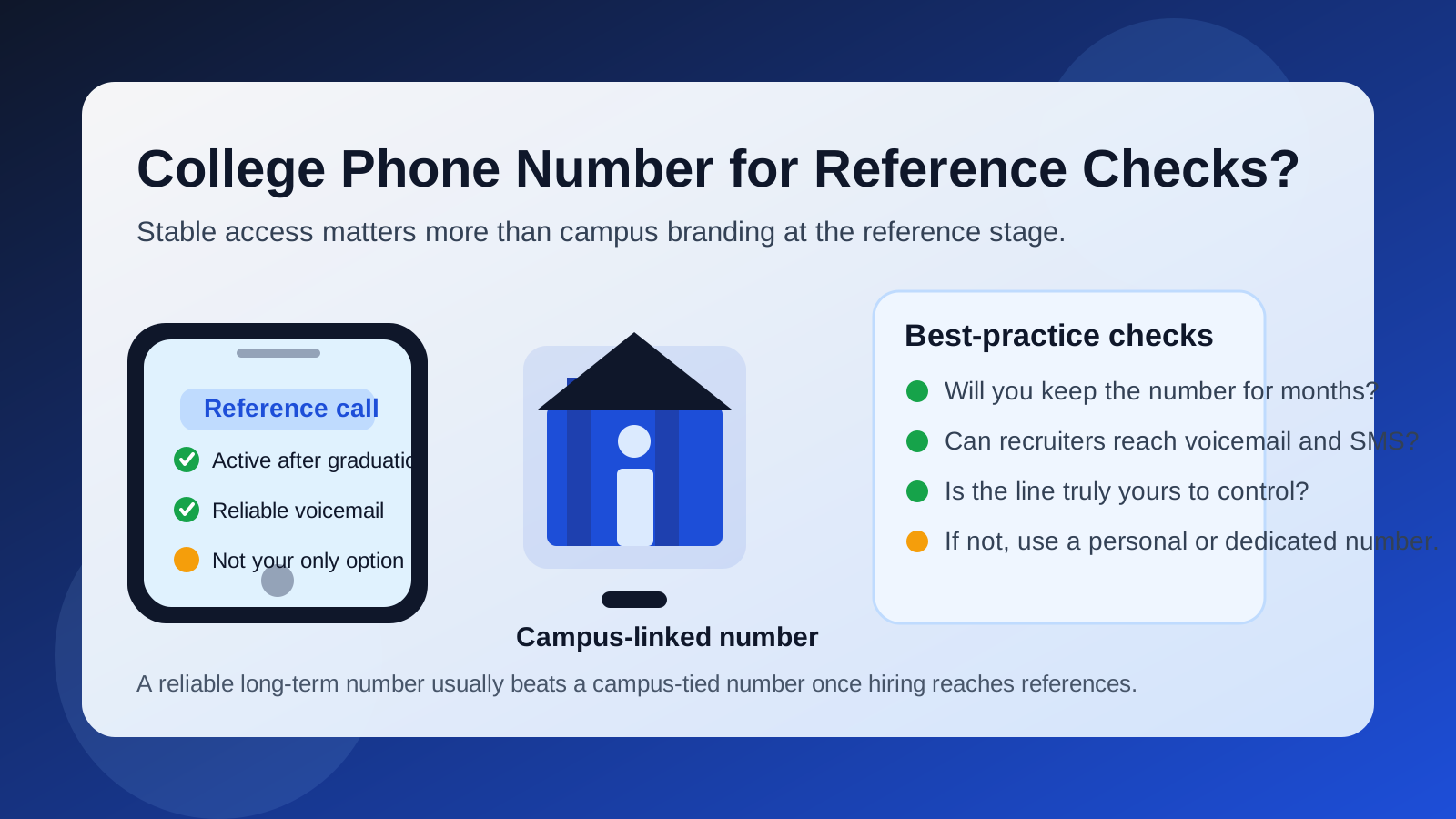
Usually only if that number is stable, fully yours, and likely to stay active through the whole hiring process. For most job seekers, a personal or dedicated job-search number is safer for reference checks because this stage is late, time-sensitive, and much less forgiving than an early application form.
That is the key difference people often miss. Reference checks usually happen after interviews, when an employer is close to making a decision and may need quick follow-up if a reference misses a call, a phone number is wrong, or a recruiter wants clarification on dates, titles, or availability. At that point, reliability matters more than the small branding boost a college-linked number might seem to offer.
What counts as a “college phone number” here?
This question comes up most often for students and recent graduates who use a number mainly during school. That might be a line tied to a campus housing setup, a student-specific phone plan, a local number you picked up for school, a number your family expects you to drop after graduation, or any number you associate with college life rather than long-term professional use.
If it is a normal mobile number that you personally own and expect to keep for years, then the “college” label does not matter much. But if there is any real chance you will lose access to it, stop checking it closely, silence it during classes and work, or replace it after a move or graduation, it becomes a weaker choice for reference checks.
Why reference checks are different from earlier job-search steps
Early in a job search, privacy tools make a lot of sense. You may use a separate inbox, an alias, or something like Anonibox for low-trust signups, recruiter forms, job-board experiments, or one-off downloads that could otherwise turn into long-term inbox spam.
Reference checks are different. They happen when an employer is already serious enough to verify your background through real people. The messages and calls at this stage are not disposable. They can directly affect whether an offer moves forward, how fast it moves, and whether you get a chance to fix a misunderstanding before the employer makes a final decision.
That means your contact method should be chosen for stability, responsiveness, and professionalism first. Privacy still matters, but this is usually not the stage to rely on a number you might retire soon.
When a college phone number can be okay
A college phone number is not automatically a bad choice. It can work if all of the following are true:
- You personally control the number and expect to keep it active for the next several months.
- You answer it, check voicemail, and reliably receive text messages.
- The line is not shared with roommates, a department office, a campus desk, or anyone else who could interfere with messages.
- You are not planning to change carriers, move abroad, or drop the number right after graduation.
- Your voicemail greeting sounds professional enough for recruiters or HR staff.
If that describes your situation, using the number is fine. In other words, the real question is not “Is it a college number?” so much as “Is this a dependable number I will still own and monitor when the employer follows up?”
Why it is usually not the best default
For many students and recent graduates, the answer is still no. A college-linked number often creates more risk than benefit at the reference stage.
1. You may not keep it long enough
Reference checks do not always happen on a neat schedule. A company may pause hiring for approvals, wait for an executive sign-off, or circle back after a vacation week. A line that feels “current” today can become inconvenient or inactive by the time someone actually tries to reach you.
2. It can be too tied to a temporary life phase
Students often change housing, schedules, cities, or even countries quickly. If your number is part of a temporary setup, it is not ideal for an employer who may need dependable contact over a longer window.
3. It may not feel as professional in practice
The number itself usually does not reveal that it is “for college,” but the way you use it often does. If the voicemail is casual, the line is constantly on Do Not Disturb, or texts pile up unanswered while you are in classes or exams, it can create friction during a part of the hiring process where speed matters.
4. It may be harder to separate job-search noise from personal life
If that number is also where friends, student groups, delivery apps, and campus notifications all hit at once, important employer follow-ups can get buried. Reference checks are not the phase where you want to miss a voicemail because it arrived between club reminders and apartment group chats.
What employers and references usually need at this stage
Most employers do not need a fancy or specially branded number. They need a number that works. That usually means:
- They can call and reach voicemail if you miss them.
- You can call back promptly.
- You can receive texts for scheduling if the recruiter uses them.
- You will still be reachable next week, next month, and after graduation if the process drags on.
Your references need the same thing. If a recruiter tells a reference, “We could not reach the candidate,” that can slow down the whole process for no good reason.
Better options than a college phone number
If you are unsure about your college-linked number, you usually have two safer options.
Your main personal number
If your personal number is stable, under your control, and something you plan to keep long-term, it is often the simplest answer. Reference checks happen late enough in hiring that a real, durable contact method is usually worth more than extra compartmentalization.
A dedicated job-search number you control
If privacy and organization matter to you, a separate job-search number can be a strong middle ground. It gives you a cleaner boundary without relying on something temporary or institution-linked.
This approach works especially well if you already separate other parts of the process. For example, some job seekers use Anonibox or another separate-email workflow for early signups and recruiter-heavy forms, then use a more stable long-term phone number for serious hiring conversations. That split makes sense: lower-trust channels get more protection, while late-stage employer communication gets a contact method built for continuity.
If you still want to use the college number, do these five things
- Confirm you will keep the number active. If there is any real chance you will cancel or replace it soon, use another number.
- Clean up your voicemail. A short greeting with your name is enough.
- Turn on missed-call and voicemail alerts. Reference-check calls are easy to miss during classes, commutes, or work shifts.
- Tell your references which number you are using. That way everyone has consistent contact details if a recruiter checks back.
- Monitor it daily until the process is fully done. Do not assume silence means the employer is finished.
Red flags that mean you should switch numbers
- You are graduating soon and not sure the number will remain convenient or active.
- You rarely answer unknown calls on that line.
- Your voicemail is full, unprofessional, or disabled.
- You share access to the line or messages with someone else.
- You are already planning to move, change carriers, or stop using the number.
If any of those apply, do not overthink it. Use a number you actually trust for the next phase of hiring.
A simple decision rule
Ask yourself three questions:
- Will I definitely keep this number through the full hiring timeline?
- Can employers and references reliably reach me on it?
- Is it better than my personal or dedicated job-search number?
If the answer to any of those is no, a college phone number is probably not your best option for reference checks.
Final answer
You can use your college phone number for reference checks, but you usually should not unless it is stable, professional, and fully under your long-term control. Reference checks are late-stage hiring communication, so the safest choice is usually a number you know you will keep and monitor closely.
If your college-linked number is temporary, inconsistent, or likely to disappear after graduation or a move, use a personal or dedicated job-search number instead. That gives employers and references a dependable way to reach you when it matters most.