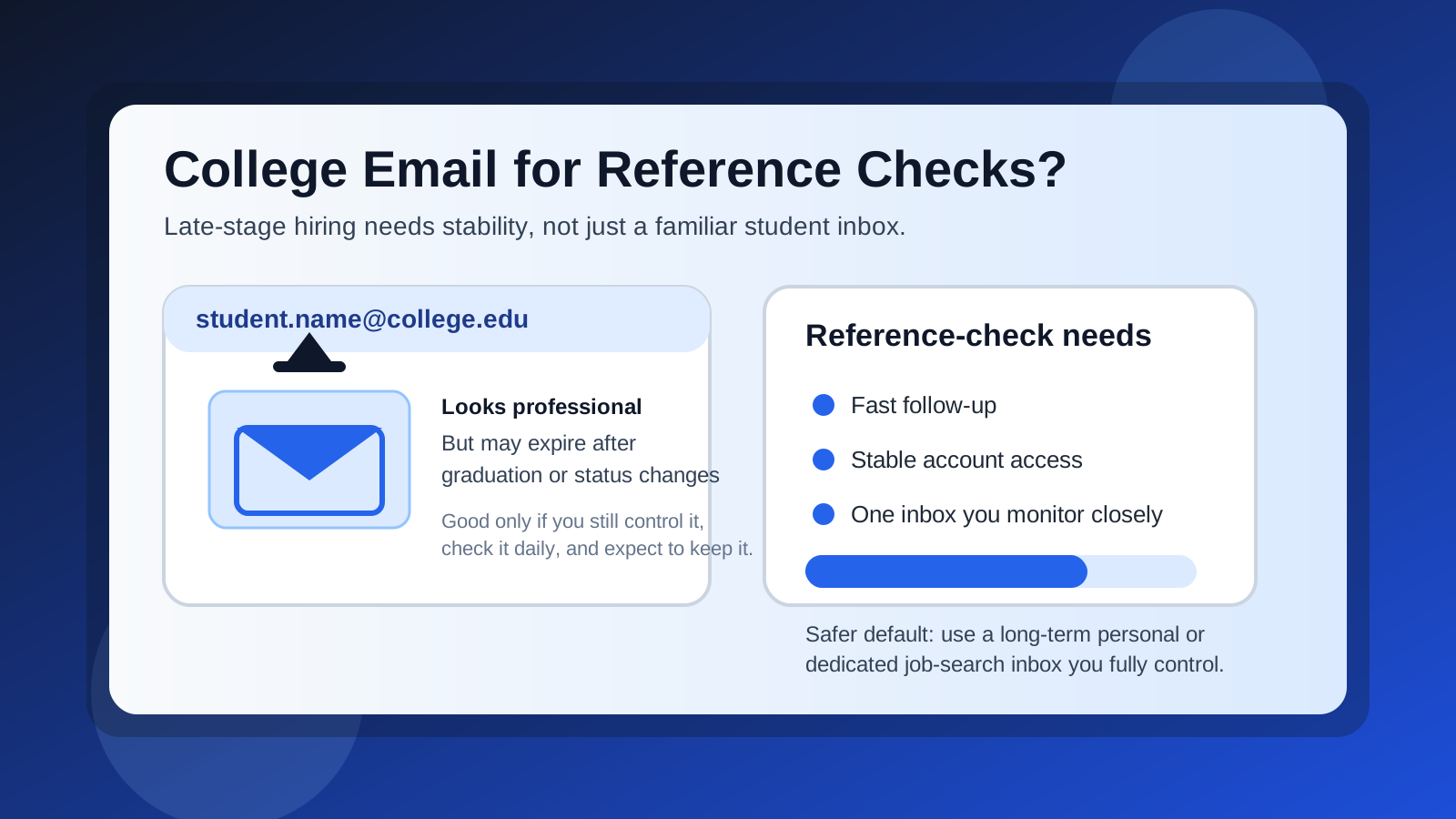
Usually no. A college email can work for reference checks only if you still control it, check it often, and know it will stay active through the whole hiring process.
For most job seekers, a personal or separate long-term inbox is safer because reference checks often happen late, involve time-sensitive follow-up, and can easily outlast graduation, campus account changes, or a semester-to-semester inbox you do not plan to keep forever.
Why this question comes up
If you are a student or recent graduate, your college email can feel like the obvious address to use. It may already be on your resume. You probably check it often during the semester. It can look more polished than an old personal address, and it may be the inbox you used for campus jobs, career-center events, or internship applications.
That instinct is understandable. The problem is that reference checks are not an early, low-stakes signup. They usually happen after interviews, when an employer is seriously comparing finalists and may need quick, accurate follow-up. At that stage, reliability matters more than academic branding.
What makes reference checks different from earlier job-search steps?
Early in a job search, privacy tools can make a lot of sense. You might use a separate inbox, an alias, or even something like Anonibox for lower-trust signups, one-off forms, or newsletter-heavy platforms where you mainly want to protect your main inbox from spam.
Reference checks are different. By then, the employer, recruiter, or HR team may be sending messages that actually matter to the outcome:
- requests to confirm your references’ contact details
- timing updates from a recruiter or HR coordinator
- questions about availability, titles, or dates
- follow-up after a reference misses a call or email
- portal links or scheduling notes tied to the final hiring stage
Those are not the kinds of messages you want stuck in an account you may stop checking or lose access to.
Short answer: use a college email only if it is genuinely stable
A college email is not automatically wrong. If you are still actively enrolled, your school keeps student accounts active for a long time, and you monitor that inbox closely every day, it can work.
But the safer default is usually an inbox that is fully yours. If there is any real chance that your student account could expire, become harder to access, or fall out of your daily routine during the hiring process, that is a strong reason to use a personal or dedicated job-search address instead.
The main risks of using a college email for reference checks
1. Account expiration after graduation or status changes
Many schools eventually reduce or remove access after graduation, withdrawal, deferral, or a long break between terms. Even when accounts do not disappear immediately, retention rules can change without much warning. A reference-check process that seems short on paper can still stretch because of travel, vacations, delayed approvals, or internal hiring slowdowns.
If the employer circles back after you have stopped watching that inbox or lost access, you can miss an important message at exactly the wrong time.
2. You may stop checking it as often
A college inbox often feels central when classes are active. Once the term ends, that can change quickly. Messages from professors, course systems, and campus notices are no longer driving your habits, so your response time can slip without you noticing.
Reference checks do not always require a huge amount of back-and-forth, but when they do, employers often expect timely replies. Even a small delay can create uncertainty when they are trying to finalize a decision.
3. Mixed personal and institutional control
Your college email may feel personal because it has your name on it, but it is still part of an institution-managed system. Policies, storage limits, forwarding behavior, login requirements, and account recovery rules are not fully under your control.
That is very different from a personal inbox you own outright and expect to keep for years.
4. Awkward transition if you move into full-time work
If a job search overlaps with graduation, relocation, onboarding, or a first full-time role, you may already be juggling major transitions. Adding a fading college inbox into that mix creates one more moving piece. A stable long-term address makes the process simpler.
When a college email can still be acceptable
There are cases where using your college email is reasonable:
- you are currently enrolled and expect the account to stay active well beyond the hiring timeline
- you already use that address consistently for professional communication
- you check it multiple times a day and have notifications configured properly
- the employer already knows you through a campus recruiting program tied to that address
- you do not have a better long-term inbox ready yet, but you know you can transition cleanly if needed
Even in those cases, it is smart to ask one practical question: If this process drags out longer than I expect, will this still be the inbox I want employers using? If the answer is shaky, switch now instead of later.
Better alternatives for most job seekers
A professional personal email
For most people, this is the best answer. A personal inbox that uses your real name, stays under your control, and is checked daily is usually the safest option for reference checks.
A dedicated job-search inbox
If you want more separation, a dedicated long-term inbox for job searching can work even better. It gives you privacy and organization without the temporary nature of a disposable account or the institutional dependency of a college mailbox.
An alias or forwarding setup you control
If you are organized and technically comfortable, an alias can be a clean middle ground. You still receive everything in one stable place, but you keep the option to filter, label, or retire a specific address later.
The common thread is simple: choose an address that is stable, private enough for your needs, and fully under your control.
What if you already used your college email earlier in the process?
If you already applied, interviewed, or exchanged messages from your college address, that does not mean you are stuck with it forever. In many cases, you can shift to a better inbox before reference checks become active.
A simple note is usually enough. For example, you can tell a recruiter that you would like future hiring communication sent to a different address because it is the inbox you monitor most closely. That is normal, especially for students who are transitioning out of school accounts.
The important thing is to update the employer before a time-sensitive message goes missing.
Best practices if you do use a college email anyway
If you decide to keep using your student address for reference checks, reduce the risk as much as possible:
- confirm how long the account will remain active
- turn on reliable notifications on your phone and laptop
- check spam, junk, and filtered folders daily
- save key recruiter addresses to your contacts
- move important messages into a labeled folder so you do not lose them in campus mail
- be ready to provide a replacement address immediately if your status changes
These steps help, but they do not remove the core issue: the inbox still may not be as durable as one you own yourself.
A quick decision checklist
Before you give an employer your college email for reference checks, ask yourself:
- Will this account definitely remain active for the next few months?
- Do I still check it as closely as my main inbox?
- Would I be comfortable if a recruiter sent an important follow-up there tomorrow?
- Am I about to graduate, change status, or stop relying on this account?
- Do I already have a more stable professional inbox I could use instead?
If several answers make you hesitate, that hesitation is useful. It usually means a personal or dedicated job-search inbox is the better call.
Final answer
Should You Use Your College Email for Reference Checks? Usually no. It can work if the account is stable, closely monitored, and clearly staying active through the full hiring process, but that is not true for everyone.
Reference checks are a late-stage hiring step where small communication gaps can matter. A stable inbox you control is usually the safer choice. If privacy matters, keep your early-stage signups and spam protection separate from the final hiring workflow, then use a dependable long-term address once real employer follow-up begins.
That gives you the best mix of professionalism, privacy, and reliability without risking an important message in a mailbox tied to student status instead of your long-term career.