Yes, you can use your personal email for networking events, and for many people it works perfectly well if the address is professional, stable, and easy to monitor.
But it is not always the best choice. If you want better privacy, cleaner follow-up, or less long-term inbox clutter from event organizers and sponsors, a separate networking email is often smarter.
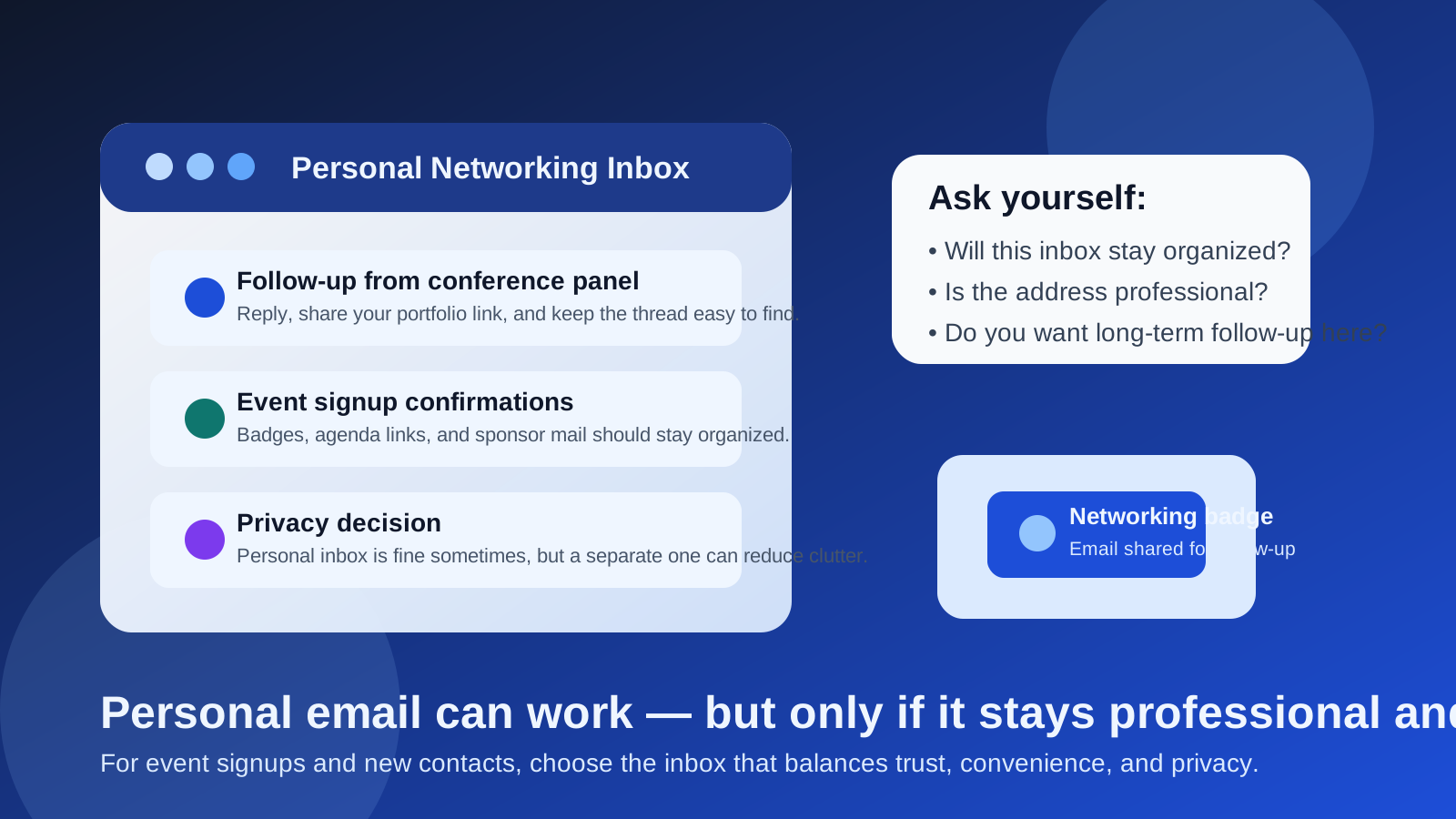
Why this question matters at networking events
Networking events are a strange mix of short-term logistics and long-term relationship building. You might use an email address to register for a conference, receive a QR badge, download a speaker deck, follow up with someone you met at a panel, or stay in touch with a recruiter, founder, or alumni contact afterward. That means the address you use can end up in several very different places at once.
One email may go to the event platform, another to sponsors, another to a new professional contact, and another to a recruiter who wants to continue the conversation next week. If you use your main personal inbox for all of that, it can be convenient. It can also create clutter, expose more of your personal digital identity than you intended, and make it harder to separate real opportunities from marketing noise.
So the real question is not whether using your personal email is allowed. It is whether it is the right inbox for the kind of networking you are doing.
Short answer: when your personal email is fine
Your personal email is usually fine for networking events if all of these are true:
- the address looks professional,
- you check it regularly,
- you are comfortable receiving follow-up there,
- it is not tied to a messy or overloaded inbox, and
- you do not mind event-related messages mixing with the rest of your life.
If that sounds like you, using your personal email may be the easiest option. Many professionals do exactly that, especially when they are not actively job searching and are simply meeting people, attending industry events, or building relationships over time.
Why people choose a personal email for networking
It feels natural and stable
A personal email account is usually the address you control most directly. It is not owned by an employer, it is not dependent on a university login, and it will probably still exist years from now. That matters in networking because some event contacts turn into useful professional relationships much later, not just the week after the event.
It makes follow-up easy
If someone emails you after a conference, a workshop, or a meetup, a personal inbox can be a simple place to continue the thread. You do not have to remember which secondary address you gave out, and you are less likely to miss a reply because you forgot to check another account.
It can look more trustworthy than a temporary address
For one-to-one professional follow-up, a stable personal inbox often feels more credible than a disposable or obviously short-lived address. That does not mean temporary email has no role, but relationship-focused networking usually benefits from an email address that can support ongoing conversation.
The downsides of using your personal email
1. More inbox clutter
Networking events rarely send only one message. You may get registration emails, reminders, venue updates, post-event surveys, sponsor promotions, newsletter enrollments, webinar invites, and follow-up campaigns. If you attend several events, that stack grows quickly.
The problem is not just annoyance. Important messages from real contacts can get buried under lower-value event marketing.
2. Less privacy than you may expect
Your personal email address can reveal more than you think. It may include your full name, birth year, an old nickname, or the same address you use for banking, shopping, personal subscriptions, and everyday life. The more widely it spreads, the more pieces of your online identity become connected.
This is not always a crisis, but it is still a privacy trade-off. Once an address is in multiple databases, event tools, CRM systems, and mailing lists, you no longer fully control where it travels.
3. Harder separation between networking and daily life
Some people like everything in one inbox. Others find that networking gets lost when it sits next to family logistics, travel receipts, newsletters, shopping alerts, and random personal mail. If you are actively building a network or exploring new opportunities, mixing everything together can make follow-up less consistent.
4. More long-tail marketing mail
Even legitimate event platforms often keep emailing long after the event is over. That can include partner offers, future event invites, and industry promotions you never intended to subscribe to. If you value a quieter personal inbox, this becomes a real cost.
When a personal email is a good choice
Using your personal email makes the most sense when the event is relationship-driven and you want the people you meet to have a durable way to reach you.
- Industry meetups: where the goal is ongoing professional conversation.
- Alumni networking events: where contacts may reach out again months later.
- Small conferences: where follow-up is likely to be personal rather than mass marketing.
- Freelance or consulting networking: where your personal brand matters more than your employer identity.
- Career exploration outside work systems: where you want an address you personally control.
In these cases, a personal email can feel human, accessible, and stable, especially if the address itself is clean and professional.
When a personal email is probably not the best choice
Your inbox is already overloaded
If your personal inbox is chaotic, networking messages may disappear. Event follow-up only works when you can actually find and respond to the useful messages.
Your address is dated or unprofessional
An old address with jokes, random numbers, or teenage-era nicknames is not ideal for professional networking. You do not need a sterile corporate identity, but you do want something that reads clearly and confidently.
You want more privacy from event platforms and sponsors
If you are signing up for a large event, a vendor-heavy expo, or a platform that clearly shares participant data across partners, using your main personal inbox may expose it to more follow-on marketing than you want.
You are actively job searching and want cleaner organization
If networking events are part of a broader job-search strategy, a dedicated inbox often works better. It keeps recruiter follow-up, event contacts, introductions, and career-related messages in one place without mixing them into your private everyday mail.
A better middle ground: use a separate networking email
For many people, the best answer is not “always personal” or “always temporary.” It is a separate email account that still feels stable and professional. That could be a dedicated Gmail or Outlook account, a clean alias, or another inbox you control specifically for networking and career outreach.
This gives you several advantages:
- you keep event mail out of your main personal inbox,
- you still look reachable and professional,
- you can organize contacts and follow-ups more easily, and
- you reduce the spread of your primary personal address.
If you already use a separate inbox for job applications or professional outreach, reusing that for networking events is often the cleanest setup.
What about temporary email addresses?
Temporary email can be useful at networking events, but usually for a narrower purpose. If you are downloading a gated event guide, testing a webinar registration flow, or signing up for something that looks likely to trigger a lot of promotional mail, a temporary or masked address can make sense.
Where it becomes less ideal is one-to-one relationship building. If someone you actually want to know emails you later, you need the inbox to remain available and easy to manage. That is why many people use a layered approach: temporary or masked addresses for low-trust signups, and a stable networking inbox for real follow-up.
That is also where a tool like Anonibox fits naturally. It can help you limit spam exposure when you are dealing with event registrations, sponsor downloads, or one-off forms, without forcing you to use the same inbox forever for every professional relationship.
Best practices if you use your personal email for networking events
Make sure the address looks professional
Your name, initials, or a simple variation usually works best. If the address looks unserious, create a cleaner one before you keep handing it out.
Use folders or labels
Create a label for networking, conferences, or career contacts. Even a basic filter can keep important replies from getting lost.
Watch what you sign up for
Not every event field deserves your primary inbox. If you are only grabbing a sponsor PDF or joining a vague mailing list, think twice before using the same address you rely on for real human follow-up.
Reply promptly to real contacts
The value of a personal email at networking events is continuity. If you use it, treat it like a professional communication channel and answer worthwhile follow-up in a timely way.
Be cautious with suspicious outreach
Some scam or low-quality sales messages use event attendance as a pretext. If someone references a conference vaguely, pushes urgency, or asks for unusual information, verify before engaging further.
Mistakes to avoid
- Using your work email by default: it may expose your networking activity to employer-controlled systems.
- Using a disposable email for serious follow-up: that can break continuity with real contacts.
- Giving out an inbox you rarely check: convenience disappears if you miss the messages that matter.
- Letting sponsors and real contacts hit the same unfiltered inbox: this makes useful follow-up harder to spot.
- Assuming every event form deserves your main address: some do, some do not.
A simple way to decide
Before using your personal email at a networking event, ask yourself three questions:
- Do I want long-term professional follow-up at this address?
- Will this inbox stay organized enough for me to notice important replies?
- Am I comfortable if this address ends up in event and sponsor mailing systems?
If the answer is yes to all three, your personal email is probably fine. If one or two answers make you hesitate, a separate networking inbox is likely the better choice.
Final answer
So, should you use your personal email for networking events? Yes, you can, and in many situations it is completely reasonable. A stable, professional personal inbox works well for real follow-up, ongoing relationships, and direct contact with people you actually want to hear from.
But if you care about reducing inbox clutter, limiting spam, and keeping your networking activity separate from everyday life, a dedicated networking address is usually better. Use your personal email when it supports the relationship you want, and use a separate or masked option when the main risk is marketing noise rather than meaningful human follow-up.