Yes — you can use your personal VPN for job interviews, but only if it does not hurt call quality or make your location look inconsistent for the role.
For most people, a personal VPN is optional rather than essential during an interview: it can add some privacy on your own network, but it will not hide who you are from the employer, and a shaky connection is usually a bigger risk than leaving the VPN off.
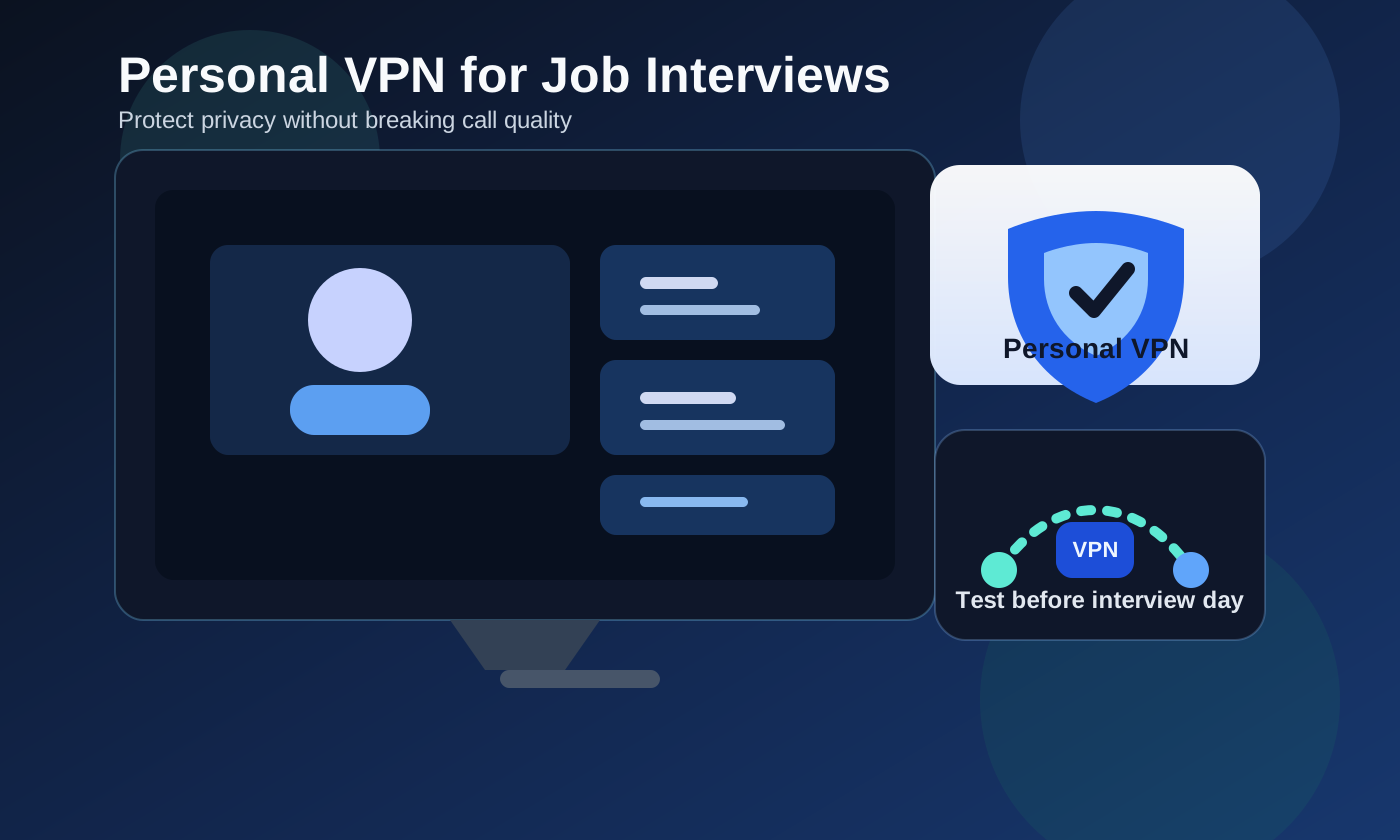
That is the practical answer, but there is more nuance behind it. A lot of job seekers are already thinking carefully about privacy. They use a separate email for applications, keep job-search logins out of work accounts, and try not to leave unnecessary traces on employer-controlled devices or networks. In that context, asking whether your personal VPN should stay on during a job interview is a smart question.
The catch is that interviews are not the same as casual web browsing. A video interview depends on stability, low latency, working microphones and cameras, and a smooth connection to whatever platform the employer uses. A personal VPN can help in some situations, but it can also create exactly the kind of technical friction you do not want when you are trying to make a good impression.
Short answer: privacy matters, but reliability matters more
If you are interviewing from your own laptop on your own home internet, using a personal VPN is usually fine if it is reliable and you have already tested it with video calls. If the VPN adds lag, dropped packets, echo, frozen video, or location weirdness, turn it off for the interview.
Most hiring teams care far more about whether they can hear you clearly than whether your traffic passed through a consumer VPN exit node. A good interview setup is one that protects your privacy where it reasonably can without sabotaging your communication.
What a personal VPN can actually do during a job interview
A personal VPN changes the network path between your device and the internet. That can help reduce exposure to your local network operator, your ISP, or insecure public Wi-Fi observers. It can also make your traffic appear to come from a different IP address than your normal home address.
That sounds powerful, but it has limits.
- It can help with network privacy: especially if you are on a shared or less-trusted network.
- It can reduce direct exposure of your home IP: which some privacy-conscious users prefer.
- It does not hide your interview identity: the employer still knows your name, email address, résumé, and meeting account.
- It does not stop platform-level tracking entirely: browser fingerprints, account logins, cookies, and meeting metadata still exist.
- It does not guarantee anonymity: interviews are not anonymous interactions in the first place.
So the right way to think about a personal VPN is not as an invisibility cloak. It is a narrow privacy tool that may make sense for your network setup, but it is only one small part of a broader job-search privacy strategy.
When using your personal VPN can make sense
There are a few situations where leaving your personal VPN on during a job interview is reasonable.
You are on your own device and already use the VPN every day
If your VPN is part of your normal setup and it has proven stable for Zoom, Google Meet, Microsoft Teams, or browser-based calls, there is no special reason to panic about it during an interview. A familiar, tested setup is often better than changing your network right before an important call.
You are on public or semi-public Wi-Fi
If you are interviewing from a hotel, coworking space, temporary apartment, or another shared network, a personal VPN can be a reasonable extra layer. That said, the better solution is usually to avoid noisy or unstable networks altogether if you can. Privacy does not help much if your interview audio keeps cutting out.
You do not want to expose your home IP more widely than necessary
Some people simply prefer not to expose their home IP address to every service they use. That preference is reasonable. If your VPN works well and uses a nearby exit location, keeping it on is not automatically a problem.
When your personal VPN can hurt you more than it helps
This is the part people underestimate. Interview platforms are sensitive to connection quality, and VPNs can add overhead.
Higher latency
Video calls feel awkward when even a small delay is added. You start talking over the interviewer, pauses feel strange, and the rhythm of conversation gets worse. If your VPN route adds noticeable lag, your interview will feel less natural even if the connection does not fully fail.
Lower stability
Some VPN servers are perfectly fine for browsing but weaker for long real-time calls. You might get jitter, temporary freezes, or audio clipping. During an interview, that can create the impression that you are unprepared even when the real issue is just a bad tunnel route.
Unhelpful location mismatches
If you are interviewing for a role tied to a country, region, or work-authorization boundary, using an exit node in the wrong place can create unnecessary confusion. That does not mean you are doing anything wrong, but it can trigger security checks, login warnings, or “why does your IP look foreign?” moments on some platforms.
Extra friction with browser-based interview tools
Some interview platforms run in the browser and already depend on camera permissions, microphone permissions, screen-sharing settings, and cookies. Adding a VPN on top can introduce one more variable when something breaks. If the call platform is already temperamental, simplicity wins.
Best practice: test the exact setup before interview day
The right answer is usually not ideological. It is operational. Test the same laptop, same browser, same VPN setting, same headset, and same meeting platform in advance.
Run a short practice call with a friend or your own secondary account and check:
- how quickly the meeting loads
- whether your camera and microphone connect cleanly
- whether screen sharing works
- whether your audio stays clear
- whether video freezes or becomes choppy
- whether captions, chat, and links behave normally
If everything works with the VPN on, great. If not, you have your answer before the real interview begins.
A simple decision framework
If you are unsure, use this practical rule set:
- On a work device or work network? Do not rely on a personal VPN to fix the deeper privacy problem. The better move is to avoid employer-controlled devices and networks for job interviews whenever possible.
- On a personal device and trusted home internet? A personal VPN is optional. Use it only if it is proven stable.
- On public Wi-Fi? A VPN may help, but a stronger network choice helps more.
- Interviewing for a location-sensitive role? Use a nearby exit region or consider turning the VPN off to avoid odd geolocation signals.
- Any sign of technical issues? Reliability wins. Turn it off and join cleanly.
What you should not expect a VPN to solve
A personal VPN does not replace the other privacy habits that matter more in a job search.
- It does not separate your interview identity from your everyday inbox.
- It does not keep interview invites organized.
- It does not stop recruiters from using the email address you gave them.
- It does not protect you from every kind of tracking or account spillover.
That is why VPN use makes the most sense as one part of a broader setup. Many job seekers get more real privacy value from using a dedicated email workflow, a separate browser profile, a personal device instead of a work device, and a clear calendar strategy. For example, if you use Anonibox or another separate inbox approach for early-stage job search activity, you reduce inbox exposure directly instead of hoping a VPN solves an unrelated problem.
A safer job-interview privacy stack
If you want a balanced approach, this setup is usually stronger than obsessing over whether the VPN is on:
- Personal laptop: not a work-managed machine.
- Private browser profile: keeps autofill, logged-in work accounts, and unrelated tabs out of view.
- Separate interview email: keeps scheduling and follow-ups organized.
- Quiet environment: better for performance than any networking tweak.
- Stable internet connection: ideally wired or strong home Wi-Fi.
- Optional personal VPN: only if already tested and stable.
That stack protects your privacy in ways that are both practical and low drama. It also reduces the chance that you accidentally expose work notifications, saved logins, or unrelated personal content while screen sharing.
Red flags and mistakes to avoid
Do not experiment five minutes before the call
If you normally interview without a VPN, interview without a VPN. If you normally use one, make sure it is the same server region and the same device setup you already tested. Last-minute changes are where small technical mistakes become memorable interview problems.
Do not use a distant exit location for no reason
Connecting through another country when you do not need to can slow the call down and create avoidable questions. If you use a VPN, keep the exit location close to your real region unless you have a specific reason not to.
Do not assume privacy tools excuse risky behavior
A VPN is not permission to use a work laptop, a work meeting account, or a work-managed browser profile for private job-search activity. Those are separate issues, and they often matter more.
Do not hide technical problems during the interview
If the call quality is bad and you suspect the VPN is contributing, turn it off and rejoin if needed. A brief, calm reset is better than struggling through an entire interview with broken audio.
So, should you use your personal VPN for job interviews?
Usually, only if it is stable and already part of a clean personal-device setup.
A personal VPN can add a modest privacy benefit, especially on less-trusted networks or if you prefer not to expose your home IP address. But it will not make you anonymous, and it is not the most important privacy choice in a job interview. The bigger wins usually come from avoiding work-managed devices, separating your job-search accounts, and keeping your interview environment controlled and predictable.
If your VPN works flawlessly, using it is fine. If it adds lag, login weirdness, or call instability, turn it off without guilt. In interviews, sounding clear and showing up reliably is usually the better tradeoff.