Usually no — using your work phone number for career fairs is rarely the best default, especially if the number is tied to an employer-managed device or service.
If you want recruiters to reach you after a fair, a personal number or dedicated job-search number is usually safer than putting new employer follow-up on a work line.
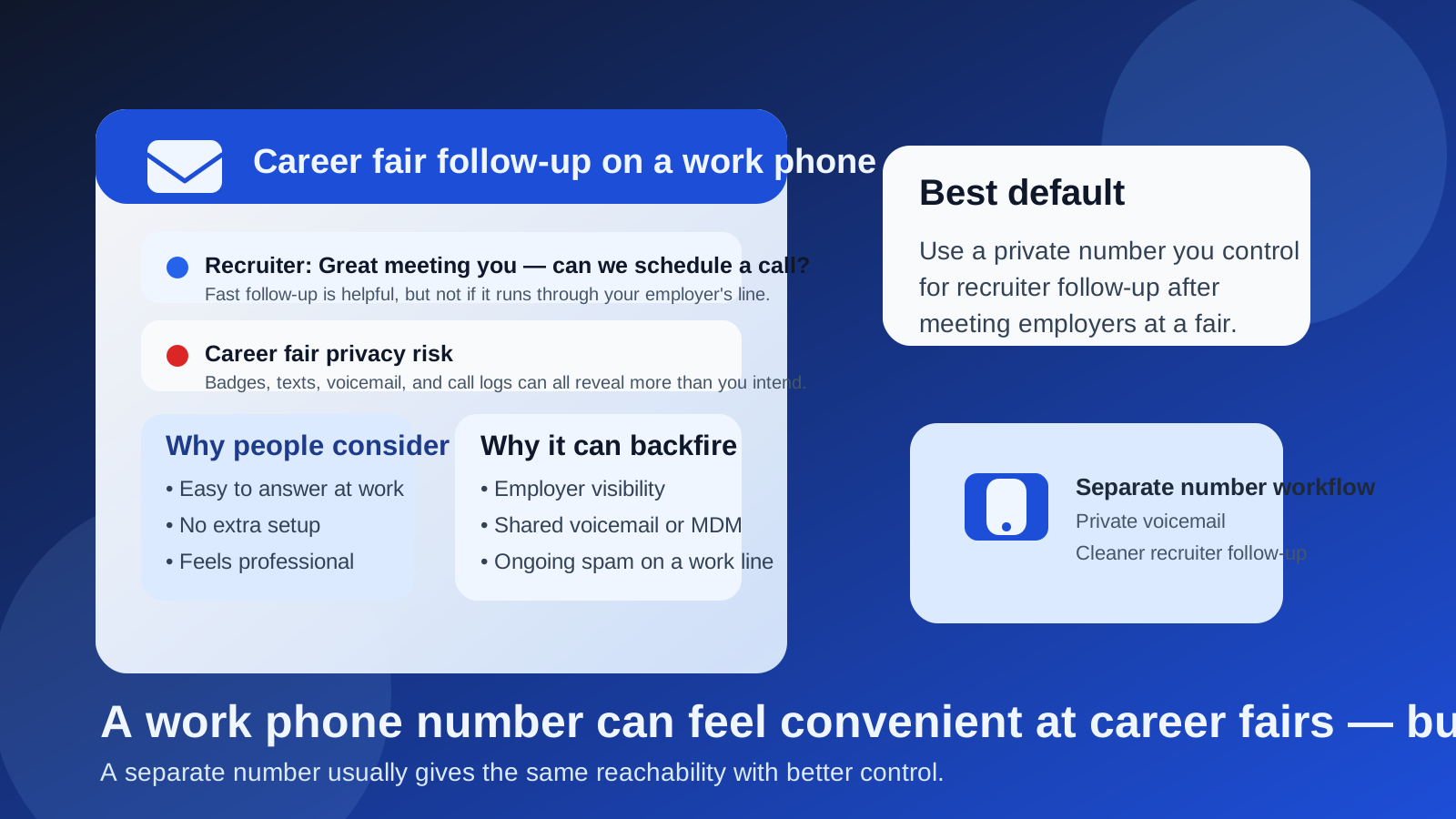
Why this question matters at career fairs
Career fairs create a very specific kind of contact problem. You may meet several employers in a single afternoon, hand out résumés quickly, scan QR codes, submit to event portals, and have recruiters ask for the easiest way to reach you. Some will follow up the same day. Others may text or call days later after reviewing your résumé. A few may keep your number in a recruiting database for months.
That makes your phone-number choice more important than it first appears. At a career fair, you are not sharing contact information with one carefully vetted company in a quiet setting. You are often sharing it with multiple organizations, third-party recruiters, event platforms, and staff members working at speed. Reachability matters, but so does keeping control over where those follow-ups land.
Short answer: a work phone number is usually a bad default
If the number belongs to your current employer, sits on a company-issued device, or is managed through a work account, using it for career fair follow-up is usually a poor privacy trade-off. The problem is not that recruiter calls are inappropriate. The problem is that you are routing private career exploration through a channel your employer may partly control.
In most cases, a number you control personally is the smarter choice. It gives recruiters a reliable way to reach you without placing your job-search trail inside your current employer’s environment.
Why people are tempted to use a work phone number
It is always nearby
If you carry a work phone all day, it can feel like the most practical number to give. You know you will see the call, and you may assume that quick access is what matters most.
It feels more professional
Some people worry that a personal number sounds less serious than a work line. In reality, most recruiters do not care whether the number is “business” or “personal.” They care whether you answer, whether your voicemail sounds normal, and whether follow-up is easy.
It avoids extra setup
A separate number takes planning. If you are rushing from booth to booth, the easiest path is often to write down the number you already use every day. That convenience is real, but it often comes with privacy costs that show up later.
The biggest risks of using your work phone number for career fairs
1. Employer visibility
If your number is part of a company-managed phone plan, desk-phone system, Microsoft Teams setup, mobile device management platform, or shared admin environment, you should assume it is not fully private. Even if nobody is actively looking for your recruiter messages, the communication may still live in systems you do not control.
That exposure can come from simple things: call logs, synced records, lock-screen previews, shared voicemail settings, or notifications appearing while you are at work. A fast career-fair follow-up text is a small message, but it can reveal a lot.
2. Mixing your current employer with your next-step search
Career fairs are often about exploration. You may not be ready to tell your current employer that you are networking actively. Using a work phone makes it easier for that boundary to blur. The more your outreach lives on employer-owned devices and systems, the less private the search really is.
3. Shared or branded voicemail problems
If your work voicemail mentions your current company, department, or formal title, that is awkward for recruiter follow-up. You do not want a new employer hearing a greeting that makes your current role the main identity attached to the number.
4. Long-term spam and recruiter noise on a work line
Career fairs can generate a lot of uneven follow-up. Some contacts are worth keeping. Others turn into generic outreach, job-board alerts, third-party recruiting blasts, or repeated check-ins for roles that never fit. A work line is a bad place to absorb that noise long term.
5. Losing continuity later
If you change jobs, change teams, return equipment, or stop using that employer-managed number, you lose the continuity connected to it. Career fair relationships often move slowly. A recruiter might reopen the conversation weeks later. You want the number attached to that trail to stay with you.
When it is especially unwise to use a work phone
- You are attending quietly while employed: confidentiality matters most in exactly this situation.
- Your phone is company-issued: this is the clearest reason not to use it.
- Your lock screen shows message previews: even a short recruiter text can reveal too much.
- Your voicemail or caller ID is company branded: that creates awkwardness immediately.
- You expect to meet many employers: more contacts means more long-tail noise and less control.
What should you use instead?
Your personal phone number
If you are comfortable using it, your main personal number is usually better than a work number because it belongs to you. It stays with you across jobs and keeps recruiter follow-up outside your employer’s systems. The downside is that it mixes recruiting traffic with everyday life.
A separate job-search number
For many people, this is the best option. A dedicated number for applications, career fairs, recruiter calls, and interview scheduling gives you reachability without exposing your work line. It also makes it easier to mute, filter, or retire the number later if it starts attracting spam.
This can be especially helpful if you attend multiple fairs, network actively, or are trying to keep your search organized. It is the phone-number version of using a separate email address for job hunting.
A lawful secondary-number service
Depending on what is available in your region, a secondary number can be a practical middle ground. The important point is not the brand. The important point is control. You want a number attached to you, not to your current employer.
What about same-day recruiter follow-up?
This is the strongest argument for giving a reachable number. A recruiter may want to schedule a phone screen quickly, confirm a résumé, or send instructions right after the fair. That speed is real, and you should plan for it.
But that does not mean the number must be your work number. It means the number should be one you actually monitor. A private number with a clean voicemail, sensible notifications, and room for long-term follow-up solves the same problem with much less risk.
How to decide what to share at the booth
Before you hand over a number, ask yourself:
- Do I personally control this number and the device behind it?
- Would I be comfortable if recruiter texts appeared on this screen during work?
- Does the voicemail reveal my current employer?
- Will I still have access to this number months from now?
- Am I choosing this number because it is best, or just because it is the most convenient today?
If those questions raise even moderate hesitation, use a different number.
Best practices if you must use your work phone temporarily
Sometimes people attend a fair before they have set up a better system. If you have to use a work phone briefly, reduce the risk as much as you can:
- Use email for most follow-up when possible.
- Turn off lock-screen previews for messages.
- Keep the voicemail neutral if you can control it.
- Move promising contacts to a private number as soon as practical.
- Avoid discussing sensitive job-search details by text on that line.
That still is not ideal, but it is better than letting the work phone become the permanent home for career-fair follow-up.
Pair your phone strategy with a separate email workflow
Your phone-number strategy works best when the rest of your job-search setup is organized too. If you already use a separate email for résumés, job boards, and recruiter outreach, the same logic applies here. Cleaner channels mean better control.
For example, if you use Anonibox to keep job-board signups and spammy recruiting lists away from your main inbox, a separate phone number gives you a similar buffer on the call-and-text side. You are still reachable for serious employers, but you are not handing every fair contact direct access to your work line or your most personal channels.
Common mistakes to avoid
Assuming a work line is automatically more professional
Professionalism comes from being reachable, polite, and organized — not from routing recruiter messages through employer-owned infrastructure.
Using the easiest number instead of the safest one
Career fairs are hectic, so it is easy to default to convenience. But a little planning usually prevents a lot of follow-up mess later.
Forgetting how many people may get the number
At a fair, your contact information can move farther than you expect. That is one reason private control matters.
Ignoring voicemail and text-preview details
Small settings make a big difference. A company-branded greeting or visible recruiter text can create unnecessary exposure fast.
A practical setup that works for most people
- Use a private number you control.
- If you are networking heavily, consider a dedicated job-search number.
- Use a professional voicemail greeting that does not mention your current employer.
- Pair that number with a separate job-search email workflow.
- Save serious recruiter contacts, but do not let every fair interaction live on your core work or personal channels forever.
This setup gives you a much better balance between responsiveness and privacy.
Final answer
So, should you use your work phone number for career fairs? In most cases, no. It may feel convenient in the moment, but employer visibility, shared systems, voicemail issues, and weak long-term control make it a poor default for private career exploration.
The better option is usually a number you control personally — either your main personal line or, better yet, a dedicated job-search number. That gives recruiters a fast, reliable way to reach you without placing career-fair follow-up inside your current employer’s environment.
If privacy, flexibility, and cleaner follow-up all matter, that extra separation is usually worth it.