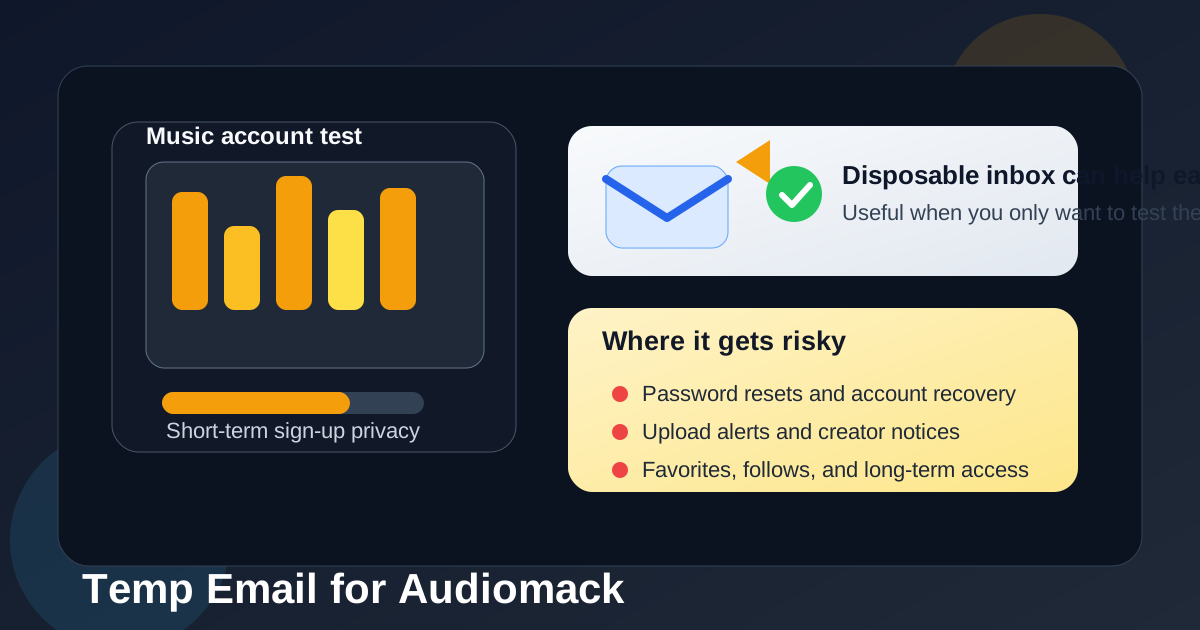
Yes, you can use a temp email for Audiomack if you only want sign-up privacy or a short test account.
It is a bad fit for any Audiomack account you plan to keep, because favorites, upload alerts, creator messages, and account recovery are much easier with a stable inbox.
Why people look for a temp email for Audiomack
Audiomack is the kind of platform people often test on impulse. You hear about a track, want to browse a niche scene, follow a few artists, compare the app with another music service, or see what the upload flow looks like before deciding whether the platform deserves a place in your routine. In that moment, using a temporary email can feel smart and tidy.
That instinct is reasonable. Music platforms can create a long tail of inbox activity over time. Once you start following artists, saving favorites, testing creator tools, or interacting with updates, even a casual account can begin producing email you do not want in your main inbox. If you are only experimenting, a throwaway inbox gives you a privacy buffer.
The problem is that Audiomack can stop being a throwaway account faster than people expect. A login that starts as a low-stakes test can become the place where you save favorites, follow artists, upload tracks, manage creator activity, or build a profile you actually care about. At that point, the disposable inbox becomes the weakest part of the setup.
When a temp email makes sense on Audiomack
A temporary inbox can work well when the account itself is truly temporary too. Good examples include:
- Quick sign-up privacy: you want to explore the platform without immediately tying another account to your everyday email address.
- Short-term comparison: you are testing Audiomack against another music or creator platform and only need a temporary login.
- One-off feature research: you want to inspect account setup, playlists, artist pages, or creator tools before deciding whether the platform fits you.
- Inbox cleanup: you want to avoid long-tail promotional or product emails from an account you may never use again.
That is the sweet spot for a tool like Anonibox. If your goal is early exploration rather than long-term ownership, protecting your primary inbox is a fair trade.
When a temp email is the wrong choice
A temp email stops being clever as soon as the account starts to matter. Avoid it if any of these sound likely:
- You want to keep favorites or listening history long term.
- You plan to follow artists and care about alerts or updates.
- You may upload your own tracks, podcasts, or mixes.
- You expect to need password resets or email-based account recovery later.
- You are using the account professionally as an artist, manager, label, or team account.
- You may eventually tie paid or higher-value activity to the account.
In all of those cases, the issue is not Audiomack itself. The issue is pairing an account with lasting value to an inbox you do not control for the long term.
What can go wrong if the inbox disappears?
1. Password resets become much harder
If you forget your password, switch devices, get signed out, or trip a security check, recovery usually flows through email. A temporary address that expired last week can turn a small inconvenience into a locked account.
2. Important notifications lose their value
Maybe you do not care about every marketing email, but not every message is noise. Upload notices, account changes, creator alerts, or confirmation emails can matter later. If the inbox is gone, those messages are gone too.
3. Creator accounts have higher stakes than listener accounts
A casual listener can sometimes shrug off a lost test account. A creator usually cannot. If you upload music, track engagement, manage profile settings, or use the platform as part of your public presence, reliable email access matters much more.
4. People forget the account was disposable
This is the most common failure mode. Someone creates the account with a throwaway inbox just to test the platform. Then they keep using it because the platform turns out to be useful. Weeks or months later, they only remember the weak setup when they need recovery help.
Listener versus creator: the risk is different
For listeners
If you only want to browse songs, test discovery, or listen casually for a few days, a temp email can be acceptable. The downside is lower when the account truly is disposable and nothing important depends on it later.
For creators and uploaders
The risk is much higher. If you plan to upload tracks, monitor reactions, adjust profile settings, or build any kind of audience connection, use a stable address from the start. Creator accounts need continuity. Disposable inboxes do not provide it.
For labels, managers, or shared brand accounts
A throwaway inbox is the wrong tool entirely. Shared or semi-professional accounts need durable ownership, clear access control, and predictable recovery paths. That means a real long-term inbox you control, not a temporary mailbox that may vanish.
A safer privacy workflow that actually works
You do not have to choose between exposing your oldest personal inbox everywhere and using a reckless throwaway for everything. A better approach is to match the email type to the account stage.
Stage 1: Low-stakes testing
If you are only exploring Audiomack, a temp inbox is reasonable. Use it for sign-up, verify the account, and decide whether the platform is worth more attention.
Stage 2: The account starts becoming useful
If you start saving favorites, following artists, or testing creator tools seriously, pause and ask whether the account is turning into something you would be annoyed to lose. If the answer is yes, that is the point where a fully disposable inbox stops making sense.
Stage 3: Long-term or creator use
Once the account matters, move to a stable email you control and monitor. It does not have to be your oldest personal inbox. A separate long-term music or creator inbox is often the best compromise because it keeps your main inbox cleaner without breaking recovery later.
Practical examples
Good use case
You want to compare Audiomack with another music app, check the catalog, and see whether the interface works for you. You create a temporary inbox, verify the account, browse for a few days, and decide whether the platform deserves a permanent spot in your stack. That is a sensible privacy-first workflow.
Bad use case
You sign up with a disposable email, then start following artists, saving favorites, uploading mixes, and treating the account like a real home base. A month later you need a reset or a confirmation email and realize the original inbox no longer exists. That is the exact outcome to avoid.
What not to assume
Do not assume that because a temp email works at sign-up, it will be a good long-term fit. Sign-up success only proves that the first step worked. It does not guarantee smooth recovery, future support, or reliable account maintenance.
Also do not assume every music account is low-stakes forever. Platforms that seem casual at first can slowly become part of your listening habits or creator workflow. Audiomack can become one of those accounts surprisingly quickly.
Quick checklist before you use a temp email for Audiomack
- Use a temp email if: you are only testing the platform, comparing services, or protecting your main inbox during a short trial.
- Do not use a temp email if: you expect to keep favorites, upload tracks, depend on email alerts, or care about future recovery.
- Use a separate long-term inbox if: you want privacy and clean organization without giving up control of the account later.
Final answer
A temp email for Audiomack is fine for sign-up privacy and short-term exploration, but it is the wrong choice for any account you plan to keep. The more your Audiomack activity matters, the more important stable email access becomes.
If you are just checking the platform out, Anonibox can help you protect your main inbox during the early stage. If the account starts becoming part of your real listening or creator workflow, switch to a long-term address before recovery, notifications, or account ownership become important.