Yes — a temp email for Builder.io can be useful for early signups, short-lived test spaces, and one-off team invites when you want to keep your main inbox private. No — it is a poor choice for long-term ownership, billing, or recovery once a Builder.io project becomes real.
That is the practical answer most teams need. A temporary inbox can reduce clutter while you are evaluating Builder.io, trying a proof of concept, or verifying whether the platform fits your workflow. But the same disposable setup becomes risky the moment the account starts owning production content, shared team access, or important recovery messages. The safe approach is to use a temp address only for the early stage, then switch to a durable inbox before the project matters.
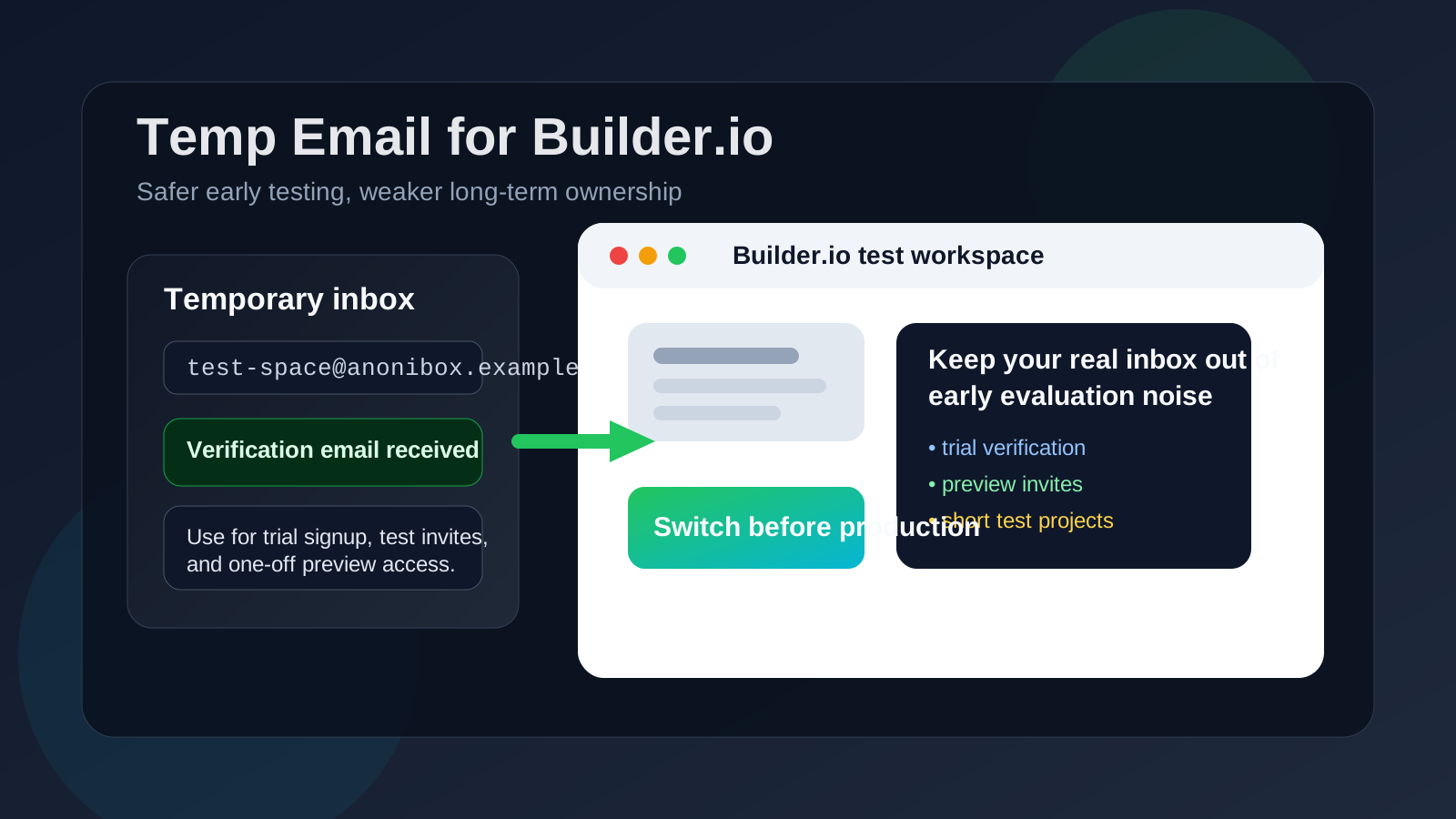
Why people look for a temp email for Builder.io
Builder.io often enters the picture during exploration. A developer wants to test a visual editing workflow. A marketer wants to see how a content model feels in practice. A team wants to compare a few modern CMS and composable content tools without turning one inbox into a permanent archive of trial emails, product updates, and sales follow-up.
That is where a temporary email address helps. You get a clean place for verification messages, initial onboarding emails, and short-term invite links. If the trial goes nowhere, your everyday inbox stays cleaner. If the platform looks promising, you can move the project to a more permanent email setup before collaboration and long-term ownership become important.
When a temporary email makes sense
A temp email for Builder.io is most useful during the short evaluation window. Good examples include:
- Checking the signup flow: you only need the verification email and the first welcome messages.
- Testing a proof of concept: you want to open a workspace, click around, and see whether the editing experience fits your team.
- Reviewing a one-off invite: a teammate wants you to look at a draft project, demo environment, or limited collaboration setup.
- Keeping research separate: you are comparing multiple CMS or visual development tools and do not want your main inbox tied to every test.
- Reducing early-stage vendor noise: you want access to the product before deciding whether it deserves your real work address.
In those cases, the value is simple: you keep control of your main inbox while still getting the messages you need to evaluate the product properly.
When it becomes a bad idea
The moment Builder.io moves from a trial to something the team may rely on, a disposable inbox stops being clever and starts being fragile. That is especially true when the account is connected to real collaboration, real publishing workflows, or any message you may need again later.
A temp inbox is a bad fit if the account will be used for:
- Primary workspace ownership for a real team project
- Admin or owner access that other people depend on
- Password resets and account recovery you may need weeks later
- Billing or plan-related communication that should not disappear
- Long-term collaboration invites across a production content workflow
- Important operational notices tied to a live business process
If the inbox expires, gets lost, or becomes inaccessible, recovering the account can become slow and annoying. What looked like a privacy win during day one can turn into a support problem later.
A safer workflow for using a temp email with Builder.io
If you want the convenience without the long-term downside, use a staged approach.
1. Start with a temporary inbox only for the trial
Use the temp address for the first signup, the first verification email, and early exploration. This keeps the evaluation isolated from your everyday inbox and lets you test the platform without overcommitting your main address immediately.
2. Save the messages that matter
Before you click around for an hour and forget the inbox exists, save anything important. That usually means the initial verification email, any invite link you still need, and any useful setup note you may want to reference later.
3. Decide quickly whether the project is disposable or durable
Not every test deserves more effort. If the Builder.io evaluation was just curiosity, stop there. If the team thinks the platform could become part of a real workflow, switch the project to a durable email address early rather than later.
4. Move ownership before production work starts
Do not wait until content is live, more teammates have joined, and multiple people are depending on the account. If Builder.io is becoming a real working environment, transfer the important access to a permanent inbox before that dependency grows.
5. Keep privacy and continuity separate
A tool like Anonibox is helpful for the privacy side of early testing. A permanent team inbox, alias, or controlled shared address is better for continuity once the account matters. Use each tool for what it is good at.
Common mistakes teams make
The biggest mistake is treating a temp email as if it were a normal long-term account. That creates hidden operational risk. A few patterns show up repeatedly:
- Forgetting who owns the login: one person used a disposable inbox, then nobody knows how to recover access later.
- Leaving the test setup in place too long: the project quietly graduates from experiment to real workflow without the email strategy being updated.
- Using temp inboxes for shared responsibility: multiple people join the project, but the original recovery path is still tied to a throwaway address.
- Confusing privacy with permanence: a disposable inbox hides your main email, but it does not create stable account governance.
Those are avoidable mistakes. The fix is simply to decide early whether Builder.io is staying experimental or becoming operational.
Better alternatives once the project is serious
If you still want privacy without relying on a throwaway address forever, there are safer middle-ground options:
- A dedicated evaluation inbox: useful for trials, demos, and early vendor conversations without using a personal or primary work address.
- An email alias: keeps messages manageable while preserving long-term control.
- A role-based team address: better for shared ownership when more than one person needs visibility.
- A controlled internal sandbox account: helpful if your team regularly tests SaaS tools and wants a repeatable process.
These options preserve most of the privacy benefits while avoiding the “we can no longer access the original inbox” problem that disposable email can create.
How to decide in practice
If you are unsure whether to use a temp email for Builder.io, ask four simple questions:
- Is this just an early test? If yes, a temp inbox is reasonable.
- Will this account own anything important? If yes, use a durable address.
- Will other teammates depend on it? If yes, avoid disposable ownership.
- Could I safely lose this inbox a month from now? If the answer is no, do not use a throwaway address.
That checklist is usually enough. Temporary email is best for short-lived evaluation, not for long-lived responsibility.
Final takeaway
A temp email for Builder.io is a practical privacy move when you are signing up for an early trial, reviewing a one-off invite, or testing whether the platform fits your stack. It helps you keep your main inbox cleaner and limits how widely your everyday address gets distributed during research.
But once Builder.io becomes tied to real collaboration, production content, or anything you may need to recover later, switch to a stable inbox quickly. Use temporary email for experimentation, not for ownership. That balance gives you the upside of privacy without creating avoidable account headaches later.