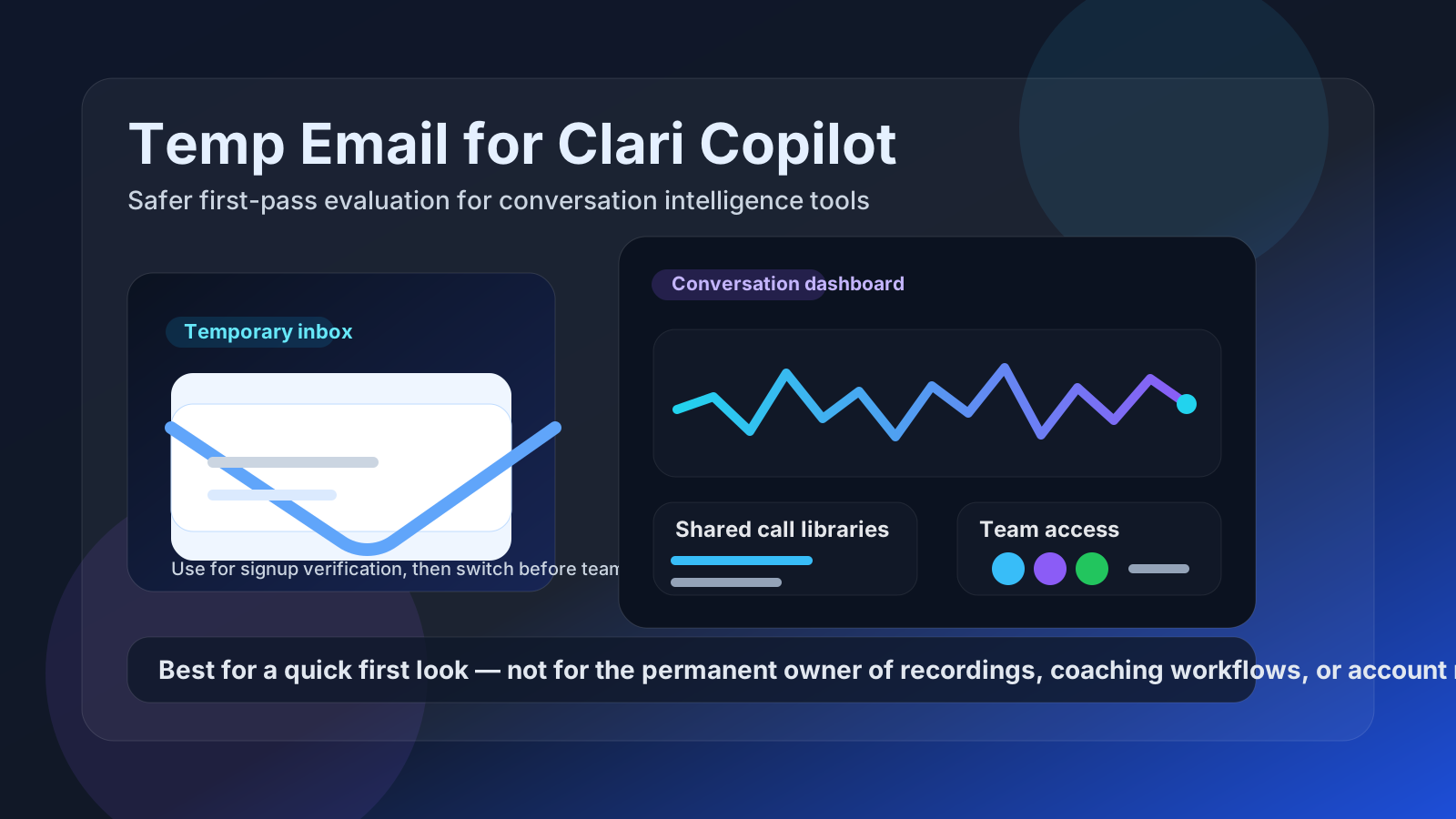
A temp email for Clari Copilot can be useful for an early conversation-intelligence evaluation, but it becomes risky once the account holds shared call libraries, team access, or recovery-critical ownership.
Use a disposable inbox for a quick first look; switch to a stable work address before Clari Copilot becomes part of a real coaching, enablement, or revenue workflow.
If you are comparing conversation-intelligence tools, inbox clutter builds up fast. A few signups can turn into welcome emails, product tours, meeting reminders, “book a demo” nudges, and long follow-up sequences before you have even decided whether the platform deserves a second session. That is the real reason people look for temp email for Clari Copilot: not because a temporary inbox magically solves security, but because it gives you a cleaner way to evaluate a product without tying your everyday address to every vendor touchpoint.
That first-pass use case is legitimate. The problem starts when a disposable inbox drifts from “short trial access” into “permanent owner of an account people actually depend on.” Conversation-intelligence software can move into real workflows quickly. Once that happens, the email on the account stops being a minor signup detail and starts affecting access, collaboration, and recovery.
Why people use a temp email for Clari Copilot in the first place
The appeal is simple: you want to see the product before volunteering your main work inbox for months of follow-up. That is especially common if you are comparing multiple tools in the same category, such as Gong, Chorus, Jiminny, or ExecVision.
In that early research phase, a temporary inbox can help you:
- keep vendor outreach out of your main work mailbox while you are still sorting the shortlist;
- separate one trial from another so onboarding emails do not blur together;
- test the signup and first-run experience without committing your long-term address immediately;
- reduce noise if several people on your team are evaluating different tools at the same time.
Used that way, a disposable address is basically an inbox hygiene tool. If you use Anonibox for that first pass, the benefit is straightforward: faster comparison with less clutter. It is not a substitute for account governance, and it should not be treated like one.
When a temporary inbox makes sense
There are a few situations where using a temp email for Clari Copilot is perfectly reasonable.
1. You are doing a quick first-look evaluation
If your goal is just to decide whether the interface, workflow, and overall product direction are worth more time, a disposable inbox can be fine. You are not trying to operationalize anything yet. You are just checking whether the product earns a place on the shortlist.
2. You are comparing several conversation-intelligence tools side by side
This is one of the best use cases. Vendor emails pile up quickly in this category, especially when multiple tools want to guide you into demos, onboarding calls, or follow-up sequences. A separate temporary inbox can keep that exploration contained.
3. You are not inviting teammates yet
If the account is only for one person doing early research, the stakes stay lower. There are no shared permissions, no internal ownership questions, and no teammates depending on that inbox later.
4. You only need the first few messages
Most early trials only require a small number of emails: the verification link, a welcome message, and perhaps a setup prompt or product-tour email. If that is all you need to make a go or no-go decision, a temporary inbox can do the job.
Where a temp email starts becoming a bad idea
The trouble is not the first verification email. The trouble is what happens when the account becomes useful.
Shared call libraries are not throwaway assets
Conversation-intelligence tools become valuable because they help teams preserve and revisit what happened in real calls. Once an account starts collecting recordings, clips, notes, or searchable history that people actually want to keep, the ownership email matters a lot more. A disposable inbox is the wrong place to anchor something that might later matter to managers, reps, enablement, or revenue operations.
Team access changes the stakes immediately
The moment you start inviting colleagues, the account stops being a personal experiment. Now permissions, admin control, and password resets affect more than one person. Even if the platform lets you change the owner email later, waiting too long turns a small cleanup into avoidable friction.
Coaching and review workflows need continuity
If the account starts supporting coaching, deal review, or shared learning, the login should sit on an address you expect to control long term. Nobody wants to discover that an active team workspace was originally tied to an inbox that only existed for a short evaluation window.
Account recovery becomes a real operational issue
Early on, recovery feels theoretical. Later, it becomes very real. Browsers change. passwords get rotated. admins leave. SSO plans evolve. security teams ask who owns what. A temporary inbox is fine for a throwaway test, but it is a poor foundation for anything that might survive past the trial phase.
Integrations and procurement raise the cost of loose ownership
Once a product moves toward pilot status, internal questions start to appear: Who owns the account? Who approves invites? Which address should receive vendor updates? Who handles access if the original evaluator is gone? A disposable inbox may help you avoid early spam, but it creates the wrong answer to those later questions.
A good rule of thumb
Use a temp email for Clari Copilot only if you are evaluating the product. Do not keep using one once you expect the account to become part of a real workflow.
That single rule prevents most of the mess. Disposable inboxes are good for filtering and comparing. Stable work addresses are good for ownership, recovery, and collaboration. Problems usually start when people try to stretch a disposable inbox beyond its natural job.
How to use a temp email for Clari Copilot without creating cleanup later
Start with a narrow evaluation goal
Decide what this session is actually for. Are you only checking whether the product feels promising? Are you comparing the general category with tools you already shortlisted? Or are you already close to a pilot? If it is just an initial evaluation, a temporary inbox is reasonable. If it already feels like the beginning of implementation, skip the disposable phase and start with a durable address.
Save the few messages that matter
During a short trial, you usually only need a small set of emails:
- the verification email,
- the welcome email,
- any setup instructions you may want to review later,
- and any vendor details that would help you recreate the account properly with a permanent address.
Do not leave that information floating around mentally. Save what matters while the session is fresh.
Evaluate the workflow, not the email campaign
The right first-session questions are practical:
- Does the product seem likely to save time or improve review quality?
- Would managers and reps actually use it consistently?
- Does the workflow seem clear enough to support real adoption?
- Would your team trust the account model and ownership setup long term?
A temporary inbox is most useful when it supports a disciplined evaluation, not an endless “maybe later” account that nobody really owns.
Make a fast graduation decision
If the answer is no, great — the disposable inbox did its job and your main address stays cleaner. If the answer is yes, switch to a stable work address before you begin inviting people, storing more internal material, or letting the account become operationally important.
Signs you should switch to a real work address immediately
- You want to invite teammates or managers.
- You expect the account to survive longer than a short test.
- You are saving shared recordings, notes, clips, or libraries that matter.
- You are entering pilot, procurement, or security-review territory.
- You would be annoyed if you lost access next month.
- You want the account to be clearly owned by the right person or team.
If any of those are true, the account has already outgrown a throwaway inbox.
What not to do
- Do not let a disposable inbox become the permanent owner of a shared workspace.
- Do not invite teammates before you know which durable address should control the account.
- Do not assume “we will change the email later” is friction-free.
- Do not confuse early convenience with a sound long-term admin setup.
- Do not judge the product only by how many emails the vendor sends; judge whether the workflow is genuinely useful.
A practical checklist before you sign up
Before using a temp email for Clari Copilot, ask yourself:
- Am I only doing a first-pass evaluation?
- Will this account stay single-user for now?
- Do I already suspect this could turn into a real pilot?
- Would a stable work address save cleanup later?
- Do I have a clear point where I will switch from disposable to permanent?
If your answers point to a short, contained trial, a temporary inbox is a practical move. If the account already looks like the start of a real program, skip the disposable step and set it up correctly from day one.
Final answer
A temp email for Clari Copilot is a smart choice for early evaluation and inbox control. It is a bad choice once the account starts holding shared libraries, team access, coaching workflows, or any ownership responsibility you would care about later.
The best approach is simple: use a disposable inbox for the first look, keep that evaluation focused, and move to a stable work address as soon as the account begins to matter. That gives you the privacy and cleanliness benefits of a temporary inbox without creating avoidable admin problems later.