A temp email for Degreed is fine for a short, low-stakes product evaluation when you only need to verify signup, look around the platform, and decide whether it belongs on your shortlist.
It becomes a poor long-term choice once admin ownership, learner access, reporting, skill data, or account recovery starts to depend on that inbox.
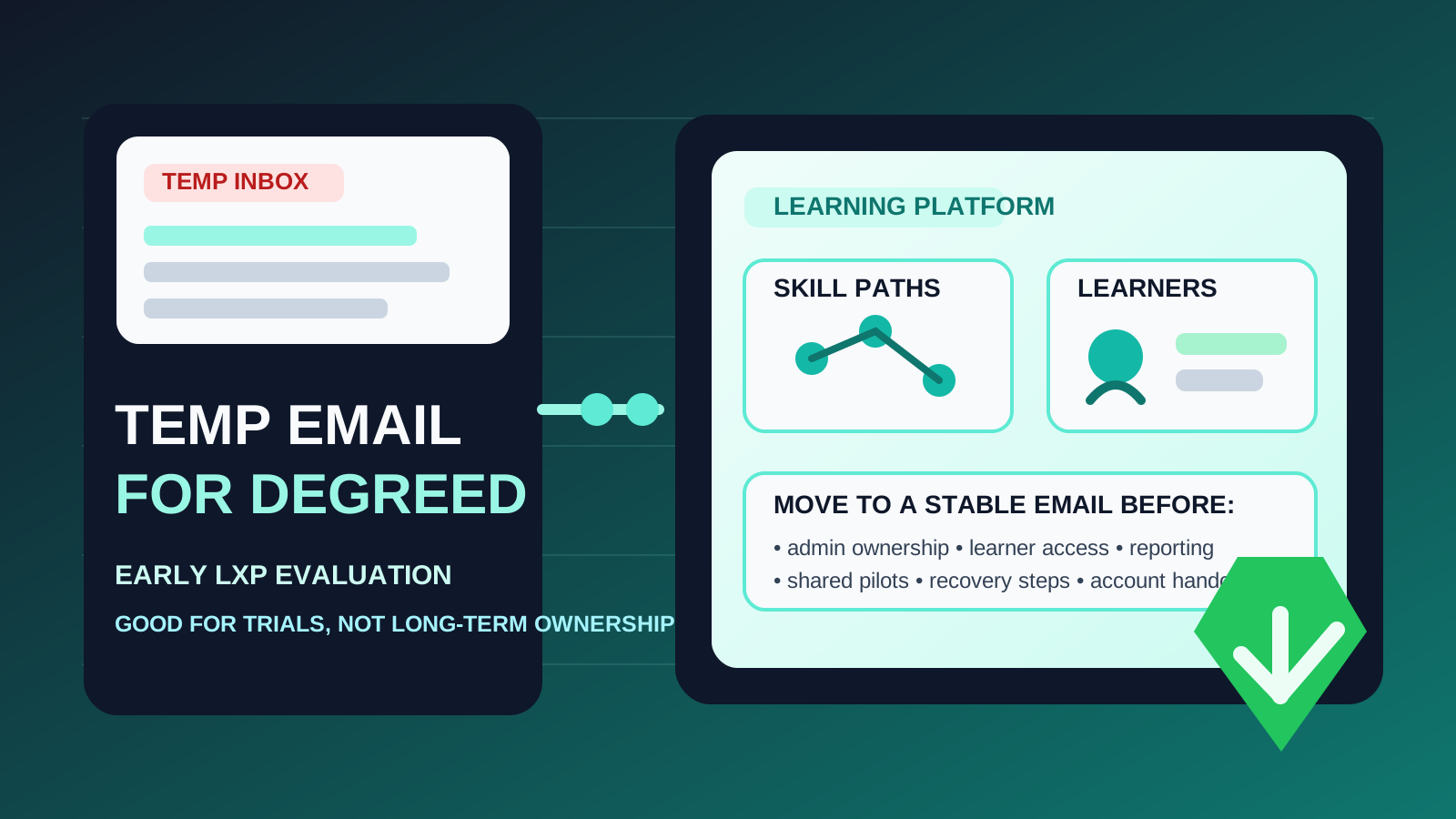
That is the practical answer behind most searches for temp email for Degreed. Many teams want to explore a learning experience platform without instantly feeding their main work inbox into sales follow-ups, webinar invites, onboarding sequences, and reminder emails from every tool they compare. That instinct makes sense. Early software research is noisy, and not every platform you test deserves a permanent place in your inbox.
A temporary address can help you isolate that first round of evaluation. You get the verification email, welcome messages, and initial setup steps without handing over your long-term work address too early. If you use a service like Anonibox for that stage, the main benefit is separation: product research stays separate from your everyday communication.
But Degreed is not the kind of product that stays “just a signup” for very long if the evaluation goes well. Learning paths, skill development, admin roles, user invitations, content structure, and recovery workflows all become more important once the account starts to matter. That is where a disposable inbox stops being convenient and starts becoming a weak foundation.
The right approach is simple: use a temporary inbox only while the account itself is temporary in every other sense too. If there is a realistic chance the workspace will become a real pilot or shared evaluation, move to a durable work-owned address early.
Why people consider a temp email for Degreed
Most people are not looking for a temporary inbox because they want to be sneaky. They want to manage attention. Comparing learning platforms usually means you are looking at several products at once, and each one may trigger marketing sequences, product tours, implementation checklists, and repeated follow-up from sales or customer success teams.
A disposable inbox can be useful if you want to:
- verify the account quickly without using your long-term inbox immediately
- compare multiple learning platforms before sharing a permanent address more broadly
- keep research separate from normal HR, L&D, enablement, or operations email
- avoid unnecessary clutter from tools that may never make the shortlist
For that narrow job, a temp inbox is practical. It gives you breathing room during the first pass.
When a temporary inbox makes sense
You are only doing a first-pass evaluation
If the goal is simply to see how Degreed looks, what the admin flow feels like, and whether the platform seems relevant, a temporary inbox can be reasonable. You are not committing to anything long-term yet. You are just deciding whether it deserves more time.
You are working alone
The disposable approach is least risky when one evaluator is exploring independently and nobody else depends on the workspace. If there are no teammates, learners, or cross-functional reviewers attached yet, the downside stays limited.
You want inbox control during vendor research
This is the most obvious benefit. A learning-platform trial can trigger welcome emails, feature explainers, sales prompts, and meeting requests fast. If you are comparing several systems at once, isolating each evaluation can keep your main inbox cleaner and easier to manage.
Where the approach starts to break down
Degreed becomes more important as soon as the account starts holding real value. That is the point where a burner inbox becomes fragile.
1. Admin ownership matters more than signup convenience
Every serious learning platform eventually needs a clear owner. Someone is responsible for settings, structure, governance, and the general health of the workspace. If the main account is tied to a disposable inbox, that ownership chain is weak from the beginning.
2. Learner access raises the stakes quickly
What begins as a solo evaluation can become a pilot. The moment you invite colleagues, test users, or learners, the account stops being a throwaway experiment. Access and continuity matter more, and the inbox on file matters more too.
3. Reporting and skills data deserve stability
Learning systems often move beyond casual browsing into real progress tracking, skill mapping, content paths, and usage review. Once the workspace starts generating information that influences decisions, relying on an inbox you may lose later is a bad trade.
4. Recovery issues show up later, not sooner
The biggest weakness of a temp inbox often appears after the trial seems successful. Password resets, suspicious-login alerts, verification prompts, ownership transfer, and admin changes all depend on continued access to the address on file. If that inbox is gone, ordinary account maintenance becomes harder than it should be.
5. Shared evaluations need clean accountability
If L&D, HR, enablement, operations, or department leads are reviewing the same workspace, the account foundation should already be durable. Teams need a monitored inbox that can be handed over responsibly if roles change or the project expands.
A practical rule that actually works
Use a temp email for Degreed only while the account is temporary in every other sense too.
If you are just inspecting the platform, that can be a smart privacy move. If the workspace might become a pilot, a team review environment, or a real implementation path, switch to a stable work-owned email before the account becomes important.
That rule keeps the privacy benefit without creating avoidable ownership problems later.
How to evaluate Degreed safely with a temp inbox
1. Decide whether this is research or the start of a pilot
Be honest before signup. Are you just exploring, or do you already think this platform may become a serious option? If this is pure research, a temporary inbox is fine. If there is a real chance the workspace will become shared or strategic, start with a durable address instead.
2. Keep the first session focused
Go into the trial with a short checklist. For example:
- Does the platform feel understandable from an admin perspective?
- Does the structure seem suitable for your learning goals?
- Would your team actually want to continue exploring it?
- Does it look strong enough to justify a deeper pilot?
A focused review reduces the chance that a temporary account slowly turns into a semi-permanent one by accident.
3. Avoid attaching real learners or real processes too early
If the owner inbox is disposable, keep the evaluation low stakes. Do not treat the workspace like production infrastructure before ownership is stabilized. The more real people and real workflow you connect to the account, the more painful the cleanup becomes later.
4. Save the useful information immediately
Keep notes on what mattered during the trial: setup steps, strong features, weak spots, and anything you would need if you recreate the workspace under a permanent email later. That way, you are not trapped by the original signup choice.
5. Switch before the workspace becomes sticky
The best time to move to a permanent inbox is before the account has multiple stakeholders, before usage data matters, and before recovery becomes mission-critical. Early migration is boring, but it is much easier than fixing ownership after people depend on the account.
When a permanent inbox is clearly the better choice
Skip the temporary step and use a stable work-controlled address from day one if any of these are already true:
- you expect the account to become a real pilot
- multiple admins or stakeholders may need access soon
- the workspace may hold meaningful learner activity or reporting
- the account could influence purchasing or implementation decisions
- you care about a clean recovery and ownership path later
In those situations, the privacy benefit of a burner inbox is smaller than the long-term friction it can create.
Common mistakes to avoid
Letting the trial account quietly become the real account
This is the classic mistake. A quick evaluation goes well, the team keeps using the same workspace, and nobody revisits the inbox decision until a reset, permissions issue, or handoff suddenly makes it urgent.
Confusing inbox cleanliness with account safety
Keeping vendor outreach out of your primary inbox is helpful. It does not automatically mean a disposable inbox is the right long-term home for a platform your team may actually depend on.
Waiting for a problem before fixing ownership
Once account recovery or admin transfer becomes urgent, the wrong inbox turns into a real operational nuisance. Moving to a stable address early is almost always easier.
Adding teammates before stabilizing the account owner
Shared evaluation changes the risk profile. Even before a full rollout, multiple stakeholders mean the owner account should already be tied to an inbox the organization can maintain.
Quick decision checklist
Before you use a temp email for Degreed, ask yourself:
- Is this only a first-pass evaluation?
- Will anyone else need access soon?
- Could this workspace turn into a real pilot?
- Would losing the inbox create unnecessary friction later?
- Am I trying to reduce inbox clutter, or am I accidentally avoiding proper account ownership?
If the account is truly temporary, a disposable inbox is reasonable. If the account may become meaningful, a permanent work-owned email is the better choice.
Final takeaway
A temp email for Degreed is useful when you want a quick, low-commitment look at the platform and you do not want early vendor outreach living in your main inbox forever.
It becomes risky once admin ownership, learner access, reporting, skill data, shared evaluation, or account recovery depends on that inbox. Use the temporary route for early exploration, then move to a stable work-owned email before the trial turns into something your team actually relies on.
That way, you get the privacy and inbox-control benefits of a disposable signup without turning a small shortcut into a long-term ownership problem.