A temp email for Trainn is reasonable for a short, low-stakes customer education evaluation when you only need signup verification, a first product tour, and a quick sense of whether the platform belongs on your shortlist.
It becomes a bad long-term choice once your academy, learner access, onboarding content, team ownership, or account recovery depends on that inbox.
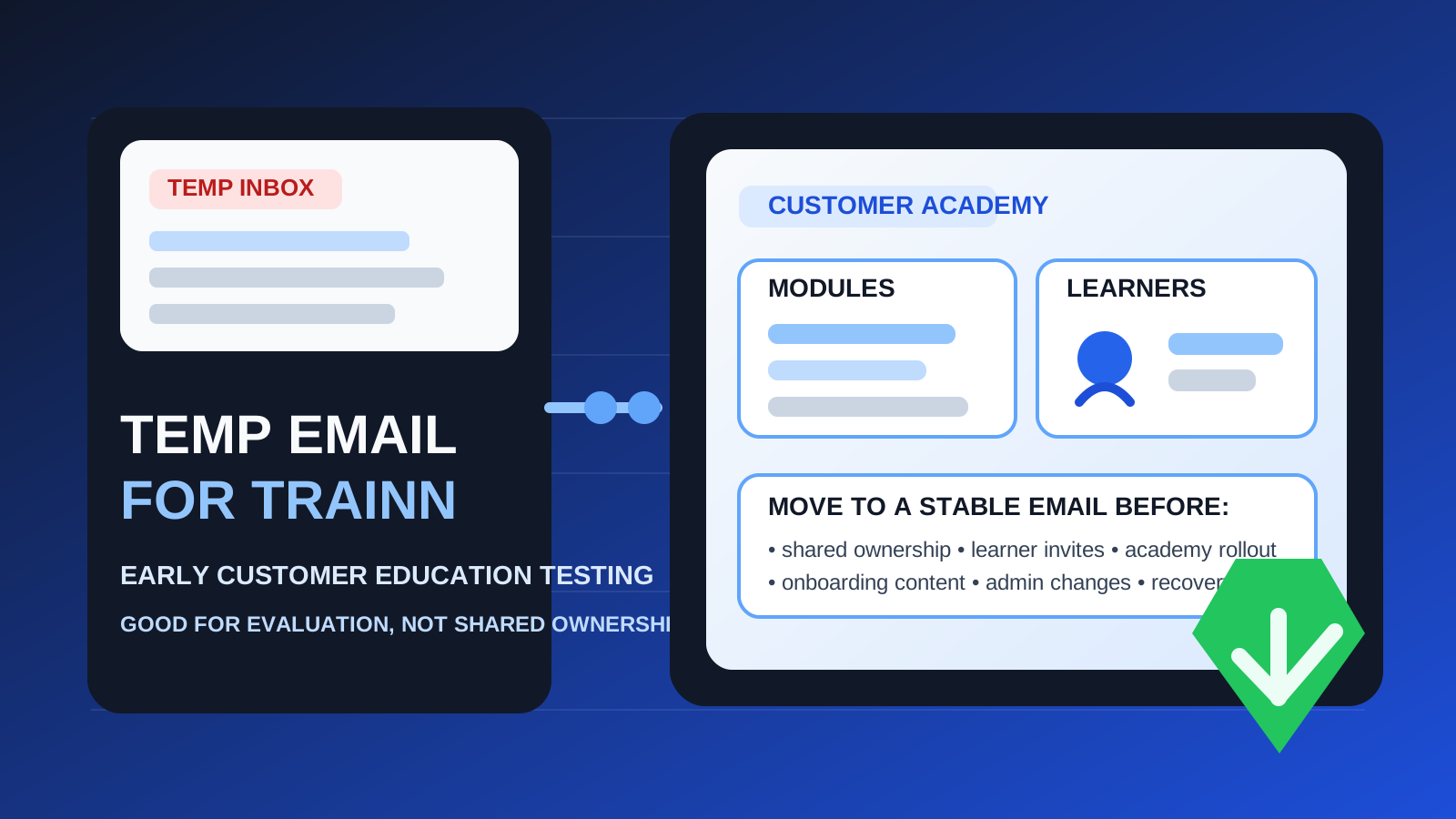
That is the practical answer behind most searches for temp email for Trainn. Many teams want to explore a customer education or training platform without giving their primary work inbox to every vendor they evaluate. That is a fair instinct. A disposable address can keep welcome emails, demo follow-ups, and trial reminders out of your long-term inbox while you decide whether a platform is actually worth deeper attention.
But the problem with customer education tools is that they stop being disposable very quickly. What begins as a harmless test account can turn into the home for onboarding videos, help-center training, academy modules, learner invites, and internal ownership decisions. Once that happens, the inbox behind the account matters a lot more than it did on day one.
If you are only doing early research, a temporary inbox can be useful. If there is a real chance the workspace will become a shared pilot, customer-facing academy, or operational training hub, moving to a durable work-owned email early is the safer move.
Why someone might use a temp email for Trainn
The most common reason is simple: software evaluation creates inbox clutter. If your team is comparing multiple customer education, onboarding, and enablement tools, every signup can trigger a chain of verification emails, product tours, webinar invites, upgrade prompts, and sales follow-ups. Not every platform makes the shortlist, so many teams would rather not attach that entire process to a permanent inbox right away.
A service like Anonibox can help isolate that early evaluation stage. You can verify the account, review the workspace, and decide whether the product deserves a more serious trial without turning one exploratory signup into months of email noise.
Used carefully, a temporary inbox can help with:
- first-pass evaluation when you only want a quick look at the platform
- vendor comparison across several customer education or training tools
- inbox hygiene so trial sequences do not flood your main work email
- low-stakes research where the account is not meant to become operational
That is the key distinction: you are evaluating the platform, not committing the account to long-term ownership yet.
When a temp inbox makes sense
You are narrowing a shortlist
If your team is still deciding which platform deserves a proper pilot, a temporary address is often fine. You can sign up, inspect the dashboard, review the workflow for creating or delivering training, and decide whether the tool feels relevant before giving it a permanent place in your stack.
You want to contain vendor follow-up
Customer education software often comes with active sales and onboarding follow-up. That is not unusual, but it can be noisy. If you are testing several platforms at once, keeping those messages separated from your normal work inbox can make the evaluation feel cleaner and easier to manage.
You are testing alone
The disposable approach is safest when one evaluator is doing a solo review and nobody else depends on the account. If there are no teammates, no learners, and no live customers involved, the downside stays limited.
Where the approach starts to break down
Trainn becomes much more important once the workspace starts holding real value. That is when a burner inbox stops being convenient and starts being fragile.
1. Customer education content tends to become shared fast
Unlike a throwaway trial for a simple utility, a customer education platform often turns into a shared workspace quickly. Product marketing, customer success, support, implementation, documentation, or enablement teams may all want input. Once several people care about the account, tying it to a disposable inbox is a weak foundation.
2. Learner access raises the stakes
If the workspace is used for onboarding, help content, academy lessons, or self-serve training, the account behind it starts affecting real learner experiences. That is the point where convenience during signup is no longer the most important factor.
3. Team ownership matters more than inbox privacy
Temporary inboxes are good at reducing early email clutter. They are not good at long-term account governance. If one person signs up with a throwaway address and the platform later becomes valuable, the organization may inherit an ownership problem that could have been avoided.
4. Recovery issues show up later, not sooner
The biggest weakness of a temp inbox often appears after the test goes well. Password resets, suspicious-login alerts, email verification prompts, billing notifications, and ownership changes all depend on continued access to the address on file. If the inbox is gone, a normal maintenance task becomes much more annoying.
5. Customer-facing platforms should not depend on throwaway foundations
If the platform may end up supporting customer onboarding, product adoption, or self-serve support, then the account foundation should be stable, monitored, and easy to transfer responsibly. Disposable owner emails work against that goal.
A practical rule that keeps things simple
Use a temp email for Trainn only while the account is temporary in every other sense too.
If you are just exploring the product, a temporary inbox can be a reasonable buffer. If the workspace may become a real pilot, shared demo, or live training environment, switch to a durable work-owned email before the account becomes important.
That simple rule preserves the privacy benefit without creating unnecessary cleanup later.
How to evaluate Trainn safely with a temporary inbox
1. Decide whether this is research or the start of rollout planning
Before you sign up, be honest about the goal. Are you just comparing tools, or do you already expect this platform might become part of your customer education stack? If it is pure research, a temp inbox is fine. If there is a realistic chance the workspace will become real, use a stable team-owned address instead.
2. Keep the first session focused
Go into the trial with a short checklist. For example:
- Is the workspace intuitive enough for the people who will own it?
- Does the training creation and delivery workflow fit your team?
- Would this work better for onboarding, product education, or self-serve support?
- Does the platform feel good enough to justify a deeper pilot?
A focused evaluation makes it easier to keep the account temporary if the answer is no.
3. Avoid attaching real learners or live workflows too early
If the workspace is tied to a disposable inbox, keep the test low stakes. Avoid turning it into the real home for customer-facing training before ownership is stabilized. The more operational value you attach to the account, the harder the cleanup becomes later.
4. Save what matters during the trial
Keep notes on what worked, what did not, and what you would want to reproduce under a permanent address. Capture any useful setup decisions, course structure ideas, or workflow observations early so you are not dependent on the original temp inbox account if you choose to start fresh.
5. Move to a durable address before the workspace becomes sticky
The easiest time to switch is before multiple teammates, real learners, or important content are attached to the account. It is much easier to restart or migrate early than to fix ownership under pressure later.
When a permanent inbox is clearly the better choice
Skip the disposable step and use a stable work-owned email from the beginning if any of these are already true:
- the workspace may become a real customer academy
- multiple internal stakeholders will need access soon
- the platform may support live onboarding or support workflows
- you care about clean account recovery and long-term access
- the evaluation is really the start of implementation planning
In those situations, the privacy benefit of a burner inbox is smaller than the ownership risk it creates.
Common mistakes to avoid
Letting the trial account become the permanent account by accident
This is the most common mistake. A quick evaluation goes well, the team keeps using the same workspace, and nobody revisits the email choice until a password reset or account handoff exposes the weakness.
Confusing cleaner inboxes with safer account ownership
Reducing sales email clutter is useful. It does not automatically make a disposable inbox the right home for a platform that might soon matter to your business or your customers.
Adding teammates before fixing the owner email
Shared evaluation raises the stakes fast. If product, customer success, support, or enablement people are joining the workspace, the owner email should already be something the organization can monitor and maintain.
Waiting for a recovery problem before making the switch
By the time you need password recovery, admin transfer, or billing continuity, the disposable inbox decision has already become painful. Moving early is much easier than fixing it later.
A quick decision checklist
Before you use a temp email for Trainn, ask yourself:
- Is this only a first-pass evaluation?
- Will other teammates need access soon?
- Could this workspace turn into a real pilot or academy?
- Would losing access to the inbox create unnecessary friction later?
- Am I trying to reduce inbox clutter, or am I accidentally avoiding proper account ownership?
If the account is truly temporary, a disposable address can be reasonable. If the account may become meaningful, a permanent work-owned email is the smarter choice.
Final takeaway
A temp email for Trainn is useful when you want a quick, low-commitment look at the platform and you do not want early vendor messages filling your main inbox forever.
It becomes risky once shared ownership, learner access, onboarding workflows, or account recovery depends on that inbox. Use a temporary address for early-stage exploration, then move to a stable work-owned email before the trial becomes something your team or your customers actually rely on.
That way, you keep the privacy and inbox-control benefits of a disposable signup without turning a small convenience into a long-term account ownership problem.