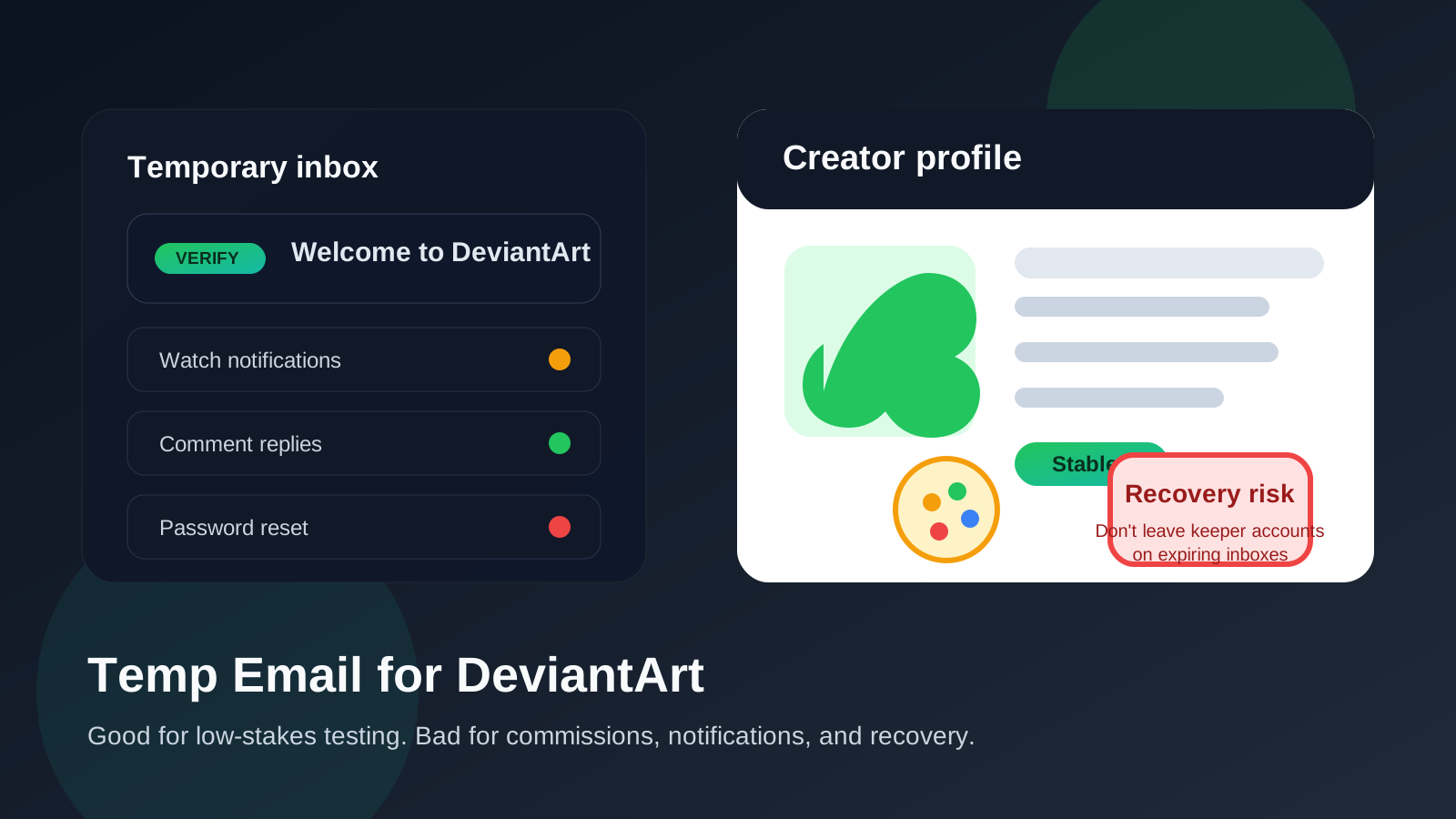
Yes — a temp email for DeviantArt can be useful if you only want to test the platform, browse privately, or keep a hobby sign-up out of your main inbox.
It becomes a bad long-term choice the moment you care about watch notifications, commission inquiries, password resets, or keeping a real art portfolio tied to one stable identity.
Why people use a temp email for DeviantArt in the first place
DeviantArt can trigger more email than people expect. Even light use can lead to verification messages, watch notifications, comment replies, follower updates, recommendation emails, and other account activity alerts. If you are joining out of curiosity, checking a fandom community, or testing whether you even want an account, it makes sense to wonder whether a disposable inbox is the easier option.
That instinct is reasonable. A temporary inbox can reduce clutter, keep your primary address off another platform, and give you a clean way to verify a one-off account. For a casual trial run, that is often enough.
The problem is that DeviantArt is not only a passive browsing site. For many people it becomes a living account: a place to upload artwork, follow artists, join conversations, save favorites, manage commission contact, and build a recognizable creative identity over time. Once that happens, the email address connected to the account stops being a throwaway detail and starts becoming part of the account’s foundation.
When a temp email for DeviantArt actually makes sense
There are a few situations where using a temporary address is practical rather than reckless.
1. You only want to explore the platform
If you are just testing the sign-up flow, browsing communities, or checking whether DeviantArt still fits your interests, a temp inbox can be fine. You get the verification email without volunteering your everyday address before you know whether you will stick around.
2. You want to separate hobby experiments from your main inbox
Some people prefer not to mix fandom, art inspiration, or side-project browsing with work, school, or family email. A temporary address can help you keep that first experiment contained while you decide whether the account deserves something more permanent.
3. You are creating a short-lived test account
If your goal is temporary by design — for example, checking onboarding, viewing how profiles behave, or testing whether certain account settings are worth the effort — a disposable address can be good enough. In that scenario, losing long-term access may not matter much.
Where temp email becomes risky on DeviantArt
The trade-off changes quickly once you move past casual browsing.
Watch notifications and reply alerts can matter more than you think
Many DeviantArt users sign up because they want to follow artists, respond to comments, or keep track of updates from communities they care about. If your temporary inbox disappears, those notifications disappear with it. That does not just mean missing marketing email. It can mean missing actual activity tied to your account.
When you are trying to stay part of a conversation, follow a creator you admire, or respond to people engaging with your work, losing those messages becomes annoying fast. Even if you can still log in for a while, the account becomes harder to manage reliably.
Account recovery is the biggest long-term weakness
This is the real deal-breaker for most serious users. If you forget your password, get locked out, change devices, or need to confirm account ownership later, an expired temp inbox can turn a minor inconvenience into a permanent loss.
That risk is easy to underestimate when the account is brand new. On day one, it feels disposable. Six months later, after uploads, favorites, follows, saved drafts, comment history, and community connections, it may not feel disposable at all.
Commission inquiries and client contact should not depend on a vanishing inbox
If you use DeviantArt to show portfolio work, accept inquiries, or attract commission leads, a disposable inbox is usually the wrong tool. You do not want a potential client message flow or account-related communication hanging off an address that may stop working when you need it most.
Even if you do not process commissions directly through email, a stable address still matters behind the scenes. It supports account access, security notices, and the practical continuity that creative work depends on.
Your account identity can outgrow the “throwaway” phase
Creative platforms are weird that way. What starts as a low-stakes account sometimes turns into your real profile. You upload a few sketches, then a polished piece, then people start following you, then you want the username, history, and audience to stay intact.
At that point, the weakest part of the setup is often the old throwaway email decision you made during sign-up.
A better way to think about the decision
The smartest question is not “Can I use a temp email for DeviantArt?” The smarter question is “What kind of DeviantArt account am I creating?”
- Purely temporary account: a temp email may be fine.
- Maybe temporary, maybe long-term: start with caution and switch early if you keep the account.
- Portfolio, commissions, or real community use: use a stable address from the beginning.
That mindset keeps you from treating every sign-up the same way. Not every account deserves your main inbox immediately, but not every account should be built on a disposable foundation either.
The safest setup for most people
For most users, the best middle ground is not a fully temporary inbox. It is a separate but permanent address dedicated to hobbies, creator platforms, or online communities.
That gives you several advantages at once:
- You keep DeviantArt off your primary personal or work email.
- You still have a real inbox for recovery and important notices.
- You can filter community mail without losing access to the account.
- You avoid turning a useful account into a recovery problem later.
If you want even more privacy, an alias-based setup can work well too. A service like Anonibox makes the most sense at the earliest, lowest-stakes stage: quick sign-ups, one-off tests, and short trial accounts you genuinely do not plan to keep. Once the account starts holding real creative value, a stable address is usually the safer move.
How to use a temp email for DeviantArt without creating future regret
If you still want to start with a temporary address, use a simple decision process.
Step 1: Decide whether this is a test account or a keeper
Be honest before you sign up. Are you actually just browsing, or do you already suspect you may upload work, follow artists, and keep the account? If you think there is a real chance the account will matter later, skip the disposable inbox and start with a stable one.
Step 2: Use the temp email only for the lowest-stakes phase
If the goal is simply verifying the account and getting a first look around, that is the right moment for a temporary address. Do not treat it as the permanent setup unless you truly do not care whether the account survives long term.
Step 3: Change the account email early if you keep the account
The earlier you switch to a permanent address, the better. Do it before you upload serious work, join groups you care about, start conversations, or attach your identity to the profile. Waiting until something goes wrong is the classic mistake.
Step 4: Save the details that matter
Store your username, password, and the stable replacement email somewhere secure. If the platform offers security settings that strengthen recovery, use them. The goal is not just getting into the account today. It is making sure future-you can still get in.
Common mistakes people make
- Treating all community accounts like one-off coupons: DeviantArt can become much more persistent than that.
- Posting real work before updating the email: once the account has value, the old temp setup becomes a liability.
- Assuming they will remember to switch later: many people do not, until recovery suddenly matters.
- Using a temporary inbox for commission-facing activity: this creates unnecessary friction for both you and potential clients.
- Confusing privacy with disposability: you can protect privacy with a separate permanent inbox too; it does not have to be a vanishing one.
What to do if you already signed up with a temp email
If the account is still accessible, fix it now rather than later.
- Log in while you still can.
- Change the account email to a stable address you control.
- Confirm the new address successfully receives mail.
- Review any notification or security settings tied to email.
- Save updated login and recovery information somewhere secure.
Do not wait for a lockout, a missed commission request, or a password reset problem to remind you. The best recovery move is usually making recovery possible before you need it.
So, should you use a temp email for DeviantArt?
Yes, if your goal is short-term sign-up privacy, quick testing, or keeping a casual experiment out of your main inbox.
No, if you plan to post art seriously, follow the community consistently, manage commission activity, or keep the account long term. In those cases, a separate permanent email or a privacy-friendly alias is usually the smarter answer.
Used carefully, a temp email can give you a low-friction way to test DeviantArt without inviting more inbox noise. Just do not confuse a good short-term privacy tactic with a good long-term account strategy.