Yes, you can use a temp email for Stack Exchange if you only want short-term sign-up privacy while testing a site or reading a niche community.
But it is usually a poor long-term choice if you want account recovery, cross-site continuity, reliable notifications, or a profile you may build across the Stack Exchange network over time.
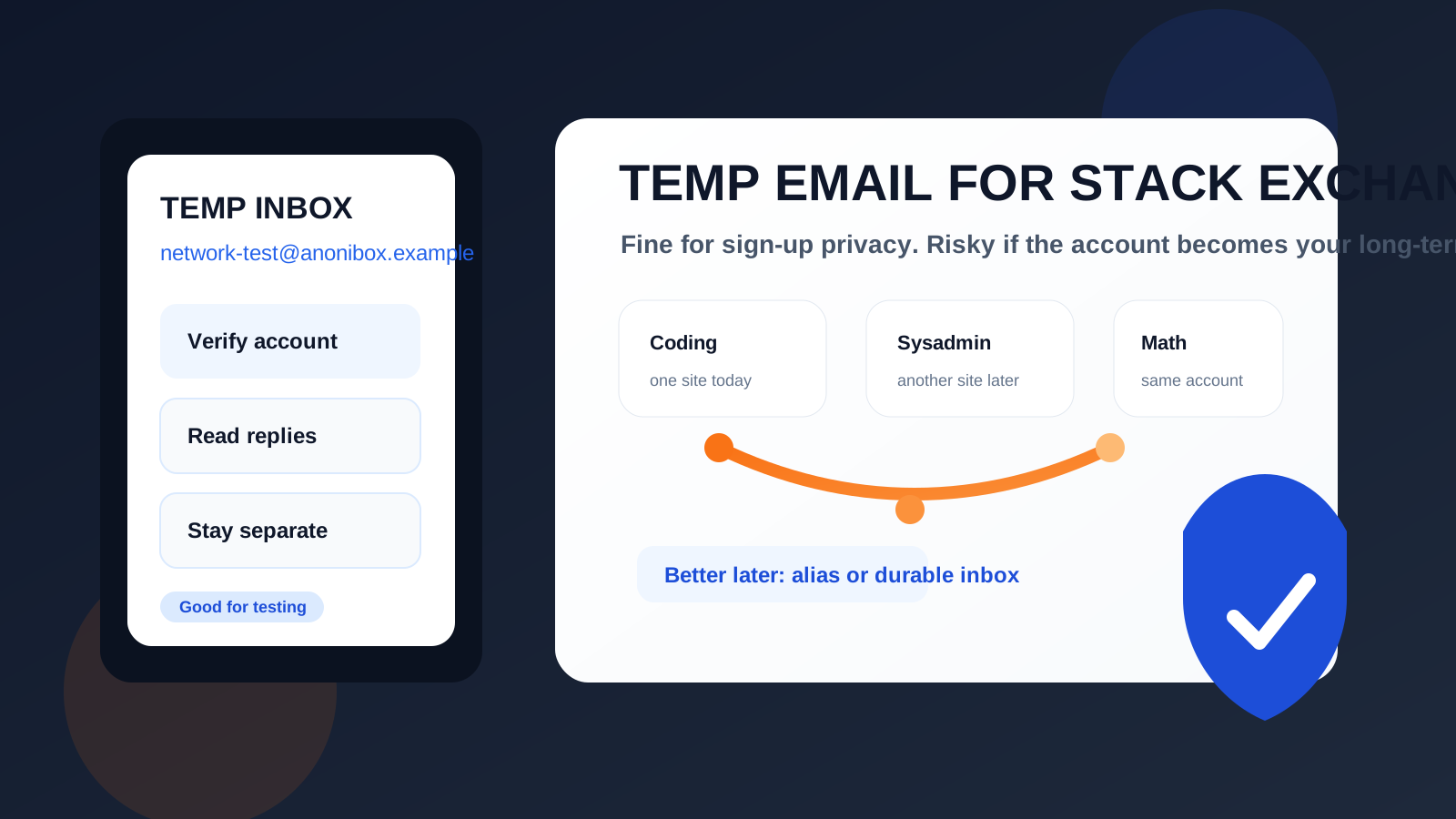
That distinction matters because Stack Exchange is not just one website. It is a network of communities, each with its own focus, norms, and activity, but tied together by an account system and a broader identity footprint. A disposable address can work when you are casually checking whether one site is useful. It starts to work against you once the account becomes something you actually depend on.
Many people search this topic for a practical reason, not a shady one. They do not want another platform tied directly to their main inbox. They want less clutter, a little privacy, and some space to decide whether the community is worth keeping. That is reasonable. The trick is understanding when a temporary email helps and when it quietly creates future problems.
Why someone would use temp email for Stack Exchange
There are a few sensible reasons to start cautiously.
- You are only exploring a niche community. Maybe you want to read, bookmark, or test one site without committing your main inbox immediately.
- You want to reduce inbox exposure. Even useful communities can generate more email than expected through replies, comments, login confirmations, and recommendation-style updates.
- You are separating low-stakes logins from your primary identity. Developers, researchers, hobbyists, and job seekers often collect accounts across too many forums and tools. A temp inbox can keep that sprawl under control for first-pass experiments.
- You are not sure you will keep the account. If you may never return after a quick test, a disposable address can feel proportionate.
Those are valid goals. A service like Anonibox fits naturally at that early stage because it helps you keep initial sign-up activity out of the inbox you use for work, finance, or important personal communication.
Where temporary email can work reasonably well
Low-stakes testing
If you only want to see how the site works when logged in, check preferences, or ask whether a specific Stack Exchange community is useful at all, a temporary inbox is usually fine. The account is acting more like a test shell than a long-term identity.
Short-term reading and browsing
Some people create accounts mostly to follow a topic, save a few posts, or access features that are easier when signed in. If you genuinely would not care much about losing the account later, the downside is smaller.
Trying a community before you invest
Stack Exchange includes sites for programming, system administration, academics, hobbies, writing, design, mathematics, and much more. If you are not sure whether you will participate seriously, using a temp email for the first look is understandable.
Why it gets risky faster than people expect
Account recovery is the obvious problem
The first risk is simple: if you lose access to the address, later recovery becomes harder. That matters on any platform, but it matters more on a network where one login can connect to multiple communities and years of activity. A temporary address may feel harmless during sign-up, then become the weakest link once the account has history attached to it.
The account can grow across the network
Unlike a one-off newsletter signup, Stack Exchange accounts can quietly accumulate value. You might begin with one question on one site and later use the same login across several communities. Over time that can mean saved posts, accepted answers, votes, edits, participation history, badges, and a recognizable profile. A disposable inbox is rarely a good foundation for something that can spread across multiple communities.
Notifications become more important later
At first, email from a Q&A site can feel optional. Later it may matter more than you expected. Comment replies, moderation notices, password resets, or follow-ups to your own posts can all become useful if you are participating seriously. Missing every message because the address was temporary is not always a crisis, but it does make the account harder to manage well.
Reputation and identity can outgrow the original setup
Even if you never set out to build a public identity, good contributions have a way of sticking. If you answer questions well, get cited, or begin using the account as part of your professional or hobby reputation, the original privacy shortcut can become a long-term maintenance problem. That is especially true if you link the profile anywhere public later.
Why this is different from the Stack Overflow question
Stack Overflow is only one part of the broader picture. The Stack Exchange query has slightly different intent because it is about the network, not just a single coding site. Someone may want a login that touches more than one community, or they may not yet know which site they will end up using most. That makes the recovery and continuity issue broader than a single-site decision.
If your real use case is specifically the programming site, see Temp Email for Stack Overflow. If your concern is the wider account that may travel across different communities, the network-level decision matters more.
Temp email vs alias vs separate long-term inbox
For Stack Exchange, the better comparison is usually not “main inbox versus throwaway inbox.” It is this:
- Temp email: best for quick experiments and low-stakes sign-up privacy.
- Email alias you control: better if you want separation from your main inbox without giving up long-term recovery.
- Separate durable inbox: strongest choice if you expect the account to matter across several communities over time.
Most people who think they want a disposable inbox actually want controlled separation. If that sounds like you, a stable alias or dedicated side inbox is usually the better tool.
A practical way to use temp email without creating future regret
1. Decide whether this is a test account or a keeper account
Be honest before you sign up. Are you only evaluating the network? Or is there a real chance you will use the account for months or years?
2. Use the temporary inbox only for the earliest stage
If it is a genuine test, use the temp address for the first verification step and early exploration. That keeps the privacy benefit where it helps most.
3. Switch early if the account starts becoming useful
The moment you begin asking good questions, posting answers, following multiple sites, or caring about the profile, move the email to something stable. Do not wait until you forget what address you used or until you actually need recovery.
4. Save login details and reduce unnecessary notifications
Some inbox clutter problems are better solved with settings than with disposable identity. If you keep the account, review notification preferences early so you are not solving a preferences issue with a recovery problem.
When a temporary inbox is probably the wrong choice from the start
- You expect to contribute regularly.
- You may use more than one Stack Exchange site.
- You care about preserving answer history or profile continuity.
- You would be annoyed if you lost access months later.
- You may connect the profile to a portfolio, résumé, blog, or professional identity.
- You want one stable place to receive replies and account notices.
If any of those sound true, skip the pure disposable route and use something you can control long term.
Best practices if privacy is still your main concern
- Prefer a durable alias over a true throwaway inbox if there is any chance the account will matter later.
- Keep community logins separate from your primary personal inbox if you want cleaner boundaries.
- Do not build a cross-site profile on an address you cannot recover.
- Change the account email early if the account stops being temporary in practice.
- Use Anonibox for early testing, not as a forever identity anchor.
Quick decision checklist
- Am I only exploring one site briefly, or might I use several communities?
- Would I care if I lost password recovery later?
- Do I want less inbox exposure, or do I actually need long-term account separation?
- Would an alias or dedicated side inbox solve the problem better?
- If the account becomes useful, am I prepared to move it to a stable address quickly?
Final answer
A temp email for Stack Exchange can be a practical short-term move if you only want low-stakes sign-up privacy while testing a community or reducing early inbox clutter.
But it is usually the wrong long-term setup for an account that may grow across multiple Stack Exchange sites, accumulate history, or need reliable recovery. If you think the account might matter later, use a stable alias or separate inbox you control. That gives you most of the privacy benefit without turning future access into a headache.
The clean middle ground is simple: temporary for testing, durable for keeping.