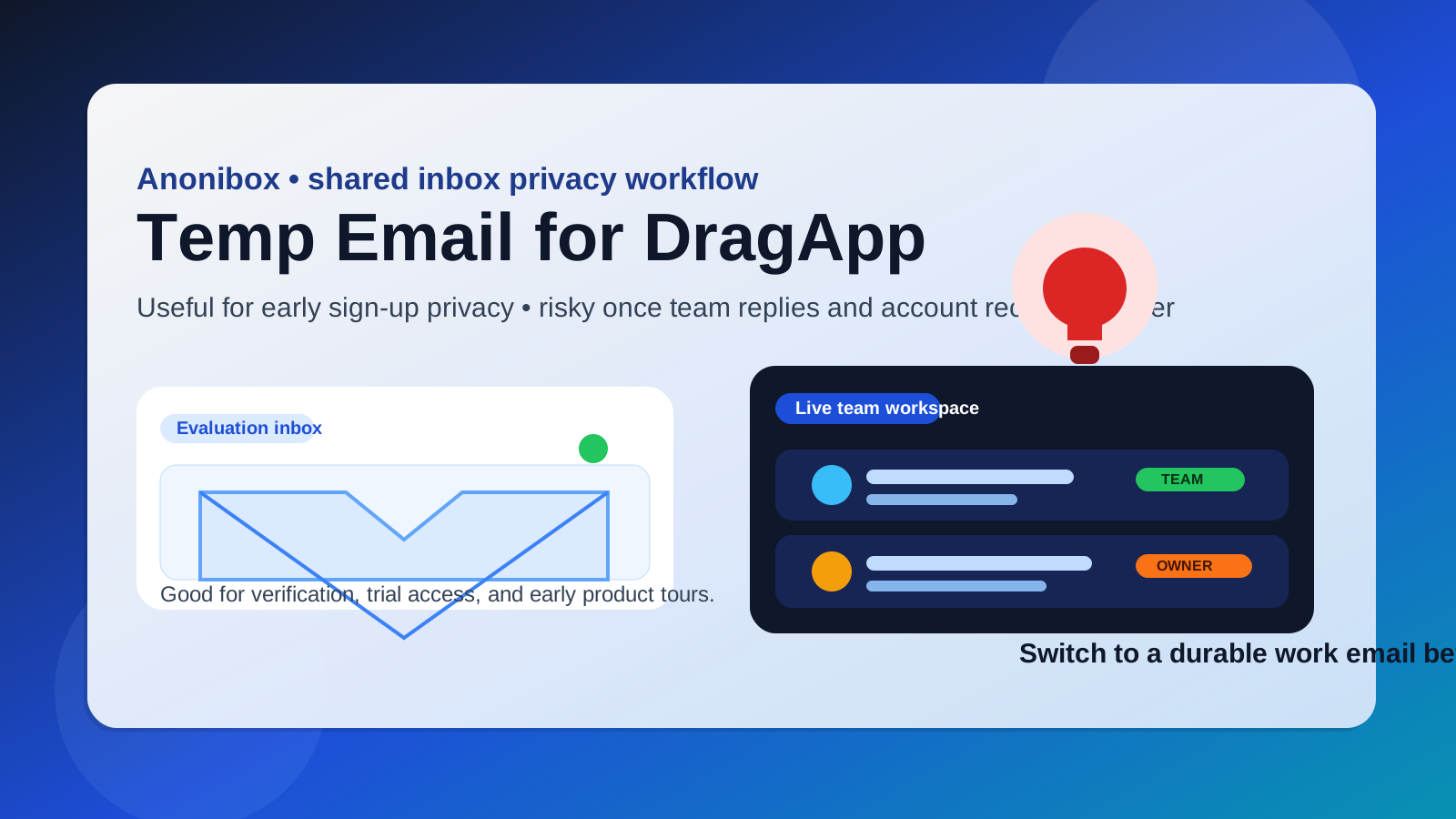
A temp email can work for a DragApp sign-up if you only want to test the product without giving your main inbox to another vendor right away.
It becomes a bad idea once the account starts touching shared inbox ownership, team replies, customer conversations, or account recovery that other people may depend on.
Why people consider a temp email for DragApp
That instinct is reasonable. If you are comparing shared inbox tools, Gmail collaboration add-ons, or team email workflows, you may not want every trial to land in your permanent work inbox on day one. A temporary address lets you receive the verification email, enter the product, and look around before you commit to another sales or onboarding sequence.
That is especially handy when you are comparing several tools in a short period. One week you might test Hiver, Missive, Front, Gmelius, Helpwise, or another shared inbox option. Using a temporary inbox for the first step can keep those evaluations separate and stop your primary address from turning into a long-tail nurture target before you even know which product deserves serious attention.
That said, DragApp belongs to a category where the sign-up address can become more important very quickly. The moment a shared inbox starts carrying real teammate activity, message ownership, or admin responsibility, the email address on the account stops being a disposable convenience and starts becoming part of your operational setup.
Short answer
If you only need to verify the account and test the interface, a temporary inbox is usually fine. If you expect the workspace to matter beyond a quick evaluation, move to a stable long-term work address before you invite teammates or rely on the account for anything important.
Put simply: a temp inbox is good for sign-up privacy, but weak for long-term shared inbox ownership.
When a temporary email is a reasonable choice
There are several cases where using a temporary address for DragApp makes practical sense:
- You are only testing the setup flow, interface, and general team-email concept.
- You want to compare multiple shared inbox products without immediately handing over your real work address to all of them.
- You only need the verification message, first-login email, and a short product tour.
- You are doing solo research before you involve the rest of your team.
- You want to reduce follow-up vendor email until you know the tool belongs on your shortlist.
This is where a service like Anonibox fits naturally. It gives you a quick inbox for early-stage testing, which is useful when the goal is simply to confirm access and evaluate the product without mixing trial traffic into your long-term mailbox.
When a temp email becomes risky
The problem is not the first login. The problem is what happens after the account starts to matter.
1. Shared inbox ownership gets messy fast
Shared inbox tools are rarely solo forever. Even if one person creates the workspace, the tool often becomes part of a broader team workflow. If the original account owner used a throwaway address and later loses it, leaves the project, or simply cannot access it anymore, ownership and recovery can become awkward at exactly the wrong time.
2. Team replies and message continuity deserve a durable address
Once teammates start replying from the workspace, assigning conversations, or depending on the tool for customer or client communication, the admin email stops being a low-stakes detail. It becomes part of your continuity plan. A temporary inbox is usually the wrong foundation for something other people rely on every day.
3. Important notices can go missing
Even when the real work happens inside the product, important account messages still tend to arrive by email. That can include confirmation steps, security notices, billing warnings, invite flows, ownership changes, export instructions, or password-reset links. Disposable inboxes are simply worse for long-term visibility and record-keeping.
4. Recovery pain shows up late
Temporary email feels convenient at the beginning because nothing important is attached yet. The downside often appears much later, after the workspace has value. That is what makes this kind of choice risky: the cost is delayed until the account contains team history, active workflows, and settings you do not want to rebuild.
A better workflow: use temp email only for the evaluation phase
The safest pattern is to treat temporary email as a screening tool, not as the permanent identity for the workspace.
- Create the temporary inbox first. Use it only for the initial verification and product tour.
- Keep the trial lightweight. Review the interface, inbox flow, teammate model, and basic workflow without attaching anything you would hate to lose.
- Do not anchor real operations to it yet. Avoid treating the account like production while the owner email is still disposable.
- Decide whether DragApp is a real contender. If it is not, you protected your main inbox from another long follow-up sequence. If it is, move the account to a durable work address before the workspace becomes important.
- Switch to a stable long-term email. Ideally use a monitored work inbox that your team expects to keep and can recover through normal internal processes.
That gives you the privacy benefit up front without carrying the weakness into the team-operations stage.
What counts as a durable address?
A durable address does not have to be fancy. It just needs to be stable, monitored, and recoverable. In most cases that means a real work email tied to your company domain or an internal role-based account that more than one responsible person can support when needed.
What you want to avoid is a setup where the most important admin path depends on an inbox that expires, disappears, or was only meant to live for a quick test. Shared inbox products reward boring account hygiene. That is a place where boring is good.
Common mistakes people make
- They keep the disposable address too long. What started as a harmless trial becomes a real workspace before anyone fixes the owner email.
- They invite teammates before upgrading the account identity. This spreads dependency across the team while the recovery path is still weak.
- They connect meaningful workflows too early. Once the account matters, the temp address stops being just a privacy tool and starts being a liability.
- They assume recovery will be easy later. Sometimes it is. Sometimes it is not. It is smarter to prevent the problem than to discover it during an urgent admin issue.
Should you ever keep a temp email on the account long term?
For a real shared inbox workflow, no. If you are only experimenting for a few minutes, fine. If the workspace has teammates, history, or ongoing value, the answer is usually no.
That does not mean temporary email is the wrong tool. It just means it is the right tool for the beginning of the journey, not for the mature operational stage. Think of it as a privacy buffer for evaluation, not the final identity for a team system.
Quick decision checklist
Before you use a temp email for DragApp, ask yourself:
- Am I only evaluating the product, or am I already planning to use it with real team workflows?
- Will other people depend on this account soon?
- Would losing access to the original inbox create recovery headaches later?
- Do I want privacy for early testing, or am I trying to make a disposable identity carry long-term operational weight?
If your goal is early product evaluation, a temporary address is usually fine. If your goal is ongoing shared inbox use, switch to a durable email before the account matters.
Final takeaway
Temp email for DragApp is a sensible short-term privacy move when you are just signing up, verifying access, and deciding whether the tool belongs on your shortlist. It helps you keep your main inbox cleaner while you compare options.
But once DragApp becomes a real team tool, a disposable inbox stops being clever and starts being fragile. Shared ownership, replies, admin control, and recovery all work better when the account is tied to a stable work address. Use the temp inbox for the first step, then graduate to a permanent email before the workspace becomes something your team depends on.