Yes, a temp email for Polymail is fine if you only want private sign-up, quick verification, and a short evaluation without adding more product email to your main inbox.
It becomes a risky long-term choice once connected accounts, daily workflows, notifications, or account recovery depend on that temporary address.
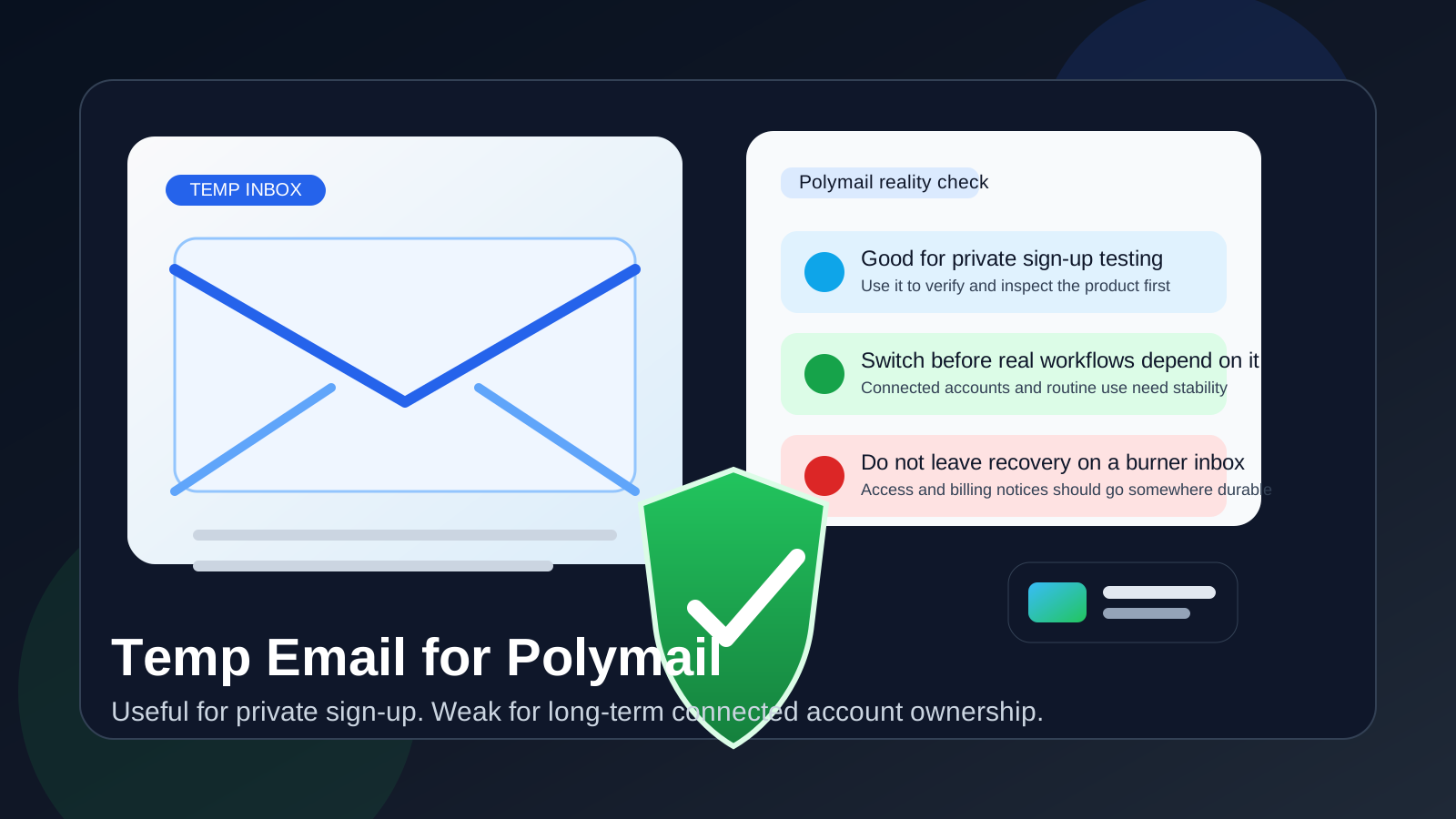
Why someone would use a temp email for Polymail
People usually reach for a temporary inbox when they are still in comparison mode. Maybe you are evaluating a few email tools, checking which one fits your routine, or trying to keep vendor follow-up and trial clutter out of the inbox you actually care about. In that stage, a disposable address is a practical filter. It lets you receive the first verification message, open the product, and decide whether the app deserves more attention before your primary email address gets attached to yet another signup.
That is the strongest case for using Anonibox or another temporary inbox here. You are not promising long-term commitment. You are protecting your main inbox while you inspect the product. For quick testing, that is sensible.
When a temporary inbox makes sense
A temp email for Polymail is most reasonable when the account is still low stakes and the only thing you need is access to the initial setup flow.
- You want to test the sign-up process privately. A temporary address keeps the first welcome emails and follow-ups separate from your main inbox.
- You are comparing several email tools at once. Keeping trials segmented makes it easier to decide which one feels worth keeping.
- You do not expect to rely on the account yet. If you are only checking the interface, setup, and general fit, a burner inbox is fine.
- You want less long-term clutter. If the product does not make the shortlist, you avoid carrying its messages around for months.
In those situations, the sign-up address is just a doorway. It is not yet the owner identity for something important.
Where the risk starts
The trade-off changes the moment Polymail stops being a casual experiment and starts becoming part of a real communication routine. That is where the temporary inbox begins to work against you.
Connected accounts need stability
Email products often become more valuable as soon as you connect real inboxes and use them across actual work or personal communication. At that point, the account is no longer disposable, even if the registration email was. If the address on file is temporary, you are building a more serious workflow on top of a weak ownership layer.
Daily workflows become annoying to recover
When you use an email tool every day, even a small access problem becomes frustrating fast. A login alert, a password reset, a security check, or a change confirmation should go to an address you know you can still reach. If the address is short-lived or poorly monitored, the cost of losing access rises quickly.
Notifications matter more than people think
Even if you do not plan to depend heavily on the product right away, useful accounts tend to gather account notices over time. A temporary inbox can feel harmless during signup, then quietly become the place where important support or recovery messages still go. That is the kind of fragile setup people only notice when something breaks.
Billing and ownership should not live on a burner inbox
If you decide the product is worth paying for, renewing, or keeping in a longer evaluation cycle, a disposable address is no longer the right contact point. Billing notices, subscription changes, security messages, and account recovery should go to a monitored inbox you control long term.
A better approach: temporary first, permanent before serious use
The cleanest workflow is to use a temp inbox only during the earliest part of evaluation, then switch to a stable address before the account becomes important.
1. Start private
Use a temporary address if your goal is to verify the account, check the onboarding flow, and decide whether Polymail is even worth more time.
2. Evaluate quickly
Do not leave the account in an indefinite half-test state. Open the product, inspect the core workflow, and make a decision while the context is still fresh.
3. Switch before real dependence
If the product makes your shortlist, change the account email to a stable monitored inbox before you depend on the account for daily use, recovery, or anything financial.
4. Keep your privacy strategy layered
A lot of people assume the only two choices are “use my main inbox for everything” or “use throwaway emails forever.” The better middle ground is often a separate permanent inbox for software trials and tool accounts. That keeps your main inbox cleaner without creating recovery problems later.
If you like using Anonibox to stay private during early sign-up, that does not mean the same temporary address should remain attached once the product becomes a keeper.
What to evaluate during the trial
The temporary-email question matters, but it should not distract you from the bigger decision: does the product actually improve your email workflow enough to justify keeping it?
- Does it feel genuinely easier to use than your current setup?
- Can you imagine opening it every day without friction?
- Would you trust it enough to connect real accounts?
- Is it worth giving durable account ownership details once the trial ends?
If the answer is no, the temp inbox did its job. You tested privately and moved on. If the answer is yes, the next step is not “keep using the burner address.” The next step is moving the account to a stable contact point.
Common mistakes to avoid
- Forgetting to change the email after the trial starts going well. What begins as a throwaway experiment can quietly become a real dependency.
- Assuming sign-up privacy solves everything. A temporary inbox reduces early exposure, but it does not replace a reliable recovery channel.
- Leaving a useful account tied to an inbox you barely control. That is a recipe for future frustration.
- Confusing low-stakes testing with long-term ownership. Those are different phases and should use different contact strategies.
A quick decision checklist
Before you sign up, ask yourself:
- Am I only evaluating Polymail, or do I expect to keep using it?
- Would I care if I lost access to the signup inbox next week?
- Could this account end up connected to real workflows or billing?
- Would a separate permanent inbox serve me better than a disposable one?
If you are still just evaluating, a temporary inbox is fine. If you already suspect the account may matter later, a separate stable email is often the smarter move from the beginning.
If you already signed up with a temp email
If you already created the account with a disposable inbox, the fix is usually simple: update the account email before more value builds around it. Do it while you still have easy access, not after you have connected real accounts, forgotten the recovery path, or started depending on the product daily.
This is one of those tiny housekeeping steps that feels unimportant right up until it saves you from an avoidable lockout.
Conclusion
A temp email for Polymail is a good fit for private sign-up and early evaluation. It helps you get inside the product, keep trial noise out of your main inbox, and decide whether the app belongs on your shortlist.
It is a poor long-term choice once connected accounts, daily workflows, notifications, or account recovery start to matter. Use a temporary inbox for the trial stage, then switch to a stable monitored address before the account becomes important. That gives you the privacy benefit upfront without creating a fragile ownership setup later.