A temp email for FlutterFlow is useful when you only need a low-stakes signup for early app prototype testing, template previews, or a quick first pass through the builder.
It becomes a weak long-term setup once real team access, user invites, project ownership, billing, or account recovery start to matter.
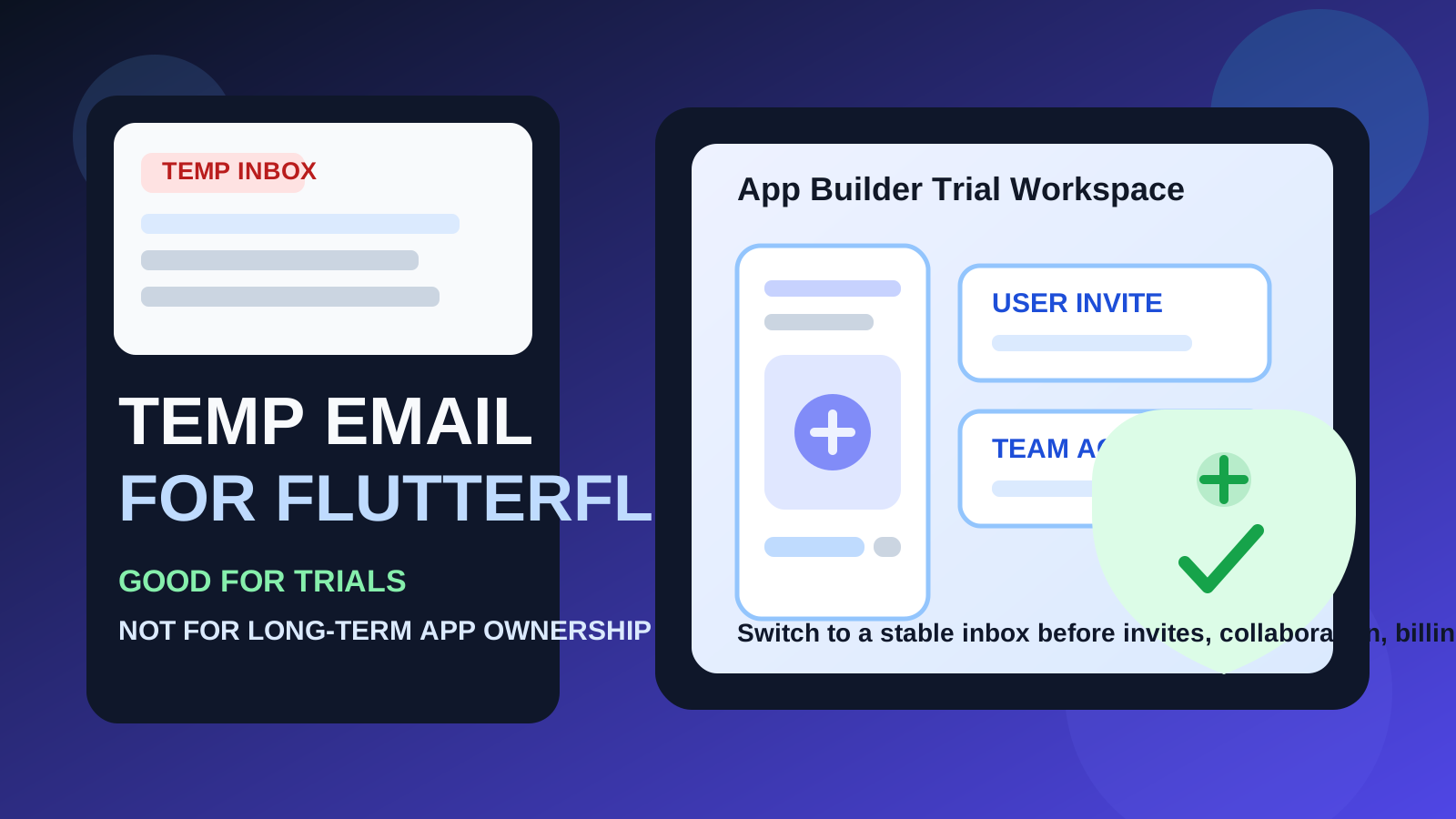
FlutterFlow is the kind of tool where email starts as a small detail and quickly turns into an important one. On day one, you might only want to verify an account, inspect the onboarding flow, or compare it against other app builders. A disposable inbox can help there because it keeps another software trial out of your main email and lets you move through the first steps without committing your personal or work address too early.
But FlutterFlow is not just a throwaway landing page signup. It can become the center of a real product workflow: shared projects, collaborator invites, customer-facing prototypes, payment-plan notices, and login recovery. That means the same temp email that feels convenient for a 20-minute evaluation can become a liability if the project becomes real and the inbox disappears or stops being monitored. The practical answer is not “always use one” or “never use one.” It is to use temporary email only for the truly temporary stage.
When a temp email for FlutterFlow actually makes sense
There are a few situations where using a temporary inbox is reasonable and genuinely helpful.
- Quick product evaluation: You want to see the signup flow, editor layout, onboarding prompts, or template access before deciding whether FlutterFlow deserves deeper attention.
- Comparing builders side by side: If you are testing FlutterFlow against tools like Bubble, Softr, Webflow, or Framer, a separate inbox keeps the welcome emails and follow-up campaigns from piling into one permanent account.
- One-off prototype review: Sometimes you only want to inspect the builder, try a starter project, or test whether the interface fits your style before bringing teammates into the process.
- Keeping trials isolated: If you already know you will test several no-code or low-code platforms, a temp inbox can prevent your main address from collecting long-term sales and onboarding clutter from tools you may never use again.
That is the useful side of the workflow. A service like Anonibox is handy when your goal is simple: receive the first verification email, finish a short evaluation, and keep your main inbox cleaner while you decide whether the platform is worth taking seriously.
Where temporary email starts to break down
The moment FlutterFlow stops being a curiosity and starts becoming a real project, the email address matters more than people expect.
1. Team invites and shared ownership need continuity
App-building rarely stays solo for long. Once a designer, developer, client, or operations teammate needs access, the account email stops being a private testing detail and becomes part of a shared workflow. If the login is tied to a temporary inbox, ownership gets fragile fast.
2. Account recovery is not optional forever
Temporary email works best when you assume you may never come back. That is fine for a short trial. It is a poor fit for a project you may need again next week, next month, or after a late-night login problem. If you lose access to the inbox, password resets and recovery can become much more annoying than the original convenience was worth.
3. User invites and app collaboration can become real work
Even if the first account is just for evaluation, projects often grow unexpectedly. A prototype turns into an internal demo. An internal demo turns into a client review. A client review turns into a live app plan. When that happens, the email address behind the account stops being disposable, whether you intended it or not.
4. Billing and plan notices matter once you commit
Early testing and long-term use are not the same thing. When you move onto paid features, shared plans, or a real team setup, missing an important account notice is not just an inbox preference issue anymore.
A simple rule that avoids most mistakes
Use a temp email for FlutterFlow when you are evaluating the tool, not when you are relying on it.
If you are only checking the builder, looking at templates, testing signup friction, or deciding whether the platform belongs on your shortlist, temporary email is reasonable. If you expect to keep the project, collaborate with others, or return to it later, switch to a permanent inbox before the account gains real value.
How to use a temp email for FlutterFlow safely
1. Decide upfront whether this is a trial or a real build
Before signing up, ask a blunt question: if this account disappeared tomorrow, would it matter? If the honest answer is no, a temp inbox is probably fine. If the answer is maybe, treat that as a sign to use a durable address sooner rather than later.
2. Keep the temporary phase narrow
Use the disposable inbox for exactly what it is good at: verification, a first login, a short look around the product, and maybe one focused test session. Do not let a “just testing” account quietly become the permanent home of a project that keeps growing.
3. Save anything you may actually need
If you receive a useful setup email, template note, invite detail, or onboarding message you may want later, save it while the inbox is active. Temporary access works best when you assume it may not be there forever.
4. Switch before collaboration starts
The best handoff point is before real teammates, clients, or stakeholders are involved. Once people start sending invites, sharing feedback, or expecting the account to persist, the cost of using a fragile inbox goes up quickly.
5. Use separation instead of disappearance for long-term privacy
Many people do not actually need a throwaway inbox. They need a separate one. A dedicated project email can keep builder trials and app-tool noise away from your main inbox while still giving you ownership, recovery, and a stable contact point.
Three realistic FlutterFlow scenarios
Scenario 1: solo evaluation of the builder
You want to see how FlutterFlow feels before committing to it. You sign up, inspect the builder, try a starter flow, and compare it against a few alternatives. In that situation, a temp inbox is perfectly reasonable because the goal is evaluation, not continuity.
Scenario 2: internal prototype for one meeting
Maybe your team wants a fast prototype for a product discussion and you are not yet sure which platform will survive the decision. A temporary inbox can still be fine for the first pass, as long as you move the project to a permanent address before the prototype becomes an ongoing workspace.
Scenario 3: shared project with client or team access
This is where the disposable setup stops making sense. Once other people depend on the account, the email behind it becomes part of your operations. If the inbox is not durable, the project foundation is weaker than it looks.
Common mistakes to avoid
- Treating a real build like a throwaway test: the project keeps growing, but the email strategy never matures with it.
- Waiting too long to switch: the safest time to move to a permanent inbox is before shared access, not after something breaks.
- Using one temp inbox for every platform trial: that can make comparisons harder and increase the chance of losing track of important messages.
- Forgetting that recovery matters later: a login that feels disposable today may control something valuable a few weeks from now.
- Judging the tool only by the signup email experience: the real question is whether FlutterFlow fits your workflow, not whether the onboarding emails were convenient.
A better middle ground for privacy-conscious builders
If your real goal is privacy rather than total disposability, a dedicated secondary inbox is often the smarter long-term option. It gives you cleaner boundaries than your main personal or work address, but it does not sabotage recovery, collaboration, or ownership.
That is especially useful for people who test a lot of SaaS tools. Instead of turning every experiment into a permanent part of your main inbox, you can keep trials and app-builder accounts in one controlled place. You still get much of the privacy benefit, but you do not lose continuity the moment a project becomes worth keeping.
Quick checklist before using a temp email on FlutterFlow
- Am I only evaluating the builder, or am I already starting a project I care about?
- Will teammates, clients, or collaborators need access soon?
- Would losing this inbox make account recovery painful later?
- Do I expect billing, plan changes, or important notices to matter?
- Would a separate permanent inbox solve the problem better than a disposable one?
If your answers point toward a short, low-stakes trial, a temp inbox is fine. If they point toward collaboration, continuity, or anything long-lived, switch to a stable address early.
Final answer
A temp email for FlutterFlow is a smart privacy move for early app prototype testing, quick first-pass signups, and side-by-side evaluation against other builders.
It becomes a bad foundation once real team access, user invites, project ownership, billing, or account recovery matter. Use the disposable inbox for the temporary phase, then move to an address you truly control before the project turns into real work.
That way you keep the upside of privacy and inbox hygiene without building an actual app workflow on top of an inbox you may not be able to count on later.