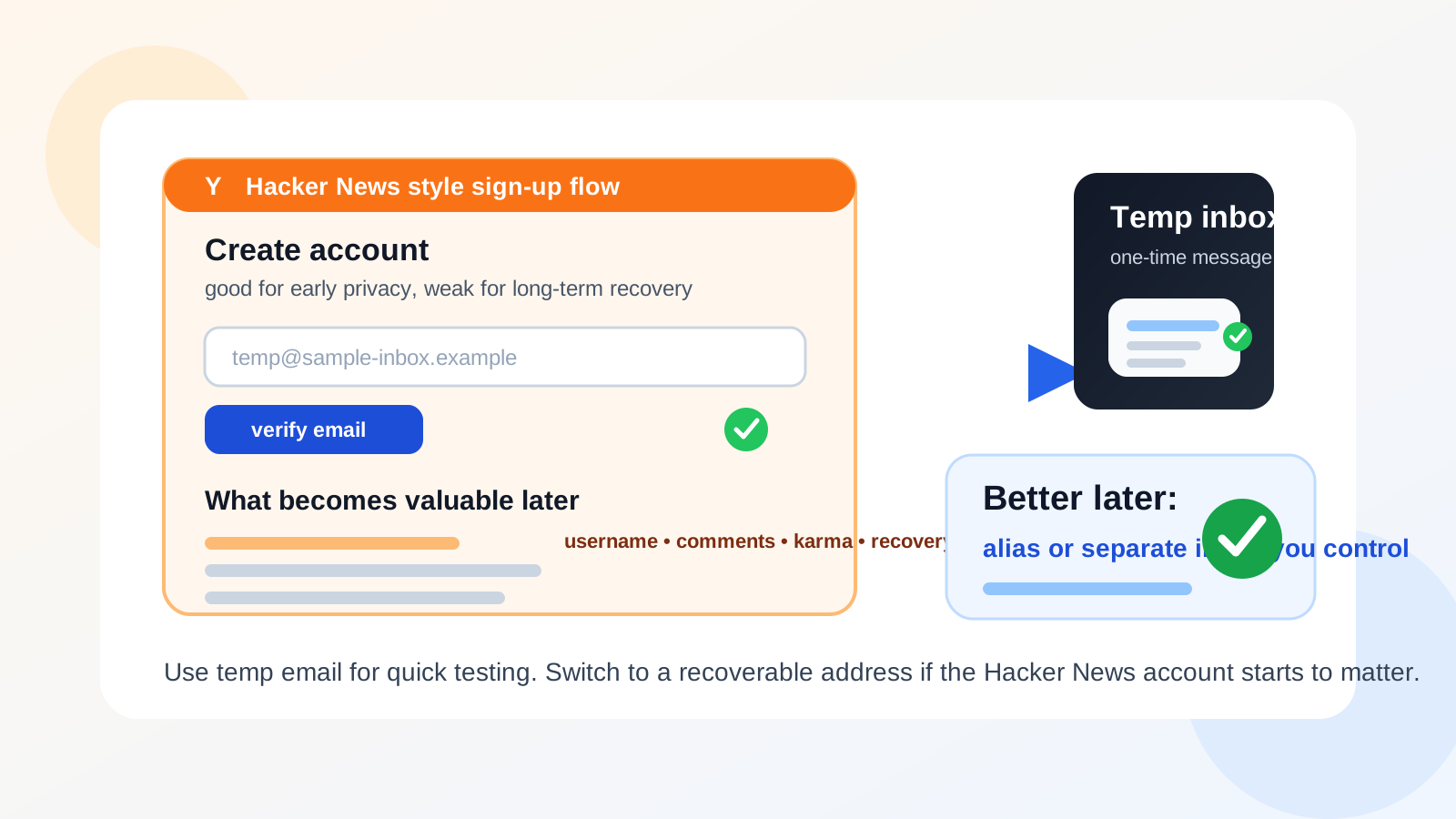
Yes, you can use temp email for Hacker News if you only want low-stakes sign-up privacy or a short-term test account.
It is a weak long-term choice if you want to keep the same username, build karma, maintain comment history, or recover the account later.
Why people look for temp email for Hacker News
Hacker News is simple on the surface, which is part of why people treat it like an easy place to use a disposable inbox. You may want to read more comfortably while signed in, post a test comment, reserve a username, or separate one more internet account from your primary email address. That instinct is understandable. Plenty of people do not want every community, tool, or social-style platform tied directly to the inbox they use for work, family, and everything else.
A temporary inbox can help with that first layer of separation. It gives you a way to receive the initial verification or signup message without immediately exposing your main email to another platform. If your goal is just early exploration, that can be perfectly reasonable.
The trouble is that a Hacker News account can become more valuable over time than it seems on day one. An account that starts as a curiosity can later hold a username you care about, comment threads you want to revisit, submissions tied to your name or project, and a bit of reputation inside a community that many founders, developers, investors, and technically minded readers still pay attention to. That is where disposable email starts to look less like privacy and more like a fragile foundation.
Short answer: okay for casual testing, poor for any account you may care about later
If you only want to create a low-stakes account, poke around, and keep your main inbox out of one more signup flow, temp email can work.
If there is any real chance that you will keep the account, participate under that username, submit links, comment regularly, or want recovery options later, a stable alias or separate inbox you control is usually the smarter choice.
When temp email makes sense for Hacker News
There are a few situations where a temporary inbox is a fair fit.
- You are just testing the platform. Maybe you want to see how account creation works, check a few settings, or understand whether you even want to participate.
- You want short-term inbox privacy. You do not want to connect your main address to yet another online account before you decide the site is worth keeping in your life.
- The account is genuinely disposable. If you would not care much about losing the account later, the downside is lower.
- You want to separate experiments from your main identity. Some people prefer not to mix early community exploration with the inbox they use everywhere else.
In those cases, a tool like Anonibox can help for the first verification step. The important part is thinking of that inbox as a temporary privacy layer, not as the permanent backbone of an account that might later matter.
Why temp email gets risky on Hacker News
1. Account recovery can matter long after sign-up
The first verification email is only part of the story. What matters later is whether you can still access the account when something goes wrong. If you forget a password, lose track of the login, change devices, or need to confirm ownership later, the original email address suddenly matters a lot more. A disposable inbox that felt convenient at sign-up may not help you months later when you actually need it.
2. Usernames, karma, and account age can become meaningful
Hacker News is not a giant profile-heavy social network, but identity still matters there. People build recognizable usernames. They collect karma. They leave comments that stay public. They submit projects, essays, jobs, and side projects. Sometimes an account becomes part of a personal or company footprint, especially if you post under the same name more than once.
That does not mean every account becomes precious. But it does mean that a throwaway signup can quietly become an account you do not want to lose.
3. Comment history and submissions are tied to one login
If you start participating regularly, your account history becomes part of the value. Maybe you left a few comments you want to revisit, followed a discussion around your launch, or posted links tied to your work. Losing that continuity may be more annoying than you expected, especially if you used a disposable inbox because the account originally felt low stakes.
4. Disposable domains are not always ideal for reliability
Like many platforms, Hacker News and the systems around it may not always behave perfectly with every temporary email domain. Sometimes the verification message arrives slowly. Sometimes the address works once but is not something you want tied to long-term ownership. Even when a temporary inbox is accepted, that does not mean it is a good long-term identity anchor.
Temp email vs alias vs separate inbox for Hacker News
The right option depends on what you expect the account to become.
Temp email
Best for quick sign-up privacy, basic testing, and low-stakes experimentation. Fast and convenient, but weak for recovery and long-term account continuity.
Email alias
Usually the best middle ground. An alias keeps Hacker News from getting your primary address directly, but the messages still flow into an inbox you actually control. That means you keep privacy without giving up the ability to recover the account later.
If you want the concept broken down clearly, see Email Alias: What It Is, How It Works, and When to Use It.
Separate inbox you control
If you prefer stronger separation, a dedicated secondary mailbox for communities, newsletters, side projects, and signups is often the safest long-term option. It keeps your main inbox cleaner without putting recovery at the mercy of a temporary address you may never see again.
The simplest rule is this: use temp email for testing, and use an alias or separate inbox for any Hacker News account you may want to keep.
How to use temp email for Hacker News more safely
If you still want the privacy benefit of a temporary inbox, treat it like a short-lived screening tool rather than a forever setup.
- Open the temporary inbox before you begin sign-up.
- Use it for the initial registration or verification step only.
- Do not assume that one successful verification makes it a good long-term email choice.
- If the account starts to matter, change the email address while you still have full access.
- Store the login in a password manager so the disposable inbox is not your only weak point.
This approach gives you the short-term privacy win without turning future access into a guessing game.
What if the verification email does not arrive?
One of the most common reasons people search this topic is simple: the email never appears. If that happens, avoid turning it into a resend loop. Try a calm checklist first.
- Wait a minute or two before trying again.
- Double-check the email address for typos.
- Keep the inbox tab open and active.
- Resend once instead of repeatedly.
- Try a fresh temporary address if the first one stays empty.
- If delivery still fails, switch to an alias or secondary inbox you control.
If you need broader troubleshooting help, these guides are useful:
- Verification Email Not Received (Temp Mail)?
- Temp Mail Not Working
- Temp Mail Not Receiving Emails
- Why Websites Block Disposable Email
When you should switch away from temp email immediately
Sometimes the better question is not whether temp email worked once. It is whether it still makes sense now.
- You got a username you want to keep.
- You started commenting regularly under that identity.
- You submitted your own project, writing, or launch.
- You care about preserving account age, karma, or history.
- You would be frustrated if recovery became difficult later.
If any of those are true, you have probably outgrown a disposable inbox. Change to an alias or separate inbox you control while the account is still easy to manage.
A practical setup that works better for most people
For most Hacker News users, the best setup is not permanent disposable email. It is one of these:
- Alias strategy: create a unique alias for Hacker News so the site never gets your main address directly, but all messages still land in a real inbox you control.
- Dedicated community inbox strategy: keep a separate mailbox for communities, creator tools, forums, side projects, and newsletter-style signups.
Both approaches preserve most of the privacy benefit while avoiding the biggest long-term mistake: treating a potentially meaningful account like it will always be disposable.
Common mistakes people make
- Treating a curiosity signup like a permanent account plan
- Forgetting to update the email after deciding to keep the account
- Assuming a lightweight website means account recovery will never matter
- Using the same disposable habit for every platform regardless of risk
- Ignoring login hygiene because the account started as an experiment
Those mistakes are avoidable if you decide up front whether the account is a throwaway test or something you may care about later.
Quick decision checklist
- Do you only need a one-time signup? Temp email can be okay.
- Might you keep the username or post under it later? Use an alias or separate inbox instead.
- Would losing recovery access bother you? Do not rely on a disposable inbox.
- Is delivery unreliable with the temporary address? Switch tools instead of forcing it.
Final verdict
Temp email for Hacker News is useful for quick sign-up privacy, low-stakes testing, and keeping your main inbox out of one more online account during the exploration phase.
But it is a poor long-term foundation for any account you may want to keep. If the username, comment history, submissions, or recovery path matter at all, move to an alias or a separate mailbox you control. That gives you the privacy benefit without making the account harder to manage later.