A temp email for Landingi is useful when you only want to test the builder, compare landing page tools, or verify a short trial without sending more signup email to your main inbox.
It becomes a weak long-term setup once real leads, form notifications, billing, client work, or account recovery depend on that inbox.
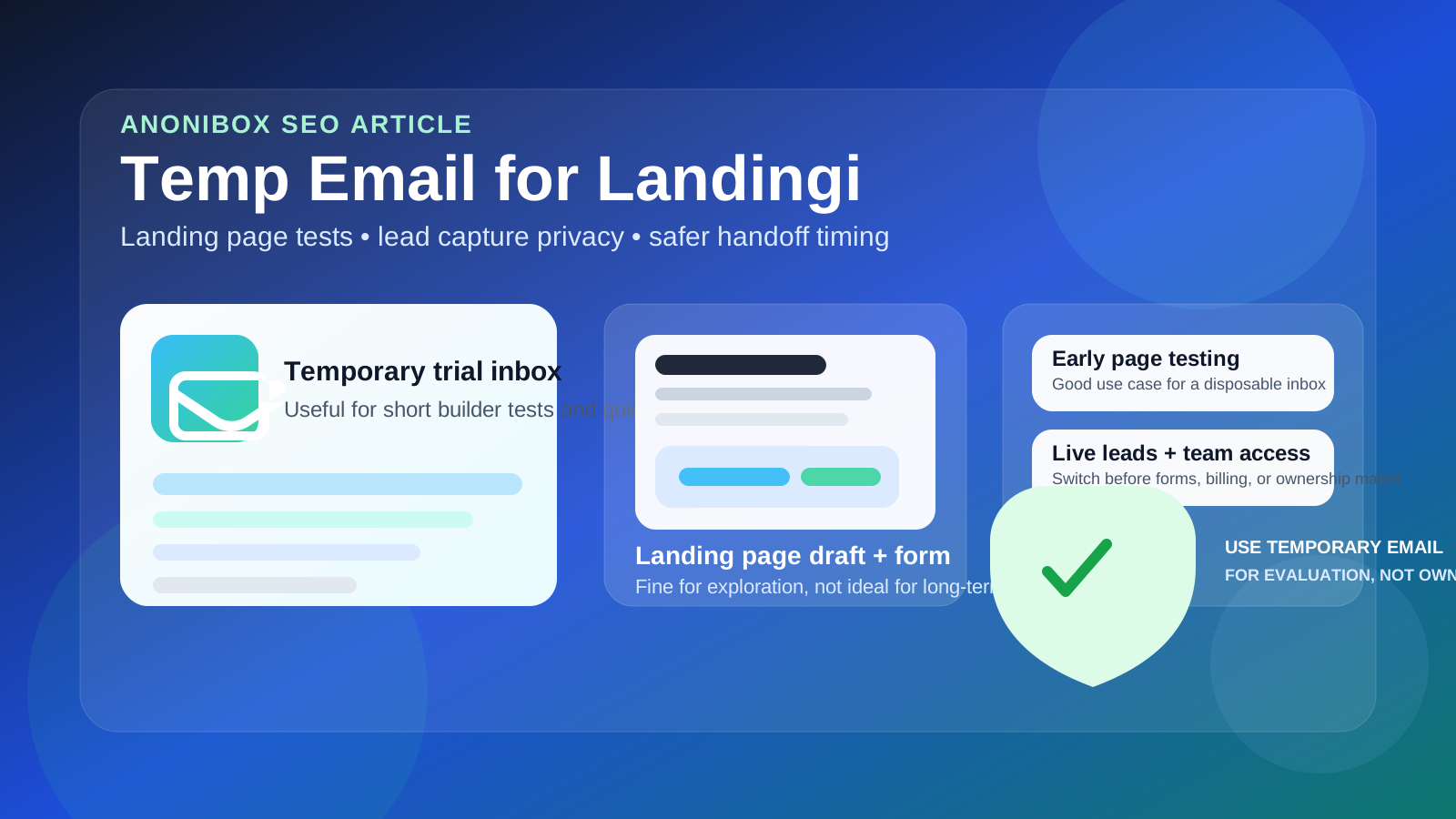
That is the practical answer behind the keyword. Landingi is exactly the kind of product people often test quickly: sign up, review templates, launch a rough page draft, compare form options, connect a campaign idea, and decide whether it belongs on the shortlist. In that early stage, using a disposable inbox can make perfect sense because you get the verification email you need without automatically adding another product trial to the address you use every day.
The catch is that landing page tools rarely stay low-stakes for long. A page that starts as a quick experiment can become a waitlist, a local-service campaign, a paid-traffic destination, a lead magnet page, or a client asset faster than expected. Once that happens, the account email is no longer just a signup detail. It becomes part of ownership, form-notification workflows, billing, permissions, and recovery. That is why temporary email can be smart for the trial stage and sloppy for the production stage.
So the right question is not whether temporary email is always good or always bad. It is whether the Landingi account is truly temporary. If the answer is yes, a temp inbox is fine. If the page may matter later, you should plan the switch to a permanent inbox earlier than most people do.
Why people look for a temp email for Landingi
Most people are not trying to hide anything dramatic. They simply want to keep a casual software evaluation separate from the inbox that runs the rest of their life or business. That is a normal instinct with landing page tools because the first signup often leads to welcome emails, feature tours, webinar invites, campaign tips, upsell prompts, and follow-up sequences even if you never publish a page.
Common reasons people want a temp email for Landingi include:
- Testing the builder before committing: you want to see whether the page editor, templates, and forms feel good enough to keep using.
- Comparing similar tools: you may be evaluating Landingi alongside Instapage, Leadpages, Unbounce, or ClickFunnels.
- Running a private proof of concept: maybe it is a rough lead-gen page, a draft campaign, a mock client deliverable, or a one-off experiment you may delete later.
- Keeping trial noise out of your main inbox: you want the verification message, not months of marketing email for a tool you may never keep.
- Separating short tests from real operations: a throwaway inbox can help keep low-commitment campaign experiments organized.
Those are sensible motives. The trick is understanding when the project is still disposable and when it has quietly become something real.
When a temp email for Landingi actually makes sense
Temporary email works best when the account is temporary in practice, not just in theory.
1. You are only evaluating the product
If your goal is to inspect the signup flow, test the editor, review templates, and decide whether Landingi belongs on your shortlist, a disposable inbox is fine. You get through verification and early exploration without volunteering your main address too early.
2. You are comparing several landing page builders
Landing page research gets noisy fast because every vendor wants to educate, re-engage, and upsell you. If you are testing multiple builders in the same week, a temporary inbox can keep the comparison cleaner and easier to manage.
3. You are building a short-lived private draft
Sometimes the page is never meant to go public. It may be a rough internal mockup, a single-use concept test, or a private preview for feedback. In that kind of short trial, a temp inbox can be a reasonable fit.
4. You only need short-term access
If all you need is the confirmation email, the first login, and enough access to judge the tool, temporary email is doing its job. The account has not become meaningful yet.
When it starts becoming a bad idea
The risk changes as soon as the landing page stops being disposable. That cutoff comes earlier than many users expect.
1. The page is going live
If the page is about to be connected to ads, shared in campaigns, linked from social profiles, or sent to real prospects, the account should no longer live behind a throwaway inbox. Public pages tend to become more valuable over time, not less.
2. Real lead capture matters
Landing pages exist to collect action. Once form fills, waitlist signups, bookings, downloads, or contact requests matter, you want reliable ownership around the account too. Even if the leads themselves route elsewhere, the underlying platform still needs a dependable admin email.
3. Form notifications or integrations are important
As soon as you care about notifications, handoffs, or the general health of the page, missing account alerts becomes a real problem. A disposable inbox is not great infrastructure for something that now supports a serious workflow.
4. Billing or paid traffic is involved
The moment you upgrade a plan, connect campaign spend, or rely on the platform for active marketing, short-term inbox privacy becomes less important than long-term account continuity.
5. Other people may depend on the page
Client pages, shared marketing assets, and team-owned campaigns need clean ownership. A burner inbox can feel harmless when you are testing alone, but it becomes messy when another person may need access or when a project has to be handed off properly.
6. You may need account recovery later
This is where temporary email fails people most often. The page survives, the campaign grows, and months later you need a password reset, security confirmation, or billing notice that went to an inbox you no longer control. That delayed downside is exactly why disposable email works better for trials than for real campaign ownership.
What can go wrong if you keep the temp inbox too long?
- You lose account recovery: reset links and security confirmations become much harder when the original inbox is gone.
- You miss important notices: billing issues, workspace alerts, or account warnings can disappear into an address you stopped checking.
- You create messy ownership: client or team projects become harder to transfer cleanly.
- You turn a short-term convenience into a long-term weak point: the landing page matures, but the account setup never does.
- You confuse future-you: months later, you may not even remember which temporary inbox was used for the original signup.
None of these problems feels urgent during signup. That is exactly why they are so easy to create.
A safer workflow for using a temp email with Landingi
If you want the privacy benefit without the usual downside, use a staged workflow instead of pretending the disposable address can safely carry the whole life of the project.
Start with the temp inbox for evaluation only
Create the temporary address before signup so the confirmation email and first round of onboarding stay separate from your everyday inbox. A service like Anonibox is practical here because it lets you test the product without committing your permanent address to another landing-page trial.
Test with a clear purpose
Do not just wander around the dashboard. Decide what you are evaluating: template quality, form flexibility, ease of editing, speed of publishing, lead-gen workflow, or campaign fit. Temporary email works best when the test has a clear endpoint.
Save anything useful right away
If a setup link, template reference, or onboarding note matters, capture it while the inbox is still active. Temporary inboxes are good at short access, not long-term archiving.
Switch to a permanent inbox before the page becomes real
The right time to change the account email is before launch, before paid traffic, before client approval cycles, and before real lead capture matters. Waiting until something breaks is the sloppy version of the workflow.
Use a dedicated project inbox if you want separation without fragility
Many people do not actually need pure disposability. They need separation. A dedicated campaign or project email can keep builder-related noise away from your main inbox while still giving you reliable recovery and clean ownership.
Three realistic Landingi scenarios
Scenario 1: quick builder comparison
You want to compare Landingi with Instapage, Leadpages, and Unbounce over a few days and decide which one deserves deeper work. A temp inbox is a good fit because the goal is evaluation, not continuity.
Scenario 2: private campaign mockup
You are creating a draft page for a team review or a rough mockup for a client pitch. A disposable inbox can still make sense, as long as you treat the account as temporary and switch if the project keeps moving.
Scenario 3: real lead generation or client delivery
This is where the burner approach stops being clever. If the page will collect real leads, support ad spend, or represent a client or business, use a stable inbox you can keep and monitor.
Common mistakes to avoid
- Treating a real campaign like a throwaway test: the page grows, but the email strategy never evolves with it.
- Waiting too long to switch: the safest handoff point is before launch, not after a recovery issue.
- Using one temp inbox for every builder trial: that can make comparisons messier and important messages easier to lose.
- Assuming the page matters more than the account: ownership, permissions, and recovery live behind the account, not just on the public page.
Quick checklist before you sign up
- Am I only testing Landingi, or am I likely to keep this page?
- Will real prospects, leads, or clients touch this page?
- Will form notifications, billing, or team access matter soon?
- Could someone else need ownership later?
- Would a separate permanent inbox solve the problem better than a throwaway one?
If your answers point toward a short, private, reversible experiment, a temp inbox is fine. If they point toward a live campaign, shared ownership, or ongoing lead generation, move to a durable address before the project grows teeth.
Final answer
A temp email for Landingi is useful for early landing page testing, quick builder comparisons, and short-lived draft campaigns when you want to protect your main inbox from another software trial.
It becomes a bad long-term foundation once real leads, form notifications, billing, team access, or account recovery matter. Use the temporary inbox for the evaluation phase, then switch to an address you trust before the page becomes something you actually care about keeping.
That way you get the privacy and inbox-hygiene benefits of temporary email without building a real lead-generation workflow on top of a contact method you may regret later.