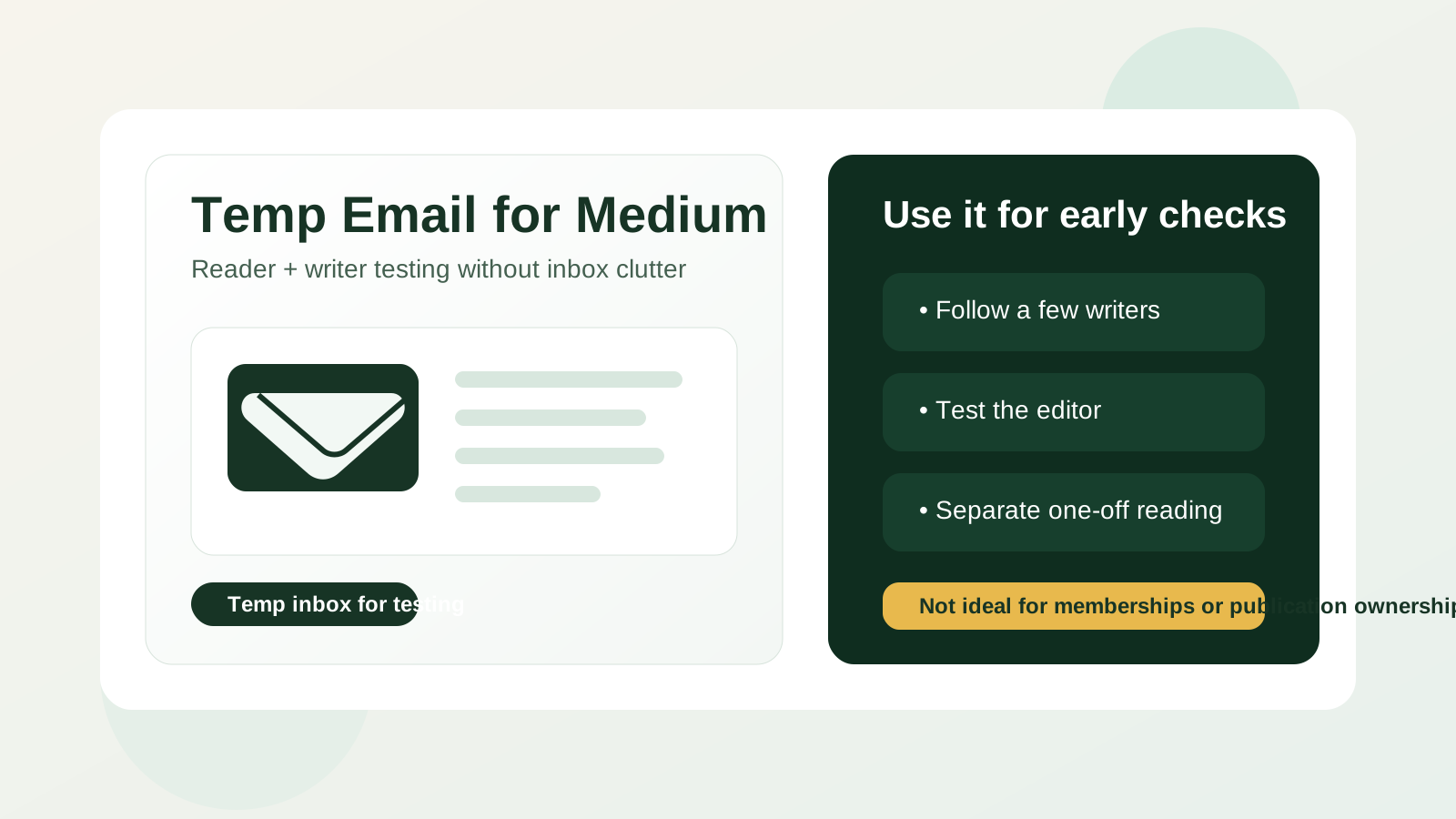
Yes — a temp email for Medium can make sense if you are only testing the platform, following a few writers, or opening a one-off reading or writing account without tying it to your main inbox right away.
It is a bad long-term choice if you plan to pay for Medium membership, run a real publication, publish under an identity you care about, or rely on that account for ongoing writing and account recovery.
Why people look for a temp email for Medium
Medium sits in an awkward middle ground between a casual reading platform and a serious publishing account. Some people only want to follow a few writers, read a limited number of articles, join a publication, or test the editor before deciding whether the platform is worth keeping. Others end up attaching real writing, paying memberships, publication access, comments, notes, and long-term reading habits to the same account.
That difference matters. If your goal is short-term exploration, using a temporary inbox can keep Medium-related email out of your primary account while you figure out whether you actually want a lasting relationship with the platform. Medium can generate account messages, digest emails, recommendations, publication updates, account notices, sign-in prompts, and follow-up email over time. None of that is inherently bad, but not every experimental signup deserves permanent access to the inbox you use for work, banking, and personal life.
When a temp email for Medium is actually useful
A temp email is most useful on Medium when the purpose is temporary too. Good examples include:
- Testing the reading experience: you want to follow a few writers, save some posts, and see whether Medium fits your workflow.
- Checking the editor before committing: you are curious about drafting, formatting, tags, and publication submission without turning the test into a long-term account.
- Separating niche subscriptions from your main inbox: some publications and creator funnels can lead to a surprising amount of follow-up email.
- Opening a one-off account for research: maybe you are reviewing competitor content, studying publication structure, or testing how article recommendations work.
- Keeping side-project identity separate: if you want to explore a topic without immediately connecting it to your everyday personal or work email, a separate inbox can be a practical buffer.
In those situations, the appeal is simple: you still get the verification message and early account access, but you do not immediately hand over your primary email for a platform you may never use seriously.
When a temp email for Medium is the wrong move
Medium becomes much less disposable once the account starts to matter. A temporary inbox is a poor fit if any of the following applies:
- You plan to pay for Medium membership. Billing, receipts, membership changes, and account notices belong in a stable inbox you control long term.
- You want to publish regularly. If you are building an audience, collecting responses, or attaching your name to essays you care about, your email should not be temporary.
- You manage or contribute to a real publication. Publication ownership, admin invitations, and team coordination are exactly the kinds of things that become painful when tied to a throwaway address.
- You care about account recovery. Temporary email is useful at the start of a workflow, not when you need dependable access months later.
- You may connect identity, reputation, or income to the account. If the Medium profile matters professionally, use a real address from the beginning.
The short version is this: a temporary inbox works best for testing. It works badly for ownership.
What Medium-related email can pile up over time?
People sometimes underestimate how many messages a content platform can produce once they start interacting with it regularly. Depending on your settings and how you use the account, the inbox footprint may include:
- verification and sign-in emails
- recommendation digests
- publication updates
- responses or interaction notifications
- membership and billing notices
- creator or product announcements
- security and account-recovery messages
If you only wanted to test one feature or read a handful of posts, that can feel like overkill. A temporary inbox can be a clean way to contain that early phase before deciding whether Medium deserves a permanent slot in your digital life.
How to use a temp email for Medium more safely
1. Decide whether you are testing or committing
Before you sign up, be honest about the goal. Are you exploring the platform for an hour, or are you starting something you may care about in six months? If it is exploration, a temp inbox may be fine. If it is the beginning of a real publication habit, skip the temporary step.
2. Generate the temporary inbox before account creation
Do this first so the entire signup flow stays separate from your primary inbox from the beginning. A service like Anonibox works well for that sort of short-term verification and inbox hygiene workflow.
3. Save anything important immediately
If the account receives a sign-in link, invitation, or setup email you might need during the test, save it right away. Temporary inboxes are helpful precisely because they are temporary. That means you should not assume important messages will always be there later.
4. Switch early if the account starts becoming useful
This is where many people go wrong. They begin with a throwaway inbox for a harmless test, then keep using the same account after it clearly becomes valuable. Once you publish posts you care about, subscribe with payment, or join a real publication, move the account to a long-term email you control.
Practical Medium scenarios where a temp inbox makes sense
Trying the platform before subscribing
Maybe you want to see how Medium feels before you commit to a paid membership or a long-term reading habit. A temporary inbox gives you a low-friction way to test the platform without feeding your main email more recommendations and onboarding sequences than you asked for.
Checking the editor and submission flow
If you are a writer comparing platforms, you may want to experiment with headings, formatting, cover images, tags, canonical handling, draft flow, or publication submission. That kind of early evaluation is a decent use case for a temp email, as long as you switch to a stable address before anything important lives there.
Researching publications in a niche
Some people create separate accounts while researching a topic, auditing content strategy, or studying publication ecosystems. A temporary inbox can help keep that research separate from the personal or professional inbox you use every day.
Protecting your main inbox from long-tail follow-up
Content platforms have a habit of continuing the relationship after the initial signup. That can be useful when you love the platform and annoying when you were only curious for one afternoon. A temp inbox puts a boundary around that curiosity phase.
What a temp email for Medium does not solve
A temporary inbox can reduce inbox clutter and add a bit of separation, but it is not magic. It does not make a disposable account appropriate for long-term work. It does not replace good password habits. It does not guarantee anonymity. And it does not make account recovery easier later.
It is best to think of temporary email as a tool for low-commitment access, not as permanent infrastructure for something you may want to build on.
Better alternatives if you expect to keep the account
If you already suspect the Medium account may matter, a dedicated long-term secondary email is often smarter than a fully temporary one. That gives you the same separation benefits without sacrificing stability.
A good middle-ground setup can look like this:
- Main personal inbox: family, banking, sensitive personal accounts
- Dedicated secondary inbox: newsletters, creator tools, writing platforms, side projects
- Temporary inbox: low-commitment signups, one-off tests, short-lived experiments
That structure helps you stay organized without turning everything into either “forever” or “throwaway.”
Common mistakes to avoid
- Using a temp inbox for a paid membership account
- Publishing work you care about before switching to a permanent email
- Forgetting to save sign-in or invitation messages during testing
- Leaving publication admin access tied to a disposable address
- Confusing short-term privacy with long-term account security
Most problems happen not because temporary email is inherently bad, but because people keep using it after the account has obviously moved beyond the testing stage.
Quick checklist: should you use a temp email for Medium?
Ask yourself these questions before signing up:
- Am I only testing Medium, or do I expect to keep using it?
- Will this account ever involve payment, publication ownership, or work I care about?
- Am I trying to reduce inbox clutter, or am I creating future account-recovery problems?
- Would a separate long-term secondary inbox serve me better than a fully temporary one?
If the honest answer is “I am just exploring,” a temp inbox can be reasonable. If the answer is “this might become my real account,” start with an email you plan to keep.
Final answer
Using a temp email for Medium is a sensible move when you want short-term access: testing the platform, following a few publications, exploring the editor, or keeping a one-off experiment out of your primary inbox. It helps limit clutter and gives you a little more control over where platform email lands.
But once Medium becomes important — paid membership, regular publishing, publication admin, or any account you may need to recover later — a temporary inbox stops being helpful and starts becoming a liability. Use Anonibox or another temporary inbox for the early trial stage if you want the privacy buffer, then switch to a stable address as soon as the account becomes real.