A temp email for Pipefy is useful when you want to test forms, approvals, and workflow automation quickly without feeding another long onboarding sequence into your main inbox.
It becomes risky once the account starts holding real process data, shared approvals, team access, or anything you may need to recover later.
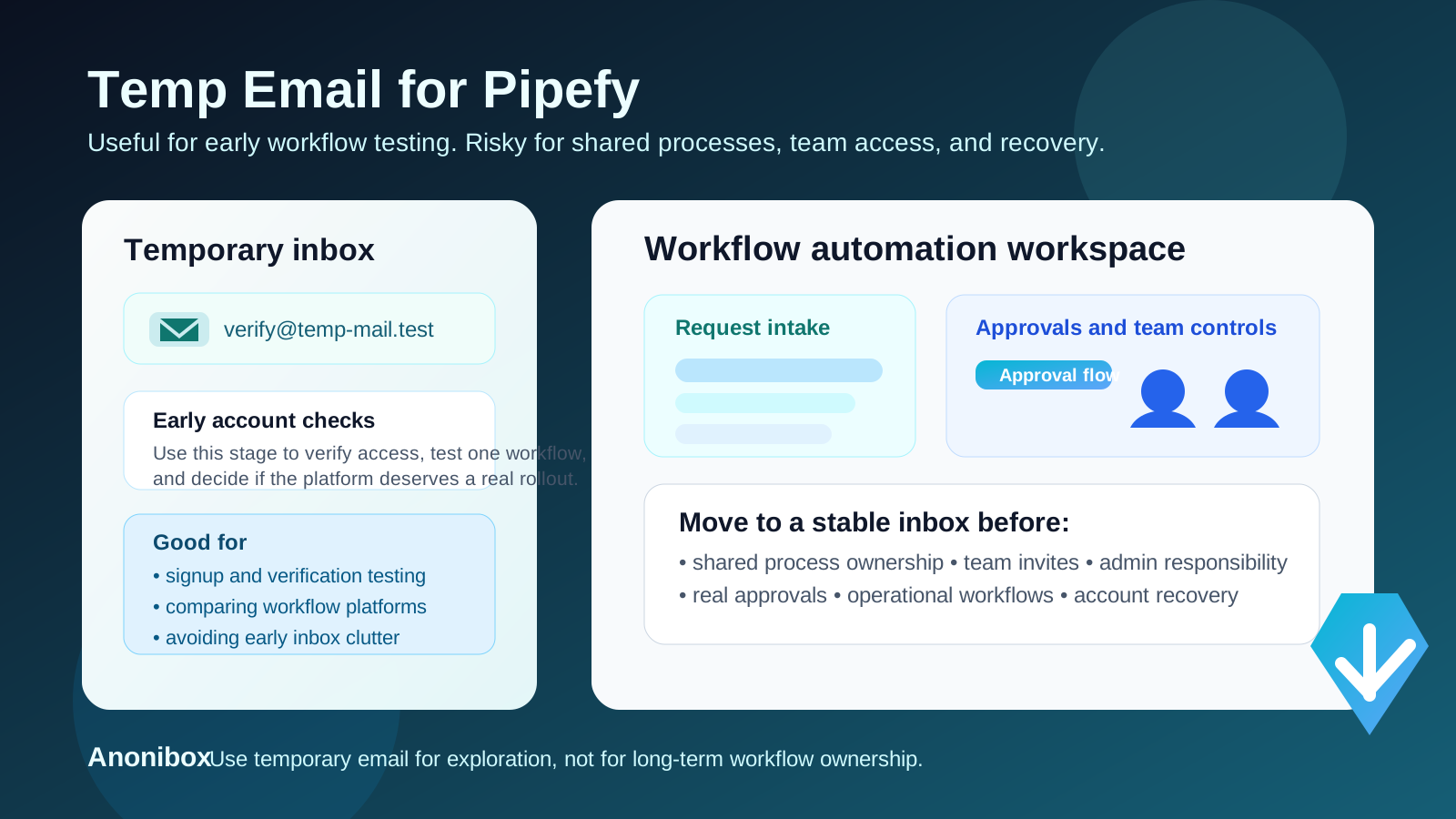
If you evaluate operations software often, the inbox problem shows up almost immediately. One product test turns into account verification, setup nudges, workflow templates, webinar invites, follow-up from sales, onboarding reminders, and “just checking in” messages that keep arriving long after the trial is forgotten. That is why people look for a temp email for Pipefy: they want enough access to inspect the platform without tying a permanent work inbox to every early experiment.
That is a sensible instinct. Pipefy sits in the kind of category where teams often compare several tools in a short window before narrowing the shortlist. A company might test Pipefy beside Process Street, ClickUp, Jira, Confluence, Zapier, or Workato, and each signup can create its own little stream of noise. Using a disposable inbox during that early evaluation stage can keep the comparison cleaner and protect the mailbox you use for actual work.
The important part is knowing where the line is. A temporary inbox is helpful when the account is truly temporary. It is a much weaker idea once the workspace starts carrying process ownership, approvals, operational tasks, or team collaboration that someone may depend on next week.
Why people use a temp email for Pipefy
Most people are not trying to hide anything dramatic when they use a temporary inbox. They are usually trying to stay organized. Workflow platforms often ask for an email before you can see the dashboard, test forms, explore templates, or check how approvals and automation behave. That is normal. What follows can still be noisy.
A temporary inbox can help for a few practical reasons:
- Inbox control: you can verify the account and review the early onboarding flow without committing your permanent mailbox to yet another trial.
- Cleaner comparisons: if you are testing several workflow or operations platforms at once, it is easier to keep the context separate.
- Lower friction during research: you can answer the first question — “is this even worth deeper time?” — before you start giving every vendor a durable route into your day-to-day inbox.
- Short-term privacy: you do not need to attach a long-lived mailbox to a product you may abandon after one afternoon.
That makes temporary email a good fit for early evaluation, not for long-term administration. A tool like Anonibox is most useful when you want a clean boundary between curiosity and commitment.
When a temporary inbox makes sense for Pipefy
1. You are doing a first-look trial
If your goal is simply to see whether Pipefy feels relevant, a temporary inbox is usually fine. Maybe you want to inspect the interface, test one intake form, look at a few templates, or understand how approvals and automation are structured. At that stage, the account is still low stakes.
2. You are comparing several workflow tools in the same week
Operations, HR, procurement, finance, and internal systems teams rarely test one platform in isolation. Pipefy may be one of several options under review. A disposable inbox helps separate each trial, which makes it easier to remember which product sent which onboarding email and which workflow felt promising.
3. You want to inspect signup and onboarding quality
Sometimes the evaluation is not only about the dashboard. It is also about the email-driven experience: how fast verification arrives, how clear setup instructions are, whether invite and reset flows feel trustworthy, and how much sales pressure shows up before the product proves its value. A temporary inbox is useful when those early signals matter but the account itself does not yet.
4. You do not want another persistent sales sequence yet
This is the quiet reason behind a lot of temp-email searches. People are willing to look at the software, but they are not ready for months of follow-up from a tool that may never make the shortlist. That is a reasonable line to draw.
When a temp email becomes the wrong choice
The danger is rarely the first login. The danger is letting a throwaway account quietly become the real account.
1. Shared processes start living inside the workspace
The moment the account begins holding real workflow templates, request forms, approval chains, intake pipelines, or process documentation, the inbox behind it matters more. If the address disappears, access and recovery can become unnecessarily messy.
2. Team invites and permissions enter the picture
Once another person joins the workspace, the account stops being a personal experiment. Permissions, notifications, ownership changes, and admin responsibility all become more important than early inbox cleanliness.
3. Real approvals and operational handoffs depend on it
A workflow platform can move from “interesting test” to “actual operational tool” faster than expected. If real requests, approvals, or cross-team handoffs begin running through the workspace, a disposable inbox is not a strong ownership foundation.
4. Recovery and continuity start to matter
Recovery feels theoretical until it is suddenly urgent. Password resets, ownership checks, suspicious-login notices, admin changes, or re-verification messages all depend on someone still controlling the login inbox. Temporary convenience is a poor trade once continuity matters.
5. You are evaluating for the team, not just for yourself
If the trial is likely to influence a departmental decision, it is often cleaner to move to a monitored business address early. That could be an individual work inbox, a team alias, or another durable mailbox your organization actually controls.
A safe way to use temp email with Pipefy
Start with a narrow goal
Use the temporary address for one clear purpose: sign up, verify the account, and run a focused first-pass evaluation. The goal is to learn quickly, not to build a semi-permanent workspace by accident.
Keep the early session lightweight
While the account is still tied to a disposable inbox, avoid loading it with anything that would be painful to recreate later. This is the wrong phase for operational ownership, large internal rollout, or process dependency.
Judge the product quickly
Answer the real evaluation questions early. Does Pipefy actually fit the kind of process you want to improve? Does the setup make sense? Does the workflow builder feel efficient or heavy? Can non-technical teammates understand what is happening? A temp inbox is most useful when it supports fast decisions, not slow drift.
Switch to a stable inbox before inviting others
If the product looks like a real contender, move the account to a permanent email before teammates join, before approvals start mattering, and before the workspace becomes harder to untangle. Early switching is simple. Late switching is where people create preventable headaches.
Use a real owner address for anything that may last
That owner address does not have to be glamorous. It just has to be durable. If the business may need the account in a month, in six months, or after a staffing change, the inbox should be one the business can still access.
What to evaluate during an early Pipefy trial
If you are already using a temp inbox for the test, make the session count. Do not stop at “I got the verification email.” Use the trial to answer practical questions:
- Form and request intake: is it easy to build and understand the front door of the workflow?
- Approval structure: can you model approvals clearly without the process becoming too brittle?
- Automation rules: do automations feel useful and understandable, or do they create hidden complexity?
- Permissions and visibility: can you tell who should see what and how ownership would work later?
- Notification load: does the platform seem likely to help coordination, or is it going to create another layer of noise?
- Migration risk: if this stopped being a throwaway trial tomorrow, how hard would it be to move ownership onto a real mailbox?
Those questions are more valuable than simply poking around the dashboard. The point of the early trial is not just access. It is clarity.
Common mistakes to avoid
Letting a disposable trial become the permanent workspace
This is the classic mistake. People create a quick account for evaluation, like what they see, and keep building on the same workspace because it is already there. The fix is easy: if the product makes the shortlist, move ownership early.
Inviting teammates too soon
If the account still sits behind a temporary inbox, keep the evaluation personal and lightweight. Team involvement is usually the moment when the stakes rise.
Optimizing only for less spam
Inbox cleanup is nice, but it is not the only issue. Governance, continuity, permissions, and recovery matter more once the platform becomes useful.
Assuming recovery can be handled later
Later is exactly when the disposable inbox becomes inconvenient. If there is any meaningful chance the trial account will stick around, make the email durable before that becomes urgent.
Testing with production-like responsibility too early
You do not need to run real operational ownership through a first-pass trial. Keep the early evaluation small. If the product proves itself, then graduate it to a proper account and a proper inbox.
Should you use a temp email for Pipefy?
Yes — if the account is truly temporary. A disposable inbox is practical for early workflow automation testing, signup verification, and shortlisting. It helps you inspect the product without turning exploratory research into a permanent source of email clutter.
No — if the workspace is starting to matter. Once shared processes, approvals, team access, admin responsibility, or account recovery enter the picture, a stable email is the better foundation.
Final takeaway
A temp email for Pipefy can be a smart move during the exploration stage. It keeps your first-pass workflow clean, helps you compare several tools without drowning your main inbox, and gives you a low-friction way to test whether the product deserves more serious attention.
The discipline is knowing when to stop using it. If the account starts carrying real process value, switch to a durable inbox before shared work depends on a mailbox you never intended to keep. Used that way, temporary email is not reckless at all. It is just a practical boundary between early testing and long-term ownership.