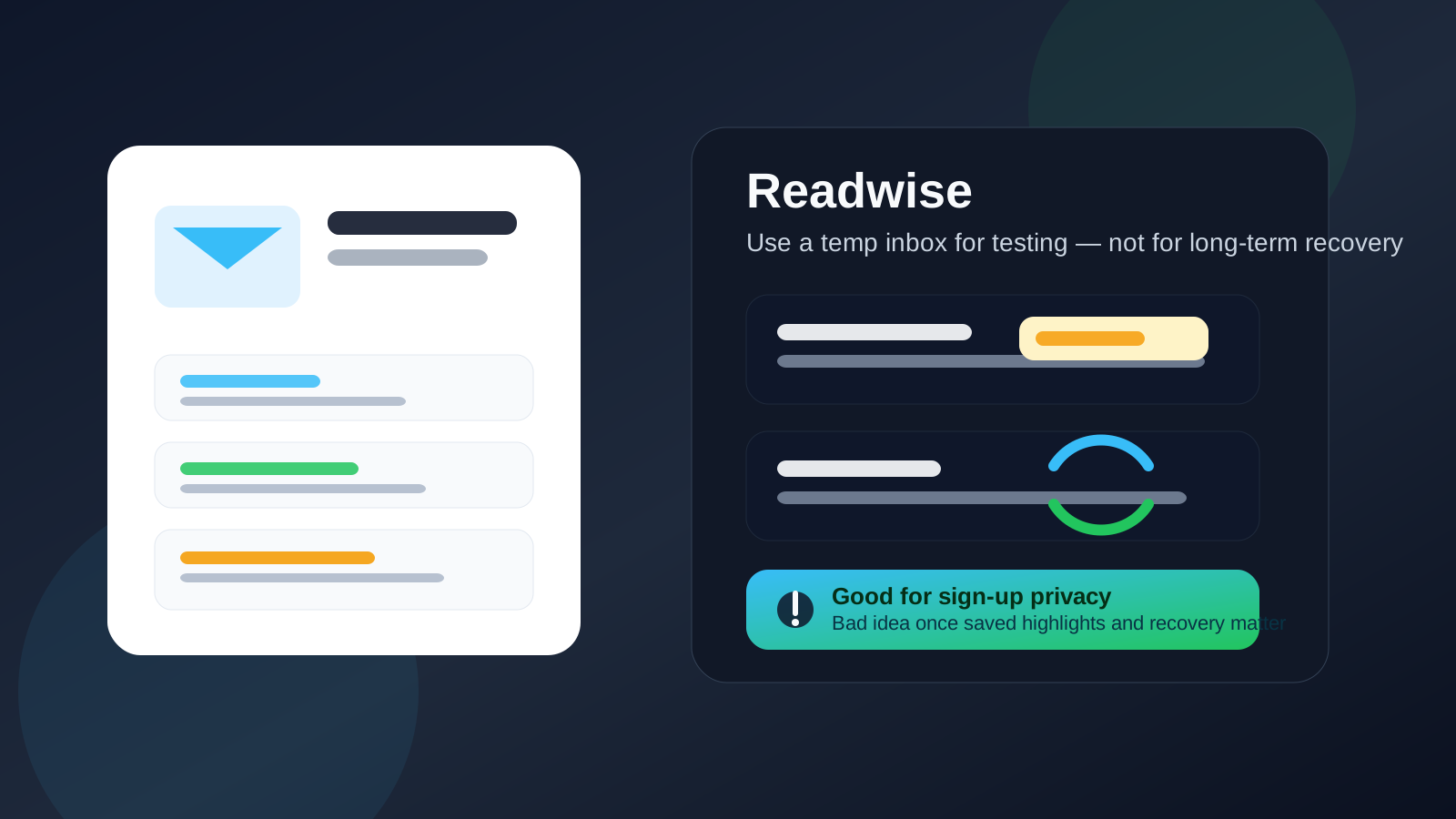
Yes — using a temp email for Readwise is fine if you just want to test the signup flow or explore the product without giving out your main inbox right away.
It becomes a bad idea once your saved highlights, Reader workflow, recovery links, or paid access depend on that temporary address.
That distinction matters because Readwise is not a throwaway account for most people. It often becomes part of a real reading system: highlights from books and articles, saved links, daily review emails, subscription access, and a long trail of notes you may want months later. A disposable inbox can help during the earliest evaluation stage, but it is rarely the best long-term home for an account you expect to keep.
When a temp email makes sense for Readwise
A temporary inbox is useful when you want low-friction privacy during the first step of research. If your goal is simply to see how Readwise works, check pricing, or compare it against other note and reading tools, there is nothing wrong with keeping that first signup separate from your everyday inbox.
- Quick product testing: you want to see the dashboard, onboarding flow, or Reader interface before committing.
- Spam control: you do not want early promotional emails mixed into your main personal or work mailbox.
- Clean comparison shopping: you are evaluating multiple tools and want each test account isolated.
- Low-stakes privacy: you are curious about the product but not yet ready to tie your permanent email identity to it.
In that narrow use case, a disposable address from a service like Anonibox can be practical. You still receive the verification message you need, but you avoid handing out your main inbox before you know whether the tool will stay in your workflow.
Why temp email gets risky surprisingly fast
The problem is not the initial signup. The problem is what happens after the signup if you decide you actually like the product.
Readwise is built around keeping valuable things organized over time: highlights you want to revisit, articles you save to read later, review emails you rely on, and an account history that becomes more useful the longer it exists. Once that account starts holding real value, a temporary inbox stops being a convenience and starts becoming a weak point.
1. Account recovery becomes fragile
If you lose access to the temp inbox, password resets and security confirmations can become a hassle. Even if the account itself still works today, recovery is exactly the thing people forget about until they urgently need it.
2. Saved highlights are not disposable
A lot of people treat reading tools as long-term memory systems. If you start importing highlights, clipping articles, or organizing reading notes, the account stops being experimental. At that point, tying it to a mailbox you do not fully control is risky.
3. Reader and newsletter workflows depend on email reliability
Some users rely on recurring emails, forwarded content, or reading reminders as part of their setup. Temporary inboxes are not ideal when messages need to arrive reliably over time rather than just once at signup.
4. Billing and subscription notices matter
If you ever move from free exploration to a paid plan, you want invoices, renewal notices, failed-payment alerts, and policy changes landing somewhere stable. A throwaway inbox is a poor fit once money is involved.
The best way to use Readwise privately without creating future problems
The smartest approach is to separate the trial phase from the keeper phase.
- Use a temp email only for the earliest evaluation. That is the moment when privacy and inbox control matter most, and account value is still low.
- Decide quickly whether Readwise is worth keeping. Do not spend weeks building a serious workflow on top of a disposable inbox.
- Switch to a permanent address before the account becomes important. If you expect to store highlights, save articles, or pay for access, move to a stable email first.
- Keep recovery under your control. The inbox attached to an account should be one you can access later, not just today.
This gives you the privacy upside without the long-term downside. You can protect your real inbox during product research and still avoid the classic mistake of leaving a valuable account attached to an address that expires or goes unmanaged.
Good use cases for a temp email for Readwise
Here are a few realistic scenarios where a temporary address is reasonable:
- You want to click through the onboarding before deciding whether the app feels useful.
- You are comparing Readwise with other note, highlight, or read-it-later tools in the same weekend.
- You want to keep promotional follow-ups out of your primary inbox until you make a decision.
- You are testing on behalf of a side project or short-term research workflow and may never keep the account.
All of those are low-stakes, low-history cases. The key is that you are still testing the surface, not building dependency.
Bad use cases for a temp email for Readwise
Now for the cases where a temporary inbox is usually the wrong move:
- You plan to save lots of highlights. That is persistent value.
- You expect to keep a reading archive. Long-term access matters more than short-term signup privacy.
- You are paying for the service. Billing and recovery should not live behind a disposable mailbox.
- You want dependable notifications. Reviews, updates, and important account emails should reach you consistently.
- You may use the account for work or academic research. Reliability matters more than novelty once the notes affect real output.
If any of those describe your situation, you are better off using a stable email address from the start or switching early before the account becomes deeply embedded in your workflow.
A practical privacy checklist before you sign up
If you want to stay careful without overcomplicating the decision, use this quick checklist:
- Am I only testing Readwise, or do I expect to keep using it next month?
- Will I care if I lose access to saved highlights or notes?
- Do I want recurring emails from this service in a mailbox I check regularly?
- Could this account eventually hold paid access, exports, or reading history I care about?
- Would a separate permanent email be better than a fully disposable one?
If your honest answer points toward ongoing use, a separate but stable email is usually the better balance. That keeps your main inbox protected while avoiding the recovery problems of a short-lived address.
Temp email vs separate permanent email: which is better here?
For Readwise specifically, a separate permanent email is often the sweet spot.
A disposable inbox is best for pure evaluation. A separate permanent inbox is better for any account that might become part of your real digital system. That separate address can still protect your main inbox from clutter, but it gives you consistent access to verification, password resets, and subscription messages later on.
In other words:
- Temp email: best for a quick look.
- Separate permanent email: best for a tool you may actually keep.
- Main personal or work email: fine if you already know you trust the tool and do not need extra separation.
What happens if you already signed up with a temporary address?
If you already created the account with a temp inbox, do not panic. The best next step is simple: update the email on the account while you still have access.
Do that before you build too much on top of it. Move the account to an inbox you control, then keep going with your highlights, saved reading, and notes. That small cleanup now is much easier than dealing with recovery trouble later.
So, should you use a temp email for Readwise?
Yes, but only for the earliest, lowest-stakes stage.
If you just want sign-up privacy, a temporary inbox can be a clean way to test Readwise without giving out your primary email immediately. But once the account holds important highlights, saved articles, ongoing reading workflows, or paid access, that same temp inbox becomes a liability.
The practical answer is simple: use a temp address to explore, then switch to a stable email before Readwise becomes part of your real system. That keeps your privacy intact without gambling with access to the notes and reading history you may actually want to keep.