A temp email for Saleshood is reasonable for low-stakes trial signup, early demo access, and first-pass training evaluation.
It becomes a bad idea once shared workspaces, team invites, coaching workflows, or account recovery depend on that inbox.
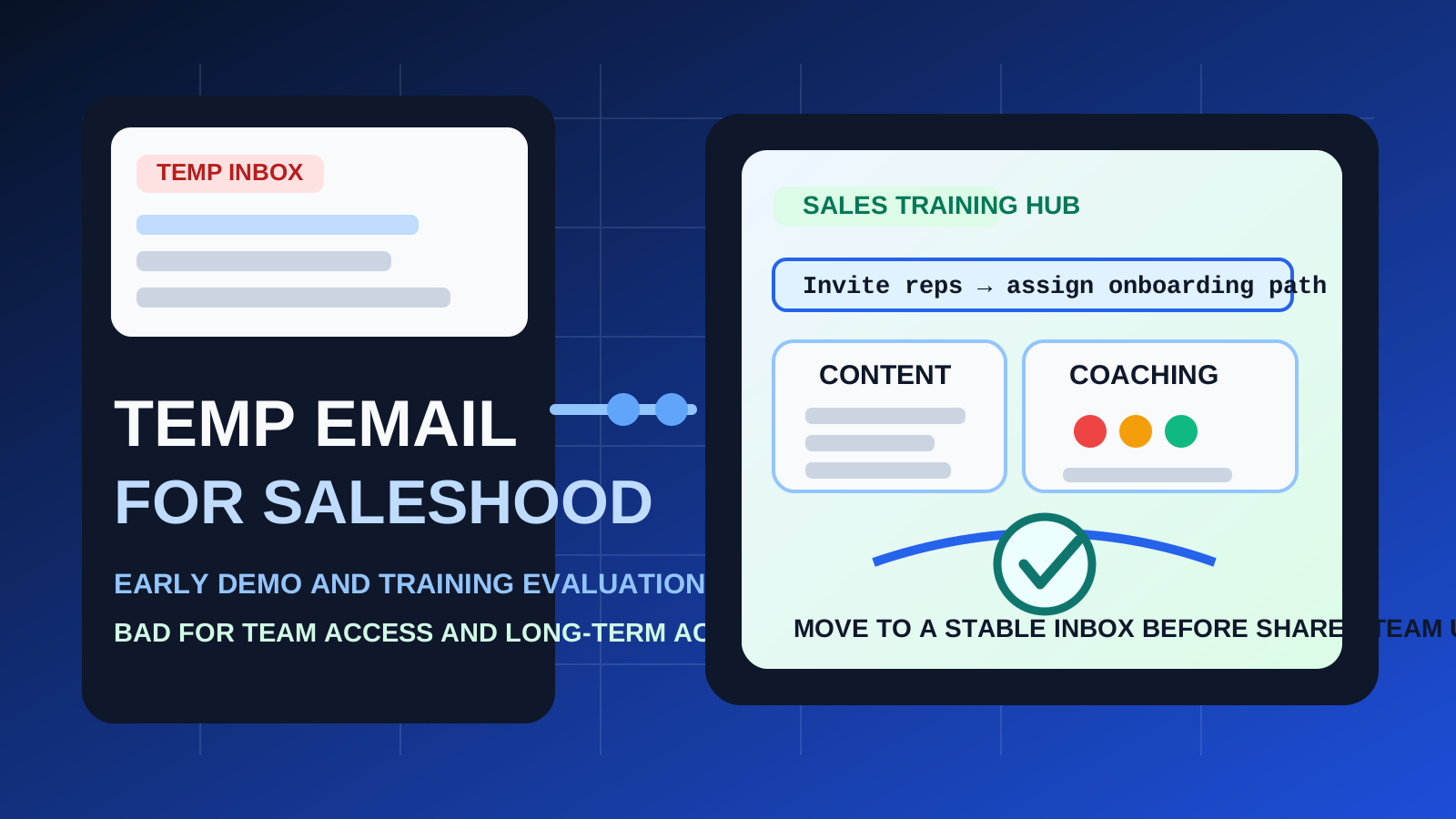
If you evaluate enablement tools regularly, your inbox can fill up with onboarding emails, demo follow-ups, webinar invites, and “book your next step” reminders surprisingly quickly. That is part of why a temporary inbox can be helpful during the earliest stage of product research. You can verify an account, inspect the interface, and decide whether the platform belongs on your shortlist without handing your main inbox to every vendor you test.
That logic applies well to Saleshood. If you only want to explore the product, review a demo environment, or compare it against nearby sales-enablement tools, a disposable address can keep early vendor noise contained. But the trade-off changes fast if the account starts holding real training paths, shared content, coaching activity, or team access. At that point the inbox attached to the account stops being a throwaway detail and starts becoming part of operational ownership.
If you use Anonibox or another temporary email service for the first pass, the safest mindset is simple: use a disposable inbox only while the account itself is still disposable. Once the workspace may matter later, move it to an address you can keep.
When a temp email for Saleshood makes sense
There are several situations where using a temporary inbox is practical and low risk.
- Quick vendor comparison: you want to look at Saleshood alongside adjacent enablement or demo platforms without committing your permanent inbox to each one immediately.
- Early product access: you mainly need the verification email, the welcome sequence, and enough access to see how the workspace feels.
- Short evaluation cycles: you are checking the product for fit, not launching a live team rollout.
- Inbox hygiene: you want to avoid long nurture sequences from products that may never make the shortlist.
In those cases, a temporary inbox helps because the account is still experimental. You are trying to answer a simple question: is this worth a deeper look? If the answer is no, it is nice to walk away without months of leftover sales email.
Where a disposable inbox starts becoming risky
Sales-enablement products tend to become shared systems rather than one-person curiosities. That is exactly where temporary email starts working against you.
1. Shared workspaces outlive the initial trial
The biggest mistake people make with disposable email is assuming the trial will stay temporary. In reality, a promising evaluation often turns into a pilot, then a small rollout, then a workspace people return to. Once that happens, the original signup address matters more than it seemed to on day one.
If the account may become part of a real enablement process, a throwaway inbox creates unnecessary fragility. A stable inbox is boring, but boring is good when other people may depend on the account later.
2. Team access changes the stakes
As soon as teammates, managers, or admins may need access, the account stops being personal trial space. Invitations, permissions, ownership questions, and account changes all become easier when the login belongs to an address you still control and can recover reliably.
A temp inbox is fine when you are just looking around. It is a poor foundation for something that may become a shared workspace with multiple people relying on it.
3. Training and coaching workflows can become real work
Even if you start with a casual evaluation, the product may quickly hold training content, onboarding paths, coaching notes, or practice tasks worth preserving. The more real work accumulates, the less sensible it is to anchor that account to an inbox designed for short-lived use.
This is the key shift: you are no longer just testing a landing page or reading a single email. You are building continuity. Disposable email and continuity rarely fit well together.
4. Account recovery is not optional
The worst time to discover a bad email choice is when you actually need it. Password resets, suspicious-login checks, admin changes, or basic verification flows often depend on the original inbox. A temporary address feels convenient only until you need access again and it is gone.
That is why the long-term risk is usually bigger than the short-term convenience. Trial signup is easy. Recovery weeks later is the part that punishes weak setup decisions.
5. Important notifications can get stranded
Early evaluation emails are mostly harmless. Later messages may not be. Once a workspace becomes active, account notices, invitations, or training-related updates may matter more than expected. If those messages go to an inbox nobody can safely rely on, simple administration becomes harder than it should be.
A practical rule of thumb
Use a temp email for Saleshood only while you are still evaluating whether the product deserves a real place in your workflow.
If you expect to keep the account, share it, or build anything useful inside it, switch to a stable inbox early.
That rule removes most of the confusion. Disposable email is good for filtering and testing. Permanent email is better for continuity, ownership, and recovery. Problems start when people use a temporary inbox for an account that quietly stops being temporary.
How to use a temp email for Saleshood without creating future headaches
1. Be honest about the goal before signup
Are you just researching? Or are you already leaning toward a real pilot if the product looks strong? If you think the tool is likely to move beyond a quick inspection, starting with a stable inbox is usually the cleaner choice.
2. Save the early messages that matter
During evaluation, the most useful emails are usually limited to a few basics:
- the verification email
- the welcome or onboarding message
- any setup guidance you may want to compare with other vendors
- key links or notes that would help if you recreate the account later
Do not treat a temporary inbox like long-term storage. Pull out what matters while the trial is active.
3. Test the workflow intentionally
If you are going to use a disposable address, make the trial focused enough to justify it. For example, you might evaluate:
- how easy the initial setup feels
- whether the workspace structure is intuitive
- how training or enablement materials are organized
- whether the experience looks manageable for the people who would actually use it
- how quickly you can tell whether the platform belongs on your shortlist
A throwaway inbox helps most when the evaluation itself is purposeful. It is less useful when you sign up vaguely, do little with the account, and leave an unclear mess behind.
4. Migrate early if the product looks promising
If the platform seems worth keeping, change the email or recreate the account on a stable inbox before the workspace becomes important. Do it before team invites go out, before training paths become meaningful, and before the account becomes something you would be annoyed to lose.
Early migration is a small task. Late migration is the kind of avoidable admin work people regret.
When a permanent inbox is the better starting point
Skip temporary email and start with a stable address if any of these are already true:
- you expect a real pilot rather than a casual demo review
- multiple teammates may need access
- the account may become tied to onboarding or training work
- you want reliable password resets and ownership continuity
- the evaluation is for a client, a real team, or a production-adjacent process
In those cases, the privacy benefit of a throwaway inbox is smaller than the continuity cost it may create later.
Common mistakes to avoid
- Using a disposable inbox for a non-disposable account: this is the classic mistake.
- Waiting too long to switch: people often promise themselves they will migrate later and then forget until recovery becomes a problem.
- Confusing trial convenience with long-term safety: easy signup does not mean good ownership.
- Letting a shared workspace begin on shaky contact details: once other people enter the picture, stable account control matters more.
- Thinking only about the first email: the real issue is rarely verification. It is future access.
Final takeaway
A temp email for Saleshood is useful when you want fast trial access, a cleaner first-pass evaluation, and less long-term inbox clutter from early vendor outreach.
It is the wrong long-term choice once the account may hold shared workspaces, team access, training workflows, or anything you would actually care about recovering. Use temporary email for the evaluation phase if you want the privacy and inbox-control benefits, then move to a stable address before the account becomes part of real work.