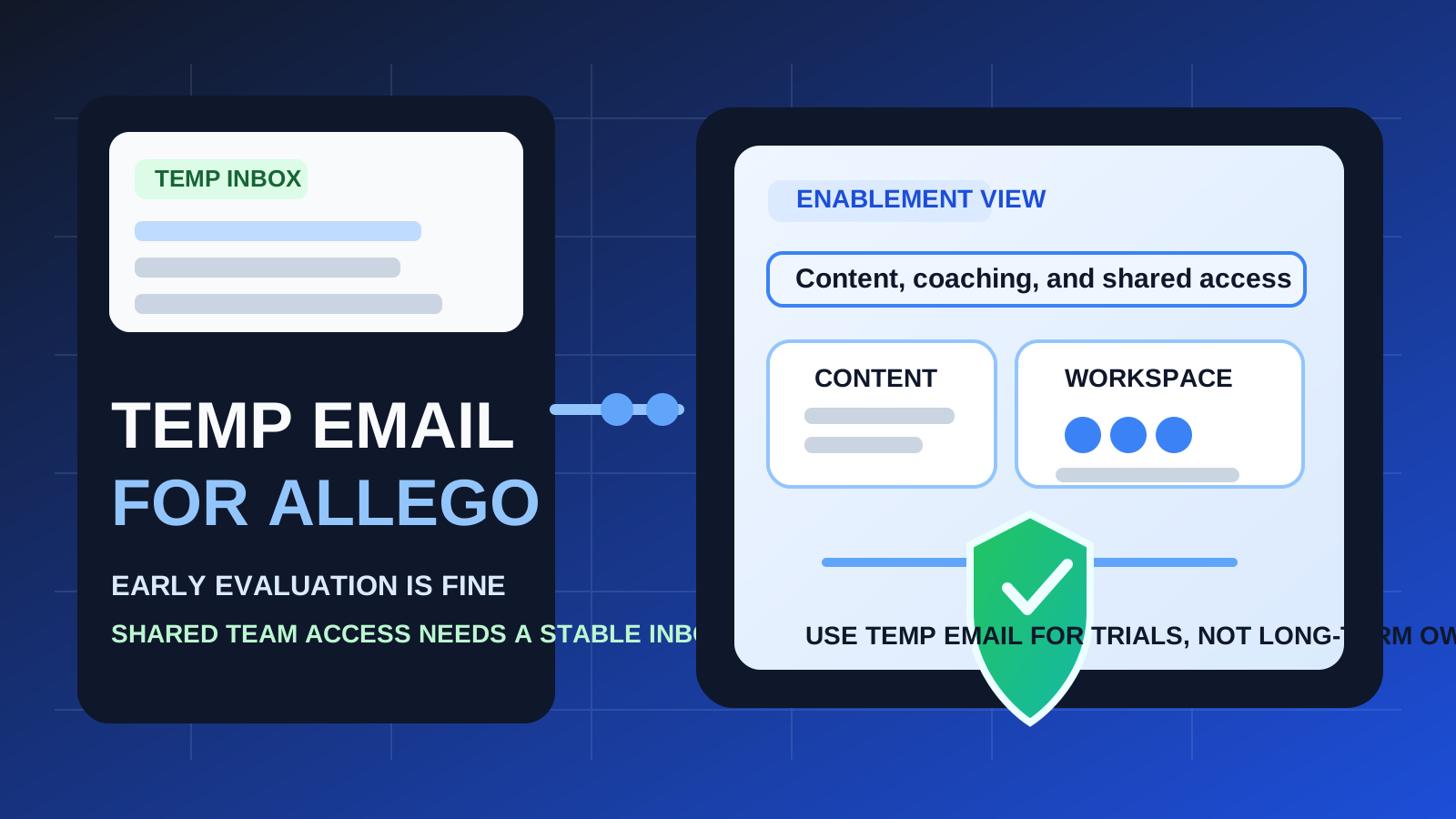
A temp email for Allego is fine for early evaluation, quick verification, and low-stakes content testing.
It becomes a poor choice once shared workspaces, team access, learning assignments, or account recovery start to matter.
If you are comparing sales enablement tools, it makes sense to protect your main inbox during the first round of testing. A single signup can trigger welcome sequences, content tips, webinar invites, book-a-demo follow-ups, and “just checking in” sales messages for weeks. That is manageable when you truly plan to adopt the platform, but it is noisy when you only want to look around and decide whether the product deserves a deeper review.
That is where a temp email can help. It gives you a separate inbox for verification, first-run onboarding, and short-term exploration without handing your primary work address to every platform you test. If you are using Anonibox for that first-pass comparison stage, Allego is exactly the kind of product where the distinction matters: a disposable inbox is practical for early evaluation, but a stable address matters once the account stops being temporary.
When a temp email for Allego makes sense
There are a few situations where using a disposable inbox is perfectly reasonable.
- You are comparing several tools at once: maybe Allego is one of a few platforms you are reviewing alongside options such as Showpad, Highspot, or Seismic.
- You only need the initial verification email: your immediate goal is to confirm the address, enter the product, and see whether the interface feels worth more time.
- You are doing low-stakes product evaluation: you want to inspect content organization, first-run workflow, or general usability before committing your permanent inbox.
- You want to avoid long-term inbox clutter: if the platform never makes the shortlist, you do not need months of follow-up mail attached to your main address.
In those scenarios, a temp inbox is just a practical filter. You still get the message you need to access the trial, but you keep your real inbox reserved for platforms and conversations that survive the first cut.
Why this is useful during early evaluation
Sales enablement platforms are often evaluated by multiple people, across multiple vendors, in a short time. That creates two kinds of friction: product friction and inbox friction. Product friction is normal; it is part of the evaluation. Inbox friction is the extra noise that makes every trial feel heavier than it should.
Using a temp email reduces that second problem. You can review the onboarding flow, see what gets sent after signup, and decide whether the product looks credible and useful before you turn it into a real line of communication with your team. That is especially helpful when you are in the “research and compare” phase rather than the “select and deploy” phase.
Where a disposable inbox becomes risky
Allego is not just a one-screen demo form. It can become part of an ongoing enablement process, which is exactly why disposable email stops being ideal once the account begins to matter.
1. Shared workspaces need continuity
If more than one person may rely on the account, the email tied to it should not disappear. A throwaway inbox may work for a solo test, but it is a shaky foundation for anything a team will revisit.
2. Team access quickly becomes messy
The moment colleagues, managers, or admins enter the picture, account ownership matters. Login changes, invite flows, permission updates, and basic accountability are easier when the account is attached to an address that stays under your control.
3. Learning and content workflows can outlive the trial
A common mistake is assuming the account is temporary, then storing something useful inside it. That could be content you want to revisit, notes from your evaluation, test assets, or setup decisions you do not want to recreate from scratch. If you lose the inbox, recovering that context later can become annoying fast.
4. Account recovery is the obvious weak point
Disposable email feels clever until you need a password reset, a verification link, or a security confirmation later. The platform may still be useful, but the path back into the account becomes fragile if the inbox is gone.
5. Internal trust matters
If a tool is moving toward real internal adoption, using a throwaway address can also create confusion. Other people may assume the account is official when it is really tied to an inbox nobody plans to keep. That mismatch is where small evaluation shortcuts turn into long-lived admin problems.
A practical rule of thumb
Use a temp email for Allego when you are evaluating the platform. Do not use one when you expect the account to become part of a real team workflow.
That line is simple, but it prevents most of the avoidable headaches. Disposable inboxes are good for quick access and inbox control. Permanent inboxes are better for ownership, collaboration, and recovery. Problems start when those two stages get mixed together.
How to use a temp email for Allego without making a mess
1. Decide whether this is a trial or the beginning of rollout
Be honest before you sign up. If you mainly want to judge fit, compare experience, or see whether the platform belongs on the shortlist, a temp inbox is reasonable. If you already expect the account to stay, start with a stable address instead.
2. Save the important early messages
During first-pass testing, you usually only need a few emails:
- the verification message
- welcome and onboarding links
- any setup notes worth comparing later
- trial details you may need if you recreate the account properly
Do not rely on memory. If something matters, save it while the evaluation is fresh.
3. Test the right things quickly
The point of using a temp inbox is not to create a half-real account and forget about it. It is to reduce friction while you make a decision. In a focused evaluation session, you might check:
- how the onboarding flow feels
- whether the product positioning matches your actual use case
- how clearly the platform presents content, coaching, or enablement workflows
- whether the first-run experience feels intuitive or overloaded
- what follow-up emails the signup triggers and whether they are useful or noisy
This gives you a clean answer to the real question: is the platform worth taking seriously?
4. Switch before other people depend on the account
If the product looks promising, do not wait until shared access matters. Move to a stable inbox before collaboration, team invites, or long-term setup become part of the account. That is the easiest moment to make the change.
When a permanent inbox is the better choice
Start with a stable email address if any of these are true:
- you expect to keep using the platform beyond the first evaluation window
- you plan to invite teammates or share ownership
- you want a dependable account recovery path later
- you are building repeatable enablement workflows instead of just exploring
- you need the account to look official inside your organization
Once one or more of those conditions is true, the small privacy win of a disposable inbox is usually not worth the future hassle.
Realistic examples
Example 1: comparing vendors in one afternoon
You want to evaluate several sales enablement tools quickly and narrow the field. A temp inbox makes sense here. You can verify the account, inspect the product, and avoid handing your permanent address to every vendor before you know which one deserves more attention.
Example 2: solo research before presenting recommendations
If you are the one doing early research for a team, a disposable inbox can help you explore without prematurely turning a casual test into an official company account. The key is being ready to recreate or update the account later if Allego makes the shortlist.
Example 3: moving into real internal evaluation
Once multiple stakeholders need access, or once your notes, workflows, or setup choices need to survive beyond a day or two, the temp email phase should end. That is when a permanent inbox is the safer and cleaner option.
Common mistakes to avoid
- Using a throwaway inbox for a non-throwaway account: if the account already matters, the inbox should be durable too.
- Waiting too long to switch: moving early is easy; moving after multiple people depend on the account is not.
- Ignoring recovery: the verification email is only the first message that matters. Password resets and ownership checks usually show up later.
- Letting evaluation drift into adoption: a casual test can quietly become a real workflow if nobody resets the account strategy in time.
- Optimizing only for inbox cleanliness: keeping your main inbox tidy matters, but so does preserving access to anything your team may actually use.
A cleaner way to evaluate Allego
- Use a temporary inbox for the first-pass signup.
- Verify the account and review the onboarding flow.
- Test the core product in one focused session.
- Decide whether the platform is disposable to you or strategically useful.
- If it is useful, recreate or update the account with a stable inbox before collaboration and recovery matter.
That workflow gives you the privacy and spam-control benefits of disposable email without pretending it is the right answer for every stage of product adoption.
Final takeaway
A temp email for Allego is a smart choice for early evaluation, quick verification, and short-term testing when you want to keep vendor follow-up out of your main inbox.
It stops being a smart choice when the account becomes something you want to keep, share, recover, or treat as official. Use disposable email for the trial phase, then switch to a permanent address before team workflows and long-term ownership start depending on that account.