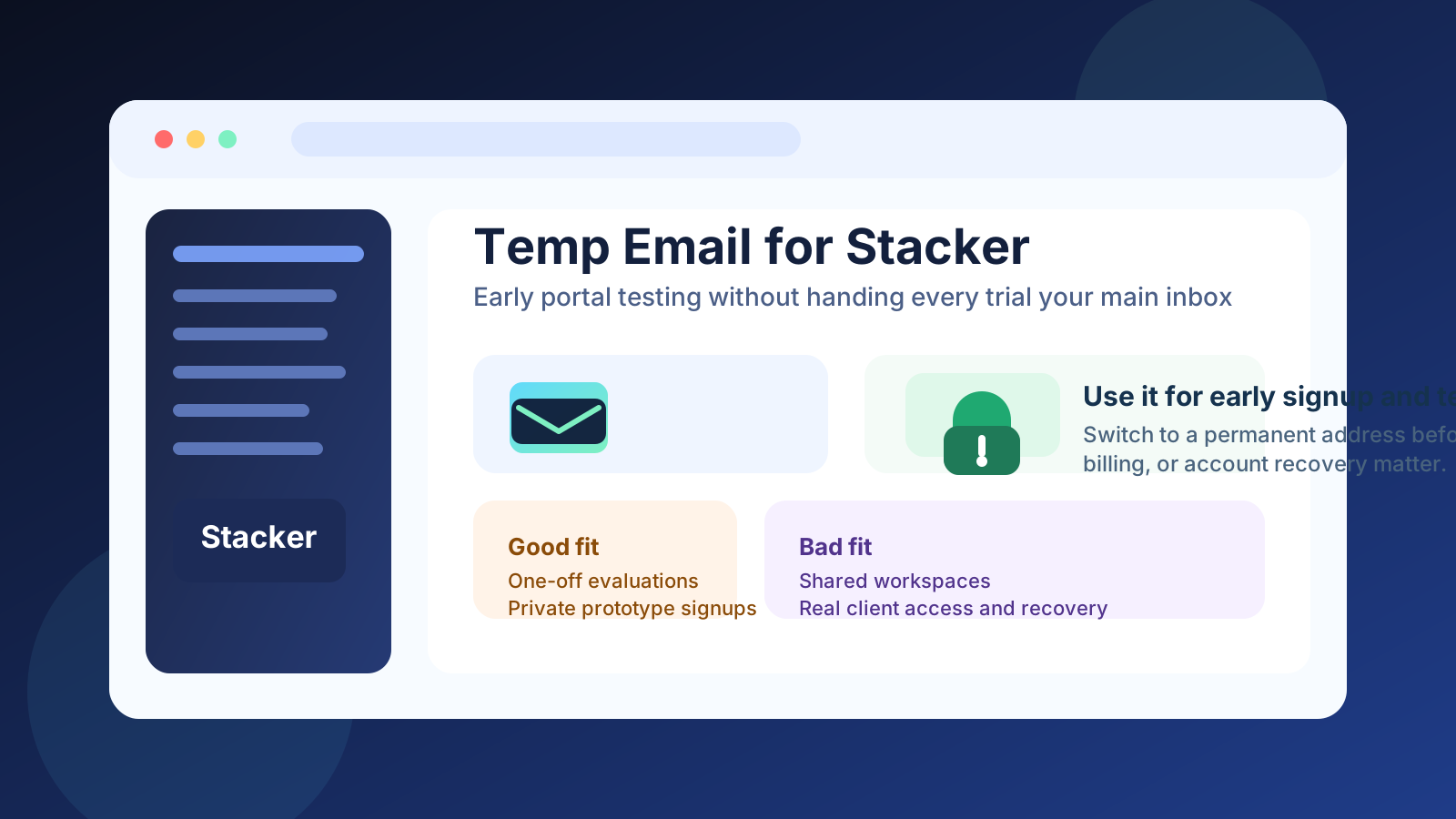
A temp email for Stacker can be useful for early portal testing, one-off signups, and private evaluation without handing over your main inbox right away.
It becomes risky once the workspace matters for real team access, client data, billing messages, or account recovery, so the smart move is to switch to a permanent address before anything important depends on it.
That is the short answer, but the real value is knowing when a temporary inbox helps and when it quietly turns into a liability. Stacker is the kind of tool people often touch during a messy evaluation phase: you might be comparing portal builders, testing a quick proof of concept, setting up a lightweight client experience, or checking whether a data-backed internal app is even worth building. In that stage, keeping your primary inbox out of every trial can be sensible.
Once the project turns real, though, email stops being a throwaway detail. It becomes the place where invites, reset links, alerts, and ownership-related messages land. If that inbox disappears, the convenience you got on day one can turn into friction later.
When a temp email for Stacker actually makes sense
Using a temporary address is most reasonable during the earliest, lowest-risk part of the process. Think exploration, not long-term ownership.
- You are evaluating Stacker against other tools. Maybe you are also looking at Softr, Glide, Retool, Appsmith, ToolJet, or another internal-tool or portal platform and you do not want your main inbox signed up everywhere.
- You want to test the signup flow privately. Sometimes you just want to see how far you can get before deciding whether the product fits your use case.
- You are building a disposable prototype. If the workspace is only for a rough internal mockup, a short-lived email can be fine.
- You want fewer follow-up emails. Trial onboarding, sales follow-ups, webinar invites, and product drip campaigns can pile up fast during tool research.
In those cases, a tool like Anonibox can help you collect the verification email, finish the first login, and keep your everyday inbox cleaner while you figure out whether Stacker deserves more serious attention.
Why people reach for temp email during portal and internal-tool testing
Portal builders and no-code internal-tool platforms often live in a strange middle ground. They are important enough to require account setup, but not every trial becomes a real project. Teams spin up experiments all the time:
- a partner portal idea that never leaves the whiteboard stage
- a quick client-facing dashboard prototype
- a simple operations workflow for one department
- a test environment for comparing permissions, layouts, and data views
If you use your main email for every one of those experiments, you can end up with a long tail of marketing email and account notices from products you stopped caring about a week later. A temporary inbox creates a buffer between early curiosity and long-term inbox clutter.
Where it gets risky fast
The trap is assuming that because a temporary inbox worked for the first login, it will stay harmless forever. That is usually not true once a Stacker workspace moves beyond a throwaway test.
1. Team invites and shared ownership
If coworkers, contractors, or clients are going to join the workspace, the account email suddenly matters much more. Ownership, admin changes, and important access messages should not depend on an inbox you might lose access to later.
2. Password resets and recovery
This is the obvious one, but people still underestimate it. If your login breaks, a temp email can become a dead end. Saving a password manager entry helps, but it does not replace having a durable recovery path.
3. Real client or customer interactions
If the workspace supports a live portal, external users, or anything tied to actual relationships, using a disposable inbox as the long-term owner address is asking for headaches. At that point, reliability matters more than privacy convenience.
4. Billing and account notices
Even if you started with a free trial, important messages can eventually include plan changes, receipts, subscription updates, or service notices. Those belong in a real inbox you monitor.
5. Data and workflow continuity
Tools in this category often sit close to operational data, workflows, and business processes. That does not mean every Stacker test is sensitive, but it does mean the account can become more important than it looked on day one. If the project survives, the inbox should survive too.
A practical way to use temp email for Stacker without regretting it later
If you want the privacy upside without the later mess, the safest approach is simple: use the temp address for the evaluation phase only, then graduate to a permanent address as soon as the workspace becomes real.
Step 1: Create the temporary inbox before signup
Do not improvise halfway through registration. Start with the temporary address ready so the entire trial stays separated from your main inbox.
Step 2: Use it for verification and first-run testing
This is the best use case. Get the confirmation message, log in, click around, and learn how the product feels. Test the setup flow, data views, permissions, and general fit for your use case.
Step 3: Decide what kind of project this is
Ask a blunt question early: is this a disposable experiment or the beginning of a real workspace?
- If it is disposable, the temp inbox may be fine from start to finish.
- If it is becoming real, move the account to a permanent address before inviting other people or connecting anything important.
Step 4: Migrate before the consequences grow
The mistake is waiting until after teammates join, client data appears, or billing starts. Switching later is possible in some tools, but it is always easier to clean this up before the workspace becomes business-critical.
Good reasons to switch away from a temp email quickly
If any of these become true, it is time to stop treating the account like a throwaway:
- You plan to keep the workspace longer than a short trial.
- You are inviting teammates, clients, or stakeholders.
- You are depending on email notifications to keep work moving.
- You are connecting meaningful business data or workflows.
- You may need reliable recovery, audit visibility, or billing history.
At that point, keeping the temp email is usually false economy. You save a little inbox hygiene now and create a bigger continuity problem later.
What a good temporary-email workflow looks like
Used well, temp email is not about being secretive or sloppy. It is just a way to control exposure during early-stage research. A clean workflow looks like this:
- Generate a temporary inbox.
- Use it for the initial Stacker signup and email verification.
- Save any important setup information from the first messages.
- Test the product honestly: structure, permissions, usability, and fit.
- Either abandon the test cleanly or switch to a permanent email once the workspace proves useful.
That approach protects your main inbox without pretending a temporary inbox is the right answer forever.
Common mistakes people make
Using the temp inbox too long
This is the classic mistake. A lot of trial work starts casually and becomes real by accident. Suddenly the disposable email owns something people actually need.
Forgetting to save critical messages
Even during a short test, capture anything important from the early emails. If you may need it later, do not assume it will still be sitting there when you come back.
Treating all signups the same
Not every Stacker use case carries the same risk. A five-minute test is different from a multi-user client portal. The more real the project becomes, the less appropriate a temporary inbox is.
Confusing privacy with permanence
A temporary inbox can be good for privacy during evaluation. It is not a substitute for durable account ownership.
Is a temp email for Stacker better than using your main work email?
For early testing, often yes. If your goal is to avoid stuffing your personal or work inbox with trial-related email from every tool you compare, a temporary address is a practical filter.
For long-term use, usually no. The more tied the workspace is to actual people, real data, recurring workflows, or account recovery, the more you want a stable email address under your control.
A useful rule of thumb
Use a temp email for Stacker when the account is still an experiment. Stop using it when the workspace starts to matter.
That line sounds simple, but it catches most good decisions:
- Experiment: temp email can help.
- Prototype with real collaborators: switch soon.
- Production workspace: use a permanent address from the start.
Final answer
A temp email for Stacker is a smart short-term tool for private evaluation, quick portal testing, and one-off prototypes, especially if you want to avoid turning every software trial into a long-term inbox problem.
It is a bad long-term owner email once the workspace involves real teammates, client-facing access, business data, billing, or account recovery. Use the temporary inbox to explore, then move to a permanent address before the project becomes important. That gives you the privacy benefit up front without creating avoidable mess later.