A temp email for Budibase is useful for early internal tool testing, account verification, and keeping another software trial out of your main inbox while you decide whether the platform fits your workflow.
It becomes risky once the workspace starts involving shared ownership, real user invites, production data, billing, or account recovery, so disposable email works best only during the evaluation stage.
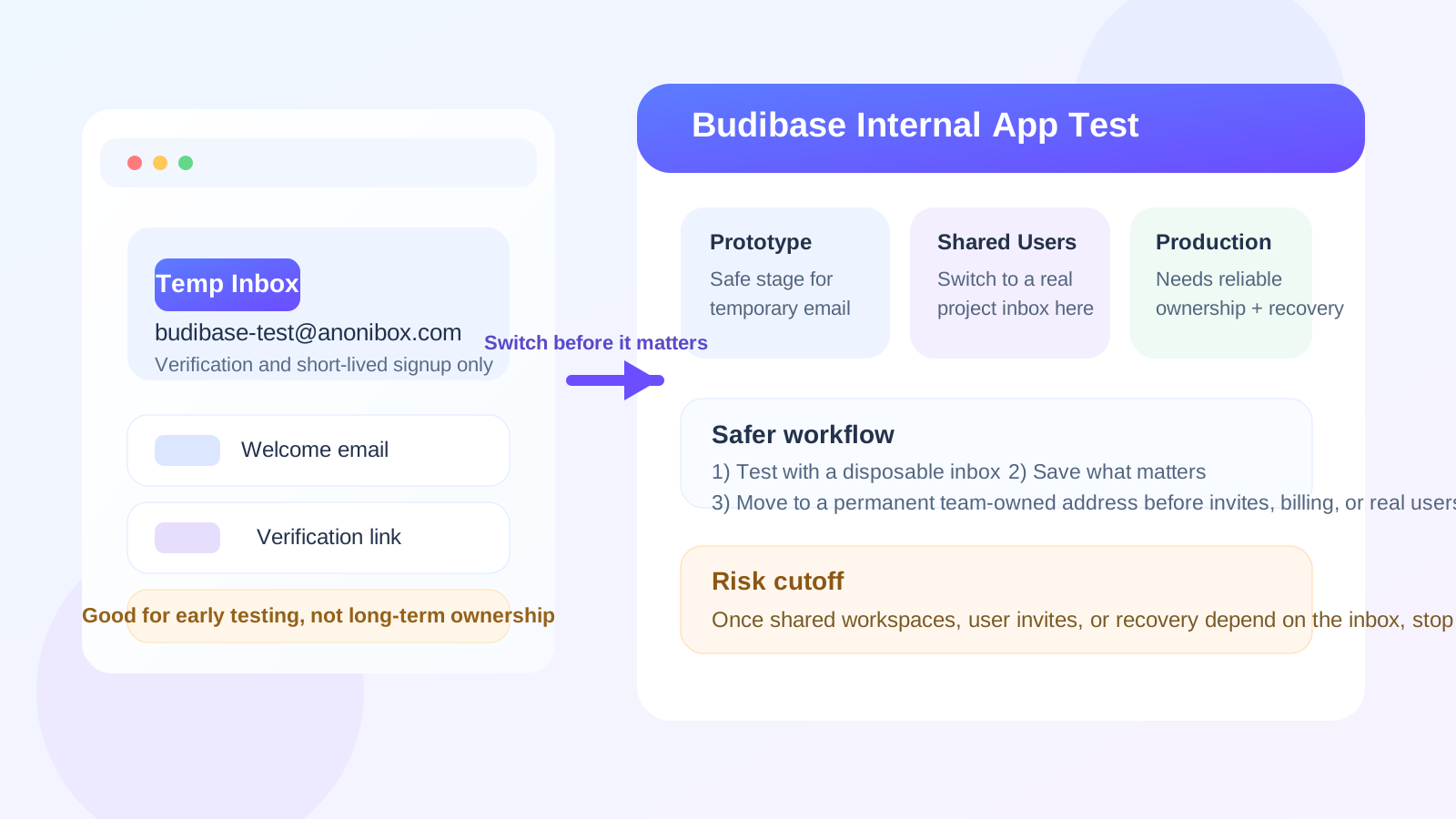
That is the honest answer most people need. Budibase is exactly the kind of tool that can start as a harmless experiment and quietly become something important. You might sign up because you want to test an internal dashboard idea, compare it with Retool, Appsmith, or ToolJet, or see whether a low-code builder is good enough for a simple admin panel, operations workflow, inventory screen, or approval app.
In that first phase, a temporary inbox can be sensible. It lets you get through signup and early onboarding without turning your everyday email into a dumping ground for trial reminders, product updates, and sales follow-up. The problem is that internal-tool platforms rarely stay low-stakes for long. A rough prototype can become a real team tool. A quick test app can become the interface people use every day. Once that happens, the email behind the account stops being a throwaway detail and starts becoming part of ownership and continuity.
Why people look for a temp email for Budibase
Most people searching for this are not trying to hide anything shady. They are usually trying to solve a normal software-evaluation problem: too many SaaS signups, too many onboarding sequences, and too many products asking for a real address before you know whether the tool deserves serious time.
Budibase fits that pattern well because people often use it during a messy comparison phase. They may be deciding between internal app builders, testing whether a no-code or low-code setup is fast enough, or checking whether a private prototype is worth turning into a real project.
Common reasons for using a temp email for Budibase include:
- Comparing Budibase with adjacent tools before committing a permanent address.
- Testing the signup flow, app builder, and workspace setup privately.
- Keeping a side project or internal proof of concept separate from your main inbox.
- Avoiding months of follow-up email from a platform you may never adopt.
- Giving a short-lived experiment its own inbox while you decide whether it has real value.
Those are all reasonable goals. The key is using temporary email at the stage where convenience helps more than it hurts.
When a temp email for Budibase actually makes sense
Temporary email works best when the project itself is temporary in practice. If the account is only supporting exploration, a disposable inbox can be a practical choice.
1. You are comparing internal-tool builders
Maybe you want to see whether Budibase feels faster, cleaner, or more flexible than Retool, Appsmith, ToolJet, or Stacker. In that case, using a temporary inbox for verification and the first look around the product is perfectly reasonable.
2. You are building a rough prototype
If the app is just a proof of concept for an ops panel, inventory view, service request form, or admin workflow, a temp inbox can help you keep the experiment isolated. The goal is not long-term account ownership yet. It is simply learning whether the platform is worth more of your time.
3. You only need short-term access
Sometimes the job is narrow: verify the account, inspect the builder, test a few components, and decide whether to continue. That is a good fit for a disposable inbox because the account is supporting a short-lived decision rather than a real operating system for your team.
4. You want less inbox clutter during evaluation
Internal-tool trials often come with onboarding messages, feature tours, setup nudges, webinar invitations, and follow-up prompts. A temporary inbox keeps those messages from mixing with your real work email before you even know whether the product belongs on your shortlist.
When it becomes a bad idea
The risk changes as soon as the workspace stops being disposable in practice. Budibase can sit underneath real internal operations, and that means email quickly becomes more important than people expect.
1. The workspace is shared with other people
If teammates, admins, or stakeholders are being invited in, the account email is no longer a personal convenience detail. It becomes part of the workspace’s ownership trail. A disposable inbox is the wrong foundation for something multiple people may rely on.
2. Real user access depends on the app
A prototype might become the internal app that handles approvals, support tasks, client records, or reporting views. Once actual users depend on it, you want a durable inbox behind the account, not one that was only meant to survive the testing phase.
3. Production data or important connectors are involved
If the project starts touching real databases, workflows, or sensitive business information, the account moves into a higher-stakes category. At that point the value of reliable ownership and recovery is much higher than the value of inbox anonymity.
4. Billing or longer-term platform decisions are attached
The moment paid plans, renewals, or account-level notices matter, a disposable inbox becomes more annoying than useful. You do not want important account messages landing somewhere temporary or forgotten.
5. You may need account recovery later
This is where temporary email fails most often. The project survives, the team keeps using it, and months later someone needs a password reset, a confirmation link, or access to an ownership-related notice. That is when a throwaway inbox stops feeling clever.
What can go wrong if you keep using the temp email too long?
- You lose recovery access: reset links and security checks can become painful if the original inbox is gone.
- You create messy ownership: the person who signed up first may be the only person who can easily recover the account.
- You miss important notices: plan updates, confirmations, and account-level alerts can disappear into an inbox nobody monitors.
- You make collaboration harder: shared workspaces work better when the underlying account setup is stable and easy to hand off.
- You turn a temporary shortcut into long-term friction: what felt convenient at signup becomes a recurring operational headache later.
None of those problems usually show up on day one. That is why this mistake is common. Disposable email feels fine during the first hour because the downside often appears later, after the tool has become useful enough to keep.
A safer workflow for using a temp email with Budibase
If you want the privacy benefit without creating avoidable future problems, use a staged approach instead of treating the disposable inbox as permanent.
Start with the temp inbox for evaluation only
Create the temporary address before signup so verification emails and first-run onboarding stay out of your main inbox. This is where a service like Anonibox is genuinely useful: it helps you test without overcommitting your real contact details to every experiment.
Test with a clear purpose
Go into the trial with real questions. Can Budibase handle the kind of form, table, or approval flow you need? Does the builder feel fast enough? Is it a better fit than the alternatives you are considering? The more specific your evaluation is, the less likely you are to let a temporary setup drift into a permanent one by accident.
Save anything important right away
If a verification link, setup message, or workspace detail matters, save it while you still have easy access. Temporary inboxes are great for short access, not dependable archiving.
Switch to a permanent address before the workspace becomes real
The best time to change the account email is before teammates are invited, before real workflows depend on the app, and before any billing or account recovery pressure exists. Do it early while the change is still simple.
Use a project-owned inbox if the app may outlive the prototype
For anything that could become a team asset, a dedicated permanent inbox is usually better than a burner. It gives you separation from your personal email without creating recovery problems later.
Realistic examples
Good use case
You want to compare Budibase with Retool and Appsmith this week, build a rough internal tool mockup, and decide whether any of them deserve deeper testing. A temp inbox is a good fit because the work is still exploratory and reversible.
Borderline use case
You are building an internal dashboard for a small team and telling yourself it is “just a prototype,” but people are already asking to see it. That is usually the point where a separate permanent inbox is smarter than a disposable one.
Bad use case
You are launching a real shared workspace, connecting important data, inviting teammates, or expecting the app to stay in use for months. Do not anchor that to a temporary inbox. Use an address you can monitor, recover, and hand off responsibly.
Quick checklist before you sign up
- Am I only testing Budibase, or do I already think this app may become real?
- Will teammates, reviewers, or other users need access soon?
- Could important workflows or production data depend on this workspace later?
- Will billing, account notices, or password recovery matter down the line?
- Do I really need a disposable inbox, or do I just need a separate long-term project email?
If your answers lean toward private, short-term, and experimental, a temp inbox can make sense. If they lean toward shared, durable, or operationally important, switch to a permanent address before the project grows teeth.
Final takeaway
A temp email for Budibase is useful for early internal tool testing, quick comparisons, and keeping another trial out of your main inbox. That upside is real, and for low-stakes experiments it can be worth it.
The downside is that Budibase projects can move from “just testing” to “team asset” faster than expected. Use temporary email during evaluation, then move to a stable inbox before shared workspaces, user invites, billing, or recovery depend on it. That gives you the privacy benefit without building a real internal app on top of an email address you were never meant to keep.