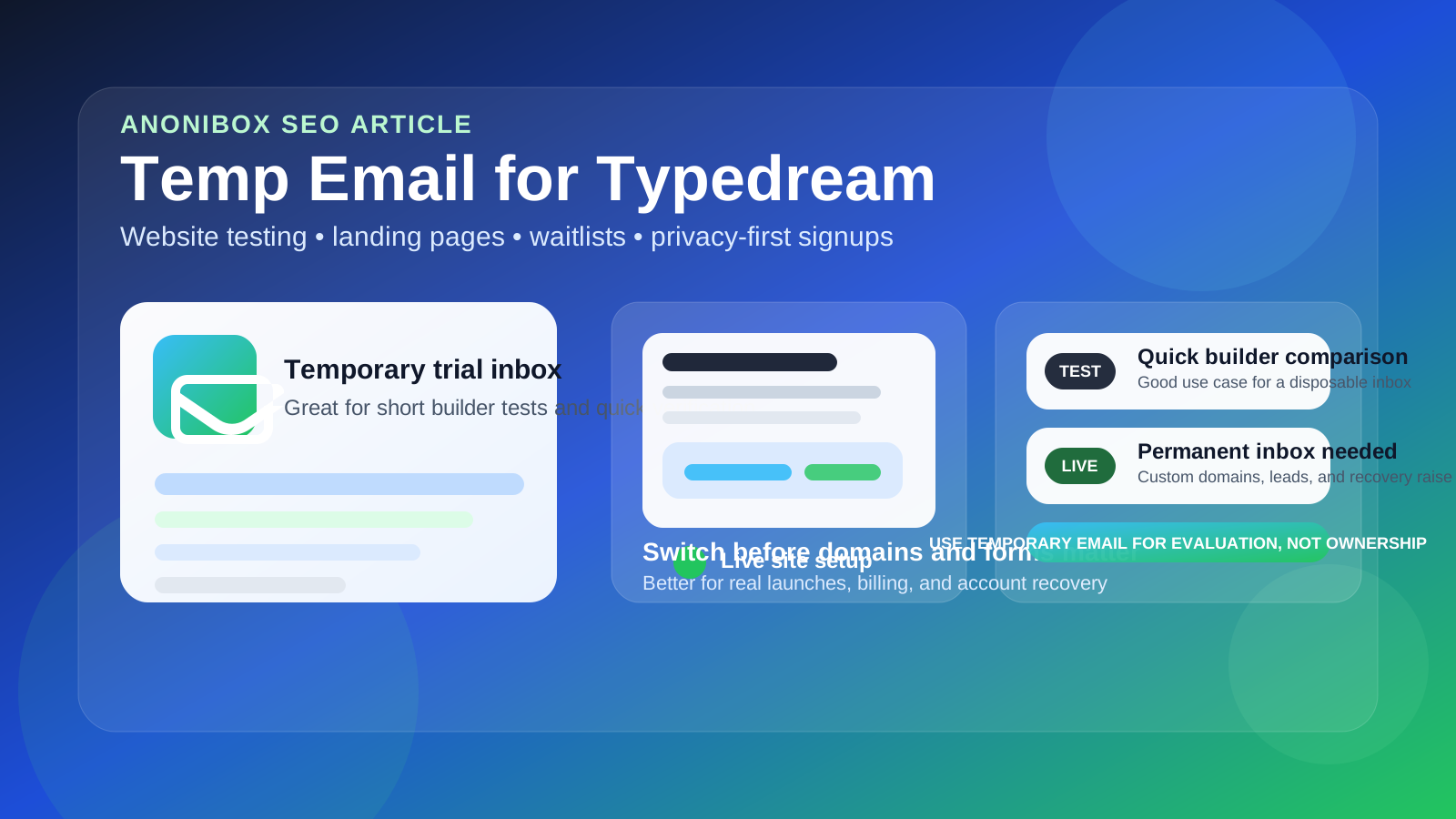
A temp email for Typedream can be useful for early website testing, quick builder comparisons, and one-off signups when you do not want another software trial living in your main inbox.
It becomes risky once you attach a custom domain, collect real leads, start paying for a plan, or may need reliable account recovery later, so disposable email works best only during the evaluation stage.
That is the honest answer most people actually need. Typedream is exactly the kind of product that starts as a casual test and can turn into something real surprisingly fast. You might sign up just to explore templates, spin up a startup landing page, compare it against other builders, or see whether the workflow feels lighter than a more complex platform. A temporary inbox can help with that early curiosity because it keeps verification emails and onboarding messages out of the account you use every day.
The problem is that website-builder accounts rarely stay low-stakes for long. A rough concept page can become your portfolio, a prelaunch waitlist, a creator site, a newsletter hub, or a client-facing homepage faster than expected. Once that happens, the email behind the account matters a lot more than it did on day one. The account is no longer just a signup. It is part of how you recover access, manage billing, watch for notices, and keep ownership clean.
So the best approach is not “always use temp email” or “never use temp email.” It is much simpler: use it for the truly temporary part of the workflow, then move to a stable inbox before the site becomes something you care about keeping.
Why people look for a temp email for Typedream
Most people searching this keyword are not trying to do anything strange. They usually want a clean boundary between a casual software experiment and the inbox they depend on for real work. That makes sense with website builders because even one short signup can trigger a long trail of follow-up messages.
Common reasons people want a temp email for Typedream include:
- Testing the builder before committing: you want to see whether the editor, page structure, and setup flow feel right.
- Comparing similar tools: you may be looking at Typedream alongside Carrd, Framer, Webflow, Dorik, or other lightweight site builders.
- Creating a private proof of concept: maybe it is a draft homepage, a product teaser, a portfolio mockup, or a short-lived side project.
- Keeping trials separate: you want the verification email, not months of marketing messages for a tool you may never use again.
- Protecting your main inbox during research: a temporary address keeps low-commitment testing from mixing with your real communication.
Those are all practical reasons. The trick is recognizing when the account is still disposable and when it has quietly become part of a real business or creator workflow.
When a temp email for Typedream actually makes sense
Temporary email is strongest when the account itself is temporary in practice, not just in theory.
1. You are doing a quick builder evaluation
If your goal is to verify the account, look around the dashboard, inspect the editing flow, and decide whether Typedream belongs on your shortlist, a disposable inbox is fine. You get through the first step without volunteering your main address too early.
2. You are comparing multiple website tools in the same week
Builder research gets noisy fast. Every product wants to send welcome emails, template suggestions, feature guides, upgrade reminders, and demo nudges. A temp inbox helps keep those evaluation messages separate so you can judge the product itself instead of drowning in follow-up.
3. You are creating a short-lived mockup or private draft
Sometimes the site is never meant to go public. It may be an internal concept, a personal experiment, or a one-time draft for feedback. If the project is truly temporary, using a temporary inbox can be reasonable too.
4. You only need short-term access
If all you need is the confirmation email and a focused session inside the product, a throwaway inbox can do that job well. It is a practical way to keep testing lightweight.
When it starts becoming a bad idea
The risks change as soon as the project stops being disposable. That line matters more than people think.
1. The site is going live
If the page is about to be shared publicly, linked in your bio, sent to prospects, or used as a real business asset, the account should no longer sit behind a burner inbox. Public sites tend to become more valuable over time, not less.
2. Real leads or waitlist signups matter
A site used for lead capture, newsletter growth, booking inquiries, or product interest is no longer a low-stakes experiment. Even if visitor messages go elsewhere, the underlying account still needs reliable ownership and recovery.
3. You attach a custom domain
This is one of the clearest cutoff points. Once a custom domain is involved, the site has crossed into “real” territory. Domain settings, publishing, and account notices are too important to leave connected to an inbox you may stop monitoring.
4. Billing or paid features enter the picture
The moment you upgrade a plan or rely on paid features, short-term inbox privacy becomes much less important than long-term account continuity. Payment notices and account alerts should go to an address you actually control.
5. Someone else may depend on the site later
Client work, team handoffs, shared brand ownership, and even future-you all benefit from a stable account foundation. A disposable inbox may feel harmless during signup, but it is weak infrastructure once other people rely on the result.
6. You may need account recovery later
This is where temporary email fails people most often. The site survives, months pass, and then you need a reset link, a security confirmation, or a billing notice. That delayed downside is exactly why disposable email works better for trials than for real website ownership.
What can go wrong if you keep the temp inbox too long?
- You lose account recovery: reset links and security confirmations become difficult once the original inbox is gone.
- You miss important notices: account alerts, plan changes, or domain-related messages can land in an inbox you no longer check.
- You create messy ownership: a useful site becomes harder to hand over or manage cleanly.
- You turn a short-term convenience into a long-term weak point: the website matures, but the email strategy never does.
- You confuse future-you: months later, you may not remember which disposable inbox was used in the first place.
None of these problems usually feel urgent during signup. That is why they are easy to create.
A safer workflow for using a temp email with Typedream
If you want the privacy benefit without the obvious downside, use a staged approach.
Start with the temporary inbox for evaluation only
Create the disposable address before signup so the confirmation message and early onboarding stay separate from your main inbox. If you just want to check whether Typedream is worth your attention, a service like Anonibox is practical for that first phase.
Test with a clear purpose
Do not wander through the builder without a plan. Decide what you are evaluating: setup friction, template quality, page speed, ease of publishing, landing-page flexibility, or general fit for your project. Temporary inboxes work best when the session has a clear endpoint.
Save anything useful right away
If you receive a setup link, template reference, or note you may want later, save it while the inbox is still active. Disposable inboxes are good at short access, not long-term archiving.
Switch to a permanent inbox before the site becomes real
The best time to change the account email is before launch, before the custom domain goes live, and before a form or waitlist starts collecting real interest. Waiting until something breaks is the sloppy version of the workflow.
Use a dedicated project inbox if you want separation without fragility
Many people do not actually need pure disposability. They need separation. A dedicated project email can keep builder-related noise away from your main inbox while still giving you dependable recovery and cleaner long-term ownership.
Three realistic Typedream scenarios
Scenario 1: quick builder comparison
You want to compare Typedream with a few other site builders over the weekend and decide which one deserves more attention. A temp inbox is a good fit because the goal is evaluation, not continuity.
Scenario 2: private startup concept page
You are sketching a draft landing page for a product idea and you are not sure whether it will ever go public. A disposable inbox can still make sense at this stage, as long as you switch to a permanent address before the project begins collecting real interest.
Scenario 3: public launch with a waitlist or contact form
This is where the burner approach stops being clever. If the page will collect leads, represent a brand, or support a real project, the account should be anchored to an address you control long term.
Common mistakes to avoid
- Treating a real site like a throwaway test even after it starts growing.
- Waiting too long to switch the email behind the account.
- Using one disposable inbox for every builder and losing track of important messages.
- Assuming the public page matters more than the account that controls it.
- Thinking “I will fix it later” without choosing a real moment to do the fix.
Quick checklist before you sign up
- Am I only testing Typedream, or am I likely to keep this site?
- Will the page go public soon?
- Could real leads, waitlist signups, or bookings depend on it?
- Will custom domains, billing, or recovery matter later?
- Do I really need a burner inbox, or would a separate permanent project inbox work better?
If your answers point toward short-term, private, and reversible testing, a temp inbox is reasonable. If they point toward public use, ongoing ownership, or business value, switch early to a durable address.
Final takeaway
A temp email for Typedream is useful for early website testing, fast comparisons, and keeping another software experiment out of your main inbox. That is the upside, and it is real.
The downside is that Typedream accounts can move from “casual trial” to “important asset” faster than people expect. Use temporary email for the evaluation stage, then move to an inbox you trust before custom domains, real leads, billing, or recovery depend on it.
That way you get the privacy and inbox-hygiene benefits of a disposable inbox without building a real site on top of an account setup you may regret later.