Yes, you can use a temp email for TYPO3 when you are testing a staging site, admin workflow, or extension setup and you do not want another long-lived thread in your main inbox. No, you should not keep a disposable inbox tied to the production admin, client handoff, password recovery, or any TYPO3 account your team may need months later.
That is the practical answer: a temporary inbox is useful during short-lived TYPO3 evaluation, but a real site needs a stable mailbox you control.
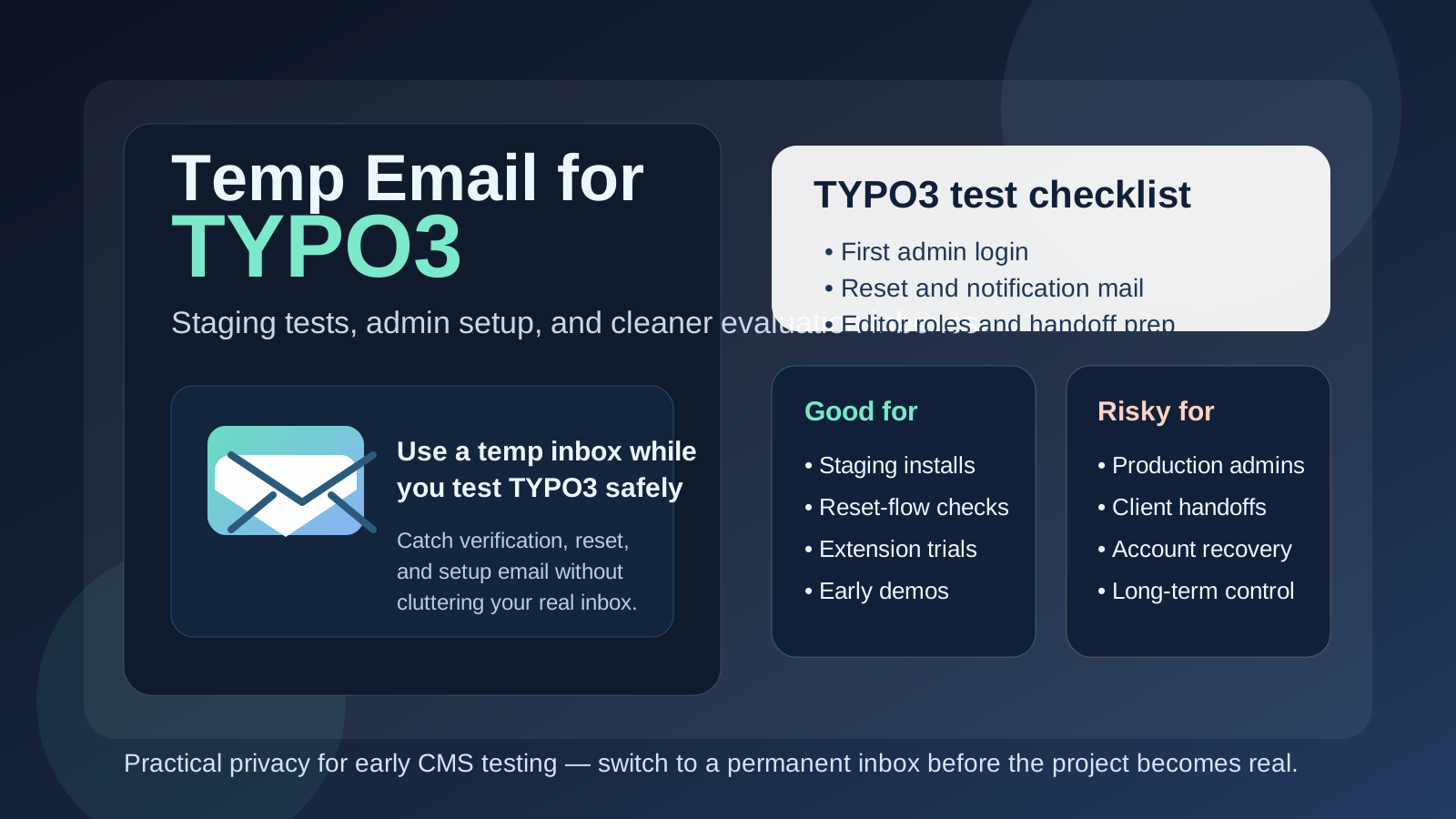
Why people search for a temp email for TYPO3
TYPO3 usually enters the picture in a more serious website workflow than a casual app signup. A team may be reviewing it for a corporate site, an agency may be building a proof of concept for a client, or a developer may be testing editor roles, login behavior, extensions, forms, and multilingual content before anyone commits long term. All of that can trigger email: admin creation, verification links, password resets, test notifications, extension trial messages, and form-routing checks.
If you are comparing a few CMS options or spinning up several staging environments, those messages get noisy fast. Using your normal inbox for every temporary install creates clutter and makes it harder to tell which message belongs to which test. A temp inbox solves that early-stage problem neatly. You can receive the messages you need, click the links, confirm the workflow, and move on without letting every experimental setup live in your permanent mailbox forever.
That is where Anonibox fits naturally. It helps you isolate the evaluation phase so you can test TYPO3 email-dependent behavior without committing your everyday address to every sandbox, demo, or one-off admin account.
When a temp email makes sense for TYPO3
A temporary inbox is most useful when the TYPO3 environment is clearly limited, disposable, or still under review. Good examples include:
- Setting up a staging site to test the first admin account
- Checking login, password-reset, and user-creation flows
- Testing form notifications or sample content workflows
- Evaluating extensions, integrations, or editor permissions in a non-production environment
- Comparing TYPO3 with Drupal, Joomla, Umbraco, or other CMS platforms before choosing one
- Running an early client demo before the long-term owner mailbox is decided
In these situations, the inbox exists to support testing rather than own anything important. That is exactly the job temporary email handles well.
When a temp email becomes risky
The trouble starts when a staging shortcut quietly becomes permanent. That happens more often than people admit. A proof of concept survives longer than expected. A temporary admin account becomes the real administrator. A quick client demo turns into the production project because deadlines move faster than cleanup. When that happens, the disposable inbox behind the account becomes an avoidable weak point.
A temp email is the wrong fit if it is connected to:
- The main production admin or site owner account
- Real client handoffs and long-term ownership records
- Password recovery for important TYPO3 users
- Security notifications, change alerts, or login-related messages
- Billing, licenses, vendor support, or contract-related communication
- Any live site your team or customer depends on day to day
If the inbox can disappear, expire, or simply stop being monitored, it should not sit behind the keys to a production CMS.
A simple rule that prevents most problems
If the account exists to test something, a temp email can be fine. If the account exists to own something, recover something, or hand something off, use a permanent mailbox you control.
That rule sounds simple because it is. It also prevents most of the messy situations people later describe as “nobody remembers which inbox owns this admin user” or “we cannot reset the account without rebuilding access.” Temporary email is useful for short-term isolation. It is not a substitute for long-term accountability.
How to use a temp email for TYPO3 safely
1. Decide whether the environment is truly temporary
Before you create the account, ask a blunt question: is this a disposable test or is there a real chance this environment becomes important? If it is just a sandbox, a temp email is reasonable. If it might become the real site owner account, start with a durable address instead.
2. Keep one inbox per environment
Do not mix several TYPO3 installs into one temporary inbox if you can avoid it. Separate inboxes make it easier to tell which reset link belongs to which environment, which extension trial email matches which site, and which account can be safely ignored later.
3. Save the links and messages that matter right away
Verification links, reset URLs, and setup instructions should be captured immediately. Disposable inboxes are useful because they are lightweight, but that is also why you should not treat them like permanent records.
4. Switch to a permanent address before the project becomes shared
The best time to replace the temp inbox is earlier than most teams think. Do it before you invite real editors, before you hand the environment to a client, and definitely before the site becomes production-critical.
5. Document ownership when the site becomes real
Once TYPO3 moves beyond testing, make it boring. Use a monitored mailbox, record who controls it, and make sure the people responsible for the site know where recovery and security messages go.
What to test while you still have the disposable inbox
If you are going to use a temp email during evaluation, use that window properly. The goal is not just to see whether a single confirmation email arrives. The better question is whether TYPO3’s email-dependent workflows feel dependable enough for the way your team plans to run the site.
Admin setup and first login
How smooth is the first-admin experience? Can you create the account, receive the necessary message, and access the backend without confusion? A clean onboarding flow matters more than people think because it shapes every later handoff and recovery step.
Password reset and recovery behavior
Do not wait until a real problem to discover whether recovery works. Trigger a password reset intentionally on staging. Check message delivery, wording, timing, and link behavior. A temp inbox is ideal for this kind of controlled test.
Editor and user-role workflows
If editors, marketers, translators, or reviewers will use the system, test the account-creation and notification paths from their side too. TYPO3 is often chosen for structured editorial work, so role-driven access should be part of the evaluation, not an afterthought.
Form and notification routing
Many TYPO3 projects rely on forms, alerts, or workflow messages. Use the temporary inbox to confirm that form notifications fire correctly, subjects make sense, and routing is doing what you expect before real contacts depend on it.
Extension and integration trials
If you are evaluating third-party extensions, managed hosting, or connected services around TYPO3, those tools may also send onboarding and verification email. A disposable inbox keeps that noise contained while you decide what is worth keeping.
Common mistakes people make
- Leaving the temp inbox in place too long: the staging administrator quietly becomes the production administrator.
- Using one disposable inbox for everything: messages from multiple installs become hard to track.
- Skipping recovery tests: teams verify signup once and never check what happens when someone loses access.
- Forgetting the client handoff: agency builds need a stable ownership transition, not a mystery inbox.
- Treating convenience as governance: a throwaway setup is helpful for testing, but it is not a real ownership plan.
Temp email vs a separate permanent project inbox
It helps to separate two different privacy habits:
- Temp email: best for prototypes, staging checks, extension trials, and short-lived admin testing
- Separate permanent project inbox: best for production ownership, shared team access, client transitions, and long-term recovery
These are not interchangeable tools. A temp inbox reduces short-term clutter and exposure. A permanent project inbox gives you long-term control. For a serious TYPO3 rollout, the smartest workflow often uses both at different stages rather than pretending one can do everything.
A practical workflow that works well
- Create a temp inbox for the initial TYPO3 sandbox or staging build.
- Use it to test admin creation, reset emails, role workflows, and notification behavior.
- Decide whether the project is disposable, likely to continue, or already becoming important.
- If it survives the test phase, move account ownership to a permanent monitored mailbox.
- Only then invite real collaborators or hand the environment to a client as part of normal operations.
This keeps your real inbox cleaner without creating future access problems. You get the speed of disposable testing and the stability of proper ownership once the site matters.
Final takeaway
A temp email for TYPO3 is a smart tool for early staging tests, admin setup, and email-flow checks. It helps you evaluate the CMS without tying every experiment, extension trial, or test notification to your main inbox.
But once the TYPO3 project becomes something your team, client, or business depends on, switch to a permanent mailbox immediately. Temporary email is great for early testing. It is the wrong foundation for production admins, client handoffs, and account recovery.